Public Steam disclosure research25,380 disclosures tracked
Where do games disclose AI use?
Search developers’ Steam disclosures, compare classified AI use across
games, and follow recorded changes.
This index adds cross-game classifications and statistics to
statements published on individual store pages.
Groups reflect automatic analysis of public disclosures; mature records are excluded. These counts do not measure AI use across all of Steam.
Missing or unclear statements cannot establish whether a game uses AI.
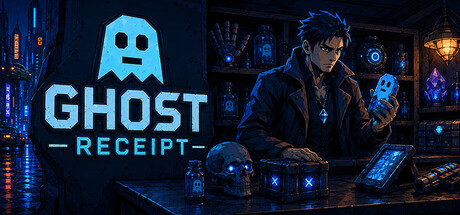
This game utilizes generative AI for certain 2D illustrations, backgrounds, and portions of written content. All AI-assisted content was manually reviewed, edited, and refined by the developer to ensure consistency with the game's artistic vision, narrative, and gameplay. No live or real-time AI generation occurs during gameplay.
Some of the visual assets and basic scripts in this work were created using generative artificial intelligence. All AI-generated content was ultimately manually modified and rigorously reviewed by the developers.
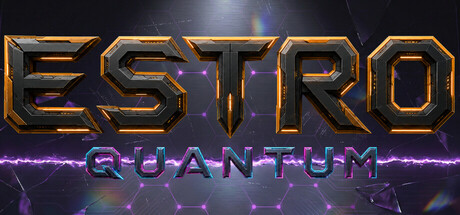
ESTRO Quantum uses generative AI only for some of its 2D/3D visual assets. Card illustrations and cosmetic art (card skins, backdrops, card backs) were created with the help of generative AI image-generation tools, then curated and reviewed by the developer before being included in the game. No AI-generated content is produced live during gameplay; the single-player "AI opponents" are traditional rule-based systems and do not use generative AI.
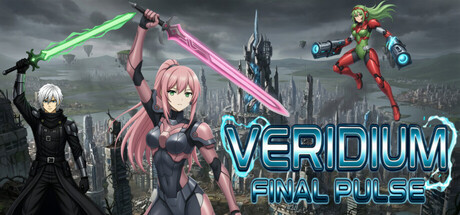
As the sole developer of Veridium: Final Pulse, I utilize generative AI tools as development assistants to create pre-rendered assets. AI technologies were used to generate 2D artwork, animations, music, sound effects, coding workflows, and promotional store texts. Crucially, all AI-generated elements have been thoroughly reviewed and curated, and were manually edited, modified, or refined wherever necessary to ensure high quality and artistic cohesion. The game contains no real-time or dynamically generated AI content during gameplay, and all tools are used under valid commercial licenses.
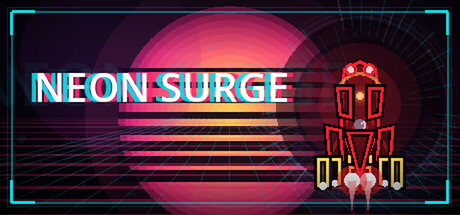
AI was used to assist in producing the in-game user-interface text translations for French, Spanish, German and Italian, which were then reviewed for accuracy. The English and Portuguese text is human-authored. All visual art, sound effects and music in NEON SURGE are generated procedurally by our own code — no AI models were used to create art, audio or gameplay assets.
The AI acts as your gameplay partner (either as a captain or a guesser). It analyzes the words on the game board and generates short text clues, or tries to guess the correct words based on the text clues you provide.
1. Cover art is created in Unreal Engine and photoshop, and has a detail pass on top of it by AI.
2. Localisation on the steam page is translated by AI.
3. Music is generated by AI.
We utilize only Google AI Studio text-to-speech models during development to pre-generate voice acting files for regional localization. All generated audio files are post-processed, mixed, and hardcoded into the game build using standard engine tools before distribution. No assets infringe on existing copyrights.
Generative AI tools (including Tripo3D and Meshy) were used during development to generate base 3D models for characters and environment assets, which were then manually adjusted and refined. AI tools were also used to create ambient background textures for marketing materials and Steam capsule illustrations. No live-generated AI content is used during runtime.
During the development process, generative AI was utilized to assist in drafting and refining select in-game text, as well as to facilitate the multilingual localization of the store page copy. Furthermore, generative AI tools were employed to aid in concept design during the creation of the game's store page key art, various marketing materials, and community assets.
Some visual assets used in the game and store page were created using a combination of licensed art assets, generative AI-assisted imagery, and manual editing by the developer.
All AI-assisted content was reviewed and modified before being included in the final project.
Generative AI tools were used to assist in the creation of certain illustrations, backgrounds, music, and translations. All final content has been reviewed by the developer.
Some content in this game was created with the assistance of generative AI tools during development, including certain visual assets, store artwork, capsule art, and text. All AI-assisted content was reviewed, edited, and integrated by the developer to ensure it fits the game’s design and overall player experience.
As a small indie team of 3 developers, we utilized AI technologies as a supplementary tool in highly specific areas to optimize our development pipeline and deliver a more immersive experience:
Voice Acting: The character voice-overs in the game were generated using AI-assisted voice models.
Concept Art: For the portrait designs appearing after the 2nd planet, AI was used strictly during the initial concept and ideation phase. All final assets were carefully refined and finalized by us to ensure strict visual consistency and match our artistic vision.
Beyond these specific use cases, all programming, core game design, narrative, and primary in-game assets were handcrafted by our team. The game does not feature any live-generated AI content, and player safety/experience is fully controlled.
Generative AI tools were used to create the 2D character sprites and background art in this game. All final assets were manually edited, resized, aligned, and integrated by the developer.
AI language models were also used as coding assistants during development.
All music tracks in this game are 100% original, human-composed pieces created by The Cyber Den. Sound effects are a combination of original recordings and royalty-free assets. No music or audio was generated using AI.
Some visual assets used for HackMeNow’s Steam store page, community assets, and marketing materials were created with the assistance of generative AI tools and then reviewed/selected by the developer.
The game itself does not use live generative AI during gameplay. No AI system generates player-facing text, images, audio, code, missions, or other dynamic content while the game is being played.
Artificial intelligence (AI) was leveraged for key aspects of the game's development, including in-game logic, support systems, and certain artistic assets.
Artificial intelligence (AI) was leveraged for key aspects of the game's development, including in-game logic, support systems, and certain artistic assets.
Some promotional artwork and store graphic backgrounds may include AI-assisted elements. The core gameplay, UI, ships, enemies, mechanics, systems and visual identity are created and edited by the developer using original game assets.
Generative AI tools were used to assist with the creation and iteration of some marketing and store page visual materials. Final assets are manually reviewed, edited, and selected by the developer. The game itself is developed by MICROMETA using original production work and game assets.
The game itself is made entirely by human hands. All in-game art, music, sound design, and writing are created or directed by human authors without generative AI. All gameplay footage shown on this store page is real, captured from the actual game.
Generative AI is used for some marketing materials — including promotional images, social media assets, and capsule art — to support a small independent studio's marketing within budget constraints. These AI-generated images are intended to represent the game's existing hand-made art style.
No AI-generated content is shipped inside the game itself. If Echo Pandemic recovers its development costs, capsule images and marketing material will be replaced with commissioned human work.
This game uses generative AI to create live in-game dialogue, AI character responses, personality details, and evaluation feedback during gameplay. The generated content is text-based and is produced dynamically through an external AI API.
The soundtrack and sound effects were made using AI tools, then edited and mixed by hand to fit the game. Localization for non-English languages was AI-translated.
FLATLINE utilizes advanced generative AI technologies to enhance both the visual and interactive experience:
Visual Assets (Pre-generated): To achieve the unique aesthetic of "clean decay" and the massive brutalist landscapes of London 2036, we employed AI-rendering tools (Nanobanana and Veo). All images and video sequences were pre-generated and underwent meticulous manual post-processing to align with the project’s artistic vision.
Interactivity (Live-generated): The episode’s climax features a live dialogue with the system "Anomaly." This character’s responses are generated in real-time using the GPT-4 model, allowing each player to find their own unique arguments in the final confrontation with the network.
We use AI as a force-multiplier for a solo creator, enabling the realization of a world that would otherwise be impossible to build at this scale using traditional methods
All visuals in MEMORY DEALER are procedural; there is no AI-generated art. The English and French text was written by the developer. The German, Spanish (Latin America), Brazilian Portuguese and Simplified Chinese localizations were produced with generative AI.
Currently, this game uses placeholder generative AI images for character portraits and voiceovers for the announcer. Hopefully these assets will be replaced by talented artists overtime.
We use AI to code faster and generate placeholder art assets. All the AI-generated art assets (and most of the stock assets) will be replaced before the game is launched. The game design, art direction, and overall vision is all from our (human!) team.
This game utilizes generative AI for certain 2D illustrations, backgrounds, and portions of written content. All AI-assisted content was manually reviewed, edited, and refined by the developer to ensure consistency with the game's artistic vision, narrative, and gameplay. No live or real-time AI generation occurs during gameplay.
Some of the visual assets and basic scripts in this work were created using generative artificial intelligence. All AI-generated content was ultimately manually modified and rigorously reviewed by the developers.
ESTRO Quantum uses generative AI only for some of its 2D/3D visual assets. Card illustrations and cosmetic art (card skins, backdrops, card backs) were created with the help of generative AI image-generation tools, then curated and reviewed by the developer before being included in the game. No AI-generated content is produced live during gameplay; the single-player "AI opponents" are traditional rule-based systems and do not use generative AI.
As the sole developer of Veridium: Final Pulse, I utilize generative AI tools as development assistants to create pre-rendered assets. AI technologies were used to generate 2D artwork, animations, music, sound effects, coding workflows, and promotional store texts. Crucially, all AI-generated elements have been thoroughly reviewed and curated, and were manually edited, modified, or refined wherever necessary to ensure high quality and artistic cohesion. The game contains no real-time or dynamically generated AI content during gameplay, and all tools are used under valid commercial licenses.
AI was used to assist in producing the in-game user-interface text translations for French, Spanish, German and Italian, which were then reviewed for accuracy. The English and Portuguese text is human-authored. All visual art, sound effects and music in NEON SURGE are generated procedurally by our own code — no AI models were used to create art, audio or gameplay assets.
The AI acts as your gameplay partner (either as a captain or a guesser). It analyzes the words on the game board and generates short text clues, or tries to guess the correct words based on the text clues you provide.
1. Cover art is created in Unreal Engine and photoshop, and has a detail pass on top of it by AI.
2. Localisation on the steam page is translated by AI.
3. Music is generated by AI.
We utilize only Google AI Studio text-to-speech models during development to pre-generate voice acting files for regional localization. All generated audio files are post-processed, mixed, and hardcoded into the game build using standard engine tools before distribution. No assets infringe on existing copyrights.
Generative AI tools (including Tripo3D and Meshy) were used during development to generate base 3D models for characters and environment assets, which were then manually adjusted and refined. AI tools were also used to create ambient background textures for marketing materials and Steam capsule illustrations. No live-generated AI content is used during runtime.
During the development process, generative AI was utilized to assist in drafting and refining select in-game text, as well as to facilitate the multilingual localization of the store page copy. Furthermore, generative AI tools were employed to aid in concept design during the creation of the game's store page key art, various marketing materials, and community assets.
Some visual assets used in the game and store page were created using a combination of licensed art assets, generative AI-assisted imagery, and manual editing by the developer.
All AI-assisted content was reviewed and modified before being included in the final project.
Generative AI tools were used to assist in the creation of certain illustrations, backgrounds, music, and translations. All final content has been reviewed by the developer.
Some content in this game was created with the assistance of generative AI tools during development, including certain visual assets, store artwork, capsule art, and text. All AI-assisted content was reviewed, edited, and integrated by the developer to ensure it fits the game’s design and overall player experience.
As a small indie team of 3 developers, we utilized AI technologies as a supplementary tool in highly specific areas to optimize our development pipeline and deliver a more immersive experience:
Voice Acting: The character voice-overs in the game were generated using AI-assisted voice models.
Concept Art: For the portrait designs appearing after the 2nd planet, AI was used strictly during the initial concept and ideation phase. All final assets were carefully refined and finalized by us to ensure strict visual consistency and match our artistic vision.
Beyond these specific use cases, all programming, core game design, narrative, and primary in-game assets were handcrafted by our team. The game does not feature any live-generated AI content, and player safety/experience is fully controlled.
Generative AI tools were used to create the 2D character sprites and background art in this game. All final assets were manually edited, resized, aligned, and integrated by the developer.
AI language models were also used as coding assistants during development.
All music tracks in this game are 100% original, human-composed pieces created by The Cyber Den. Sound effects are a combination of original recordings and royalty-free assets. No music or audio was generated using AI.
Some visual assets used for HackMeNow’s Steam store page, community assets, and marketing materials were created with the assistance of generative AI tools and then reviewed/selected by the developer.
The game itself does not use live generative AI during gameplay. No AI system generates player-facing text, images, audio, code, missions, or other dynamic content while the game is being played.
Artificial intelligence (AI) was leveraged for key aspects of the game's development, including in-game logic, support systems, and certain artistic assets.
Artificial intelligence (AI) was leveraged for key aspects of the game's development, including in-game logic, support systems, and certain artistic assets.
Some promotional artwork and store graphic backgrounds may include AI-assisted elements. The core gameplay, UI, ships, enemies, mechanics, systems and visual identity are created and edited by the developer using original game assets.
Generative AI tools were used to assist with the creation and iteration of some marketing and store page visual materials. Final assets are manually reviewed, edited, and selected by the developer. The game itself is developed by MICROMETA using original production work and game assets.
The game itself is made entirely by human hands. All in-game art, music, sound design, and writing are created or directed by human authors without generative AI. All gameplay footage shown on this store page is real, captured from the actual game.
Generative AI is used for some marketing materials — including promotional images, social media assets, and capsule art — to support a small independent studio's marketing within budget constraints. These AI-generated images are intended to represent the game's existing hand-made art style.
No AI-generated content is shipped inside the game itself. If Echo Pandemic recovers its development costs, capsule images and marketing material will be replaced with commissioned human work.
This game uses generative AI to create live in-game dialogue, AI character responses, personality details, and evaluation feedback during gameplay. The generated content is text-based and is produced dynamically through an external AI API.
The soundtrack and sound effects were made using AI tools, then edited and mixed by hand to fit the game. Localization for non-English languages was AI-translated.
FLATLINE utilizes advanced generative AI technologies to enhance both the visual and interactive experience:
Visual Assets (Pre-generated): To achieve the unique aesthetic of "clean decay" and the massive brutalist landscapes of London 2036, we employed AI-rendering tools (Nanobanana and Veo). All images and video sequences were pre-generated and underwent meticulous manual post-processing to align with the project’s artistic vision.
Interactivity (Live-generated): The episode’s climax features a live dialogue with the system "Anomaly." This character’s responses are generated in real-time using the GPT-4 model, allowing each player to find their own unique arguments in the final confrontation with the network.
We use AI as a force-multiplier for a solo creator, enabling the realization of a world that would otherwise be impossible to build at this scale using traditional methods
All visuals in MEMORY DEALER are procedural; there is no AI-generated art. The English and French text was written by the developer. The German, Spanish (Latin America), Brazilian Portuguese and Simplified Chinese localizations were produced with generative AI.
Currently, this game uses placeholder generative AI images for character portraits and voiceovers for the announcer. Hopefully these assets will be replaced by talented artists overtime.
We use AI to code faster and generate placeholder art assets. All the AI-generated art assets (and most of the stock assets) will be replaced before the game is launched. The game design, art direction, and overall vision is all from our (human!) team.