Public Steam disclosure research25,380 disclosures tracked
Where do games disclose AI use?
Search developers’ Steam disclosures, compare classified AI use across
games, and follow recorded changes.
This index adds cross-game classifications and statistics to
statements published on individual store pages.
Groups reflect automatic analysis of public disclosures; mature records are excluded. These counts do not measure AI use across all of Steam.
Missing or unclear statements cannot establish whether a game uses AI.
English (AI Disclosure)
This game includes AI-assisted NPC dialogue and text generation to create dynamic conversations and world events. AI-generated text is reviewed and integrated by the developer before release.
The game does not generate images, audio, or code on the player's device. AI is used to enhance dialogue variety and immersive world interactions while core gameplay, progression, and game systems are designed by the developer.
A Note on AI in This Game
Almost all of the visuals and music you'll experience in this game were created with the help of generative AI tools. These AI-generated assets were curated, refined, and integrated by me to bring the game's world to life.
I believe in being upfront with my players — AI was a creative tool in my process, not a replacement for the care and intention I put into making this experience for you.
I use generative AI tools as part of art pipeline. Some visual assets - such as background art and certain textures - are created with AI assistance (e.g. Midjourney, Gemini) and then manually refined, edited, and composited before being integrated into the game. All AI-assisted content is reviewed by me personally to ensure quality and appropriateness. The game does not generate any content live during play.
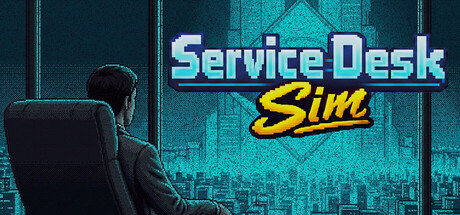
We used advanced AI language models (Claude and Gemini) to help translate
SERVICE DESK SIM into 8 languages: French, German, Spanish, Italian, Hindi,
Urdu, Japanese, and English (UK). The AI handled the initial translation of
all in-game text from UI menus to dialogue, story sequences, and thousands
of unique support tickets. Every translation was then carefully reviewed and
tested by humans to ensure quality and cultural accuracy across all languages.
Generative AI was used in the creation of some graphic assets. These assets were further processed using filters and adjustments to better suit the game's visual style.
Some background elements were partially generated using AI.
Localization into languages other than German was carried out with the help of AI.
AI was used as a development aid (to help implement certain systems in the game).
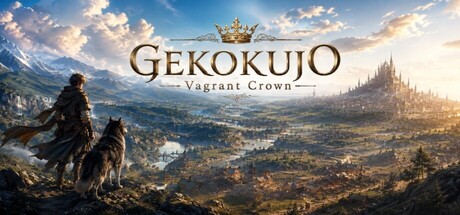
I am a solo indie developer and wanted to tell an engaging horror story set in an anime/Japanese-inspired world. Without AI, I unfortunately would never have been able to create a project like this!
Generative AI was used as an assistive tool during certain stages of visual asset creation. The overall design, direction, editing, and final composition of the work were created and managed by the developer.
AI tools were only used in the development phase for code, textures, texts, audio and music production. There is no player-accessible AI generation feature or external AI service connection in the released game, and all built-in content has passed full manual compliance review.
Generative AI technology was used to create high-quality voice-overs for the game's characters. This allowed this independent project to feature full voice acting, providing a more immersive narrative experience and bringing the historical journey of Wojtek the Bear to life. All AI-generated audio assets are pre-rendered and have been manually reviewed and edited to ensure high quality and consistency with the game's emotional tone.
The developer describes how this game uses generative AI as follows:
Visual Assets: Some character illustrations, background art, and UI icons in this game have been created or enhanced using generative AI tools.
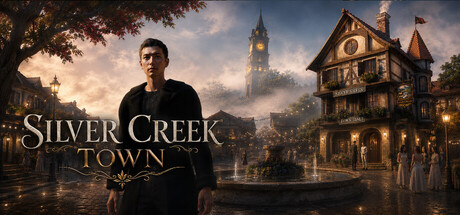
Silver Creek Town uses generative AI to support live NPC dialogue text during gameplay. Player text input may be processed by an AI service to generate in-character fictional NPC responses within the world of Silver Creek Town. Some background music, concept art, character images, text drafts, and marketing materials may also be created or assisted by AI tools during development. We review AI-assisted content before use and apply prompts, content rules, and safety restrictions to reduce inappropriate, illegal, hateful, sexually explicit, infringing, or unsafe output.
This game uses AI-generated art assets (ComfyUI / Stable Diffusion XL) and music (AceStep). All AI-generated content was created during development and is fixed in the final build. No AI APIs are
called at runtime.
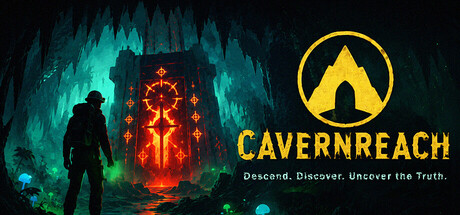
Cavernreach contains very limited AI-assisted content, including some music/audio assets and promotional artwork. All gameplay, environments, programming, story content, voice acting, level design, and game implementation were created by the developer. Any AI-assisted assets used during development for testing or reference purposes have been replaced, recreated, or removed from the full release where applicable.
Generative AI was used for some marketing visuals, evidence assets, and music. All other content including scripts, character sprites, and game development was created by the developer.
Some sound effects and a small number of textures in this game were created with the assistance of AI tools and refined by hand. Subtitle translations across our nine supported languages were generated using AI from the original English voice acting. Voice acting was performed by real people, with AI tools used only for noise reduction and audio mastering. All AI-generated content was curated and finalized by human creators before being included in the game.
Playstories uses live-generated AI during gameplay to create fictional interactive story prose, dialogue, player choices, scene keywords, branching follow-up scenes, and optional scene images from player prompts and actions through novelai.ai. AI does not control purchases, account actions, executable code, or system-level behavior.
This game uses AI language models to generate real-time conversational text content during gameplay. Players interact with AI-powered desktop companions through text chat. The AI responses are generated either locally on the player's PC or through optional cloud AI services (such as OpenAI, Deepseek, etc.). All AI-generated content consists of text-based conversations only — no AI-generated images, audio, or video are used.
Hire uses AI for its live character conversations and generated portraits, connecting to your own ChatGPT account (it uses your existing ChatGPT plan, with no separate purchase).
About Art Assets
DesktopDaily does not use AI-generated artwork for its in-game art assets. Character designs, 3D models, textures, animations, UI assets, and other visual content are created by human artists or based on properly licensed materials.
About Character Voices and Speech Synthesis
DesktopDaily’s character voice models are trained or fine-tuned using voice materials with clear provenance and authorization, and are used for character speech synthesis at runtime. These voice materials come from publicly available or authorized audio materials provided by the corresponding character or voice provider, and are used in accordance with their usage terms and authorized scope.
The character voices played at runtime are synthesized speech and are not original voice recordings.
About the Use of Generative AI
During development, AI assistance was used for parts of the code implementation and for some non-Chinese UI text localization. At runtime, generative AI is used only in optional features, including the character conversation feature, the visual companion feature, and notification assistant tools.
Some non-Chinese UI text localization uses AI-assisted translation and editing. This is limited to UI text localization and is separate from the runtime generation of character dialogue.
In the optional character conversation feature, AI is used to generate character dialogue text and to synthesize speech based on that text. When this feature is enabled, player input may be sent to cloud AI services in order to generate character-style response text. These responses may also be used for speech synthesis and played back in the game. If the player chooses not to use an API, the character conversation feature will not be enabled, and only the basic features will be available.
In the optional visual companion feature, after the player actively enables the feature, the game may use a local vision-language model to analyze screen, window, or application content within the scope authorized by the player. The analysis results may be used as context for character dialogue, allowing the character to respond based on the player’s current computer usage scenario. This feature is disabled by default. If the analysis results are used in cloud-based character dialogue, necessary summary information may be sent as part of the dialogue context to the cloud AI service selected or configured by the player.
In the optional notification assistant tools, after the player actively enables the feature and grants permission, the game may read Windows system notifications, email summaries, or other information sources specified by the player. A local AI model may be used to filter, categorize, or judge the importance of this information in order to decide whether to notify the player. This feature is intended to assist with notification management, and will not reply to emails, send messages, or perform external actions on behalf of the player. AI-based classification and notification results may be inaccurate.
The official trial API provided by the game uses Alibaba Cloud Model Studio. Players may also configure other APIs themselves. When features that require cloud AI are enabled, the necessary conversation content or contextual information is sent directly to the corresponding cloud AI service and is not relayed through the developer’s own server.
Character dialogue generated by AI at runtime is intended only for everyday companion-style interaction. The game uses prompts, content rules, and safety measures to reduce the output of inappropriate, illegal, hateful, sexual, violent, or copyright-infringing content. AI-generated responses may vary and do not represent official statements by DesktopDaily, the game’s developer, any character rights holder, voice provider, or third-party asset creator.
This game uses generative artificial intelligence to assist with the creation of some pre-rendered content, including visual, audio, translation, or marketing elements.
All AI-generated or AI-assisted content is selected, modified, corrected, and manually integrated by a human before final use. AI is used as a creative assistance tool, not as a replacement for human work.
No content is generated in real time by AI within the game, and no generative AI directly interacts with players during gameplay.
This game is developed using the commercial engine RPG Bakin. The core game logic, systems, and all promotional videos are 100% handcrafted and created without the use of any AI tools.
To enhance the overall experience of this indie project, generative AI tools were utilized to assist in specific asset creation, video sequences, and localization:
Pre-rendered Content & Video Sequences:
The introductory cinematic video showcasing the game’s backstory was generated with the assistance of AI and manually edited.
The short animations for the item forging and dismantling systems were generated using AI and manually refined.
Some 2D character portraits, equipment icons (initial concepts), and background music (BGM) were generated with the assistance of AI and subsequently polished.
Character Voiceovers: The Japanese battle voice lines for characters were created using modern AI voice generation tools.
Language & Localization: The English translation and localization of the game's scripts and dialogues were assisted by AI translation tools.
We ensure that all AI-assisted processes and content comply with legal standards, aiming to deliver an authentic wuxia RPG experience with rich audio-visuals and smooth language accessibility for players worldwide.
Thirsty Snail uses an on-device local language model to generate short snail dialogue, personality-based reactions, and race taunts. AI-generated text is triggered by in-game interactions and constrained by character prompts and content moderation rules. Screen-aware reactions are processed locally on the player's device. Screenshots are never stored or uploaded, and private file contents are not read.
Character portraits were created using AI. As well, as modification to existing character portraits to create different expressions.
AI was not used for writing or audio purposes.
We use AI tools where appropriate to streamline our workflow, specifically for pre-generating certain in-game assets such as images and music, as well as assisting with translations
All of your conversations with the “manita” character are generated by artificial intelligence. The design, UI/UX, and character design are not generated by artificial intelligenc
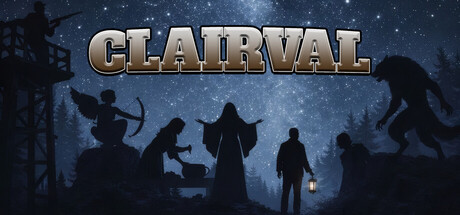
Clairval uses AI in the following limited ways:
1) Optional AI bot players: When a game host enables "Allow AI players", the server may fill empty seats with computer-controlled bot accounts at game start. These bots follow scripted server-side game logic (votes, night actions, chat). They are not powered by generative AI or large language models, and they do not learn from player conversations.
2) AI-generated visual assets (optional): Some provisional role card illustrations (placeholder JPG artwork) were created with AI-assisted tools during development. Final redrafted role cards (PNG) are human-made and always shown. Players can disable display of AI-generated placeholder art at any time in Account Settings → "Display AI-generated content?" (default: hidden until the player opts in).
Clairval does not use generative AI to create in-match dialogue, role assignments, game outcomes, moderation decisions, or real-time gameplay content. All core game rules and results are determined by the game server.
Generative AI tools are used during development for the creation and refinement of certain visual assets, animations, music, sound effects and voice content.
AI-assisted workflows are also utilized for localization support, historical research, narrative iteration and code review.
All AI-generated material is manually reviewed, edited and integrated into the final game experience by the developer.
AI-assisted tools were used during portions of concept exploration and creative iteration for certain visual and writing workflows.
All game systems, gameplay implementation, worldbuilding, design direction, editing, integration, UI construction, narrative structure, and final production decisions are created and directed by the developer.
AI tools are used as part of an assisted creative workflow rather than as fully autonomous content generation.
Artificial intelligence was used to create the game. With the help of ChatGPT, we were able to analyze and organize several thousand messages from eco-volunteer chat groups, as well as dozens of media articles, podcasts, and vlogs about the spill. All of this was necessary to identify key events, troubling themes, and the moods of people involved in disaster response, and was used by a human author to further develop the plot and dialogue. The images were created using Midjourney. Photos of real landscapes, but not people, were used to generate prompts. The game’s music was generated in Stability AI. The code to adapt the existing game structure to the Ren’py framework was written using Cursor AI.
Some visual assets used in this game, including character artwork, background images, UI-related artwork, and promotional images, were created or enhanced with the assistance of generative AI tools during development.
All AI-assisted assets were reviewed, selected, edited, and integrated by the development team before being included in the final game. The game does not generate AI content in real time during gameplay.
This game includes pre-generated content made with the assistance of generative AI tools, including some visual assets, audio/sound effects, text, localization, and other production materials. AI tools were also used during development to support programming and production workflows. All AI-assisted content included in the game has been manually reviewed and refined by the development team. The game does not generate AI content during gameplay.
This game uses pre-generated AI-assisted assets in some development and marketing materials, including draft visuals, voice work, localization support, and production references. Final content is reviewed and curated by the developer. The game does not generate AI content during gameplay.
The things the player sees are mostly made manually by humans. But some visuals, like a couple of seamless textures that are used in the environment, were AI-generated and then modified by hand. AI was used to boost productivity generally, so it was used in a lot of workflows here and there to be finish tasks faster.
There are AI voices in certain parts of the game: TikTok-style narration voice in the Tiktok parody intro, retro robotic text-to-speech voices for a character, etc...
This game uses generative AI (KlingAI) to create artwork, including characters and backgrounds. These images are directed, selected, and adjusted by the developer before being incorporated into the game.
All scenario text and scripts are written entirely by a human author. No generative AI is used for the writing.
The music is composed by a human and produced using a DAW (Cakewalk) and singing-voice synthesis software (VoiSona). No generative AI is used in the music production.
This game uses generative AI to create live in-game dialogue, AI character responses, personality details, and evaluation feedback during gameplay. The generated content is text-based and is produced dynamically through an external AI API.
English (AI Disclosure)
This game includes AI-assisted NPC dialogue and text generation to create dynamic conversations and world events. AI-generated text is reviewed and integrated by the developer before release.
The game does not generate images, audio, or code on the player's device. AI is used to enhance dialogue variety and immersive world interactions while core gameplay, progression, and game systems are designed by the developer.
A Note on AI in This Game
Almost all of the visuals and music you'll experience in this game were created with the help of generative AI tools. These AI-generated assets were curated, refined, and integrated by me to bring the game's world to life.
I believe in being upfront with my players — AI was a creative tool in my process, not a replacement for the care and intention I put into making this experience for you.
I use generative AI tools as part of art pipeline. Some visual assets - such as background art and certain textures - are created with AI assistance (e.g. Midjourney, Gemini) and then manually refined, edited, and composited before being integrated into the game. All AI-assisted content is reviewed by me personally to ensure quality and appropriateness. The game does not generate any content live during play.
We used advanced AI language models (Claude and Gemini) to help translate
SERVICE DESK SIM into 8 languages: French, German, Spanish, Italian, Hindi,
Urdu, Japanese, and English (UK). The AI handled the initial translation of
all in-game text from UI menus to dialogue, story sequences, and thousands
of unique support tickets. Every translation was then carefully reviewed and
tested by humans to ensure quality and cultural accuracy across all languages.
Generative AI was used in the creation of some graphic assets. These assets were further processed using filters and adjustments to better suit the game's visual style.
Some background elements were partially generated using AI.
Localization into languages other than German was carried out with the help of AI.
AI was used as a development aid (to help implement certain systems in the game).
I am a solo indie developer and wanted to tell an engaging horror story set in an anime/Japanese-inspired world. Without AI, I unfortunately would never have been able to create a project like this!
Generative AI was used as an assistive tool during certain stages of visual asset creation. The overall design, direction, editing, and final composition of the work were created and managed by the developer.
AI tools were only used in the development phase for code, textures, texts, audio and music production. There is no player-accessible AI generation feature or external AI service connection in the released game, and all built-in content has passed full manual compliance review.
Generative AI technology was used to create high-quality voice-overs for the game's characters. This allowed this independent project to feature full voice acting, providing a more immersive narrative experience and bringing the historical journey of Wojtek the Bear to life. All AI-generated audio assets are pre-rendered and have been manually reviewed and edited to ensure high quality and consistency with the game's emotional tone.
The developer describes how this game uses generative AI as follows:
Visual Assets: Some character illustrations, background art, and UI icons in this game have been created or enhanced using generative AI tools.
Silver Creek Town uses generative AI to support live NPC dialogue text during gameplay. Player text input may be processed by an AI service to generate in-character fictional NPC responses within the world of Silver Creek Town. Some background music, concept art, character images, text drafts, and marketing materials may also be created or assisted by AI tools during development. We review AI-assisted content before use and apply prompts, content rules, and safety restrictions to reduce inappropriate, illegal, hateful, sexually explicit, infringing, or unsafe output.
This game uses AI-generated art assets (ComfyUI / Stable Diffusion XL) and music (AceStep). All AI-generated content was created during development and is fixed in the final build. No AI APIs are
called at runtime.
Cavernreach contains very limited AI-assisted content, including some music/audio assets and promotional artwork. All gameplay, environments, programming, story content, voice acting, level design, and game implementation were created by the developer. Any AI-assisted assets used during development for testing or reference purposes have been replaced, recreated, or removed from the full release where applicable.
Generative AI was used for some marketing visuals, evidence assets, and music. All other content including scripts, character sprites, and game development was created by the developer.
Some sound effects and a small number of textures in this game were created with the assistance of AI tools and refined by hand. Subtitle translations across our nine supported languages were generated using AI from the original English voice acting. Voice acting was performed by real people, with AI tools used only for noise reduction and audio mastering. All AI-generated content was curated and finalized by human creators before being included in the game.
Playstories uses live-generated AI during gameplay to create fictional interactive story prose, dialogue, player choices, scene keywords, branching follow-up scenes, and optional scene images from player prompts and actions through novelai.ai. AI does not control purchases, account actions, executable code, or system-level behavior.
This game uses AI language models to generate real-time conversational text content during gameplay. Players interact with AI-powered desktop companions through text chat. The AI responses are generated either locally on the player's PC or through optional cloud AI services (such as OpenAI, Deepseek, etc.). All AI-generated content consists of text-based conversations only — no AI-generated images, audio, or video are used.
Hire uses AI for its live character conversations and generated portraits, connecting to your own ChatGPT account (it uses your existing ChatGPT plan, with no separate purchase).
About Art Assets
DesktopDaily does not use AI-generated artwork for its in-game art assets. Character designs, 3D models, textures, animations, UI assets, and other visual content are created by human artists or based on properly licensed materials.
About Character Voices and Speech Synthesis
DesktopDaily’s character voice models are trained or fine-tuned using voice materials with clear provenance and authorization, and are used for character speech synthesis at runtime. These voice materials come from publicly available or authorized audio materials provided by the corresponding character or voice provider, and are used in accordance with their usage terms and authorized scope.
The character voices played at runtime are synthesized speech and are not original voice recordings.
About the Use of Generative AI
During development, AI assistance was used for parts of the code implementation and for some non-Chinese UI text localization. At runtime, generative AI is used only in optional features, including the character conversation feature, the visual companion feature, and notification assistant tools.
Some non-Chinese UI text localization uses AI-assisted translation and editing. This is limited to UI text localization and is separate from the runtime generation of character dialogue.
In the optional character conversation feature, AI is used to generate character dialogue text and to synthesize speech based on that text. When this feature is enabled, player input may be sent to cloud AI services in order to generate character-style response text. These responses may also be used for speech synthesis and played back in the game. If the player chooses not to use an API, the character conversation feature will not be enabled, and only the basic features will be available.
In the optional visual companion feature, after the player actively enables the feature, the game may use a local vision-language model to analyze screen, window, or application content within the scope authorized by the player. The analysis results may be used as context for character dialogue, allowing the character to respond based on the player’s current computer usage scenario. This feature is disabled by default. If the analysis results are used in cloud-based character dialogue, necessary summary information may be sent as part of the dialogue context to the cloud AI service selected or configured by the player.
In the optional notification assistant tools, after the player actively enables the feature and grants permission, the game may read Windows system notifications, email summaries, or other information sources specified by the player. A local AI model may be used to filter, categorize, or judge the importance of this information in order to decide whether to notify the player. This feature is intended to assist with notification management, and will not reply to emails, send messages, or perform external actions on behalf of the player. AI-based classification and notification results may be inaccurate.
The official trial API provided by the game uses Alibaba Cloud Model Studio. Players may also configure other APIs themselves. When features that require cloud AI are enabled, the necessary conversation content or contextual information is sent directly to the corresponding cloud AI service and is not relayed through the developer’s own server.
Character dialogue generated by AI at runtime is intended only for everyday companion-style interaction. The game uses prompts, content rules, and safety measures to reduce the output of inappropriate, illegal, hateful, sexual, violent, or copyright-infringing content. AI-generated responses may vary and do not represent official statements by DesktopDaily, the game’s developer, any character rights holder, voice provider, or third-party asset creator.
This game uses generative artificial intelligence to assist with the creation of some pre-rendered content, including visual, audio, translation, or marketing elements.
All AI-generated or AI-assisted content is selected, modified, corrected, and manually integrated by a human before final use. AI is used as a creative assistance tool, not as a replacement for human work.
No content is generated in real time by AI within the game, and no generative AI directly interacts with players during gameplay.
This game is developed using the commercial engine RPG Bakin. The core game logic, systems, and all promotional videos are 100% handcrafted and created without the use of any AI tools.
To enhance the overall experience of this indie project, generative AI tools were utilized to assist in specific asset creation, video sequences, and localization:
Pre-rendered Content & Video Sequences:
The introductory cinematic video showcasing the game’s backstory was generated with the assistance of AI and manually edited.
The short animations for the item forging and dismantling systems were generated using AI and manually refined.
Some 2D character portraits, equipment icons (initial concepts), and background music (BGM) were generated with the assistance of AI and subsequently polished.
Character Voiceovers: The Japanese battle voice lines for characters were created using modern AI voice generation tools.
Language & Localization: The English translation and localization of the game's scripts and dialogues were assisted by AI translation tools.
We ensure that all AI-assisted processes and content comply with legal standards, aiming to deliver an authentic wuxia RPG experience with rich audio-visuals and smooth language accessibility for players worldwide.
Thirsty Snail uses an on-device local language model to generate short snail dialogue, personality-based reactions, and race taunts. AI-generated text is triggered by in-game interactions and constrained by character prompts and content moderation rules. Screen-aware reactions are processed locally on the player's device. Screenshots are never stored or uploaded, and private file contents are not read.
Character portraits were created using AI. As well, as modification to existing character portraits to create different expressions.
AI was not used for writing or audio purposes.
We use AI tools where appropriate to streamline our workflow, specifically for pre-generating certain in-game assets such as images and music, as well as assisting with translations
All of your conversations with the “manita” character are generated by artificial intelligence. The design, UI/UX, and character design are not generated by artificial intelligenc
Clairval uses AI in the following limited ways:
1) Optional AI bot players: When a game host enables "Allow AI players", the server may fill empty seats with computer-controlled bot accounts at game start. These bots follow scripted server-side game logic (votes, night actions, chat). They are not powered by generative AI or large language models, and they do not learn from player conversations.
2) AI-generated visual assets (optional): Some provisional role card illustrations (placeholder JPG artwork) were created with AI-assisted tools during development. Final redrafted role cards (PNG) are human-made and always shown. Players can disable display of AI-generated placeholder art at any time in Account Settings → "Display AI-generated content?" (default: hidden until the player opts in).
Clairval does not use generative AI to create in-match dialogue, role assignments, game outcomes, moderation decisions, or real-time gameplay content. All core game rules and results are determined by the game server.
Generative AI tools are used during development for the creation and refinement of certain visual assets, animations, music, sound effects and voice content.
AI-assisted workflows are also utilized for localization support, historical research, narrative iteration and code review.
All AI-generated material is manually reviewed, edited and integrated into the final game experience by the developer.
AI-assisted tools were used during portions of concept exploration and creative iteration for certain visual and writing workflows.
All game systems, gameplay implementation, worldbuilding, design direction, editing, integration, UI construction, narrative structure, and final production decisions are created and directed by the developer.
AI tools are used as part of an assisted creative workflow rather than as fully autonomous content generation.
Artificial intelligence was used to create the game. With the help of ChatGPT, we were able to analyze and organize several thousand messages from eco-volunteer chat groups, as well as dozens of media articles, podcasts, and vlogs about the spill. All of this was necessary to identify key events, troubling themes, and the moods of people involved in disaster response, and was used by a human author to further develop the plot and dialogue. The images were created using Midjourney. Photos of real landscapes, but not people, were used to generate prompts. The game’s music was generated in Stability AI. The code to adapt the existing game structure to the Ren’py framework was written using Cursor AI.
Some visual assets used in this game, including character artwork, background images, UI-related artwork, and promotional images, were created or enhanced with the assistance of generative AI tools during development.
All AI-assisted assets were reviewed, selected, edited, and integrated by the development team before being included in the final game. The game does not generate AI content in real time during gameplay.
This game includes pre-generated content made with the assistance of generative AI tools, including some visual assets, audio/sound effects, text, localization, and other production materials. AI tools were also used during development to support programming and production workflows. All AI-assisted content included in the game has been manually reviewed and refined by the development team. The game does not generate AI content during gameplay.
This game uses pre-generated AI-assisted assets in some development and marketing materials, including draft visuals, voice work, localization support, and production references. Final content is reviewed and curated by the developer. The game does not generate AI content during gameplay.
The things the player sees are mostly made manually by humans. But some visuals, like a couple of seamless textures that are used in the environment, were AI-generated and then modified by hand. AI was used to boost productivity generally, so it was used in a lot of workflows here and there to be finish tasks faster.
There are AI voices in certain parts of the game: TikTok-style narration voice in the Tiktok parody intro, retro robotic text-to-speech voices for a character, etc...
This game uses generative AI (KlingAI) to create artwork, including characters and backgrounds. These images are directed, selected, and adjusted by the developer before being incorporated into the game.
All scenario text and scripts are written entirely by a human author. No generative AI is used for the writing.
The music is composed by a human and produced using a DAW (Cakewalk) and singing-voice synthesis software (VoiSona). No generative AI is used in the music production.
This game uses generative AI to create live in-game dialogue, AI character responses, personality details, and evaluation feedback during gameplay. The generated content is text-based and is produced dynamically through an external AI API.