Public Steam disclosure research27,951 disclosures tracked
Where do games disclose AI use?
Search developers’ Steam disclosures, compare classified AI use across
games, and follow recorded changes.
This index adds cross-game classifications and statistics to
statements published on individual store pages.
Groups reflect automatic analysis of public disclosures; mature records are excluded. These counts do not measure AI use across all of Steam.
Missing or unclear statements cannot establish whether a game uses AI.
Generative AI was used during development as a coding assistant and to assist with drafting and translating store-page and marketing text. Some pixel-art assets were rendered by deterministic drawing code written with AI assistance; the final images were not directly output by a text-to-image or diffusion model. All shipped and published content was reviewed and edited by the developer. No generative AI runs in the game, and no content is generated from player input.
Pregenerated AI audio tools were used during development to generate character voice lines and background music tracks. All visual art, graphics, puzzle task and animations were created by hand without generative AI.
Yes — pre-rendered only (no real-time generative AI during gameplay).
Generative AI tools were used to create or refine some visual assets (UI, images, marketing / store materials) and parts of text / localization. Gameplay, code and game design are made and reviewed by the studio. No AI content is generated live during play.
Portions of this game's written content were drafted with the assistance of Anthropic's Claude, under the direction of the developer, and were reviewed and edited by a human before inclusion. All artwork is procedurally rendered by the game's own code. No generative AI images are used. No AI content is generated during gameplay.
Generative AI tools were used during development to assist with some pre-generated promotional and graphical artwork used for Cubing Forge, including certain Steam store, library, and marketing assets. All AI-assisted content is reviewed, curated, and finalized before publication. Cubing Forge does not use live generative AI during gameplay.
Yakutori uses on-device AI to translate Japanese text on your screen into English in real time. It reads the on-screen text with optical character recognition (PaddleOCR PP-OCRv5) and generates the English translation with a local large language model (Qwen3-4B). All AI runs entirely on your own computer — no cloud services and no internet connection are used, and nothing you translate ever leaves your device. As with any machine translation, the AI-generated output is not always perfect.
Some of the pre-rendered 2D art shipped with the game (era intermission illustrations, panel icons, campaign cover images and the Economic Association hall with economist portraits) was produced with generative image tools (fal.ai, Krea) from prompts authored by the developer, then post-processed by hand and by scripts in tools/. No generative AI is used at runtime. The game's simulation code, UI, isometric city renderer, world map (built from Natural Earth data) and all text, including the three interface languages, are authored by the developer.
This game uses live generative AI to create text-based character dialogue, diaries, journey events, NPC conversations, and outcomes of player-directed interactions. Responses are generated from player-created character profiles, recent in-game memories, current objectives, and player messages. Relevant text context is sent to a third-party AI service to generate these responses. Generated content may vary between sessions and may occasionally produce unexpected results. AI is not used to generate executable code or modify files on the player's device.
We used AI to create some game assets and edited them manually for quality and consistency. If our game succeeds, we hope to hire artists for future releases.
We are a 2-person indie team who just wanted to create a fun, educational and immersive game that we are proud of.
We are passionate about national parks and pledge to donate a portion of profits to the National Park Foundation to help protect and preserve our beautiful parks!
We use AI as a coding assistant during development, and as a drafting tool to help generate candidate crossword clues from our word bank. Every single clue is reviewed and edited by a human before it ships. AI generated images were used during prototyping as early placeholders. All final visual art assets that ship with the game have been created by the developer.
We've harnessed the power of Generative AI technology to create several of our game's unique theme background artworks, enhancing your gaming experience with visually stunning designs.
Generative AI tools were used during development to assist with some pre-generated visual assets and store marketing images. These assets are fixed in advance and are not generated during gameplay. The released game does not call an external generative AI service and does not generate text, images, audio, code, or other content at runtime.
Generative AI tools were used during development to create and refine some pre-generated 2D artwork used in the game and its marketing, including environmental backgrounds, character and item art, fossil and museum visuals, capsule and library artwork, and achievement imagery. All AI-assisted assets were selected, edited, and integrated by the developer before shipping. The game does not generate AI content during gameplay and does not connect to a live AI service.
AI tools were used during development to help compose the soundtrack, draw the pixel art, and draft text (including localization and this store page), all under human direction — every piece was reviewed, curated, and approved by the developer. All content is fixed at build time; the game contains no live or runtime AI generation.
This game's store page description and some marketing/visual assets were created with the assistance of generative AI tools. AI is not used to generate gameplay content, puzzles, or code during play - Sudoku puzzles are generated using standard, deterministic algorithms, not AI.
This game uses AI technology in the production of some of its illustrations, music, voice, and text assets. All generated assets have been reviewed and adjusted by the developer before inclusion.
The game also includes an "offline AI study assistant." This assistant does NOT generate text. It identifies the intent of the player's question and searches through study data that the developer has written and verified in advance, then displays the matching explanation as-is. It uses two bundled machine-learning models to improve search accuracy (an embedding model, multilingual-e5-large / MIT, and a re-ranking model, ms-marco-MiniLM-L-6-v2 / Apache-2.0), but these models do not generate any answer text. All processing runs entirely on the player's device with no external data transmission (no GPU required; runs on CPU). Any explanation shown was written and verified in advance by the developer. Note that it cannot answer topics outside the included data, and content may become outdated due to changes in exam rules or laws, so please confirm important matters with official exam information. This AI assistant is a supplementary study feature.
Hot Seat Triage uses AI tools during development only; the game contains no live AI generation at runtime.
Code: The game's code was written with the assistance of Claude (Anthropic). All AI-assisted code was directed, reviewed and tested by the developer.
Art: The in-game background image was initially generated with Nano Banana 2, then manually edited and finalized by the developer. All other art and UI assets are human-made.
Text: Clinical case scenarios were drafted with AI assistance and then reviewed, corrected and medically approved by the developer, an emergency medicine physician.
Audio: The theme music and some sound effects were created by the developer using Suno.
All AI-assisted content was human-reviewed before inclusion.
Some 2D art assets and music in this game were created with the assistance of generative AI during development. All such content was reviewed, edited, and curated by the developer. The game does not generate any AI content in real time.
Salty is made by a solo developer. Game code was written with the help of AI coding tools and was reviewed and tested by the developer. Several music tracks, some sound effects and the English voice-over were generated with ElevenLabs. All store and promotional artwork was created by a commissioned digital artist. In-game creature art, animation, level design, Compendium text and all biology content were made by the developer.
AI-generated content was used for some 2D artwork, loading screen assets, and some secondary 3D models. I reviewed, edited, and integrated all AI-assisted content into the game. The main game systems, world design, gameplay, narrative, and historical research were created and developed by me.
Parts of this game's artwork and audio were created with the help of generative AI tools and then selected, edited and assembled by hand. This covers the comic panels, the character portraits, the store and library artwork, and the music and sound effects. No content is generated while the game is running.
Some questions and answers in our quiz game are generated using AI. Additionally, we utilized pre-generated AI images included in the capsules and for in-game assets.
This game uses AI tools in the following ways:
Music: Composed using Suno.
Code: Written and debugged with AI assistance.
Art: Created with AI assistance.
All AI-assisted content was reviewed, edited, and finalized by the developer.
This game was developed with the assistance of generative AI tools. AI was used to help create in-game art, UI elements and icons, parts of the script and dialogue text, the English localization, and store page materials (capsule images, screenshots, and trailer). All AI-assisted content was reviewed, edited, and integrated by the developer. No AI-generated content is created during gameplay.
Generative AI was used in creating pre-rendered SVG assets for the app's UI, logo, and Steam store capsules, along with informational text for the breathing patterns and "Knowledge" section, which was carefully researched and reviewed for accuracy.
The characters in Conversation Simulator are played live by an AI language model that runs entirely on your computer — no cloud AI service is involved. All character dialogue and end-of-session feedback is generated locally during play. A built-in safety policy that cannot be disabled keeps generated content within a PG/PG-13 boundary: no sexual content, no content involving minors, no impersonation of real people, no voice cloning, and no claims to be a real therapist, doctor, or lawyer. Self-harm and crisis topics are intercepted and answered with a resource message instead of AI-generated content.
The quiz content (questions, answer choices, and explanations) was authored with the assistance of large language models, then validated by automated checks (every citation resolves against the canonical text) and human review passes. The scripture text itself is NOT AI-generated — it is the public-domain JPS 1917 translation sourced from Sefaria.org. Decorative chapter art and store capsule art were produced by our own procedural generation scripts with AI-assisted design; store copy was written with AI assistance and human-edited. The game contains no live/runtime AI generation.
The store page and library artwork for GeoPinQuest (capsule images, library assets, and application icons) was created using generative AI image tools. Inside the game itself, no AI-generated content is used - country outlines come from a public GeoJSON dataset, city and locality data from Geoapify's public locality dump, and the Earth surface texture from NASA's Blue Marble imagery. The game does not use AI at runtime and does not connect to any external AI services.
Some of the game's artwork (such as background images) and store/marketing assets were created with the assistance of generative AI tools, and all of them were reviewed and adjusted by the developer. Some in-game descriptive texts
were also drafted with AI assistance and manually verified. All AI-assisted content is pre-rendered — the game does not generate any content or code with AI during gameplay. Trailer narration uses VOICEVOX text-to-speech (VOICEVOX:
Zundamon).
NarrationOS uses generative AI to create its output. It synthesizes speech from your books using an AI voice model (Resemble AI's Chatterbox) and can generate a custom voice from a short recording you supply. A local AI language model assists with text analysis. All generation happens locally on your device. You are responsible for having the rights to any content or voice you use, and voice cloning requires your confirmation of consent.
AI tools were used during development to assist in creating portions of the game's code, text, and 2D artwork, including some store page assets. All AI-assisted content was generated during development and reviewed by the developer. The game does not use AI to generate any content at runtime.
P·A·L - Personal Artificial Lifeform is a generative AI software suite. P·A·L generates written word, spoken word, voice to text, generative images, generative music and sound, game code, and is capable of learning through user choices.
Always use AI responsibly.
Connects to 3rd-Party Service for AI Content Generation: Hugging Face
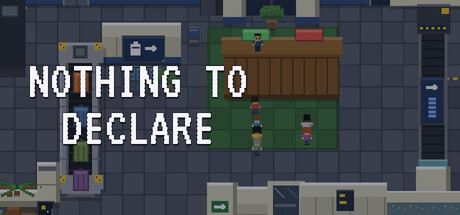
Nothing to Declare is a handcrafted game by a solo developer: all pixel art was drawn by the developer (AI images served only as composition references early in production and do not appear in the game), and the store images are actual in-game screenshots. The dialogue and case writing were created with the assistance of generative AI — always under the developer's direction, curation, and manual editing, to ensure accuracy regarding rules and legal citations based on actual Brazilian law. No content is generated by AI while you play.