Public Steam disclosure research25,380 disclosures tracked
Where do games disclose AI use?
Search developers’ Steam disclosures, compare classified AI use across
games, and follow recorded changes.
This index adds cross-game classifications and statistics to
statements published on individual store pages.
Groups reflect automatic analysis of public disclosures; mature records are excluded. These counts do not measure AI use across all of Steam.
Missing or unclear statements cannot establish whether a game uses AI.
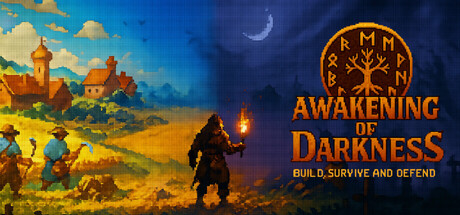
In order to better reflect the identity of our game and obtain easier outputs, we use artificial intelligence to produce content such as capsule images, small logos, and simple text found on our game's store page.
I use AI in this project for generation of some static art assets such as title screens, UI elements, Steam store assets, item images in inventory, and the large world map.
AI is NOT used for generating the engine-rendered gameplay, with exception of an image of an item dropped to the ground.
All environment tiles, objects and decorations, as well as animated entities (humans, monsters, etc) are generated by human artists.
This is a very demanding project; should I get more money and access to artists, ideally I would replace all AI assets. Ideally...
Some graphical assets are generated using AI as templates. These are then proccesses manually in a custom made animation software or edited in image editing software.
Currently, we use AI to modify some of the character voices featured in the game. Additionally, we are planning to introduce several features that leverage Generative, including:
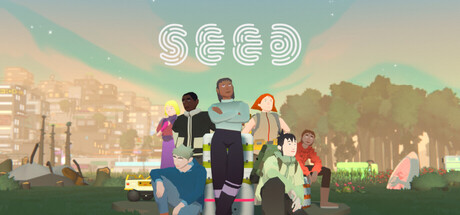
- Seedling Speech Bubbles: AI-generated dialogue for Seedlings to enhance their interactions.
- Seedling Thought Bubbles: AI-generated internal thoughts to give Seedlings more personality and depth.
- Seedling Responses: AI-driven replies to messages that players send to their Seedlings.
Generative AI is initially used in the localization, but later replaced with human-translated text in the main release version. Additional languages only available in the optional "testing" beta branch contains AI-translated text that is not yet replaced.
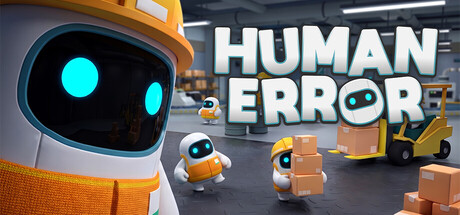
Human Error utilizes cloud based generative AI to power the dialogue and interrogation systems of its robotic characters. During the Debrief Session, an integrated model generates text responses based on your performance metrics in the preceding tasks. This technology is used to create dynamic, unscripted confrontations where the machines analyze your behavior and react to your input in real time.
The game generates text-based dialogue during the social deduction phase. This content is created in real time using your performance data (movement patterns, task efficiency, and error logs). This process requires an active internet connection to communicate with our cloud hosted AI systems. We have implemented guardrails to ensure the AI remains within the thematic boundaries of the game.
To maintain high quality interactions and manage operational costs, gameplay is limited to 25 games per day per user. This ensures that our cloud-based AI systems remain available and responsive for all players.
Mystic Grove uses generative AI in a limited supporting role for certain pre-rendered content, including music and some 2D visual assets such as skill images, spec node images, and related artwork. The core game itself — including gameplay systems, programming, combat, level design, map creation, and overall development — is solely created by the developer. Mystic Grove does not use live-generated AI content during gameplay.
AI assisted with raw audio foundations, but humans manually rearranged and mastered every sound. Nothing went straight from the algorithm to your headphones.
Generative AI tools were used in the creation of player-facing audio and visual assets in this game. This includes AI-assisted music generation and AI-assisted image/animation processing used for in-game materials. The game does not generate content live during play.
Some visual assets in the game and store page were created using generative AI and then edited and integrated by the developer. No real-time AI generation is used during gameplay.
Live Through Time utilizes the Gemini 2.5 Flash AI model to act as a dynamic, interactive historian. All narrative text, NPC dialogue, character biographies, and world events are generated live in real-time based entirely on player input. The game contains no pre-written scripts; instead, the AI calculates the historical causality of your actions to create a completely unique, unscripted roleplaying experience.
This game uses generative AI (Large Language Models) as its core engine. Every NPC independently makes decisions, engages in dialogue, forms relationships, and creates emergent stories powered by LLM. AI generates text narratives including NPC thoughts, actions, dialogue, combat scenes, and story events in real time during gameplay. Players must provide their own API key to connect to an LLM service of their choice. No AI content is pre-generated or stored by the developer.
I am a software engineer with over 20 years of professional experience in fields from robotics to AI (writing actual neural networks, not typing prompts) to healthcare. I used some generated content for scaffolding of UI/UX, as well as music and some background VFX, but I am responsible for and able to understand and modify every line of code. The game itself is built on a program I wrote by hand several months ago from time of release.
This game feature a fictional AI entity, and developer of this game uses AI voice acting for this AI entity, although final sound files are heavily edited by the developer for better result.
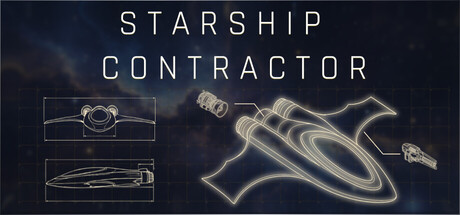
Generative AI was used strictly as a technical tool to digitize original, hand-drawn pencil sketches. Each asset in the game reflects the developer’s physical drawings 1:1, with AI only assisting in the translation of paper lines into a clean digital format. No additional details or artistic elements were generated by the AI. All final styling, including the 'blueprint' aesthetic, was performed manually by the developer in graphic design software
AI is used for Code-Debugging and graphic creation. Final graphics are modified versions. This only applies to parts of code blocks and graphics. More then 90% are self-made and handcrafted.
This game is independently developed by a single creator. To achieve the desired artistic style, AI was used to assist in the creation process, with a small portion of materials being purely hand-drawn. All content has been modified and integrated by the developer to ensure accuracy in expression.
Some in-game artwork and music were created with the assistance of generative AI tools and then curated/edited by the developer. No AI content is generated at runtime.
This game uses generative AI to assist in creating narrative text and investigative scenarios. All generated content is reviewed and curated by the developer.
For the prototype I've generated story-pixel art. It will be changed for professional graphics designer in the final game version. I'm solo dev, at this stage I can't afford to hire full-time artist. The rest of the game graphics is either BOUGHT or pixel-drawn by myself. Hope you understand. Thanks.
Some pre-rendered artwork and narrative content for this game were created with the assistance of generative artificial intelligence during development. All content is curated and finalized by the developer, and no AI systems are used during gameplay.
See the description for an extended discussion about the tools used to produce this game.
AI use in this game includes Claude and Claude Code for assisting with implementing complex systems and bug fixing. The codex's image-examination assets are pre-rendered during development: in-game screenshots are composited via ChatGPT and then some are stylistically processed by a model running locally on my laptop. I experimented a bit with Adobe Podcast to make recordings on my not-very-good mic sound a little better but I wasn't so impressed with the results so I don't think much of this made it in. Most sound effects were found in online libraries but in some cases they were generated using ElevenLabs and other sound generation models when suitable alternatives could not be found. Some 3D models and textures were created using Meshy. Text was checked for spelling and grammar with Grammarly and Claude.
The game utilized AI for some creative brainstorming during the concept design and demo phases, and AI was also employed for initial creation in certain auxiliary systems such as icons, animations, and special effects.
Some in-game visual assets and code snippets were developed with the assistance of generative AI tools. These pre-generated elements were used to enhance the visual quality and technical foundation of the game.
Pre-Generated Content】:
The majority of assets in this game were created using generative AI technologies:
Artwork: Character sprites, backgrounds, and CG illustrations were generated using NovelAI, with manual selection and retouching by the developer.
Music: Background music (BGM) and sound effects were generated using Suno V5.
Voice Acting: All character voices were synthesized using the MiniMax speech model.
Writing & Coding: Script polishing and coding assistance were provided by Gemini. The developer retains full control over all AI-generated content and has ensured that no illegal or infringing material is included.
【Live-Generated Content】:
No / None.
Some assets of the game (including illustrations, music, and certain code elements) were created or assisted using artificial intelligence tools, then manually edited and integrated.
The story, writing, ideas, staging, and the majority of the code were designed and created by the developer.
AI tools were used to support parts of the development process, such as initial image, music, and code drafts. Every element was then hand-crafted, adjusted, and tested to fit the game’s vision. As a solo developer, this made it possible to create a broader and more polished experience.
Generative AI tools were used during development to assist in asset creation. This includes:
Certain art assets (character sprites, backgrounds, UI icons) were generated by AI and manually retouched.
AI assistance was used for writing game code. All AI-generated content has been reviewed to ensure it contains no illegal or infringing material.
As a self taught solo dev, I use ai to learn about new way to create and improve my coding skills. So part of my knowledge comes from ai and while writing code I get a second opinion from ai to know if there are better ways to go about it and better myself.
The single-player framework and associated features for the game were developed by humans, but the multi-player framework and a few general game polish features were developed by AI. Additionally, AI was used to help flush out the description for the store page, since I couldn't be bothered to write another essay - I don't think I ended up using most of it though - so that's kind of a waste *shrug* :/
In RoleMIAster, a local AI acts as your personal Game Master. It creates worlds, characters, quests, and items in real time, interprets your actions, and narrates the consequences dynamically, offering a unique and ever-changing role-playing experience.
Before I get into this, I'd like to say that I am a professional game designer, writer, sprite artist, video animator, music producer, and audio engineer. I worked in the industry for a number of years, and deciding on whether or not to use gen AI was not something I took lightly. I know there are a lot of feelings about this right now, and I understand why a lot of people are hurting, but ultimately, I felt that it enhances the will and talent of the end user. I use programs that claim they are trained on models that own the rights to the content, or are trained on open source materials. This game uses a limited amount of generative AI for content. About 50% of the art assets are generated, then carefully tailored for visual cohesion. Currently, very little animation is done with generative AI, but this could change in the future. The music is 100% human created by Punch Deck. The voiceover is 100% generative AI. Depending on funding, this could change in the future.
In order to better reflect the identity of our game and obtain easier outputs, we use artificial intelligence to produce content such as capsule images, small logos, and simple text found on our game's store page.
I use AI in this project for generation of some static art assets such as title screens, UI elements, Steam store assets, item images in inventory, and the large world map.
AI is NOT used for generating the engine-rendered gameplay, with exception of an image of an item dropped to the ground.
All environment tiles, objects and decorations, as well as animated entities (humans, monsters, etc) are generated by human artists.
This is a very demanding project; should I get more money and access to artists, ideally I would replace all AI assets. Ideally...
Some graphical assets are generated using AI as templates. These are then proccesses manually in a custom made animation software or edited in image editing software.
Currently, we use AI to modify some of the character voices featured in the game. Additionally, we are planning to introduce several features that leverage Generative, including:
- Seedling Speech Bubbles: AI-generated dialogue for Seedlings to enhance their interactions.
- Seedling Thought Bubbles: AI-generated internal thoughts to give Seedlings more personality and depth.
- Seedling Responses: AI-driven replies to messages that players send to their Seedlings.
Generative AI is initially used in the localization, but later replaced with human-translated text in the main release version. Additional languages only available in the optional "testing" beta branch contains AI-translated text that is not yet replaced.
Human Error utilizes cloud based generative AI to power the dialogue and interrogation systems of its robotic characters. During the Debrief Session, an integrated model generates text responses based on your performance metrics in the preceding tasks. This technology is used to create dynamic, unscripted confrontations where the machines analyze your behavior and react to your input in real time.
The game generates text-based dialogue during the social deduction phase. This content is created in real time using your performance data (movement patterns, task efficiency, and error logs). This process requires an active internet connection to communicate with our cloud hosted AI systems. We have implemented guardrails to ensure the AI remains within the thematic boundaries of the game.
To maintain high quality interactions and manage operational costs, gameplay is limited to 25 games per day per user. This ensures that our cloud-based AI systems remain available and responsive for all players.
Mystic Grove uses generative AI in a limited supporting role for certain pre-rendered content, including music and some 2D visual assets such as skill images, spec node images, and related artwork. The core game itself — including gameplay systems, programming, combat, level design, map creation, and overall development — is solely created by the developer. Mystic Grove does not use live-generated AI content during gameplay.
AI assisted with raw audio foundations, but humans manually rearranged and mastered every sound. Nothing went straight from the algorithm to your headphones.
Generative AI tools were used in the creation of player-facing audio and visual assets in this game. This includes AI-assisted music generation and AI-assisted image/animation processing used for in-game materials. The game does not generate content live during play.
Some visual assets in the game and store page were created using generative AI and then edited and integrated by the developer. No real-time AI generation is used during gameplay.
Live Through Time utilizes the Gemini 2.5 Flash AI model to act as a dynamic, interactive historian. All narrative text, NPC dialogue, character biographies, and world events are generated live in real-time based entirely on player input. The game contains no pre-written scripts; instead, the AI calculates the historical causality of your actions to create a completely unique, unscripted roleplaying experience.
This game uses generative AI (Large Language Models) as its core engine. Every NPC independently makes decisions, engages in dialogue, forms relationships, and creates emergent stories powered by LLM. AI generates text narratives including NPC thoughts, actions, dialogue, combat scenes, and story events in real time during gameplay. Players must provide their own API key to connect to an LLM service of their choice. No AI content is pre-generated or stored by the developer.
I am a software engineer with over 20 years of professional experience in fields from robotics to AI (writing actual neural networks, not typing prompts) to healthcare. I used some generated content for scaffolding of UI/UX, as well as music and some background VFX, but I am responsible for and able to understand and modify every line of code. The game itself is built on a program I wrote by hand several months ago from time of release.
This game feature a fictional AI entity, and developer of this game uses AI voice acting for this AI entity, although final sound files are heavily edited by the developer for better result.
Generative AI was used strictly as a technical tool to digitize original, hand-drawn pencil sketches. Each asset in the game reflects the developer’s physical drawings 1:1, with AI only assisting in the translation of paper lines into a clean digital format. No additional details or artistic elements were generated by the AI. All final styling, including the 'blueprint' aesthetic, was performed manually by the developer in graphic design software
AI is used for Code-Debugging and graphic creation. Final graphics are modified versions. This only applies to parts of code blocks and graphics. More then 90% are self-made and handcrafted.
This game is independently developed by a single creator. To achieve the desired artistic style, AI was used to assist in the creation process, with a small portion of materials being purely hand-drawn. All content has been modified and integrated by the developer to ensure accuracy in expression.
Some in-game artwork and music were created with the assistance of generative AI tools and then curated/edited by the developer. No AI content is generated at runtime.
This game uses generative AI to assist in creating narrative text and investigative scenarios. All generated content is reviewed and curated by the developer.
For the prototype I've generated story-pixel art. It will be changed for professional graphics designer in the final game version. I'm solo dev, at this stage I can't afford to hire full-time artist. The rest of the game graphics is either BOUGHT or pixel-drawn by myself. Hope you understand. Thanks.
Some pre-rendered artwork and narrative content for this game were created with the assistance of generative artificial intelligence during development. All content is curated and finalized by the developer, and no AI systems are used during gameplay.
See the description for an extended discussion about the tools used to produce this game.
AI use in this game includes Claude and Claude Code for assisting with implementing complex systems and bug fixing. The codex's image-examination assets are pre-rendered during development: in-game screenshots are composited via ChatGPT and then some are stylistically processed by a model running locally on my laptop. I experimented a bit with Adobe Podcast to make recordings on my not-very-good mic sound a little better but I wasn't so impressed with the results so I don't think much of this made it in. Most sound effects were found in online libraries but in some cases they were generated using ElevenLabs and other sound generation models when suitable alternatives could not be found. Some 3D models and textures were created using Meshy. Text was checked for spelling and grammar with Grammarly and Claude.
The game utilized AI for some creative brainstorming during the concept design and demo phases, and AI was also employed for initial creation in certain auxiliary systems such as icons, animations, and special effects.
Some in-game visual assets and code snippets were developed with the assistance of generative AI tools. These pre-generated elements were used to enhance the visual quality and technical foundation of the game.
Pre-Generated Content】:
The majority of assets in this game were created using generative AI technologies:
Artwork: Character sprites, backgrounds, and CG illustrations were generated using NovelAI, with manual selection and retouching by the developer.
Music: Background music (BGM) and sound effects were generated using Suno V5.
Voice Acting: All character voices were synthesized using the MiniMax speech model.
Writing & Coding: Script polishing and coding assistance were provided by Gemini. The developer retains full control over all AI-generated content and has ensured that no illegal or infringing material is included.
【Live-Generated Content】:
No / None.
Some assets of the game (including illustrations, music, and certain code elements) were created or assisted using artificial intelligence tools, then manually edited and integrated.
The story, writing, ideas, staging, and the majority of the code were designed and created by the developer.
AI tools were used to support parts of the development process, such as initial image, music, and code drafts. Every element was then hand-crafted, adjusted, and tested to fit the game’s vision. As a solo developer, this made it possible to create a broader and more polished experience.
Generative AI tools were used during development to assist in asset creation. This includes:
Certain art assets (character sprites, backgrounds, UI icons) were generated by AI and manually retouched.
AI assistance was used for writing game code. All AI-generated content has been reviewed to ensure it contains no illegal or infringing material.
As a self taught solo dev, I use ai to learn about new way to create and improve my coding skills. So part of my knowledge comes from ai and while writing code I get a second opinion from ai to know if there are better ways to go about it and better myself.
The single-player framework and associated features for the game were developed by humans, but the multi-player framework and a few general game polish features were developed by AI. Additionally, AI was used to help flush out the description for the store page, since I couldn't be bothered to write another essay - I don't think I ended up using most of it though - so that's kind of a waste *shrug* :/
In RoleMIAster, a local AI acts as your personal Game Master. It creates worlds, characters, quests, and items in real time, interprets your actions, and narrates the consequences dynamically, offering a unique and ever-changing role-playing experience.
Before I get into this, I'd like to say that I am a professional game designer, writer, sprite artist, video animator, music producer, and audio engineer. I worked in the industry for a number of years, and deciding on whether or not to use gen AI was not something I took lightly. I know there are a lot of feelings about this right now, and I understand why a lot of people are hurting, but ultimately, I felt that it enhances the will and talent of the end user. I use programs that claim they are trained on models that own the rights to the content, or are trained on open source materials. This game uses a limited amount of generative AI for content. About 50% of the art assets are generated, then carefully tailored for visual cohesion. Currently, very little animation is done with generative AI, but this could change in the future. The music is 100% human created by Punch Deck. The voiceover is 100% generative AI. Depending on funding, this could change in the future.