Public Steam disclosure research25,380 disclosures tracked
Where do games disclose AI use?
Search developers’ Steam disclosures, compare classified AI use across
games, and follow recorded changes.
This index adds cross-game classifications and statistics to
statements published on individual store pages.
Groups reflect automatic analysis of public disclosures; mature records are excluded. These counts do not measure AI use across all of Steam.
Missing or unclear statements cannot establish whether a game uses AI.
AI-assisted tools were used in the creation of some background images included in the game.
AI-assisted translation was also used for the English and Korean localization. The translated text was reviewed and adjusted during development.
There is no content generated by AI in real time during gameplay.
All code in this game is generated with AI assistance. The game’s visuals and music also involve AI-aided processes, including image adjustments and extension of music segments. The gameplay concepts and skill/item designs are partially inspired by AI, with some skill and item names originating from AI-generated ideas.
I used AI tools (such as ChatGPT) to assist in writing scripts and optimizing the game code, which helped bridge the technical gap as an individual developer. Additionally, AI was used for English translation and proofreading to ensure a natural and high-quality narrative for global players.
AI used for artwork and logo that used in Steam page. In-game, placeholder narrative dialogue sounds are AI generated and will be replaced further in development.
Generative AI was used for base sprites and code. All assets were manually edited and adapted to match the game's aesthetic and ensure originality. Content is static and pre-rendered.
AI was used to generate the initial rough 3D base for the characters in the game. All further work, including detailing, texturing, and custom animations, was done completely by hand.
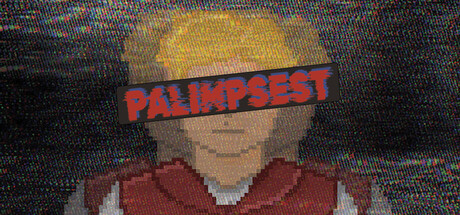
Palimpsest features two visual styles: pixel art and realism point-and-click scenes. Some point-and-click assets are created using a combination of generative AI and Photoshop, contributing to the game’s intentionally unsettling visual tone.
Some visual and audio assets in the game were created or assisted using AI tools during development. These assets were further refined and integrated by the developer to ensure consistency and quality.
AI was used to expand store assets to the correct dimensions. All game content including environments, textures, narrative, and audio was created WITHOUT generative AI.
Generative AI tools were used to assist in the conceptual design of the game's logo, as well as for translating and polishing in-game text and store page descriptions into multiple languages. All core visual assets, including the pixel art, character designs, and cover illustrations, are strictly and entirely hand-crafted by the human developer.
Generative AI tools were used during the development of this game to assist in the localization of in-game text and store page descriptions into multiple languages. All AI-assisted content has been thoroughly reviewed and curated by the developer to ensure it meets the creative vision and quality standards of the project.
This game uses AI-generated audio for select in-game dialogue, designed to achieve a synthetic, machine-like sound aesthetic. Certain in-game artwork, including hint posters and environmental paintings, was also created with AI generation tools.
Textures for billboards are made with AI to showoff the "AI car company" The AI art is easily noticable and intentional
Text to Speech software is used for the AI cars commands. this can be toggled off ingame
LLM is used in the steampage description, THOUGH it has not written a single word of the description, it was just used to find proper words and sentences to make it look like it was written by the AI bot of the car.
Game descriptions, text translations, and some images (excluding textures) are made with the assistance of artificial intelligence, while all other in-game resources are handmade
AI-assisted tools were used in the creation of some background images included in the game.
AI-assisted translation was also used for the English and Korean localization. The translated text was reviewed and adjusted during development.
There is no content generated by AI in real time during gameplay.
All code in this game is generated with AI assistance. The game’s visuals and music also involve AI-aided processes, including image adjustments and extension of music segments. The gameplay concepts and skill/item designs are partially inspired by AI, with some skill and item names originating from AI-generated ideas.
I used AI tools (such as ChatGPT) to assist in writing scripts and optimizing the game code, which helped bridge the technical gap as an individual developer. Additionally, AI was used for English translation and proofreading to ensure a natural and high-quality narrative for global players.
AI used for artwork and logo that used in Steam page. In-game, placeholder narrative dialogue sounds are AI generated and will be replaced further in development.
Generative AI was used for base sprites and code. All assets were manually edited and adapted to match the game's aesthetic and ensure originality. Content is static and pre-rendered.
AI was used to generate the initial rough 3D base for the characters in the game. All further work, including detailing, texturing, and custom animations, was done completely by hand.
Palimpsest features two visual styles: pixel art and realism point-and-click scenes. Some point-and-click assets are created using a combination of generative AI and Photoshop, contributing to the game’s intentionally unsettling visual tone.
Some visual and audio assets in the game were created or assisted using AI tools during development. These assets were further refined and integrated by the developer to ensure consistency and quality.
AI was used to expand store assets to the correct dimensions. All game content including environments, textures, narrative, and audio was created WITHOUT generative AI.
Generative AI tools were used to assist in the conceptual design of the game's logo, as well as for translating and polishing in-game text and store page descriptions into multiple languages. All core visual assets, including the pixel art, character designs, and cover illustrations, are strictly and entirely hand-crafted by the human developer.
Generative AI tools were used during the development of this game to assist in the localization of in-game text and store page descriptions into multiple languages. All AI-assisted content has been thoroughly reviewed and curated by the developer to ensure it meets the creative vision and quality standards of the project.
This game uses AI-generated audio for select in-game dialogue, designed to achieve a synthetic, machine-like sound aesthetic. Certain in-game artwork, including hint posters and environmental paintings, was also created with AI generation tools.
Textures for billboards are made with AI to showoff the "AI car company" The AI art is easily noticable and intentional
Text to Speech software is used for the AI cars commands. this can be toggled off ingame
LLM is used in the steampage description, THOUGH it has not written a single word of the description, it was just used to find proper words and sentences to make it look like it was written by the AI bot of the car.
Game descriptions, text translations, and some images (excluding textures) are made with the assistance of artificial intelligence, while all other in-game resources are handmade