Public Steam disclosure research25,519 disclosures tracked
Where do games disclose AI use?
Search developers’ Steam disclosures, compare classified AI use across
games, and follow recorded changes.
This index adds cross-game classifications and statistics to
statements published on individual store pages.
Groups reflect automatic analysis of public disclosures; mature records are excluded. These counts do not measure AI use across all of Steam.
Missing or unclear statements cannot establish whether a game uses AI.
Generative AI was used during development to assist in creating some pre-generated visual assets, character artwork, backgrounds, and promotional images. All AI-assisted content was reviewed and selected by the developer before inclusion in the game. No generative AI is used during gameplay, and the game does not connect to any external AI service.
Generative AI tools were used during development to assist with portions of the game’s interface and narrative text, programming, procedurally constructed 2D visual elements, and marketing materials. All included content was reviewed, edited, and integrated by the developer. Tide & Crown does not generate AI content during gameplay and does not connect to external AI services.
Generative AI was used during development to assist with visual ideation and to create selected pre-generated store-page and marketing materials, including supporting textures and interface concept imagery. These materials were reviewed and edited by the developer. The game does not generate content or code during gameplay, and it does not connect to an external AI service.
Generative AI was used solely to assist with translation, localization, and language editing of written text. This includes localization of Steam store-page descriptions and translation or language correction of in-game text, primarily from Portuguese into English. No AI-generated artwork, audio, gameplay content, or live-generated AI content is included in the game.
Generative AI was used to assist in creating all pre-rendered artwork, including environment backgrounds, menu and branding art, icons, and promotional/title-card images. These assets were reviewed and integrated by the developer. No content is generated during gameplay, and the game does not connect to external AI services.
Some 2D art assets and pre-rendered cinematic videos in this game were created with the help of generative AI tools, and were then manually reviewed, edited and retouched by the developer. Generative AI tools were also used to assist during development. The game does not generate any AI content at runtime.
AI-assisted generation of small code snippets and early visual concepts. All content has been manually reviewed and optimized. Real-time AI generation is not involved; it is entirely locally packaged and does not rely on external APIs.
The bartender's side of every conversation is generated live, while you play, by a language model that ships inside the game and runs on your own computer. Nothing you type or say is sent anywhere. There is no account, no server, and no internet connection required — the game works with the network unplugged. When the character speaks her lines aloud, that audio is synthesised locally by the same install.
Everything else in the game is authored by hand: the world and its writing, the cast of regulars, the drink recipes, the art, and the rules the bartender plays by.
Because her dialogue is generated rather than scripted, it cannot be listed in advance. The controls on it are: a fixed authored prompt that defines the character, the setting, and what she will and will not do; a filtered generation pipeline; and a specific model chosen and regression-tested against an automated suite of behavioural checks before it ships. Anything the character has remembered about you can be viewed and permanently deleted from inside the game at any time.
We use AI to aid the team with coding and refactoring more quickly, texturing assets and background faster, and creating highly detailed cinematics. We have both original and AI generated music & sound effects.
We DO NOT use AI for our story, narratives, dialog, 3D models, or character animations.
AI generation was used in the concept art for the game that is currently on display with the game screenshots. We are currently working on making the real art for the game, but wanted to provide the artstyle that we are aiming towards. The game itself, including in-game current and future art, is human made.
Generative AI is utilized as support in the game's development, employed for concept creation, texture upscaling, and the design of icons and visual elements.
The code, the in-game text and its translations into six languages were written with the help of an AI assistant, then reviewed and edited by the developer.
No images or audio were AI-generated: all artwork is built from licensed photography, a licensed typeface and licensed icons, and all sound comes from a licensed royalty-free library. Full credits are in the game.
Nothing is generated while you play — the game makes no network requests at all.
Generative AI tools helped create and refine some concept art, and marketing images for this game. The game does not generate new AI content while you play.
Visual assets in this game — symbol icons, charm icons, user interface elements, machine and objective icons, and store artwork — were created with generative AI tools and then selected, edited, sized and integrated by hand. Game code was written with AI assistance under human direction. Design, balancing decisions and final text are authored by the developer.
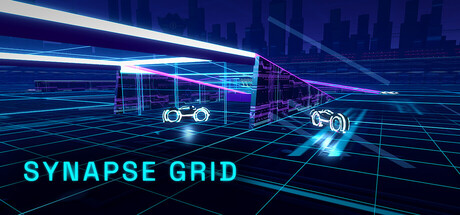
Some of the art, music, voice-over and cinematic clips in Synapse Grid were produced with generative AI tools during development, then edited, curated and directed for release. Nothing is generated while you play.
The tools used, and what each produced:
Google Gemini - concept art and texture reference
ACE-Step - original music tracks
MiniMax-Music3 - original music tiles
IndexTTS - cast voice-over
MiniMax H3 (via ComfyUI) - tutorial and transmission video clips
All of this content was generated for this project. No third party's personal media, voice or likeness is used. The same list is shown in the game's own credits screen.
Separately, the opponent riders use a neural network trained by self-play. That system decides how a bike steers; it does not generate any art, audio or text that you see or hear.
Parts this game's visual assets — including concept art, textures, and character portraits — were pre-rendered with generative AI tools during development, then reviewed and hand-integrated by the developer. Store and marketing images were produced the same way. No content is generated by in real time while you play.
Some music and visual artwork included in the game were created or enhanced using generative AI-assisted tools. AI-assisted coding tools were also used during development to help write and refine portions of the game’s code. Every AI-assisted element was reviewed, edited, selected, integrated, and tested by the developer before inclusion. No AI content is generated during gameplay, and the game does not connect to external AI services. All AI-assisted content included with the game is fixed and pre-generated.
AI tools were used during development solely to assist with coding, including identifying and fixing bugs and making minor code corrections and improvements. AI does not generate any content for players during gameplay.
Generative AI tools were used during development to assist with drafts and revisions of some pre-generated in-game text, interface copy, localization, and store and library artwork. All resulting content is selected, edited, and reviewed by the developer before shipping. The game does not generate content with AI at runtime.
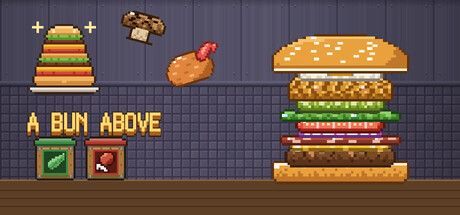
This game was developed with AI coding agents (Anthropic Claude / OpenAI Codex). All in-game pixel art (ingredients, relics, character faces, UI) is rendered by drawing code and pixel-placement scripts written by these agents; no diffusion/image-generation model output is included. Music and SFX are procedurally generated at runtime from AI-assisted code. In-game text, store page copy, and translations into 10 languages were produced with AI assistance and reviewed by the developer. Trailer scripts and captions were also AI-assisted. All content has been reviewed by the developer.
Generative AI was used in the creation of visual assets for this game, including characters, backgrounds, and stage maps.
AI-assisted coding tools were also used during the development of the game.
The game does not use generative AI to create content in real time during gameplay.
Generative AI tools assisted with portions of the game’s code and written material, and with the creation of pre-generated promotional key art and derivative marketing graphics. All final content was selected, edited, tested, and reviewed by the developer. Gameplay screenshots and trailers show the actual game.
Customer voice lines were pre-generated with edge-tts (neural TTS) and shipped in the build (assets/voice/).
If store capsules or marketing art also used generative AI, that still counts as “Yes.” If you later replace all VO with human recordings and ship no AI-generated assets, change the answer to “No.”
Generative AI tools were used during development to assist with creating some texture images, promotional/banner images, and code development. AI was also used to help review, test, and debug code, identify potential issues, and suggest improvements. All generated or AI-assisted content was reviewed, selected, and integrated by the developer.
This game uses generative AI in a limited capacity on the game server in real time. The AI is used solely to generate narrative text: mission names and descriptions, in-world news broadcasts, and some NPC dialogue. All game logic — including mission mechanics, rewards, and balance — is governed by deterministic code and is never decided by AI. If the AI service is unavailable, the game automatically falls back to pre-written text templates.
Portions of imagery were produced with the assistance of generative AI.
Some assets in this game were created with the help of generative AI. Generative AI was used to produce background art, background music, sound effects, and in-game icons.
Metlivi Adventure uses generative AI to create certain in-game content, including narrative text, visual elements, and, where applicable, music. AI-generated content is used to support dynamic, player-driven adventures.
Some of the textures and images in this game were created with the help of generative AI tools, and AI tools also assisted with the game's localization and store page text. All of this content was reviewed and edited by the developer before release.
Developed and tested under human creative direction with generative AI assistance for game code, audio and promo materials. Some skin patterns for customization of character and ball were AI generated. Maps, 3D assets and animations were bought from artists. The game does not use live-generated AI during gameplay.
This game uses generative AI tools to assist in creating early drafts of some artwork and text during development. All AI-generated content is pre-rendered and has been reviewed, edited, and polished by hand before being included in the game. No content is generated live at runtime.
Lumi uses generative AI to create dynamic conversations and spoken responses in real time. AI inference, speech recognition and speech synthesis run locally on the player's PC. AI model files are downloaded during setup, but player conversations and generated responses are not sent to an external AI service. Available capabilities may vary depending on the locally selected model.
Every voice you hear in Dub Night Live is a real person. Nothing in the game is AI-generated: no AI voices, no AI art, no AI judging (scoring is player votes).
The clip editor uses two open-source machine-learning tools that run locally on your PC: one separates a clip's original voices from its music and effects, and one drafts line timings for you to review and fix. They process your own video files, never send anything to an external service, and never create content.
During development, AI was used as a coding assistant only.
This game includes AI-assisted, human-curated and edited artwork (tile art, actor sprites, and other visual assets). All AI-generated art was reviewed, edited, and approved by the developer before being included. An LLM was used to co-author most code changes. An LLM was used to proof and ideate some of the dialog in the game. All dialog was curated and approved by a human.
Generative AI tools were used during development to assist with the creation and refinement of certain pre-generated 2D visual assets, including environment artwork, character sprites, and store marketing images. All AI-assisted content was reviewed and edited by the developer before inclusion. No AI-generated content is created during gameplay, and the game does not connect to any external AI service.
Generative AI was used during development to assist in creating some pre-generated visual assets, character artwork, backgrounds, and promotional images. All AI-assisted content was reviewed and selected by the developer before inclusion in the game. No generative AI is used during gameplay, and the game does not connect to any external AI service.
Generative AI tools were used during development to assist with portions of the game’s interface and narrative text, programming, procedurally constructed 2D visual elements, and marketing materials. All included content was reviewed, edited, and integrated by the developer. Tide & Crown does not generate AI content during gameplay and does not connect to external AI services.
Generative AI was used during development to assist with visual ideation and to create selected pre-generated store-page and marketing materials, including supporting textures and interface concept imagery. These materials were reviewed and edited by the developer. The game does not generate content or code during gameplay, and it does not connect to an external AI service.
Generative AI was used solely to assist with translation, localization, and language editing of written text. This includes localization of Steam store-page descriptions and translation or language correction of in-game text, primarily from Portuguese into English. No AI-generated artwork, audio, gameplay content, or live-generated AI content is included in the game.
Generative AI was used to assist in creating all pre-rendered artwork, including environment backgrounds, menu and branding art, icons, and promotional/title-card images. These assets were reviewed and integrated by the developer. No content is generated during gameplay, and the game does not connect to external AI services.
Some 2D art assets and pre-rendered cinematic videos in this game were created with the help of generative AI tools, and were then manually reviewed, edited and retouched by the developer. Generative AI tools were also used to assist during development. The game does not generate any AI content at runtime.
AI-assisted generation of small code snippets and early visual concepts. All content has been manually reviewed and optimized. Real-time AI generation is not involved; it is entirely locally packaged and does not rely on external APIs.
The bartender's side of every conversation is generated live, while you play, by a language model that ships inside the game and runs on your own computer. Nothing you type or say is sent anywhere. There is no account, no server, and no internet connection required — the game works with the network unplugged. When the character speaks her lines aloud, that audio is synthesised locally by the same install.
Everything else in the game is authored by hand: the world and its writing, the cast of regulars, the drink recipes, the art, and the rules the bartender plays by.
Because her dialogue is generated rather than scripted, it cannot be listed in advance. The controls on it are: a fixed authored prompt that defines the character, the setting, and what she will and will not do; a filtered generation pipeline; and a specific model chosen and regression-tested against an automated suite of behavioural checks before it ships. Anything the character has remembered about you can be viewed and permanently deleted from inside the game at any time.
We use AI to aid the team with coding and refactoring more quickly, texturing assets and background faster, and creating highly detailed cinematics. We have both original and AI generated music & sound effects.
We DO NOT use AI for our story, narratives, dialog, 3D models, or character animations.
AI generation was used in the concept art for the game that is currently on display with the game screenshots. We are currently working on making the real art for the game, but wanted to provide the artstyle that we are aiming towards. The game itself, including in-game current and future art, is human made.
Generative AI is utilized as support in the game's development, employed for concept creation, texture upscaling, and the design of icons and visual elements.
The code, the in-game text and its translations into six languages were written with the help of an AI assistant, then reviewed and edited by the developer.
No images or audio were AI-generated: all artwork is built from licensed photography, a licensed typeface and licensed icons, and all sound comes from a licensed royalty-free library. Full credits are in the game.
Nothing is generated while you play — the game makes no network requests at all.
Generative AI tools helped create and refine some concept art, and marketing images for this game. The game does not generate new AI content while you play.
Visual assets in this game — symbol icons, charm icons, user interface elements, machine and objective icons, and store artwork — were created with generative AI tools and then selected, edited, sized and integrated by hand. Game code was written with AI assistance under human direction. Design, balancing decisions and final text are authored by the developer.
Some of the art, music, voice-over and cinematic clips in Synapse Grid were produced with generative AI tools during development, then edited, curated and directed for release. Nothing is generated while you play.
The tools used, and what each produced:
Google Gemini - concept art and texture reference
ACE-Step - original music tracks
MiniMax-Music3 - original music tiles
IndexTTS - cast voice-over
MiniMax H3 (via ComfyUI) - tutorial and transmission video clips
All of this content was generated for this project. No third party's personal media, voice or likeness is used. The same list is shown in the game's own credits screen.
Separately, the opponent riders use a neural network trained by self-play. That system decides how a bike steers; it does not generate any art, audio or text that you see or hear.
Parts this game's visual assets — including concept art, textures, and character portraits — were pre-rendered with generative AI tools during development, then reviewed and hand-integrated by the developer. Store and marketing images were produced the same way. No content is generated by in real time while you play.
Some music and visual artwork included in the game were created or enhanced using generative AI-assisted tools. AI-assisted coding tools were also used during development to help write and refine portions of the game’s code. Every AI-assisted element was reviewed, edited, selected, integrated, and tested by the developer before inclusion. No AI content is generated during gameplay, and the game does not connect to external AI services. All AI-assisted content included with the game is fixed and pre-generated.
AI tools were used during development solely to assist with coding, including identifying and fixing bugs and making minor code corrections and improvements. AI does not generate any content for players during gameplay.
Generative AI tools were used during development to assist with drafts and revisions of some pre-generated in-game text, interface copy, localization, and store and library artwork. All resulting content is selected, edited, and reviewed by the developer before shipping. The game does not generate content with AI at runtime.
This game was developed with AI coding agents (Anthropic Claude / OpenAI Codex). All in-game pixel art (ingredients, relics, character faces, UI) is rendered by drawing code and pixel-placement scripts written by these agents; no diffusion/image-generation model output is included. Music and SFX are procedurally generated at runtime from AI-assisted code. In-game text, store page copy, and translations into 10 languages were produced with AI assistance and reviewed by the developer. Trailer scripts and captions were also AI-assisted. All content has been reviewed by the developer.
Generative AI was used in the creation of visual assets for this game, including characters, backgrounds, and stage maps.
AI-assisted coding tools were also used during the development of the game.
The game does not use generative AI to create content in real time during gameplay.
Generative AI tools assisted with portions of the game’s code and written material, and with the creation of pre-generated promotional key art and derivative marketing graphics. All final content was selected, edited, tested, and reviewed by the developer. Gameplay screenshots and trailers show the actual game.
Customer voice lines were pre-generated with edge-tts (neural TTS) and shipped in the build (assets/voice/).
If store capsules or marketing art also used generative AI, that still counts as “Yes.” If you later replace all VO with human recordings and ship no AI-generated assets, change the answer to “No.”
Generative AI tools were used during development to assist with creating some texture images, promotional/banner images, and code development. AI was also used to help review, test, and debug code, identify potential issues, and suggest improvements. All generated or AI-assisted content was reviewed, selected, and integrated by the developer.
This game uses generative AI in a limited capacity on the game server in real time. The AI is used solely to generate narrative text: mission names and descriptions, in-world news broadcasts, and some NPC dialogue. All game logic — including mission mechanics, rewards, and balance — is governed by deterministic code and is never decided by AI. If the AI service is unavailable, the game automatically falls back to pre-written text templates.
Portions of imagery were produced with the assistance of generative AI.
Some assets in this game were created with the help of generative AI. Generative AI was used to produce background art, background music, sound effects, and in-game icons.
Metlivi Adventure uses generative AI to create certain in-game content, including narrative text, visual elements, and, where applicable, music. AI-generated content is used to support dynamic, player-driven adventures.
Some of the textures and images in this game were created with the help of generative AI tools, and AI tools also assisted with the game's localization and store page text. All of this content was reviewed and edited by the developer before release.
Developed and tested under human creative direction with generative AI assistance for game code, audio and promo materials. Some skin patterns for customization of character and ball were AI generated. Maps, 3D assets and animations were bought from artists. The game does not use live-generated AI during gameplay.
This game uses generative AI tools to assist in creating early drafts of some artwork and text during development. All AI-generated content is pre-rendered and has been reviewed, edited, and polished by hand before being included in the game. No content is generated live at runtime.
Lumi uses generative AI to create dynamic conversations and spoken responses in real time. AI inference, speech recognition and speech synthesis run locally on the player's PC. AI model files are downloaded during setup, but player conversations and generated responses are not sent to an external AI service. Available capabilities may vary depending on the locally selected model.
Every voice you hear in Dub Night Live is a real person. Nothing in the game is AI-generated: no AI voices, no AI art, no AI judging (scoring is player votes).
The clip editor uses two open-source machine-learning tools that run locally on your PC: one separates a clip's original voices from its music and effects, and one drafts line timings for you to review and fix. They process your own video files, never send anything to an external service, and never create content.
During development, AI was used as a coding assistant only.
This game includes AI-assisted, human-curated and edited artwork (tile art, actor sprites, and other visual assets). All AI-generated art was reviewed, edited, and approved by the developer before being included. An LLM was used to co-author most code changes. An LLM was used to proof and ideate some of the dialog in the game. All dialog was curated and approved by a human.
Generative AI tools were used during development to assist with the creation and refinement of certain pre-generated 2D visual assets, including environment artwork, character sprites, and store marketing images. All AI-assisted content was reviewed and edited by the developer before inclusion. No AI-generated content is created during gameplay, and the game does not connect to any external AI service.