Public Steam disclosure research27,951 disclosures tracked
Where do games disclose AI use?
Search developers’ Steam disclosures, compare classified AI use across
games, and follow recorded changes.
This index adds cross-game classifications and statistics to
statements published on individual store pages.
Groups reflect automatic analysis of public disclosures; mature records are excluded. These counts do not measure AI use across all of Steam.
Missing or unclear statements cannot establish whether a game uses AI.
We have used open source LLMs trained on our game's lore and dialogue to generate quests.
We have used our own private NeRF systems to generate some 3D models.
Some of our marketing materials, game icons, and concept art was generated using art we had designers create under contract for this game. That art was used to train an open source generative system.
A few background concepts were generated with AI that retains respect to artist copyright (Adobe Firefly) but we are still working on reworking these few instances with our art team!
Some object textures are AI generated to apparently look AI generated as a commentary, distorted and non human (dreamtexture plugin for Blender with prompts like "AI looking alien food" and such.
Pictures of faces have been generated with this-person-does-not-exist.com to look like conventionnaly beautiful but generic portraits, again foreshadowing the idea what a person looks like, from an AI, algorithmically driven system.
Due to our team having only one artist and one engineer, using AI assistance during the development process is crucial. This technology saves a significant amount of time and resources, helping us maintain momentum in our development efforts. We primarily apply AI technology during the drafting stage to expedite the design process and improve efficiency. Specifically, we only utilize AI assistance for certain game scenes and objects, with final adjustments made manually to complete the final drafts. As for character illustrations within the game, they are entirely designed and finalized by the artist from start to finish.
Core design elements including units, animations, visual effects and sound effects were all created by real artists. AI tools were used solely for supporting assets like background images, portraits, buttons, and background music. These AI-generated assets were subsequently modified by our team. This approach enabled our three-person team to concentrate on core design and game mechanics.
We have integrated AI technology into our art production workflow. While AI is utilized, we have also used extensive hand drawing, editing, and post-processing in our workflow.
Some UI textures and the musical pieces (except theme song) have been created with the help of generative AI.
Contrary to some beliefs, all 3500 products are modelled and textured from scratch (except a few hundres which is from packs) by hired designers over the course of 3 years.
This game used generative AI for the following elements :
-The backgrounds in the game (generated by Lornn, Two Orcs and lehxra, available online)
-The representation of Hotel Perkkow (Used in the store and library images)
This game and associated materials uses AI generated audio and visual graphics content. All AI generated content is commercially licensed from the industries leading AI generation platforms.
I Had A Plan! uses human-made sprites and assets, but uses AI to transform voices for most (non narrator/GM) characters. These were still recorded by the developer, but then transformed to sound like other people using AI. AI was also used to lip sync those voices.
The New Boss: Football Club utilizes pre-rendered generative AI to enhance the depth and visual variety of its world. This includes:
Character Portraits: Thousands of unique AI-generated faces for players and staff to ensure every 'fake name' in our database has a distinct identity.
Environmental Artwork: AI-assisted imagery used in game menus, background art, and narrative events to create a gritty, atmospheric 5th-league experience.
Marketing Materials: Select store assets, trailers, and promotional videos have been created or enhanced using AI tools to visualize the journey of the 'New Boss.'
All AI content is pre-rendered and integrated into the game files to ensure a high-quality, stable, and consistent experience for all players.
We have sections that use AI:
1. On the character selection page of the game, the character's voiceover is created by AI
2. On the character selection page of the game, the first version of the character's sketch is created by AI.
Illustrations in the game's "event" system are created by AI.
Some music and graphical elements (ie. music that plays during scenes, pictures that display during scenes, etc.) were edited and/or created using AI. These technologies are used sparsely throughout the game, and the entirety of Cryspace's story, characters, UI elements, etc. were not created using any AI technologies.
DeepL has been used as a tool for aiding the translations, AI has been used for image generation (a complete list can be found in-game), a single song is AI-generated song (can you spot it? ;) It has been exclusively added for the Steam release. In a recent update, we also added optional AI-background music for a part of the game.
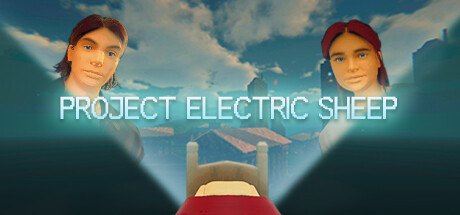
Project Electric Sheep uses generative AI to create character conversations inspired by your dream prompts, as well as to tailor dream worlds to your chosen topics. Below is some more information about which generative AI services we're using in PES, and how:
1. We use ChatGPT to generate NPC dialogue when dream worlds are created and when you reply to an NPC. We use AWS to generate voices for our NPCs.
2. We also use ChatGPT to write in-game world building details, such as graffiti and advertisements, as well as to create the dream description that displays on the dream loading screen.
3. We use DALL·E 2 to paint in-game murals inspired by your dream prompt.
4. Lastly, during the dream generation phase, we use ChatGPT to make creative decisions about world design based on the given dream prompt.
This game uses artificial intelligence (AI) tools to help optimize code and improve development efficiency and runtime performance. Additionally, character voices in the game were recorded by the developer himself. The voice was then synthesised by AI to create different character voices. These technologies enhance the overall quality and experience of the game.
Generative AI was utilized during development to create Steam capsule designs, in-game UI assets, and the trailer music. All assets produced using AI are fully owned and licensed for commercial use by us.
If your ingame choices are inconsistent or raise moral questions, you’ll have to justify them in writing. An AI will read your defense and decide whether it counts as a solution. Convince it — because its verdict carries real consequences in the game.
In-game text has been translated into multiple languages using AI-generated translations. The character representing AI in the game features a voice generated through text-to-speech technology.