Public Steam disclosure research25,380 disclosures tracked
Where do games disclose AI use?
Search developers’ Steam disclosures, compare classified AI use across
games, and follow recorded changes.
This index adds cross-game classifications and statistics to
statements published on individual store pages.
Groups reflect automatic analysis of public disclosures; mature records are excluded. These counts do not measure AI use across all of Steam.
Missing or unclear statements cannot establish whether a game uses AI.
Some 2D character illustrations, backgrounds, and UI elements in this game were created with the help of generative AI tools during development, and then manually edited, refined, and reviewed by the developer.
This game uses generative AI during gameplay to create an original in-game character called a "Logos" for use by that player. Based on text entered or selected by the player, the AI generates a 2D illustration of the Logos in real time, along with its name, flavor text, and similar content. The generated Logos can be added to your deck and used to progress through the game.
The game also includes pre-generated AI content: enemy and event illustrations were created with Adobe Firefly during development. Generation is performed using cloud-based external AI services (Adobe Firefly for image generation, OpenAI for text generation).
The words entered by the player, generation conditions, and the data of the generated Logos are sent to and stored on our server. These records are used to provide the generation feature, review reported results, and investigate errors. A generated Logos is visible only to the player who created it and is not shared with other players.
Some information required for generation is sent from our server to external AI services. Data sent from our server to these services is not used to train or improve their models. Please do not enter any personal information, such as your name or contact details, or any confidential information you would not want third parties to know.
This app uses our in-house AI for the pixel-art conversion process. Generative AI content is used in the trailers and screenshots shown on this store page.
- Character photos and video clips shown in the in-game Stories feed were generated using AI tools (image and video generation), then reviewed, edited, and composited by the developer to fit the game's art direction.
- AI-assisted tools were used in parts of the development process.
AI was used as the main tool to code this game, generate assets, and navigate the release processes.
This is the core model of Shadow Games Software. Leveraging AI to do the busy work to free up creative teams to focus more on design, taste, and producing a quality product.
As the 2nd real project for the studio, Idle Energy, heavily used AI during development.
The development of this game utilizes generative artificial intelligence tools to create some pre-rendered graphic assets, visual interface elements, and sound effects that are part of the arena's atmosphere.
In this work, much of the text is interactively generated by a language generation AI. In addition, language generation AI is used for various judgments on the text entered by players. Furthermore, all the illustrations in this work are created using image generation AI.
The art, music, and writing in this game were created with AI tools during development, directed by the developer through written prompts. The development process is documented publicly, prompt by prompt. The shipped game contains no live or runtime AI generation — the in-game assistant “Aya” is a hand-authored, deterministic simulation, and the game makes no network or model calls during play.
SonderSoft uses generative AI for localization to make Arena Bot Manager accessible to more players worldwide. ABM features an optional AI voice-commentator for arena events that can be disabled as per player preference.
SonderSoft pays artists to participate in the creative process, and some artists may choose on their own to use generative AI as part of their workflow; SonderSoft respects the creative tools artists choose in order to realize their own artistic vision.
Whenever possible, SonderSoft prioritizes paying artists, creators, and actors.
This game was created with the assistance of generative AI during development.
Generative AI tools were used to help produce parts of the game’s art, written content, and soundtrack. All AI-assisted content was selected, refined, and assembled by the developer as part of the final game experience.
My game uses artificial intelligence tools to assist in the creation of certain visual assets, including a number of images and illustrations used in the game's library assets and promotional materials.
EchoMind uses a locally running large language model to generate conversational text responses in real time based on the user’s prompts and local memory/context.
The AI-generated content is limited to text-based conversation and local memory summaries. EchoMind does not generate images, music, voices, sound effects, 3D models, textures, or executable code as part of its normal user experience.
This game uses generative AI to assist with the creation of some visual, audio, text, and localization assets. All AI-assisted content is reviewed and edited by the development team before being included in the game.
This game uses generative artificial intelligence to create dynamic content during gameplay. AI systems may generate political advice, news articles, speeches, social media posts, events, narrative responses, and other text-based content based on player actions and the current game state. AI-generated content is intended to enhance replayability and create unique gameplay experiences. Some store, library, and character artwork was created with the assistance of generative AI image tools.
Command Doctrine uses generative AI to create some of the content you play. When you generate a scenario or a campaign, an AI model produces the map, the opposing forces, the objectives, and the written mission briefing from your prompt. AI is also used to write narrative battle reports, to create the images that accompany them, and to interpret the natural-language orders you give your units. This content is generated live by third-party AI services. We apply content moderation and input filtering to guard against inappropriate or unsafe output.
This game uses AI-assisted tools during development, including assistance with coding and the creation or iteration of some promotional and visual art assets.
During gameplay, AI may be used to help interpret the player’s spoken spell commands and map them to predefined in-game spell actions.
PyxelAid includes optional AI-assisted image processing filters that users can apply to their own imported images. These filters may enhance, clean, upscale, simplify, recolor, or restore pixel-art images based on the user's input. The app does not generate text, code, dialogue, or autonomous content during use. Users control the input images and decide whether to save or share the resulting outputs.
Bot or Brush uses generative artificial intelligence as a core part of the game. Players guess whether drawings were created by AI or by a human. In-game content includes AI-generated sketches, pre-drawn AI images, and similar visual assets, as well as human-created drawings.
Netshell uses AI to power its characters. The NPCs you meet on the in-game forums and IRC read what is happening in your playthrough and respond in character, so their messages and forum posts are generated rather than pre-scripted, and each player's world unfolds differently.
All of this runs locally and offline: the AI models ship with the game and run on your machine. Netshell never connects to a third-party AI service such as ChatGPT or Claude. You can turn the AI off entirely, in which case the NPCs stop chatting and the game continues with its authored story.
Some Steam store and trailer assets were created with AI assistance and then edited/curated by the development team. During gameplay, Netshell only uses AI to generate in-character NPC text.
Penko Vox: Japanese uses local generative AI to power its immersive language learning experience. An integrated Large Language Model (LLM) acts as a native Japanese tutor, generating real-time dialogue based on user input, while a Neural Text-to-Speech (TTS) engine synthesizes high-fidelity Japanese audio for listening practice.
This game uses images created with AI generation tools — including NPC photos and portraits, and some store and promotional artwork. All such content has been reviewed by the developer to ensure it contains no illegal or infringing material.
Good, honest call — AI-generated art means you disclose it, and Steam shows this text publicly on your page. Here's a clean, accurate disclosure message:
Some of the visual assets in this game (such as card artwork and illustrations) were created with the assistance of generative AI tools. All AI-generated content was reviewed and curated by the developer. The game's design, code, and gameplay are human-authored.
AI has been used to generate some graphics, music, and translations.
As the story of this game may suggest, I understand (and even share) most of the criticisms regarding AI, but it is also a tool that has enabled small creators like myself to achieve bigger things that would have been difficult without it.
In this game, questions and answers (yes/no) are sent to Amazon Bedrock to generate in-game text. Personal information like your name is not sent. Progress data is saved on your device.
This game lets you converse with a character based on the historical Japanese warlord Oda Nobunaga. The character's reply text is generated on the fly by a language AI that runs locally on your own PC in response to your input.
・Everything runs entirely on your PC. No data is sent to any external server, and the game works without an internet connection.
・A system prompt (character definition) keeps the AI in role: speaking in Nobunaga's style and offering encouragement. It answers based on the historical record and will honestly say it doesn't know when it doesn't.
・The only thing generated at runtime is conversation text. The portrait uses a public-domain painting, and the talking and blinking animations based on that portrait are fixed clips created with a video-generation AI during development and played on a loop. Speech is produced by a voice-synthesis engine (VOICEVOX).
・This is a conversational app made for encouragement and light counsel. The AI's responses vary every time and are not guaranteed to be accurate. Please enjoy it as entertainment.
Idle Startup is made by a solo developer with the help of generative AI. The milestone background artwork — the illustrations that unlock as each skill levels up — is generated with AI image tools and then selected and curated by the developer. The game's code is also written with the assistance of AI coding tools. All music and sound effects are generated procedurally in code, the interface art and icons are hand-drawn, and all in-game text is written by the developer.
To provide our players with a richer visual and auditory experience within a small-scale development environment, We used pre-generated AI tools to assist in creating some 2D art assets, background music, and voice lines.
This application uses generative AI models (Depth Anything V2 / V3) to perform real-time monocular depth estimation on user-provided videos, converting 2D footage into 3D depth maps for stereoscopic and immersive viewing. All AI models are loaded and run locally on the user's own hardware. No third-party cloud AI services are used, and no user data is transmitted externally.
We used generative AI mainly for generating code. It has also been used for writing flavour text, many interface descriptions and some lines for an AI character. Finally it has also been used for proofreading.
I used generative AI tools (specifically Fooocus) to help paint and generate my static 2D game backgrounds and concept/icon art. I also utilized AI-collaboration platforms to assist with audio synthesis composition and programming codebase layouts. All generated assets were fully curated, conceptualized, and processed under my own direct creative control and creative direction before building.
This product uses generative AI for live text-based character dialogue, optional code or technical text generation, and AI-assisted pre-generated visual assets.
Players can interact with an AI desktop character through text chat. AI responses may be generated based on the character profile, the current conversation, limited memory, and optional screen-context summaries. When requested by the user, the AI may also generate programming explanations, code snippets, configuration examples, or technical suggestions.
AI conversation features require an internet connection. In the Steam version, players do not need to create, configure, or manage any third-party AI service accounts or API keys. Access to AI features is managed by the developer’s backend service and uses in-app AI Credits purchased through Steam Wallet.
The artwork used as the basis for the built-in character was created with assistance from ChatGPT and was subsequently manually edited, separated, and rigged by the developer as a Live2D model. Some promotional images, Steam library assets, background art, and key art were also created or refined with the assistance of generative AI tools during development.
The product does not generate images, audio, music, voice, textures, 3D models, or video at runtime. Generated code is not automatically executed, compiled, installed, or applied by the application. Any use of generated code is controlled by the user outside the application.
We use generative AI tools in parts of our development process, primarily to assist with creating 3D character models and visual/UI design assets. All AI-generated content is reviewed, edited, and integrated by our team.
Some store assets (capsules, library art, promotional images) and some in-game terrain sprites (such as mountains and forests) started from drafts produced with AI image tools, then selected, color-graded, composited, and cropped by the developer. All publicly released assets are human-reviewed. UI, fonts, icons, player avatars, faction emblems, and other non-terrain art are drawn directly by the developer or built from licensed fonts / open-source resources — no AI generation involved. Player-to-player text messages produced at runtime by the AI model each player has chosen are disclosed separately under "Live-Generated AI".
Artificial intelligence (AI) was leveraged for key aspects of the game's development, including in-game logic, support systems, and certain artistic assets.
Some visual assets, images, or concept materials used in this game are created with AI-assisted tools and further selected, adjusted, integrated, or refined by the author for use in the game's artistic presentation and content production.
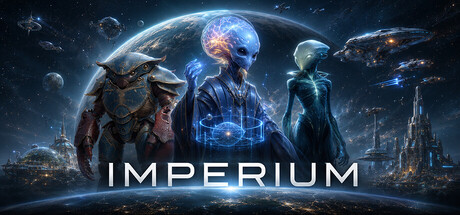
Imperium is a solo-developed game that makes extensive use of generative AI
to create its content:
• Visual art and graphical assets — planet surfaces, buildings, species and
ship artwork, interface art, and store/marketing imagery — were generated
using Midjourney and ChatGPT, then extensively edited, composited, and
refined by hand in Photoshop (including Photoshop's AI tools) to fit the
game's art direction.
• Music was generated using Suno.
• Sound effects were generated using ElevenLabs.
Every asset is reviewed, edited, and approved by the developer before it
ships, and the game's design, systems, and balance are the developer's own.
Imperium's in-game opponents use traditional algorithmic AI, not generative AI.
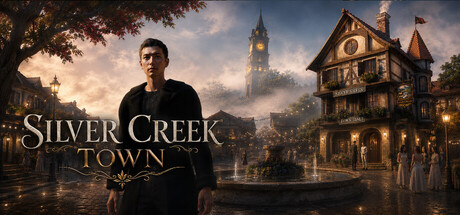
Silver Creek Town uses generative AI to support live NPC dialogue text during gameplay. Player text input may be processed by an AI service to generate in-character fictional NPC responses within the world of Silver Creek Town. Some background music, concept art, character images, text drafts, and marketing materials may also be created or assisted by AI tools during development. We review AI-assisted content before use and apply prompts, content rules, and safety restrictions to reduce inappropriate, illegal, hateful, sexually explicit, infringing, or unsafe output.
AI Disclosure
This game was developed entirely with the assistance of large language models and generative AI tools. AI systems were used for graphic asset generation, concept art, narrative text drafting, lore writing, design review, creative critique, initial structural planning, code architecture, system design, feature implementation, iterative refinement, and debugging. All lore, mechanics, story, art, and game systems are pre-authored and fully static. No AI processing or generation occurs at runtime — the game runs entirely on pre-built code with no live model calls. This disclosure is provided in compliance with Steam's AI Content Policy and Valve developer transparency guidelines.
Some visuals, text, and promotional materials (including the trailer) were created with the help of AI.
Imperfections, inconsistencies, and “errors” are intentional — they reflect a world where systems don’t always make sense, yet people rely on them anyway.
This is not a bug. It’s the design.
This game uses generative AI to create concept art, some background illustrations. All AI-generated content has been reviewed, edited, and refined by human hands to ensure it does not infringe on any copyrights.
Some 2D character illustrations, backgrounds, and UI elements in this game were created with the help of generative AI tools during development, and then manually edited, refined, and reviewed by the developer.
This game uses generative AI during gameplay to create an original in-game character called a "Logos" for use by that player. Based on text entered or selected by the player, the AI generates a 2D illustration of the Logos in real time, along with its name, flavor text, and similar content. The generated Logos can be added to your deck and used to progress through the game.
The game also includes pre-generated AI content: enemy and event illustrations were created with Adobe Firefly during development. Generation is performed using cloud-based external AI services (Adobe Firefly for image generation, OpenAI for text generation).
The words entered by the player, generation conditions, and the data of the generated Logos are sent to and stored on our server. These records are used to provide the generation feature, review reported results, and investigate errors. A generated Logos is visible only to the player who created it and is not shared with other players.
Some information required for generation is sent from our server to external AI services. Data sent from our server to these services is not used to train or improve their models. Please do not enter any personal information, such as your name or contact details, or any confidential information you would not want third parties to know.
This app uses our in-house AI for the pixel-art conversion process. Generative AI content is used in the trailers and screenshots shown on this store page.
- Character photos and video clips shown in the in-game Stories feed were generated using AI tools (image and video generation), then reviewed, edited, and composited by the developer to fit the game's art direction.
- AI-assisted tools were used in parts of the development process.
AI was used as the main tool to code this game, generate assets, and navigate the release processes.
This is the core model of Shadow Games Software. Leveraging AI to do the busy work to free up creative teams to focus more on design, taste, and producing a quality product.
As the 2nd real project for the studio, Idle Energy, heavily used AI during development.
The development of this game utilizes generative artificial intelligence tools to create some pre-rendered graphic assets, visual interface elements, and sound effects that are part of the arena's atmosphere.
In this work, much of the text is interactively generated by a language generation AI. In addition, language generation AI is used for various judgments on the text entered by players. Furthermore, all the illustrations in this work are created using image generation AI.
The art, music, and writing in this game were created with AI tools during development, directed by the developer through written prompts. The development process is documented publicly, prompt by prompt. The shipped game contains no live or runtime AI generation — the in-game assistant “Aya” is a hand-authored, deterministic simulation, and the game makes no network or model calls during play.
SonderSoft uses generative AI for localization to make Arena Bot Manager accessible to more players worldwide. ABM features an optional AI voice-commentator for arena events that can be disabled as per player preference.
SonderSoft pays artists to participate in the creative process, and some artists may choose on their own to use generative AI as part of their workflow; SonderSoft respects the creative tools artists choose in order to realize their own artistic vision.
Whenever possible, SonderSoft prioritizes paying artists, creators, and actors.
This game was created with the assistance of generative AI during development.
Generative AI tools were used to help produce parts of the game’s art, written content, and soundtrack. All AI-assisted content was selected, refined, and assembled by the developer as part of the final game experience.
My game uses artificial intelligence tools to assist in the creation of certain visual assets, including a number of images and illustrations used in the game's library assets and promotional materials.
EchoMind uses a locally running large language model to generate conversational text responses in real time based on the user’s prompts and local memory/context.
The AI-generated content is limited to text-based conversation and local memory summaries. EchoMind does not generate images, music, voices, sound effects, 3D models, textures, or executable code as part of its normal user experience.
This game uses generative AI to assist with the creation of some visual, audio, text, and localization assets. All AI-assisted content is reviewed and edited by the development team before being included in the game.
This game uses generative artificial intelligence to create dynamic content during gameplay. AI systems may generate political advice, news articles, speeches, social media posts, events, narrative responses, and other text-based content based on player actions and the current game state. AI-generated content is intended to enhance replayability and create unique gameplay experiences. Some store, library, and character artwork was created with the assistance of generative AI image tools.
Command Doctrine uses generative AI to create some of the content you play. When you generate a scenario or a campaign, an AI model produces the map, the opposing forces, the objectives, and the written mission briefing from your prompt. AI is also used to write narrative battle reports, to create the images that accompany them, and to interpret the natural-language orders you give your units. This content is generated live by third-party AI services. We apply content moderation and input filtering to guard against inappropriate or unsafe output.
This game uses AI-assisted tools during development, including assistance with coding and the creation or iteration of some promotional and visual art assets.
During gameplay, AI may be used to help interpret the player’s spoken spell commands and map them to predefined in-game spell actions.
PyxelAid includes optional AI-assisted image processing filters that users can apply to their own imported images. These filters may enhance, clean, upscale, simplify, recolor, or restore pixel-art images based on the user's input. The app does not generate text, code, dialogue, or autonomous content during use. Users control the input images and decide whether to save or share the resulting outputs.
Bot or Brush uses generative artificial intelligence as a core part of the game. Players guess whether drawings were created by AI or by a human. In-game content includes AI-generated sketches, pre-drawn AI images, and similar visual assets, as well as human-created drawings.
Netshell uses AI to power its characters. The NPCs you meet on the in-game forums and IRC read what is happening in your playthrough and respond in character, so their messages and forum posts are generated rather than pre-scripted, and each player's world unfolds differently.
All of this runs locally and offline: the AI models ship with the game and run on your machine. Netshell never connects to a third-party AI service such as ChatGPT or Claude. You can turn the AI off entirely, in which case the NPCs stop chatting and the game continues with its authored story.
Some Steam store and trailer assets were created with AI assistance and then edited/curated by the development team. During gameplay, Netshell only uses AI to generate in-character NPC text.
Penko Vox: Japanese uses local generative AI to power its immersive language learning experience. An integrated Large Language Model (LLM) acts as a native Japanese tutor, generating real-time dialogue based on user input, while a Neural Text-to-Speech (TTS) engine synthesizes high-fidelity Japanese audio for listening practice.
This game uses images created with AI generation tools — including NPC photos and portraits, and some store and promotional artwork. All such content has been reviewed by the developer to ensure it contains no illegal or infringing material.
Good, honest call — AI-generated art means you disclose it, and Steam shows this text publicly on your page. Here's a clean, accurate disclosure message:
Some of the visual assets in this game (such as card artwork and illustrations) were created with the assistance of generative AI tools. All AI-generated content was reviewed and curated by the developer. The game's design, code, and gameplay are human-authored.
AI has been used to generate some graphics, music, and translations.
As the story of this game may suggest, I understand (and even share) most of the criticisms regarding AI, but it is also a tool that has enabled small creators like myself to achieve bigger things that would have been difficult without it.
In this game, questions and answers (yes/no) are sent to Amazon Bedrock to generate in-game text. Personal information like your name is not sent. Progress data is saved on your device.
This game lets you converse with a character based on the historical Japanese warlord Oda Nobunaga. The character's reply text is generated on the fly by a language AI that runs locally on your own PC in response to your input.
・Everything runs entirely on your PC. No data is sent to any external server, and the game works without an internet connection.
・A system prompt (character definition) keeps the AI in role: speaking in Nobunaga's style and offering encouragement. It answers based on the historical record and will honestly say it doesn't know when it doesn't.
・The only thing generated at runtime is conversation text. The portrait uses a public-domain painting, and the talking and blinking animations based on that portrait are fixed clips created with a video-generation AI during development and played on a loop. Speech is produced by a voice-synthesis engine (VOICEVOX).
・This is a conversational app made for encouragement and light counsel. The AI's responses vary every time and are not guaranteed to be accurate. Please enjoy it as entertainment.
Idle Startup is made by a solo developer with the help of generative AI. The milestone background artwork — the illustrations that unlock as each skill levels up — is generated with AI image tools and then selected and curated by the developer. The game's code is also written with the assistance of AI coding tools. All music and sound effects are generated procedurally in code, the interface art and icons are hand-drawn, and all in-game text is written by the developer.
To provide our players with a richer visual and auditory experience within a small-scale development environment, We used pre-generated AI tools to assist in creating some 2D art assets, background music, and voice lines.
This application uses generative AI models (Depth Anything V2 / V3) to perform real-time monocular depth estimation on user-provided videos, converting 2D footage into 3D depth maps for stereoscopic and immersive viewing. All AI models are loaded and run locally on the user's own hardware. No third-party cloud AI services are used, and no user data is transmitted externally.
We used generative AI mainly for generating code. It has also been used for writing flavour text, many interface descriptions and some lines for an AI character. Finally it has also been used for proofreading.
I used generative AI tools (specifically Fooocus) to help paint and generate my static 2D game backgrounds and concept/icon art. I also utilized AI-collaboration platforms to assist with audio synthesis composition and programming codebase layouts. All generated assets were fully curated, conceptualized, and processed under my own direct creative control and creative direction before building.
This product uses generative AI for live text-based character dialogue, optional code or technical text generation, and AI-assisted pre-generated visual assets.
Players can interact with an AI desktop character through text chat. AI responses may be generated based on the character profile, the current conversation, limited memory, and optional screen-context summaries. When requested by the user, the AI may also generate programming explanations, code snippets, configuration examples, or technical suggestions.
AI conversation features require an internet connection. In the Steam version, players do not need to create, configure, or manage any third-party AI service accounts or API keys. Access to AI features is managed by the developer’s backend service and uses in-app AI Credits purchased through Steam Wallet.
The artwork used as the basis for the built-in character was created with assistance from ChatGPT and was subsequently manually edited, separated, and rigged by the developer as a Live2D model. Some promotional images, Steam library assets, background art, and key art were also created or refined with the assistance of generative AI tools during development.
The product does not generate images, audio, music, voice, textures, 3D models, or video at runtime. Generated code is not automatically executed, compiled, installed, or applied by the application. Any use of generated code is controlled by the user outside the application.
We use generative AI tools in parts of our development process, primarily to assist with creating 3D character models and visual/UI design assets. All AI-generated content is reviewed, edited, and integrated by our team.
Some store assets (capsules, library art, promotional images) and some in-game terrain sprites (such as mountains and forests) started from drafts produced with AI image tools, then selected, color-graded, composited, and cropped by the developer. All publicly released assets are human-reviewed. UI, fonts, icons, player avatars, faction emblems, and other non-terrain art are drawn directly by the developer or built from licensed fonts / open-source resources — no AI generation involved. Player-to-player text messages produced at runtime by the AI model each player has chosen are disclosed separately under "Live-Generated AI".
Artificial intelligence (AI) was leveraged for key aspects of the game's development, including in-game logic, support systems, and certain artistic assets.
Some visual assets, images, or concept materials used in this game are created with AI-assisted tools and further selected, adjusted, integrated, or refined by the author for use in the game's artistic presentation and content production.
Imperium is a solo-developed game that makes extensive use of generative AI
to create its content:
• Visual art and graphical assets — planet surfaces, buildings, species and
ship artwork, interface art, and store/marketing imagery — were generated
using Midjourney and ChatGPT, then extensively edited, composited, and
refined by hand in Photoshop (including Photoshop's AI tools) to fit the
game's art direction.
• Music was generated using Suno.
• Sound effects were generated using ElevenLabs.
Every asset is reviewed, edited, and approved by the developer before it
ships, and the game's design, systems, and balance are the developer's own.
Imperium's in-game opponents use traditional algorithmic AI, not generative AI.
Silver Creek Town uses generative AI to support live NPC dialogue text during gameplay. Player text input may be processed by an AI service to generate in-character fictional NPC responses within the world of Silver Creek Town. Some background music, concept art, character images, text drafts, and marketing materials may also be created or assisted by AI tools during development. We review AI-assisted content before use and apply prompts, content rules, and safety restrictions to reduce inappropriate, illegal, hateful, sexually explicit, infringing, or unsafe output.
AI Disclosure
This game was developed entirely with the assistance of large language models and generative AI tools. AI systems were used for graphic asset generation, concept art, narrative text drafting, lore writing, design review, creative critique, initial structural planning, code architecture, system design, feature implementation, iterative refinement, and debugging. All lore, mechanics, story, art, and game systems are pre-authored and fully static. No AI processing or generation occurs at runtime — the game runs entirely on pre-built code with no live model calls. This disclosure is provided in compliance with Steam's AI Content Policy and Valve developer transparency guidelines.
Some visuals, text, and promotional materials (including the trailer) were created with the help of AI.
Imperfections, inconsistencies, and “errors” are intentional — they reflect a world where systems don’t always make sense, yet people rely on them anyway.
This is not a bug. It’s the design.
This game uses generative AI to create concept art, some background illustrations. All AI-generated content has been reviewed, edited, and refined by human hands to ensure it does not infringe on any copyrights.