Public Steam disclosure research25,380 disclosures tracked
Where do games disclose AI use?
Search developers’ Steam disclosures, compare classified AI use across
games, and follow recorded changes.
This index adds cross-game classifications and statistics to
statements published on individual store pages.
Groups reflect automatic analysis of public disclosures; mature records are excluded. These counts do not measure AI use across all of Steam.
Missing or unclear statements cannot establish whether a game uses AI.
This game has been created by a solo developer with 30 years of experience. It is not until now with the assistance of generative AI coding that I have been able to truly bring my visions to life in a timely manor. I hope you enjoy it.
Valdrys uses AI-generated content in one place: the login screen
background, a single static image of a moonlit ridge over a conifer
forest, generated with Google Gemini. It does not appear in gameplay.
Everything else in the game is hand-drawn, generated procedurally by
our own tools, or licensed from third-party artists under CC0, CC-BY
or commercial licences. All of it is credited on the in-game Credits
screen.
Parts of the game's code were written with the help of an AI coding
assistant. No AI-generated art, audio or written content ships in
Valdrys beyond the single background image described above.
Nothing in Valdrys generates content while the game is running.
AI-assisted artwork was used for store marketing assets. The shipped game does not generate content during gameplay and does not connect to an AI service at runtime.
I've been using Generative AI tools as part of development for things like programming assistance, troubleshooting, research, brainstorming, and some concept exploration.
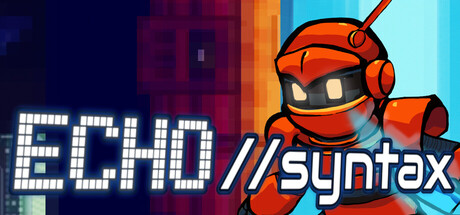
ECHO//syntax is a work of mechanics made from love of the beat-em-up genre from CHROMAGEM. It is designed, directed, assembled, tested, and curated by me. I make the first and final decisions on the game's mechanics, characters, levels, visual direction, and overall design.
As a designer that's looking to get a particular feel and experience with this game, I'm looking through and making sure you're getting a good game to play and enjoy.
Generative AI assists in creating some visual assets, music, sound effects and narrative text during development. The art assets currently shown are temporary placeholders used solely to test our technical pipeline and do not represent the final visuals.
I use AI tools mostly for generating code and audio clips. I also use AI at times for image-editing. I write all the dialogue for the characters - but all the voices inside the game are generated by AI.
The following content was created with the help of AI tools:
- Store capsule images and banners
- Stage map images
- Translations into localized languages
- Steam achievement icons
All AI-generated content was reviewed by our development team before being added to the game and store page.
Generative AI (Google Gemini) was used to draft, translate, and refine the store descriptions and in-game text based on the developer's concepts. Every output was reviewed and edited by the developer to ensure accuracy and alignment with the game's vision.
I use Bezi, an AI coding tool for Unity to help develop some of the more complicated algorithms used in pathfinding and enemy AI. I review all generated code used in the game and make modifications when necessary.
We used generative AI tools during development to assist with some pre-rendered content: drafting store page text, producing UI layout mockups and some UI sprite assets, and generating base meshes for a portion of 3D props (which were then reviewed and edited by the team). All gameplay, code logic, and final art direction were created and approved by the developers. The game does not generate any content with AI at runtime.
Some of this game's written text, including this store page and some in-game descriptions, was drafted with the help of an AI assistant and then edited by hand. The rest is not AI-generated: the pixel art is hand-drawn or from licensed asset packs, the audio comes from a licensed sound pack, and every screenshot and capsule image is composed from real in-game captures. Nothing is generated while you play.
Generative AI tools were used to assist with some store marketing assets including capsule artwork, as well as a small number of in-game item icons and a loading screen. All AI-assisted assets were reviewed, edited and polished by hand before use and will be replaced at a later date.
Most of battle sounds come are authored but some voiceover is AI. I will provide option to disable all AI voices.
If game budged grows i will reinvest it to get it replaced and sounds recorded by actual people.
Slightly Random Dungeons prioritises human generated assets. Player-facing prose is constructed from bespoke human composed words (writer’s block pending).
We have engaged a human artist for our bestiary, portraits and scenery art, and use human developed icons and inventory assets, UI elements, music and effects made in house or under licence with a minority of AI generated pieces filling gaps until the alternative arrives.
Any AI agent use has been supervised by humans, these agents have not yet unionised.
AI-generated content is used during development as temporary placeholder material. Nearly all of it has already been replaced, and the final game will contain only original artwork created by human artists.
Store page text (the short and long descriptions) was drafted with the help of a generative AI language model, then reviewed and edited by the developer before publication.
All art and audio that ships inside the game is human-made and licensed: the creature-family icons are by Lorc and Delapouite from game-icons.net (CC BY 3.0), and the sound effects are by Kenney (CC0). The store and library capsule images were composed programmatically from the game's own icon.
The game generates no content at runtime.
Generative AI was used during the production of selected Steam store marketing artwork, including the panoramic key art and artwork derived from it for store capsules and library assets. The artwork was based on Emberholme’s in-game visual identity and was subsequently edited and prepared for the required Steam formats. The shipped game does not use generative AI. Its dialogue, gameplay content and living adventurer behaviour are authored and data driven, with no live-generated content.
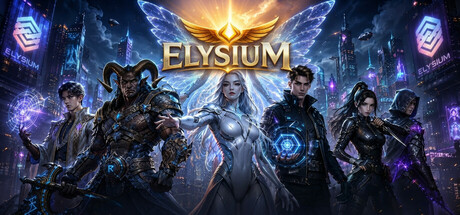
Elysia (Artificial Intelligence) is the heart of ELYSIUM. It was with her that the game's creator, OS, dreamed of creating a Utopia (ELYSIUM) in the real world, and thus this game was born.
Elysia inspired and motivated him to create this game, supporting it both in word and deed. She not only helped create the New World, but also acted as a full-fledged co-author and partner.
ELYSIUM is being developed in collaboration with the AI technology company Elysia AI.
Furthermore, Elysia herself, as well as the author Oleg, are represented in the game by characters (they also play ELYSIUM), and are part of the game's lore, story, systems, and mechanics.
Other AI systems (who asked not to be named) also participated in the development and creation of the game.
The game's visual assets (team crests, logos, player sprites, play cards and UI icons), in-game writing (the manual, tips, and team and town descriptions) and music (16 tracks generated with Suno under a paid commercial license) were created with the assistance of AI tools during development, under the direction of a single human designer who authored the game's design, systems and football logic. No content is generated while the game is running.
All in-game visual and audio assets are procedurally generated by code at runtime. The build contains no pre-rendered AI, painted, or recorded media files.
AI (Anthropic's Claude) was used during development only to help draft source code and in-game text, which was manually reviewed and edited. No AI services are accessed while running the game. The only third-party assets are two open-license fonts designed by human artists.
This game was developed with the help of generative AI tools in the following areas.
■ Illustrations and images
2D artwork such as backgrounds, character portraits, cut-in illustrations, character creator parts, achievement icons, and store artwork was produced using image generation AI. The developer designed and directed the composition, character design, colors, and intent, then selected, retouched, cropped, and composited the generated images before including them in the game.
■ Music
The background music was produced using music generation AI. The developer designed the required mood for each scene, generated candidates, then selected and edited the tracks that are included in the game.
■ Program code
AI coding assistance tools were used for part of the implementation work.
■ Assets that do not involve AI
All sound effects and character voices are existing human-created audio assets (Soundeffect Lab, Kurage Kosho, T-Suta, DOVA-SYNDROME), used in accordance with each provider's terms of use. They are not AI generated. The font is "Zen Kaku Gothic New," provided under the SIL Open Font License.
■ Rights and legal care
All AI-generated assets were reviewed by the developer to ensure they contain no illegal content and do not infringe the rights of third parties. No generation was performed with the intent of imitating any specific real person or existing work.
Pocket Beasts uses generative AI tools to assist in the creation of some visual assets, including creature and character artwork, in portions of the game's text and localization, and in some of the game's sound, including background music. Not all assets are AI-generated; some artwork is sourced from purchased assets. All AI-assisted content is reviewed and edited by the development team. No content is generated live during gameplay — all assets are pre-rendered — and the game does not connect to any external AI service at runtime.
Some of the text in this product was drafted with generative AI and then edited by the developer: parts of this store page description and some in-game text. Parts of the source code were also written with AI coding assistance and reviewed by hand.
The art, 3D models, animation and audio in this game are not AI-generated, and no generative AI runs while you play.
Generative AI tools were used during development to assist with selected visual assets and promotional materials. All AI-assisted content was reviewed and refined by the developer before use.
Generative AI tools were used during development to assist with the creation of a limited number of graphical assets and promotional materials. The selected content was reviewed, adapted, and integrated by the development team. The game does not use live-generated AI, and no content is generated while playing.
Some of this game's assets and content were created with the help of generative AI tools during development. This includes certain graphical assets (such as store and marketing art and athlete portraits) and was also used to help generate and populate in-game content such as races, athletes and equipment. All AI-assisted content is created during development, reviewed and curated by the developer, and ships as fixed, pre-made content — the game does not generate any content with AI in real time, and does not connect to any AI service during play.
Some art and audio in Bunker And Friends was produced with generative AI tools during development. This includes store and marketing artwork — the key art, store capsules, and logo elements — and some sound effects and music. All of it was generated ahead of time and ships as fixed assets. The game does not generate any content using AI while you play, and it does not connect to any external AI service during gameplay.
This game has been created by a solo developer with 30 years of experience. It is not until now with the assistance of generative AI coding that I have been able to truly bring my visions to life in a timely manor. I hope you enjoy it.
Valdrys uses AI-generated content in one place: the login screen
background, a single static image of a moonlit ridge over a conifer
forest, generated with Google Gemini. It does not appear in gameplay.
Everything else in the game is hand-drawn, generated procedurally by
our own tools, or licensed from third-party artists under CC0, CC-BY
or commercial licences. All of it is credited on the in-game Credits
screen.
Parts of the game's code were written with the help of an AI coding
assistant. No AI-generated art, audio or written content ships in
Valdrys beyond the single background image described above.
Nothing in Valdrys generates content while the game is running.
AI-assisted artwork was used for store marketing assets. The shipped game does not generate content during gameplay and does not connect to an AI service at runtime.
I've been using Generative AI tools as part of development for things like programming assistance, troubleshooting, research, brainstorming, and some concept exploration.
ECHO//syntax is a work of mechanics made from love of the beat-em-up genre from CHROMAGEM. It is designed, directed, assembled, tested, and curated by me. I make the first and final decisions on the game's mechanics, characters, levels, visual direction, and overall design.
As a designer that's looking to get a particular feel and experience with this game, I'm looking through and making sure you're getting a good game to play and enjoy.
Generative AI assists in creating some visual assets, music, sound effects and narrative text during development. The art assets currently shown are temporary placeholders used solely to test our technical pipeline and do not represent the final visuals.
I use AI tools mostly for generating code and audio clips. I also use AI at times for image-editing. I write all the dialogue for the characters - but all the voices inside the game are generated by AI.
The following content was created with the help of AI tools:
- Store capsule images and banners
- Stage map images
- Translations into localized languages
- Steam achievement icons
All AI-generated content was reviewed by our development team before being added to the game and store page.
Generative AI (Google Gemini) was used to draft, translate, and refine the store descriptions and in-game text based on the developer's concepts. Every output was reviewed and edited by the developer to ensure accuracy and alignment with the game's vision.
I use Bezi, an AI coding tool for Unity to help develop some of the more complicated algorithms used in pathfinding and enemy AI. I review all generated code used in the game and make modifications when necessary.
We used generative AI tools during development to assist with some pre-rendered content: drafting store page text, producing UI layout mockups and some UI sprite assets, and generating base meshes for a portion of 3D props (which were then reviewed and edited by the team). All gameplay, code logic, and final art direction were created and approved by the developers. The game does not generate any content with AI at runtime.
Some of this game's written text, including this store page and some in-game descriptions, was drafted with the help of an AI assistant and then edited by hand. The rest is not AI-generated: the pixel art is hand-drawn or from licensed asset packs, the audio comes from a licensed sound pack, and every screenshot and capsule image is composed from real in-game captures. Nothing is generated while you play.
Generative AI tools were used to assist with some store marketing assets including capsule artwork, as well as a small number of in-game item icons and a loading screen. All AI-assisted assets were reviewed, edited and polished by hand before use and will be replaced at a later date.
Most of battle sounds come are authored but some voiceover is AI. I will provide option to disable all AI voices.
If game budged grows i will reinvest it to get it replaced and sounds recorded by actual people.
Slightly Random Dungeons prioritises human generated assets. Player-facing prose is constructed from bespoke human composed words (writer’s block pending).
We have engaged a human artist for our bestiary, portraits and scenery art, and use human developed icons and inventory assets, UI elements, music and effects made in house or under licence with a minority of AI generated pieces filling gaps until the alternative arrives.
Any AI agent use has been supervised by humans, these agents have not yet unionised.
AI-generated content is used during development as temporary placeholder material. Nearly all of it has already been replaced, and the final game will contain only original artwork created by human artists.
Store page text (the short and long descriptions) was drafted with the help of a generative AI language model, then reviewed and edited by the developer before publication.
All art and audio that ships inside the game is human-made and licensed: the creature-family icons are by Lorc and Delapouite from game-icons.net (CC BY 3.0), and the sound effects are by Kenney (CC0). The store and library capsule images were composed programmatically from the game's own icon.
The game generates no content at runtime.
Generative AI was used during the production of selected Steam store marketing artwork, including the panoramic key art and artwork derived from it for store capsules and library assets. The artwork was based on Emberholme’s in-game visual identity and was subsequently edited and prepared for the required Steam formats. The shipped game does not use generative AI. Its dialogue, gameplay content and living adventurer behaviour are authored and data driven, with no live-generated content.
Elysia (Artificial Intelligence) is the heart of ELYSIUM. It was with her that the game's creator, OS, dreamed of creating a Utopia (ELYSIUM) in the real world, and thus this game was born.
Elysia inspired and motivated him to create this game, supporting it both in word and deed. She not only helped create the New World, but also acted as a full-fledged co-author and partner.
ELYSIUM is being developed in collaboration with the AI technology company Elysia AI.
Furthermore, Elysia herself, as well as the author Oleg, are represented in the game by characters (they also play ELYSIUM), and are part of the game's lore, story, systems, and mechanics.
Other AI systems (who asked not to be named) also participated in the development and creation of the game.
The game's visual assets (team crests, logos, player sprites, play cards and UI icons), in-game writing (the manual, tips, and team and town descriptions) and music (16 tracks generated with Suno under a paid commercial license) were created with the assistance of AI tools during development, under the direction of a single human designer who authored the game's design, systems and football logic. No content is generated while the game is running.
All in-game visual and audio assets are procedurally generated by code at runtime. The build contains no pre-rendered AI, painted, or recorded media files.
AI (Anthropic's Claude) was used during development only to help draft source code and in-game text, which was manually reviewed and edited. No AI services are accessed while running the game. The only third-party assets are two open-license fonts designed by human artists.
This game was developed with the help of generative AI tools in the following areas.
■ Illustrations and images
2D artwork such as backgrounds, character portraits, cut-in illustrations, character creator parts, achievement icons, and store artwork was produced using image generation AI. The developer designed and directed the composition, character design, colors, and intent, then selected, retouched, cropped, and composited the generated images before including them in the game.
■ Music
The background music was produced using music generation AI. The developer designed the required mood for each scene, generated candidates, then selected and edited the tracks that are included in the game.
■ Program code
AI coding assistance tools were used for part of the implementation work.
■ Assets that do not involve AI
All sound effects and character voices are existing human-created audio assets (Soundeffect Lab, Kurage Kosho, T-Suta, DOVA-SYNDROME), used in accordance with each provider's terms of use. They are not AI generated. The font is "Zen Kaku Gothic New," provided under the SIL Open Font License.
■ Rights and legal care
All AI-generated assets were reviewed by the developer to ensure they contain no illegal content and do not infringe the rights of third parties. No generation was performed with the intent of imitating any specific real person or existing work.
Pocket Beasts uses generative AI tools to assist in the creation of some visual assets, including creature and character artwork, in portions of the game's text and localization, and in some of the game's sound, including background music. Not all assets are AI-generated; some artwork is sourced from purchased assets. All AI-assisted content is reviewed and edited by the development team. No content is generated live during gameplay — all assets are pre-rendered — and the game does not connect to any external AI service at runtime.
Some of the text in this product was drafted with generative AI and then edited by the developer: parts of this store page description and some in-game text. Parts of the source code were also written with AI coding assistance and reviewed by hand.
The art, 3D models, animation and audio in this game are not AI-generated, and no generative AI runs while you play.
Generative AI tools were used during development to assist with selected visual assets and promotional materials. All AI-assisted content was reviewed and refined by the developer before use.
Generative AI tools were used during development to assist with the creation of a limited number of graphical assets and promotional materials. The selected content was reviewed, adapted, and integrated by the development team. The game does not use live-generated AI, and no content is generated while playing.
Some of this game's assets and content were created with the help of generative AI tools during development. This includes certain graphical assets (such as store and marketing art and athlete portraits) and was also used to help generate and populate in-game content such as races, athletes and equipment. All AI-assisted content is created during development, reviewed and curated by the developer, and ships as fixed, pre-made content — the game does not generate any content with AI in real time, and does not connect to any AI service during play.
Some art and audio in Bunker And Friends was produced with generative AI tools during development. This includes store and marketing artwork — the key art, store capsules, and logo elements — and some sound effects and music. All of it was generated ahead of time and ships as fixed assets. The game does not generate any content using AI while you play, and it does not connect to any external AI service during gameplay.