Public Steam disclosure research27,953 disclosures tracked
Where do games disclose AI use?
Search developers’ Steam disclosures, compare classified AI use across
games, and follow recorded changes.
This index adds cross-game classifications and statistics to
statements published on individual store pages.
Groups reflect automatic analysis of public disclosures; mature records are excluded. These counts do not measure AI use across all of Steam.
Missing or unclear statements cannot establish whether a game uses AI.
Character portraits and some narrative text were created with AI tool assistance during development. Game design, story direction, building sprites, music, and sound effects are human-authored. All content is reviewed and approved by the developer.
Generative AI tools were used as part of the development process.
For store page materials, AI-generated outputs were used as reference material. The final store assets were manually edited and assembled by the developer.
For the game itself, generative AI tools were used to assist with the creation of some in-game visual assets, such as sprites, and to support programming and implementation work. All AI-assisted content is reviewed, edited, and integrated by the developer before inclusion.
The game does not use live generative AI during gameplay and does not generate images, text, audio, or other content at runtime.
There's a local Large Language Model that integrates with the game's systems and is used primarily for but not limited to dialogue generation.
Several other uses are planned, including localization.
AI has been used for coding and in a limited capacity for creating placeholder assets that will be replaced at a later date.
Generative AI was used during development to assist with some visual concept art, store page images, and marketing assets. All AI-assisted content is manually reviewed, edited, and curated by the developer. The game does not include real-time generative AI content.
AI was NOT used to generate code, text, art or music for the game itself. It was also NOT used for any artwork used on Steam.
I'm rubbish at marketing so I used it to help write the store descriptions (this is literally the only thing steam related I used it for) and to help develop a marketing plan for me.
LLM was used for translation to languages except English and Russian.
Pixelated character portraits were made based on generative pictures from this person does not exist web site
Pre-Generated Content (AI-assisted art):
Some promotional and marketing artwork & game arts of the tiles & the facilities was created with the assistance of AI image generation tools used as a starting point, subsequently edited and modified by the developer. All in-game characters & effects are hand-crafted by the developer.
AI tools were used during development to assist with asset creation (2D art such as sprites, illustrations and event images, terrain textures, and localization drafts) and with game design iteration. All AI-generated content was reviewed, edited and curated by the developer.
I’m a good programmer, but a terrible artist. So some of the images were created with the help of AI. By the time of release, I’ll try to remove all AI-generated images from the Steam page and from some textures in the game.
This game uses generative artificial intelligence tools during parts of its development process. AI assistance was used in a limited capacity for implementing certain minor systems and supporting the coding workflow, representing a small portion of the overall codebase.
In addition, some visual assets and UI elements were created or enhanced using AI-generated imagery, often combined with manual editing and integration to fit the game’s style and design.
Generative AI tools were used to refine store descriptions and assist with the translation of certain UI elements to provide a better experience for international players. All visual assets and core gameplay mechanics are original creations.
Dead Reckoning is designed by one person. AI is used for quality assurance: automated playthroughs that test each build for crashes and balance problems.
This game made auxiliary use of pre-generated AI tools during solo development to improve efficiency in areas such as programming code scripts, game system data structure design, draft text writing, and the creation of certain UI icons (such as trait nodes). All AI-assisted content in the game—including code, graphic assets, and text—was thoroughly reviewed, revised, and reworked by the developer to align with the game's intended direction. This game does not include live-generated AI content that is created through real-time interaction with players.
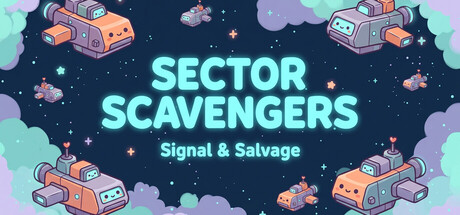
Sector Scavengers was built almost 100% using AI agents and tools. Makko.ai created the game art, animations, and game code/logic, and the trailers were made with a combination of Grok and 11 Labs.
AI coding tools were used during development. All visual assets, music, writing, and narrative content are human-made. An alternative wireframe visual mode is also available.
Generative AI tools, including ChatGPT, were used as development assistance for programming support, debugging, design iteration, writing assistance, and workflow planning.
All final implementation, integration, testing, and creative decisions were manually reviewed and assembled by the developer.
SKYOS does not use live generative AI during gameplay, and players cannot generate AI content in-game.
I'm a game/level designer so I used visual scripting to make games. AI was used to generate the code of some elements of the game that were too complicated to do in visual scripting. SFX and Voices were also generated by AI.
I am a single developer. AI is used to speed up some processes, some marketing and concept materials are made with AI as a base to improve on and deliver better game.
There are optional AI soundtracks in the game.
As a small, two-person independent development team, we utilized generative AI tools to create some of our character visuals and background artworks due to budget constraints. To ensure originality and maintain our artistic vision, these AI tools were guided by our own artist's original work, with their explicit permission. Please note that these AI-generated assets are currently serving as placeholders. As development continues and our resources grow, we plan to replace them with original, hand-drawn artwork in future updates. The game does not feature any live AI content generation during gameplay.
Some minor visual assets, such as icons and UI elements, were created or assisted using licensed AI tools during development.
All AI-assisted content has been reviewed, edited, and integrated by the developer to ensure consistency with the overall art direction and quality standards.
AI is not used in gameplay systems, code, or real-time content generation.
The Early Access version of Plentiful uses AI-assisted machine translation for localization. No generative AI was used to create gameplay content, art, or audio.
We use AI as a tool to help support parts of our game development workflow, not to replace the creativity behind the game. It helps us speed up iteration and improve efficiency in certain areas, while the ideas, design, art direction, and overall vision remain entirely shaped by our team. For us, AI is simply one of many tools that helps us spend more time focused on making the best game possible.
Generative Pre-Trained Transformer has been used for improving the game content, for example to improve amazing vehicles, effects and marketing materials.