Public Steam disclosure research27,951 disclosures tracked
Where do games disclose AI use?
Search developers’ Steam disclosures, compare classified AI use across
games, and follow recorded changes.
This index adds cross-game classifications and statistics to
statements published on individual store pages.
Groups reflect automatic analysis of public disclosures; mature records are excluded. These counts do not measure AI use across all of Steam.
Missing or unclear statements cannot establish whether a game uses AI.
Generative AI tools were used during development to create and manually refine some illustrations, store page artwork, and music tracks, as well as to assist with text preparation and localization. The game does not generate any AI content in real time.
During gameplay, the AI generates regional information and sightseeing guides (utilizing the Google Gemini API ). These generated texts change in real time and may occasionally contain inaccurate information.
Additionally, some images displayed within the game and on the store page utilize assets pre-generated by Google Gemini. (These are pre-generated contents, not live-generated during gameplay.)
Portions of this game's store page text were created with the assistance of generative AI tools and then edited by the developer. CueVR itself does not use generative AI: its captions are produced entirely by on-device speech-to-text transcription of a live microphone, with no content generation and no external AI services.
The announcer voice audio is generated using text-to-speech technology. The game's phrase pool was written with AI assistance and human review.
Some commissioned store and library artwork may include AI-generated elements.
Generative AI was used during development for certain text descriptions and for a limited number of illustrative assets. These visuals were subsequently reworked by the game’s artist for consistency with the game’s final style. No generative AI is used during gameplay.
During Early Access, we use AI-generated voice-overs as temporary placeholders for some characters. These will be replaced with professionally recorded voice-overs during development or, at the latest, after the end of the Early Access period.
AI Used to Generate SOME Game Aspects such as backend simulations and Graphical Textures. ALL AI Usage is Pre-Rendered and approved by Development team before being built into the game.
Some artwork in this game was created using generative AI (NightCafe) from text prompts, then edited and incorporated into the final visuals. AI is not used to generate content during gameplay.
Generative AI was used only during the early testing and prototyping stages to create temporary placeholder images for visualisation and internal evaluation. These images will not be included in the final released version of the game and will be replaced with original, professionally produced artwork.
The final game will not contain any AI-generated images, text, audio, or other AI-generated assets. It also does not use generative AI to produce content during gameplay.
Space Planet Explorer uses generative AI to create assets that ship with the game, including planet surface textures, cinematic sequences, voice narration, and music. All of this content was generated during development — no AI content is generated live during gameplay. Planet visuals are AI-generated interpretations based on real scientific data, not actual NASA photography.
OverlayGG's in-game guides are written with the help of generative AI. We use large language models to research and condense publicly available information about each game into concise reference guides. All guides are generated ahead of time and stored in our catalog — nothing is generated live while you play. You can flag any guide for correction directly in the app. Some of our store-page and marketing artwork is also created using AI image tools.
AI is merely an auxiliary tool, not an excuse for laziness!
We leverage AI to generate in-game image assets and use Suno AI to create the game’s background music.
All AI-generated visual and audio materials have been manually reviewed and edited to ensure compliance with content standards.
Generative AI was used only during the early concept art and ideation phase to help explore visual directions and inspire the art team. Any AI-assisted concepts served solely as reference material. All final in-game artwork was created, substantially reworked, or manually produced by human artists. The game does not generate AI content during gameplay, and no live AI systems are used by players.
Type Shogun uses pre-generated AI-assisted artwork for some stylized visual assets, including Steam store/library artwork and selected marketing/capsule images. Some in-game background or presentation artwork may also include AI-assisted elements. All AI-assisted content was reviewed, selected, and curated by NH Media LLC before inclusion.
Type Shogun does not use live generative AI during gameplay. Players cannot generate AI images, text, audio, or other AI content inside the game.
Generative AI was used in the creation of reaction sound effects (burning, explosions, electricity etc.) only.
All music and imagery is human-made and attributed.
AI Content Disclosure
During development, this game used generative AI tools to create some of its content:
Music: The background music was created using the AI music-generation tool Suno.
Code: Some of the code was written with the assistance of AI tools.
Images: Some of the artwork and icons were created using AI image-generation tools.
All AI-generated content was selected, adjusted, and integrated into the game by the developer, and was pre-generated (completed during development). No AI content is generated in real time while the game is running.
The game's lessons and coach commentary were drafted with generative AI tools and then edited by the developer and written into the code. Nothing is generated live while you play. The game's actual analysis, such as equity, odds, and the grading of your decisions, is computed by the game's code, not by AI.
The game's 2D artwork was also created using generative AI image tools.
This game does not contain any real-time generative AI features. Some game assets, including but not limited to animation effects, videos, and similar materials, were created with the assistance of AI.
This game used generative AI tools during development to assist with: (1) some artwork such as the title illustration, (2) in-game text including newspaper headlines and stock descriptions, and (3) Korean/English localization. All AI-assisted output was reviewed and edited by the developer. The game does not generate any AI content at runtime (all pre-generated).
Penko Vox: Japanese uses local generative AI to power its immersive language learning experience. An integrated Large Language Model (LLM) acts as a native Japanese tutor, generating real-time dialogue based on user input, while a Neural Text-to-Speech (TTS) engine synthesizes high-fidelity Japanese audio for listening practice.
The store page was originally written in Chinese. All other language versions, including English, were translated using AI (the same engine the product itself uses), then reviewed by a human before publishing. No other store assets are AI-generated.
Some of this game's images and artwork, its background music, and parts of its translated text were created with the help of generative AI tools. All AI-assisted content was reviewed by the developer before being included. The Sudoku puzzles themselves are generated by traditional (non-AI) algorithms, and no content is generated by AI while you play.
A pre-rendered promotional cinematic/trailer used in marketing materials was created with generative AI cinematic tools. The game itself does not include live generative AI features, and players cannot generate AI content in-game.
One man team here. AI helped me learn to code and I also used it to help generate some of the artwork and voices. All of the artwork generated by AI has been carefully polished and modified.
Game Overlay Translator uses AI at runtime to translate the on-screen text that the player chooses to capture from other games or apps. All processing runs locally on the player's own PC and works offline: on-screen text is recognized with an on-device OCR model (RapidOCR / ONNX Runtime) and translated with on-device neural machine translation models (FuguMT, Argos Translate) and, optionally, a locally-run LLM (Ollama / Qwen2.5, or NVIDIA Riva).
No captured text, images, screenshots, or any other user data are sent to external or cloud AI services. The app does not accept free-form prompts and does not generate original or creative content — the AI only outputs a translation of the specific text the player captures. The source text belongs to the third-party games or apps the player runs.
Guardrails: the tool translates only the text the player explicitly captures from their own screen; it cannot be prompted to produce anything else, and all inference is local/offline, so no content is generated on, or sent to, any external server.
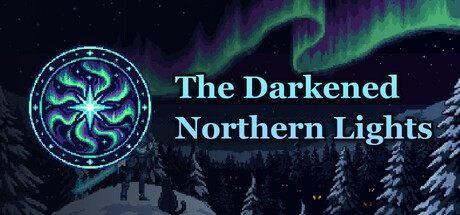
The Darkened Northern Lights uses generative AI to help create some of the content that ships with the game:
Artwork: many of the game's pixel-art characters and graphics were made with the help of an AI art tool.
Sound: some of the game's audio was created with the help of AI.
Text and localization: parts of the game's text and its Finnish and English translations were produced with the help of AI.
All of this content was reviewed by the developer and is fixed - it does not change while you play. The game does not generate any content live during gameplay. An optional feature that generates extra storybook tales may be added in a future update; if so, this notice will be updated.
Cellula was developed with the assistance of generative AI tools. The developer used AI to help write C++ code, generate 3D organelle models from text descriptions, and create UI button artwork. No AI-generated content appears in the final game without human modification, curation, and integration.
This project is itself a demonstration of how AI can democratize game development — allowing a single developer with domain expertise but limited programming experience to build something that previously required a full studio.
All game design, biological accuracy, educational content, and creative direction were provided by a human physician and educator.
Spoken dialogue is voiced with AI tools (Suno and local text-to-speech); all scripts are written by the developer. AI is also used for code optimization.
MultiScope Air Traffic Control uses two AI models, both running offline on your own PC. Pilot readbacks are spoken in real time by a neural text-to-speech model (Piper). Your spoken clearances are recognised by our own speech recognition model, trained on ATC phraseology; it turns your voice into text and does not generate content. No voice input or player data is sent anywhere or used to train any AI model. Some store page and marketing text and graphics were created with the help of AI tools and reviewed by the developers.
AI Usage Disclosure
This game was developed with the assistance of an AI programming tool to help draft portions of the code. All AI-generated code has been reviewed, tested, and revised by the developer to ensure quality and stability.
AI was used solely as a development aid — you will not interact with any generative AI during gameplay. All in-game narrative text, financial knowledge, and numerical systems were independently created by the developer. The game runs entirely offline and does not call any external AI interfaces.
Generative AI tools (Gemini) were used to assist in creating marketing materials and capsule images for the Steam store page. Additionally, AI was utilized for in-game text translation and localization. No in-game visual assets were generated by AI, and there is no live AI generation during gameplay.
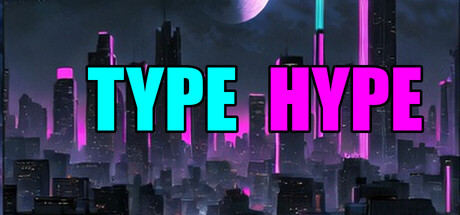
TYPE HYPE's static visual assets — the main-menu skyline background, achievement icons (34 color + 34 grayscale variants = 68 PNGs), exhibition-level theme backgrounds (15 themes × 6 layer files = 90 PNGs), and Steam capsule backgrounds — were created with the assistance of generative AI image tools (primarily OpenAI's GPT image generation). All AI-generated assets were curated, selected, and approved by the developer. No AI runs at runtime in the shipped product. Music (59 tracks) is human-composed and sourced from Pixabay under the Pixabay Content License. Code was written collaboratively by the developer with an AI coding assistant. The game contains no AI-generated content shown to players during gameplay (procedural music layering is rule-based, not AI).
Generative AI technology was used to create high-quality voice-overs for the game's characters. This allowed this independent project to feature full voice acting, providing a more immersive narrative experience and bringing the historical journey of Wojtek the Bear to life. All AI-generated audio assets are pre-rendered and have been manually reviewed and edited to ensure high quality and consistency with the game's emotional tone.
This game uses generative AI tools during development to assist with the creation of some story drafts, character and scene image assets, interface text, and code generation or optimization.
All AI-assisted content has been manually reviewed, edited, selected, and integrated by the developer to fit the game’s story, children’s sci-fi style, and overall presentation. The final narrative, gameplay structure, character design, and in-game content are curated and approved by the developer.
The game does not generate AI content in real time during gameplay, and it does not submit player input, choices, or gameplay data to any generative AI service.