Public Steam disclosure research25,380 disclosures tracked
Where do games disclose AI use?
Search developers’ Steam disclosures, compare classified AI use across
games, and follow recorded changes.
This index adds cross-game classifications and statistics to
statements published on individual store pages.
Groups reflect automatic analysis of public disclosures; mature records are excluded. These counts do not measure AI use across all of Steam.
Missing or unclear statements cannot establish whether a game uses AI.
Game design, code, mechanics, gameplay systems, sprites, and writing are entirely human-made. All AI-generated assets were reviewed, edited, composed, and integrated manually by the developer. No AI content is generated at runtime — every asset is pre-authored and curated.
Generative AI was used in the creation of:
Marketing and store page artwork (capsules, banners, hero, logo)
In-game background art, sprites directions
Music tracks
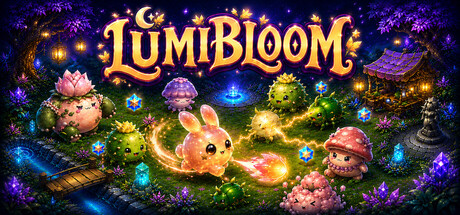
Some visual assets, promotional artwork, sound concepts, and early creative content for Lumibloom were created or assisted using generative AI tools during development. All AI-assisted content is reviewed, edited, and integrated by the developer to fit the game’s final artistic direction and gameplay experience.
Generative AI was used strictly as an assistive tool during development. It was utilized to help debug code, optimize scripts, and generate minor background visual elements. All core gameplay mechanics, main graphics, story, and game design were created entirely by the developer.
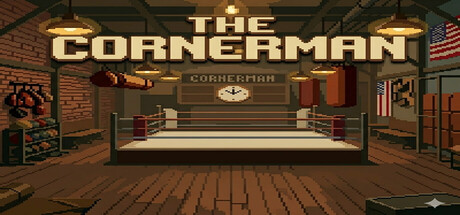
Some visual assets used in The Cornerman, including certain fighter portraits and background artwork, were created or assisted using generative AI tools and were further edited and integrated by the developer before inclusion in the game.
AI Disclosure (for Steam Store Page)
This game uses generative artificial intelligence tools only for certain visual assets on the store page.
Some promotional images and artwork displayed on the Steam store page were created or enhanced with the assistance of AI tools. All such content has been reviewed and curated by the developer to match the intended style and quality.
I use AI to summarize documentation, criticize my code, and help me make sense of error messages.
Sometimes I feel discouraged and I ask AI to write stuff for me. Seeing the garbage it produces makes me feel better, and encourages me to try again :)
We use AI to code faster and generate placeholder art assets. All the AI-generated art assets (and most of the stock assets) will be replaced before the game is launched. The game design, art direction, and overall vision is all from our (human!) team.
TRANSLATIONS in store page and in-game have been generated with artificial intelligence. These translations are FULLY OPTIONAL to use and you can experience the full game without any artificial intelligence by playing in the English language. I wanted to give people the possibility to experience the game in their native language, which is why this decision was made.
Based on the developer's original creative direction, AI tools were used to generate the game's store page capsule images, soundtrack, and the non-English in-game text translations. AI coding assistance supported programming during development.
This game uses generative AI for the following elements during development:
Visual assets (character, tile, and effect images, title screen artwork, and Steam store assets): Nano Banana Pro (Google Gemini 3 Pro Image) and Qwen Image Edit
Map structure and in-game text in general (proper nouns, messages, etc.): Anthropic Claude
All generated assets are reviewed by the developer before use, with care taken to avoid intentional reproduction or imitation of third-party copyrighted works.
This game utilizes generative AI tools to assist in the creation of pre-rendered 2D visual assets, including character illustrations and in-game icons.
For now there are some placeholder assets that we generated by AI to fill in some of the UI but we do not intend to include these assets in the final build on release.
AI was used during development to assist with code generation, some graphical assets, and selected music or audio elements. All content was reviewed and edited by the developer before being included in the game.
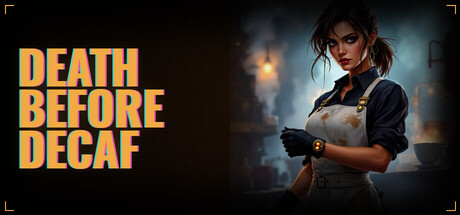
Death Before Decaf uses generative AI tools to assist with visual asset production. This includes character and enemy sprites, environment art, and marketing capsule images, all created using a fine-tuned model trained on reference materials owned by Overdose Interactive (Scenario.gg with a custom DBD LoRA, plus Replicate/Flux for select assets). All AI-generated outputs are reviewed, edited, and approved by a human art director before being shipped in the game.
The game itself does not generate any AI content at runtime: all assets are pre-rendered and bundled with the build. The game does not connect to any external AI services during gameplay.
Generative AI tools were used during development to assist with selected visual and audio asset concepts and production support.
All final assets included in the game were reviewed, edited, and integrated by the developer to ensure they are appropriate for the game and do not knowingly include infringing content. No live AI-generated content is produced during gameplay.
Some marketing assets for this game (capsule art) were created with the assistance of AI image generation tools. All gameplay content is procedurally generated by the NAGAS simulation engine — a custom-built system using deterministic algorithms, not generative AI.
Some visual assets in this game (including the main menu background and Steam store page capsule images) were created using generative AI tools (Google Gemini). All AI-generated content was pre-rendered during development and reviewed by the developer. The game does not use any AI generation during gameplay — all assets are static and packaged with the game.
During the development process, we may use procedural- and AI-based tools to assist with content creation. In all such cases, the final product reflects the creativity and expression of our own development team.
This game was made available in many languages thanks to generative AI. Creation of some assets was performed or aided by generative AI tools.
If you ever beat an open-world game, you probably used more power than was used to generate all the assets in this game, including the ones that went unused. If you 100%'d that game, you used much, much more.
Some game artwork was generated with the assistance of AI, including monster sprites and a portion of achievement icons. These assets were then manually reviewed and edited to fit the game's pixel-art style. Store page descriptions were co-written with AI assistance.
Yes — this game uses generative AI tools to assist in the creation of certain pre-rendered content. This includes some voice acting and limited written text. All AI-generated content is reviewed, edited, and integrated by the developer. No AI-generated content is created dynamically during gameplay.
All visual assets and sound effects in this game were created with the assistance of AI generation tools, then curated and integrated by the developer.
Generative AI tools were used as development assistance for portions of the source code, including drafting, organization, and commenting. No live AI-generated content is produced during gameplay.
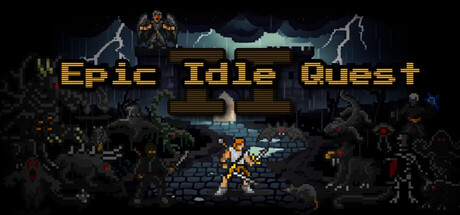
Generative AI was used during the pre-production phase to create and refine visual concepts, character designs (including enemies and the protagonist), and environmental assets. All AI-generated content was further edited and processed by the developer to fit the game's unique pixel-art constructivist style. No AI content is generated live during gameplay.
The background music in this game was generated using Suno AI. Some sound effects were generated using ElevenLabs. All AI-generated assets were curated, edited, and finalized by the developer (W4S) as part of the production process. No AI-generated content is created at runtime — all assets are pre-produced and bundled with the game.
"This game uses pre-generated content created with the assistance of generative AI. Specifically: some 2D character, enemy, and environment art was sourced from AI-assisted asset packs; portions of the store page description and in-game flavor text were drafted with AI writing tools and then human-edited. No generative AI content is produced live at runtime — all assets are fixed and shipped with the build. The developer has confirmed appropriate rights/licenses for all included assets."
All store page and in-game translations were created with AI assistance as a starting point. As a solo developer, I only speak English and Ukrainian natively, so I recognize that AI translations may contain errors — I hope to improve them with native speaker feedback in the future.
Store page artwork was generated with AI image tools and then manually composed and edited by the developer.
AI tools (Claude Code) were used to assist with code development and store page localization. All game design, visual style, and creative decisions were made by the developer. All visuals are procedurally generated by the game's own code at runtime.
To streamline our development and bring the game to market faster, we utilize generative AI for core visualization. Our team then uses these outputs as a foundation to refine, improve, and create the final iterations you see in the game.
The developer uses AI tools (such as ChatGPT, Claude, and Cursor) to assist with writing code, drafting in-game text like card effect descriptions, and brainstorming narrative elements. Additionally, AI is utilized to provide draft localizations for various languages.
However, all graphical assets (including character illustrations and monster designs) and audio are entirely human-made. No AI-generated images, pre-rendered graphics, or sound files are used in this game.
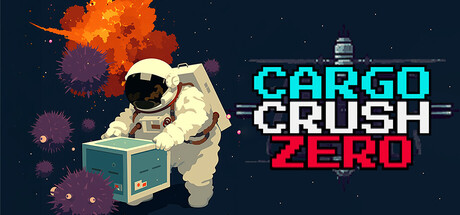
CARGO CRUSH ZERO is developed with the assistance of AI tools throughout its production. Game code is implemented using Claude (Anthropic) as a development assistant. Background music is generated with AIVA. Visual assets are created using AI image generation tools and further edited by the developer. All creative direction, design decisions, and final output are overseen by the developer.
AI technology is used in a supplementary capacity during the conceptual and prototyping stages of our 2D assets. Any such assets are replaced through our production pipeline by our artists.
Some visual assets (illustrations and portraits) and the music were created with the help of AI tools. The game code was developed with AI-assisted programming. All content was reviewed, curated, and approved by the developer.
Some content in this game, including text and certain assets, was created with the assistance of AI tools during development. All AI-generated content has been reviewed, edited, and integrated by the developer to ensure quality and consistency.
Some store imagery (capsule art) was created with AI image generation tools. Game text translations for non-English/Turkish languages were assisted by AI translation, with manual review
Game design, code, mechanics, gameplay systems, sprites, and writing are entirely human-made. All AI-generated assets were reviewed, edited, composed, and integrated manually by the developer. No AI content is generated at runtime — every asset is pre-authored and curated.
Generative AI was used in the creation of:
Marketing and store page artwork (capsules, banners, hero, logo)
In-game background art, sprites directions
Music tracks
Some visual assets, promotional artwork, sound concepts, and early creative content for Lumibloom were created or assisted using generative AI tools during development. All AI-assisted content is reviewed, edited, and integrated by the developer to fit the game’s final artistic direction and gameplay experience.
Generative AI was used strictly as an assistive tool during development. It was utilized to help debug code, optimize scripts, and generate minor background visual elements. All core gameplay mechanics, main graphics, story, and game design were created entirely by the developer.
Some visual assets used in The Cornerman, including certain fighter portraits and background artwork, were created or assisted using generative AI tools and were further edited and integrated by the developer before inclusion in the game.
AI Disclosure (for Steam Store Page)
This game uses generative artificial intelligence tools only for certain visual assets on the store page.
Some promotional images and artwork displayed on the Steam store page were created or enhanced with the assistance of AI tools. All such content has been reviewed and curated by the developer to match the intended style and quality.
I use AI to summarize documentation, criticize my code, and help me make sense of error messages.
Sometimes I feel discouraged and I ask AI to write stuff for me. Seeing the garbage it produces makes me feel better, and encourages me to try again :)
We use AI to code faster and generate placeholder art assets. All the AI-generated art assets (and most of the stock assets) will be replaced before the game is launched. The game design, art direction, and overall vision is all from our (human!) team.
TRANSLATIONS in store page and in-game have been generated with artificial intelligence. These translations are FULLY OPTIONAL to use and you can experience the full game without any artificial intelligence by playing in the English language. I wanted to give people the possibility to experience the game in their native language, which is why this decision was made.
Based on the developer's original creative direction, AI tools were used to generate the game's store page capsule images, soundtrack, and the non-English in-game text translations. AI coding assistance supported programming during development.
This game uses generative AI for the following elements during development:
Visual assets (character, tile, and effect images, title screen artwork, and Steam store assets): Nano Banana Pro (Google Gemini 3 Pro Image) and Qwen Image Edit
Map structure and in-game text in general (proper nouns, messages, etc.): Anthropic Claude
All generated assets are reviewed by the developer before use, with care taken to avoid intentional reproduction or imitation of third-party copyrighted works.
This game utilizes generative AI tools to assist in the creation of pre-rendered 2D visual assets, including character illustrations and in-game icons.
For now there are some placeholder assets that we generated by AI to fill in some of the UI but we do not intend to include these assets in the final build on release.
AI was used during development to assist with code generation, some graphical assets, and selected music or audio elements. All content was reviewed and edited by the developer before being included in the game.
Death Before Decaf uses generative AI tools to assist with visual asset production. This includes character and enemy sprites, environment art, and marketing capsule images, all created using a fine-tuned model trained on reference materials owned by Overdose Interactive (Scenario.gg with a custom DBD LoRA, plus Replicate/Flux for select assets). All AI-generated outputs are reviewed, edited, and approved by a human art director before being shipped in the game.
The game itself does not generate any AI content at runtime: all assets are pre-rendered and bundled with the build. The game does not connect to any external AI services during gameplay.
Generative AI tools were used during development to assist with selected visual and audio asset concepts and production support.
All final assets included in the game were reviewed, edited, and integrated by the developer to ensure they are appropriate for the game and do not knowingly include infringing content. No live AI-generated content is produced during gameplay.
Some marketing assets for this game (capsule art) were created with the assistance of AI image generation tools. All gameplay content is procedurally generated by the NAGAS simulation engine — a custom-built system using deterministic algorithms, not generative AI.
Some visual assets in this game (including the main menu background and Steam store page capsule images) were created using generative AI tools (Google Gemini). All AI-generated content was pre-rendered during development and reviewed by the developer. The game does not use any AI generation during gameplay — all assets are static and packaged with the game.
During the development process, we may use procedural- and AI-based tools to assist with content creation. In all such cases, the final product reflects the creativity and expression of our own development team.
This game was made available in many languages thanks to generative AI. Creation of some assets was performed or aided by generative AI tools.
If you ever beat an open-world game, you probably used more power than was used to generate all the assets in this game, including the ones that went unused. If you 100%'d that game, you used much, much more.
Some game artwork was generated with the assistance of AI, including monster sprites and a portion of achievement icons. These assets were then manually reviewed and edited to fit the game's pixel-art style. Store page descriptions were co-written with AI assistance.
Yes — this game uses generative AI tools to assist in the creation of certain pre-rendered content. This includes some voice acting and limited written text. All AI-generated content is reviewed, edited, and integrated by the developer. No AI-generated content is created dynamically during gameplay.
All visual assets and sound effects in this game were created with the assistance of AI generation tools, then curated and integrated by the developer.
Generative AI tools were used as development assistance for portions of the source code, including drafting, organization, and commenting. No live AI-generated content is produced during gameplay.
Generative AI was used during the pre-production phase to create and refine visual concepts, character designs (including enemies and the protagonist), and environmental assets. All AI-generated content was further edited and processed by the developer to fit the game's unique pixel-art constructivist style. No AI content is generated live during gameplay.
The background music in this game was generated using Suno AI. Some sound effects were generated using ElevenLabs. All AI-generated assets were curated, edited, and finalized by the developer (W4S) as part of the production process. No AI-generated content is created at runtime — all assets are pre-produced and bundled with the game.
"This game uses pre-generated content created with the assistance of generative AI. Specifically: some 2D character, enemy, and environment art was sourced from AI-assisted asset packs; portions of the store page description and in-game flavor text were drafted with AI writing tools and then human-edited. No generative AI content is produced live at runtime — all assets are fixed and shipped with the build. The developer has confirmed appropriate rights/licenses for all included assets."
All store page and in-game translations were created with AI assistance as a starting point. As a solo developer, I only speak English and Ukrainian natively, so I recognize that AI translations may contain errors — I hope to improve them with native speaker feedback in the future.
Store page artwork was generated with AI image tools and then manually composed and edited by the developer.
AI tools (Claude Code) were used to assist with code development and store page localization. All game design, visual style, and creative decisions were made by the developer. All visuals are procedurally generated by the game's own code at runtime.
To streamline our development and bring the game to market faster, we utilize generative AI for core visualization. Our team then uses these outputs as a foundation to refine, improve, and create the final iterations you see in the game.
The developer uses AI tools (such as ChatGPT, Claude, and Cursor) to assist with writing code, drafting in-game text like card effect descriptions, and brainstorming narrative elements. Additionally, AI is utilized to provide draft localizations for various languages.
However, all graphical assets (including character illustrations and monster designs) and audio are entirely human-made. No AI-generated images, pre-rendered graphics, or sound files are used in this game.
CARGO CRUSH ZERO is developed with the assistance of AI tools throughout its production. Game code is implemented using Claude (Anthropic) as a development assistant. Background music is generated with AIVA. Visual assets are created using AI image generation tools and further edited by the developer. All creative direction, design decisions, and final output are overseen by the developer.
AI technology is used in a supplementary capacity during the conceptual and prototyping stages of our 2D assets. Any such assets are replaced through our production pipeline by our artists.
Some visual assets (illustrations and portraits) and the music were created with the help of AI tools. The game code was developed with AI-assisted programming. All content was reviewed, curated, and approved by the developer.
Some content in this game, including text and certain assets, was created with the assistance of AI tools during development. All AI-generated content has been reviewed, edited, and integrated by the developer to ensure quality and consistency.
Some store imagery (capsule art) was created with AI image generation tools. Game text translations for non-English/Turkish languages were assisted by AI translation, with manual review