Public Steam disclosure research25,380 disclosures tracked
Where do games disclose AI use?
Search developers’ Steam disclosures, compare classified AI use across
games, and follow recorded changes.
This index adds cross-game classifications and statistics to
statements published on individual store pages.
Groups reflect automatic analysis of public disclosures; mature records are excluded. These counts do not measure AI use across all of Steam.
Missing or unclear statements cannot establish whether a game uses AI.
Generative AI tools were used to assist in the creation of some 2D visual assets and artwork (including character illustrations and background art). All generated assets have been reviewed and refined to fit the game's pixel art style and quality standards.
Generative AI was only used to assist in creating some of the inventory icons and promotional artwork, as TEMPORARY PLACEHOLDERS.
The game's environments, gameplay systems, characters, mechanics, world design, and narrative were created by the developer. No AI content is generated during gameplay.
Generative AI tools were used to create visual concepts and initial drafts for most of the game's artwork. These drafts were used as references and starting points for the final pixel art assets, which were manually created, reviewed, edited, and refined by the developer before being included in the game or its marketing materials.
Generative AI tools were also used to assist with localization and the creation of some in-game names and text. All AI-assisted text was manually reviewed and edited by the developer before being included in the game.
The game does not use generative AI to create content during gameplay.
Generative AI tools were used during development to assist with programming and to create or refine portions of the game’s artwork, visual assets, sound effects, and other audio. All AI-assisted content was selected, edited, integrated, and reviewed by the developer. The game does not generate AI content or connect to external AI services during gameplay.
Generative AI tools were used during development to assist with the creation of some pre-generated visual assets and development materials. All AI-assisted content is reviewed, selected, and integrated by the developer. The game does not generate AI content during gameplay.
Generative AI tools were used as part of the development workflow for selected visual and audio asset refinement and production. All final content is reviewed and edited by the developer. No generative AI is used during gameplay.
This game uses generative AI as an assistive tool for creating some artwork and store assets. All AI-assisted content has been reviewed, edited, and approved by the developer before inclusion. The game does not generate AI content during gameplay.
During development, AI was used to refine some fixed ASCII pixel-art data and portions of the code-defined sound data embedded in the game's C# source. Deterministic rendering and synthesis functions convert this fixed data into sprites and audio at runtime. Some Steam store images use renders of the same sprites.
No generative AI is used while the game is running. The game does not contact an AI service, generate AI content during play, or send player input to an AI service.
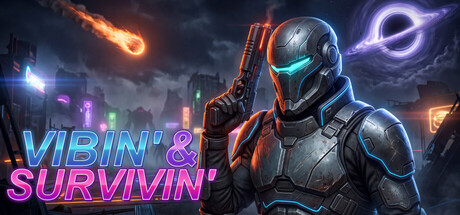
As a solo project, Vibin & Survivin leverages AI assistance for asset design, audio generation, and coding support. This allowed me to punch above my weight class as a single developer and focus on crafting tight, responsive action-roguelike gameplay!
AI tools provided reference materials in development. All finished assets are manually adjusted by our team. No live AI content generates while playing.
All artwork, character art, animation and audio in Fleshgrinder were created by human artists — the use of generative AI for art was contractually prohibited on this project. Generative AI was used to translate the game's text into its ten non-English languages, and to draft a portion of the in-game item descriptions and dialogue. No generative AI runs while you play; nothing is generated at runtime.
This game uses live generative AI to create text-based character dialogue, diaries, journey events, NPC conversations, and outcomes of player-directed interactions. Responses are generated from player-created character profiles, recent in-game memories, current objectives, and player messages. Relevant text context is sent to a third-party AI service to generate these responses. Generated content may vary between sessions and may occasionally produce unexpected results. AI is not used to generate executable code or modify files on the player's device.
In the interest of transparency, illustrations were created with the help of AI-assisted tools, used as creative support within a human-led artistic process.
Krukmore is developed by a solo developer who uses generative AI as part of the production pipeline. Character and environment sprite art was created using AI image generation, then processed, edited, and integrated by hand. Portions of the game's code were written with AI assistance under the developer's direction, with all systems designed, reviewed, and tested by the developer. All AI-generated content is created during development ("pre-generated") — the game does not generate any content while you play, and no AI runs on your machine. Game design, writing, and all creative decisions are the work of the developer.
Some of our art (not all) began as generative drafts made with AI tools, then heavily reworked by hand to fit the game's look. Everything else, story, music, game design and level design is human-made (with love).
Generative AI tools were used during development to assist with some pre-generated visual assets and store marketing images. These assets are fixed in advance and are not generated during gameplay. The released game does not call an external generative AI service and does not generate text, images, audio, code, or other content at runtime.
RLG:Origins uses a locally operated generative AI model during play to interpret free-form player input and generate GM narration and character dialogue. AI-generated text does not establish game facts or decide outcomes. A separate deterministic rules system validates actions and controls game-state changes. Generation takes place on the player's device, and player input is not sent to an external AI service.
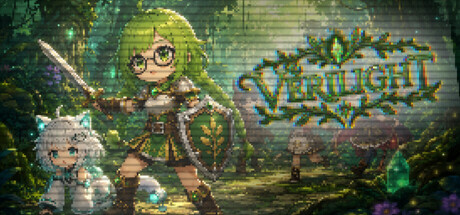
Verilight incorporates generative AI as part of its development pipeline for creating draft artwork, music, text, and programming assistance. All AI-generated material is manually reviewed, edited, refined, and integrated by the developer before being included in the final game. Artwork is transformed into the game's pixel-art style, music is manually arranged and adapted for each biome, and code is reviewed and modified before implementation. The game does not generate AI content during gameplay and does not connect to external AI services.
Some of the music in this game was created using generative AI tools. All other content — art, animation, writing and design — is made without generative AI.
This game uses generative AI to create visual assets, including character portraits, event CGs, and background images. All generated images were selected, adjusted, and finalized by the developer.
The scenario, dialogue, game design, and system programming were created by the developer. AI translation assistance was used as part of the localization process, with the results reviewed by the developer.
Generative AI was used during development to create or assist with some pre-generated visual assets, including character, item, environment, and Steam store capsule, library, and marketing artwork. All output is selected, edited, integrated, and reviewed by the developer. No content is generated during gameplay.
This game adopts generative AI technology to provide players with real-time interactive text dialogue with in-game NPCs. We have set strict content filtering rules to prevent the generation of inappropriate, illegal, pornographic or violent content. Players can report improper AI outputs through Steam's built-in marking tool.
Portions of this game's artwork were created with generative AI tools under human direction, curation, and editing — including aircraft counter sprites, scene illustrations, character portraits, achievement icons, and some store/marketing images. The store trailer's narration is AI-generated voiceover. Some code was developed with AI assistance and human review. The game does not generate any content with AI while running.
Generative AI tools were used as an editorial and localization assistant for some written content in the game and on the Steam store page. All such text is reviewed, revised, and approved by the development team. The game does not use generative AI at runtime.
Generative AI tools were used to assist in creating and refining some pre-generated visual assets, narrative text, localization, and store/marketing artwork. All AI-assisted content was reviewed, edited, and curated by Plants Game. No content is generated during gameplay, and the game does not connect to external AI services.
Some code elements and visual assets in Curse of the Ancient Grimoire were created or refined with the assistance of generative AI tools, including character portraits, monster images, scene illustrations, and store capsule artwork. All AI-assisted assets were reviewed, selected, edited, and integrated by the developer.
Generative AI is not used during gameplay to create dynamic content, dialogue, player-facing text, decisions, or game mechanics.
Generative AI is not used during gameplay to create dynamic content, dialogue, player-facing text, decisions, or game mechanics.
This application uses AI tools in parts of its development process, including the creation of artwork used in the game and on the store page, the writing of the dialogue text shown by the characters, the tuning of behaviour algorithms, and the translation of the store page into multiple languages. All such output is generated and reviewed in advance before being incorporated into the product, and no generative AI runs during gameplay.
Generative AI technology is used in a supplementary capacity during the creation of some user interface assets.
Any such assets are replaced through our production pipeline by our art and development teams, ensuring they meet our quality standards and creative direction.
This title uses generative artificial intelligence in software development, the creation of art assets, and foreign-language localization.
Given the constraints of our production schedule, the size of our team, and the professional responsibilities of our members outside this project, we chose to incorporate generative AI into certain parts of development in pursuit of a more complete and polished game. However, our team firmly believes that generative AI should help creators produce better work. It should never become an excuse for cutting corners, disregarding the creative process, or replacing skilled professionals.
While working to deliver the most complete experience possible, these technologies enabled our engineers to explore directions that had previously been difficult to pursue because of limited time and manpower. These efforts include machine-learning-based image segmentation and depth mapping using motion-aware techniques, as well as redesigning low-level director systems and asset-management systems for art and text beyond the assistance provided by conventional game-engine tooling.
We also recognize that the experience and judgment of professional creators cannot be replicated. Throughout the production of our artistic assets, the team has actively sought guidance from artists, engineers, and experienced professionals in relevant fields, and has continuously reviewed the final content in accordance with their professional advice. All generated output is subject to human review, selection, and adjustment. No generated material is included in the game without first being inspected.
With regard to our art assets, we take copyright and creators’ rights in connection with generative AI very seriously. We believe that artists’ creative work and aesthetic expertise deserve stronger copyright protection. We have never trained models on others’ work without authorization, nor have we used LoRA models of unknown or unverifiable origin. We will not use an artist’s name, work, or distinctive style to train models or create imitations without permission, and we will never claim another creator’s work as our own.
We understand that players may hold different views regarding generative AI, and we are committed to being transparent about how and where it has been used in this title, as well as the principles that guide our use of it.
We will continue striving to ensure that both our own technology and generative AI serve as tools for creating a more complete work—not as excuses for avoiding creative responsibility, undermining the trust between creators and consumers, or producing inexpensive imitations.
Finally, we sincerely thank you for your understanding and for holding us accountable.
Dungeon Cooking uses generative AI tools for some of its content, created during development (pre-generated, not generated in real time):
- Part of the creature art: 6 of the game's 18 monsters were made with AI image tools, then edited and integrated by the developer.
- Some in-game dungeon event content was drafted with AI assistance and edited by the developer.
- The announcement trailer was produced using AI tools.
The rest of the game's art comes from licensed asset packs and the developer's own work. All AI-generated content was reviewed and curated by the developer before shipping.
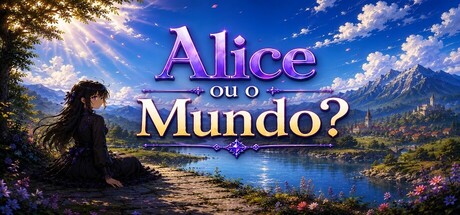
Algumas imagens presentes neste jogo foram criadas com auxílio de inteligência artificial generativa e posteriormente revisadas, editadas e integradas pelo desenvolvedor. Todo o restante do jogo, incluindo programação, design, mecânicas e direção criativa, foi desenvolvido manualmente.
GRIDFALL was developed with extensive AI assistance (Anthropic's Claude): the game's code — including the procedural generators that produce all in-game art (pre-baked at build time) and synthesize all audio and music at runtime — was written with AI pair-programming under human direction and review. The game contains no pre-rendered AI-generated images or audio files; all art and audio assets are produced by deterministic code, and the sole third-party asset is the SIL-licensed Noto Sans UI font. Story, dialogue, and text were authored with AI assistance under human editorial control.
Generative AI tools were used to assist in the creation of some 2D visual assets and artwork (including character illustrations and background art). All generated assets have been reviewed and refined to fit the game's pixel art style and quality standards.
Generative AI was only used to assist in creating some of the inventory icons and promotional artwork, as TEMPORARY PLACEHOLDERS.
The game's environments, gameplay systems, characters, mechanics, world design, and narrative were created by the developer. No AI content is generated during gameplay.
Generative AI tools were used to create visual concepts and initial drafts for most of the game's artwork. These drafts were used as references and starting points for the final pixel art assets, which were manually created, reviewed, edited, and refined by the developer before being included in the game or its marketing materials.
Generative AI tools were also used to assist with localization and the creation of some in-game names and text. All AI-assisted text was manually reviewed and edited by the developer before being included in the game.
The game does not use generative AI to create content during gameplay.
Generative AI tools were used during development to assist with programming and to create or refine portions of the game’s artwork, visual assets, sound effects, and other audio. All AI-assisted content was selected, edited, integrated, and reviewed by the developer. The game does not generate AI content or connect to external AI services during gameplay.
Generative AI tools were used during development to assist with the creation of some pre-generated visual assets and development materials. All AI-assisted content is reviewed, selected, and integrated by the developer. The game does not generate AI content during gameplay.
Generative AI tools were used as part of the development workflow for selected visual and audio asset refinement and production. All final content is reviewed and edited by the developer. No generative AI is used during gameplay.
This game uses generative AI as an assistive tool for creating some artwork and store assets. All AI-assisted content has been reviewed, edited, and approved by the developer before inclusion. The game does not generate AI content during gameplay.
During development, AI was used to refine some fixed ASCII pixel-art data and portions of the code-defined sound data embedded in the game's C# source. Deterministic rendering and synthesis functions convert this fixed data into sprites and audio at runtime. Some Steam store images use renders of the same sprites.
No generative AI is used while the game is running. The game does not contact an AI service, generate AI content during play, or send player input to an AI service.
As a solo project, Vibin & Survivin leverages AI assistance for asset design, audio generation, and coding support. This allowed me to punch above my weight class as a single developer and focus on crafting tight, responsive action-roguelike gameplay!
AI tools provided reference materials in development. All finished assets are manually adjusted by our team. No live AI content generates while playing.
All artwork, character art, animation and audio in Fleshgrinder were created by human artists — the use of generative AI for art was contractually prohibited on this project. Generative AI was used to translate the game's text into its ten non-English languages, and to draft a portion of the in-game item descriptions and dialogue. No generative AI runs while you play; nothing is generated at runtime.
This game uses live generative AI to create text-based character dialogue, diaries, journey events, NPC conversations, and outcomes of player-directed interactions. Responses are generated from player-created character profiles, recent in-game memories, current objectives, and player messages. Relevant text context is sent to a third-party AI service to generate these responses. Generated content may vary between sessions and may occasionally produce unexpected results. AI is not used to generate executable code or modify files on the player's device.
In the interest of transparency, illustrations were created with the help of AI-assisted tools, used as creative support within a human-led artistic process.
Krukmore is developed by a solo developer who uses generative AI as part of the production pipeline. Character and environment sprite art was created using AI image generation, then processed, edited, and integrated by hand. Portions of the game's code were written with AI assistance under the developer's direction, with all systems designed, reviewed, and tested by the developer. All AI-generated content is created during development ("pre-generated") — the game does not generate any content while you play, and no AI runs on your machine. Game design, writing, and all creative decisions are the work of the developer.
Some of our art (not all) began as generative drafts made with AI tools, then heavily reworked by hand to fit the game's look. Everything else, story, music, game design and level design is human-made (with love).
Generative AI tools were used during development to assist with some pre-generated visual assets and store marketing images. These assets are fixed in advance and are not generated during gameplay. The released game does not call an external generative AI service and does not generate text, images, audio, code, or other content at runtime.
RLG:Origins uses a locally operated generative AI model during play to interpret free-form player input and generate GM narration and character dialogue. AI-generated text does not establish game facts or decide outcomes. A separate deterministic rules system validates actions and controls game-state changes. Generation takes place on the player's device, and player input is not sent to an external AI service.
Verilight incorporates generative AI as part of its development pipeline for creating draft artwork, music, text, and programming assistance. All AI-generated material is manually reviewed, edited, refined, and integrated by the developer before being included in the final game. Artwork is transformed into the game's pixel-art style, music is manually arranged and adapted for each biome, and code is reviewed and modified before implementation. The game does not generate AI content during gameplay and does not connect to external AI services.
Some of the music in this game was created using generative AI tools. All other content — art, animation, writing and design — is made without generative AI.
This game uses generative AI to create visual assets, including character portraits, event CGs, and background images. All generated images were selected, adjusted, and finalized by the developer.
The scenario, dialogue, game design, and system programming were created by the developer. AI translation assistance was used as part of the localization process, with the results reviewed by the developer.
Generative AI was used during development to create or assist with some pre-generated visual assets, including character, item, environment, and Steam store capsule, library, and marketing artwork. All output is selected, edited, integrated, and reviewed by the developer. No content is generated during gameplay.
This game adopts generative AI technology to provide players with real-time interactive text dialogue with in-game NPCs. We have set strict content filtering rules to prevent the generation of inappropriate, illegal, pornographic or violent content. Players can report improper AI outputs through Steam's built-in marking tool.
Portions of this game's artwork were created with generative AI tools under human direction, curation, and editing — including aircraft counter sprites, scene illustrations, character portraits, achievement icons, and some store/marketing images. The store trailer's narration is AI-generated voiceover. Some code was developed with AI assistance and human review. The game does not generate any content with AI while running.
Generative AI tools were used as an editorial and localization assistant for some written content in the game and on the Steam store page. All such text is reviewed, revised, and approved by the development team. The game does not use generative AI at runtime.
Generative AI tools were used to assist in creating and refining some pre-generated visual assets, narrative text, localization, and store/marketing artwork. All AI-assisted content was reviewed, edited, and curated by Plants Game. No content is generated during gameplay, and the game does not connect to external AI services.
Some code elements and visual assets in Curse of the Ancient Grimoire were created or refined with the assistance of generative AI tools, including character portraits, monster images, scene illustrations, and store capsule artwork. All AI-assisted assets were reviewed, selected, edited, and integrated by the developer.
Generative AI is not used during gameplay to create dynamic content, dialogue, player-facing text, decisions, or game mechanics.
Generative AI is not used during gameplay to create dynamic content, dialogue, player-facing text, decisions, or game mechanics.
This application uses AI tools in parts of its development process, including the creation of artwork used in the game and on the store page, the writing of the dialogue text shown by the characters, the tuning of behaviour algorithms, and the translation of the store page into multiple languages. All such output is generated and reviewed in advance before being incorporated into the product, and no generative AI runs during gameplay.
Generative AI technology is used in a supplementary capacity during the creation of some user interface assets.
Any such assets are replaced through our production pipeline by our art and development teams, ensuring they meet our quality standards and creative direction.
This title uses generative artificial intelligence in software development, the creation of art assets, and foreign-language localization.
Given the constraints of our production schedule, the size of our team, and the professional responsibilities of our members outside this project, we chose to incorporate generative AI into certain parts of development in pursuit of a more complete and polished game. However, our team firmly believes that generative AI should help creators produce better work. It should never become an excuse for cutting corners, disregarding the creative process, or replacing skilled professionals.
While working to deliver the most complete experience possible, these technologies enabled our engineers to explore directions that had previously been difficult to pursue because of limited time and manpower. These efforts include machine-learning-based image segmentation and depth mapping using motion-aware techniques, as well as redesigning low-level director systems and asset-management systems for art and text beyond the assistance provided by conventional game-engine tooling.
We also recognize that the experience and judgment of professional creators cannot be replicated. Throughout the production of our artistic assets, the team has actively sought guidance from artists, engineers, and experienced professionals in relevant fields, and has continuously reviewed the final content in accordance with their professional advice. All generated output is subject to human review, selection, and adjustment. No generated material is included in the game without first being inspected.
With regard to our art assets, we take copyright and creators’ rights in connection with generative AI very seriously. We believe that artists’ creative work and aesthetic expertise deserve stronger copyright protection. We have never trained models on others’ work without authorization, nor have we used LoRA models of unknown or unverifiable origin. We will not use an artist’s name, work, or distinctive style to train models or create imitations without permission, and we will never claim another creator’s work as our own.
We understand that players may hold different views regarding generative AI, and we are committed to being transparent about how and where it has been used in this title, as well as the principles that guide our use of it.
We will continue striving to ensure that both our own technology and generative AI serve as tools for creating a more complete work—not as excuses for avoiding creative responsibility, undermining the trust between creators and consumers, or producing inexpensive imitations.
Finally, we sincerely thank you for your understanding and for holding us accountable.
Dungeon Cooking uses generative AI tools for some of its content, created during development (pre-generated, not generated in real time):
- Part of the creature art: 6 of the game's 18 monsters were made with AI image tools, then edited and integrated by the developer.
- Some in-game dungeon event content was drafted with AI assistance and edited by the developer.
- The announcement trailer was produced using AI tools.
The rest of the game's art comes from licensed asset packs and the developer's own work. All AI-generated content was reviewed and curated by the developer before shipping.
Algumas imagens presentes neste jogo foram criadas com auxílio de inteligência artificial generativa e posteriormente revisadas, editadas e integradas pelo desenvolvedor. Todo o restante do jogo, incluindo programação, design, mecânicas e direção criativa, foi desenvolvido manualmente.
GRIDFALL was developed with extensive AI assistance (Anthropic's Claude): the game's code — including the procedural generators that produce all in-game art (pre-baked at build time) and synthesize all audio and music at runtime — was written with AI pair-programming under human direction and review. The game contains no pre-rendered AI-generated images or audio files; all art and audio assets are produced by deterministic code, and the sole third-party asset is the SIL-licensed Noto Sans UI font. Story, dialogue, and text were authored with AI assistance under human editorial control.