Public Steam disclosure research25,380 disclosures tracked
Where do games disclose AI use?
Search developers’ Steam disclosures, compare classified AI use across
games, and follow recorded changes.
This index adds cross-game classifications and statistics to
statements published on individual store pages.
Groups reflect automatic analysis of public disclosures; mature records are excluded. These counts do not measure AI use across all of Steam.
Missing or unclear statements cannot establish whether a game uses AI.
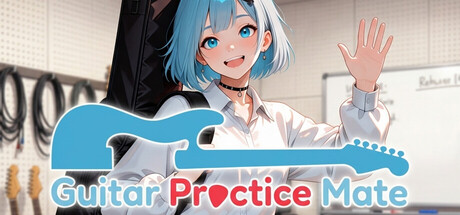
The character artwork and voice recordings used in this application were created using AI.
This application also utilizes AI tools in the MIDI converter for recorded audio data provided by AI Transcriber.
Hagicode is a software tool for code development that interfaces with third-party CLI tools. Accordingly, it invokes third-party CLI tools for content generation. These CLI tools, including Claude Code, Codex, Gemini CLI and others, are installed and used by users on their own computers independently.
Users utilizing these CLI tools are generally professional developers. Hagicode does not invoke any third-party AI generation services other than the aforementioned CLI tools. It merely acts as a caller to coordinate and display outputs returned by the CLI tools.
Therefore, Hagicode shall not be liable for the generated results and content. Hagicode is not the actual generator and implementer, but only a caller.
The game uses AI-assisted translation to localize in-game text into multiple languages. All other content is created by human developers using licensed assets.
Playto uses AI models (LLMs) to generate real-time translations of on-screen game text. All AI processing runs entirely on your machine using local models — no data is sent to external servers. The AI is also used for OCR (optical character recognition) to read text from game screens. No pre-generated AI content is included; all translations are generated live during use.
NeuralBeat Studio uses generative AI to create original music and audio from user prompts and settings. Outputs are generated for creative use inside the app and may vary each time. The product is designed for general-audience audio creation and applies usage rules and safeguards to reduce inappropriate or policy-violating content.
rAIdio.bot is an AI music creation tool. Players use text prompts, style tags, and lyrics to generate original music
tracks in real time using the ACE-Step audio generation model, which runs entirely on the player's local GPU — no
cloud connection required. AI is also used for vocal synthesis, stem separation, and audio effects processing. All
AI-generated content is created on-demand by the player and is unique to their session.
TaskPilotSignal uses generative AI to automate user-configured workflows. When a user runs a pipeline, the app invokes a third-party AI tool (Claude Code, Gemini CLI, or Codex CLI — installed by the user and authenticated via each provider's browser-based OAuth login) to analyze user-specified source content (e.g., a YouTube video or web page) and generate a summary, report, or analysis. The result is then delivered to a user-chosen destination such as Notion, Telegram, Google Docs, or Google Sheets.
All AI processing is user-initiated and user-scoped. The app contains no pre-generated AI assets (artwork, audio, narrative). No AI API keys are entered in the app — users authenticate with AI providers through each provider's official login flow. Users retain full ownership and control of all generated output, and no content is published automatically.
This application uses technologies such as optical character recognition (OCR) and speech recognition to analyze and process user-generated content in real time for moderation purposes. It does not use generative AI to create original content, assets, or narrative.
How This Game Uses AI
FlashReading uses generative AI to enhance your language learning experience:
- Article Generation: Creates custom reading passages tailored to your vocabulary level and learning goals
- Translations: Provides instant translations of words and sentences to help you understand content
- Summaries: Generates article summaries to reinforce comprehension
You can choose between:
- Local AI: Run models privately on your device using Ollama (no internet required)
- Cloud AI: Connect to OpenAI, Anthropic, or compatible API services
Some visual assets, including text, promotional artwork and capsule images, were generated using AI tools and then reviewed and edited by the developer.
This app utilized AI to use CSS styling and java-script to make the application feel more modern. such as creating UI icons like the trash bin icons, navigation slide bars, and stylizing features. It was also used to resize and upscale the main Ghost Vault logo and store image assets.
Some visual assets used in the store page (such as promotional images and graphics) were created with the assistance of AI tools and then reviewed and refined by the developer.
The application itself does not use AI to generate content during gameplay and functions as a standalone reading and training tool.
OverX may use generative AI tools to create certain visual assets used in the store page or marketing materials. These assets are pre rendered and reviewed by the developer before publication. The application itself does not generate AI content during use and does not produce user generated AI outputs
GameTasker was built by a solo developer with no prior coding experience. The overwhelming majority of the code, design, and Steam assets were created with the help of AI.
I'm being upfront about this because I think it's worth knowing, and because I'm proud of it rather than embarrassed. The idea, the design decisions, the testing, and the judgment calls were all mine — AI was the pair programmer that made it real.
If you run into bugs or have feature requests, come find me on Discord.
Some store page screenshots were created using AI image
generation tools. Capsule images were created
programmatically using Python and the Pillow library
(no AI image generation tools were used for capsule images).
Some store trailer audio, including voice and music, was generated or assisted by generative AI. The application itself does not include AI-generated assets and does not generate AI content during use.
AI tools were utilized during the development process to assist with code optimization, debugging, and the implementation of core system architectures. All code and logic generated by AI have been manually reviewed, verified, and integrated into the final build by the developer to ensure stability and policy compliance.
Wallpaper Animator uses generative AI. Your prompt creates a still image, which you can then animate into a looping video. Both run on third-party AI services.
Generative AI was used to aid in the preparation of store visuals and multi-language localization. The final content is not entirely AI-generated, as it has undergone significant manual inspection, confirmation, and refinement to ensure quality.
Some visual assets (such as promotional images and artwork) were created or enhanced using AI tools. All in-game content and functionality are implemented by the developer.
Some visual assets were generated with the assistance of AI tools, and OpenClaw has been integrated as the underlying logic framework for the NPC companion system.
Divookoa is primarily handcrafted, next-generation software and does not rely on AI-generated content as part of the player-facing experience.
Generative AI is used selectively within the development process in the following areas:
- Refinement of marketing materials (written content, visual compositions)
- Research and prototyping during R&D phases
- Limited graphical asset generation (e.g., icons, non-core UI elements)
- Localization support (translation and adaptation of text)
No AI-generated content is directly shipped as part of the core gameplay experience.
MetaDoc uses generative AI to assist users in writing, editing, and structuring documents. AI features include text generation, rewriting, summarization, and outline creation.
AI services are provided and managed by MetaDoc through its own backend infrastructure. Users can access AI features using in-app credits or subscriptions purchased via Steam.
A limited free quota may be available for initial experience and testing purposes.
All AI-generated content is initiated, controlled, and reviewed by the user. Users are responsible for the content they generate and choose to use.
LingoHUD's output is strictly limited to language translation and speech-to-text
transcription of content already present on the user's screen or audio. It does not
generate creative, original, or open-ended content.
Content moderation: The translation and recognition models process only user-initiated
input that the user explicitly captures via a hotkey. The software does not produce
novel content; it converts existing content from one language to another, or from
speech and images to text. All processing is deterministic and bounded to the captured
input.
FriedrichAI uses a locally hosted AI model to provide responses, assist with coding tasks, and support general interaction.
All processing is performed on the user’s machine. The application does not rely on cloud-based AI services and does not send user data externally.
The AI generates text-based responses based on user input and is intended for productivity, development assistance, and general-purpose use.
AI-generated images and audio in the default example project, used for demonstration purposes only. It will be fully replaced with real art in one of the next updates!
Some visual assets used for the store page and promotional materials were created with the assistance of generative artificial intelligence tools.
The game itself does not include AI-generated gameplay content, and no generative AI is used during gameplay.
This application does not have AI functionality by itself, but can be linked to external translation engines and AI-based interactive tools.
By default, a dll library is included to work with DeepL, Microsoft Translator, and Chat GPT.
Users can also implement the dll library themselves.
Please be careful to check the rights of the text to be translated as well as the external functions to be used to make sure that they can be used appropriately.
Currently, all locales are generated by an LLM. However, I am making significant efforts to ensure that all supported UI languages 100% human-made for the future.
If the user chooses to, there are alternative translation models to download & use through the community repository. These are all text generative AI.
The character artwork and voice recordings used in this application were created using AI.
This application also utilizes AI tools in the MIDI converter for recorded audio data provided by AI Transcriber.
Hagicode is a software tool for code development that interfaces with third-party CLI tools. Accordingly, it invokes third-party CLI tools for content generation. These CLI tools, including Claude Code, Codex, Gemini CLI and others, are installed and used by users on their own computers independently.
Users utilizing these CLI tools are generally professional developers. Hagicode does not invoke any third-party AI generation services other than the aforementioned CLI tools. It merely acts as a caller to coordinate and display outputs returned by the CLI tools.
Therefore, Hagicode shall not be liable for the generated results and content. Hagicode is not the actual generator and implementer, but only a caller.
The game uses AI-assisted translation to localize in-game text into multiple languages. All other content is created by human developers using licensed assets.
Playto uses AI models (LLMs) to generate real-time translations of on-screen game text. All AI processing runs entirely on your machine using local models — no data is sent to external servers. The AI is also used for OCR (optical character recognition) to read text from game screens. No pre-generated AI content is included; all translations are generated live during use.
NeuralBeat Studio uses generative AI to create original music and audio from user prompts and settings. Outputs are generated for creative use inside the app and may vary each time. The product is designed for general-audience audio creation and applies usage rules and safeguards to reduce inappropriate or policy-violating content.
rAIdio.bot is an AI music creation tool. Players use text prompts, style tags, and lyrics to generate original music
tracks in real time using the ACE-Step audio generation model, which runs entirely on the player's local GPU — no
cloud connection required. AI is also used for vocal synthesis, stem separation, and audio effects processing. All
AI-generated content is created on-demand by the player and is unique to their session.
TaskPilotSignal uses generative AI to automate user-configured workflows. When a user runs a pipeline, the app invokes a third-party AI tool (Claude Code, Gemini CLI, or Codex CLI — installed by the user and authenticated via each provider's browser-based OAuth login) to analyze user-specified source content (e.g., a YouTube video or web page) and generate a summary, report, or analysis. The result is then delivered to a user-chosen destination such as Notion, Telegram, Google Docs, or Google Sheets.
All AI processing is user-initiated and user-scoped. The app contains no pre-generated AI assets (artwork, audio, narrative). No AI API keys are entered in the app — users authenticate with AI providers through each provider's official login flow. Users retain full ownership and control of all generated output, and no content is published automatically.
This application uses technologies such as optical character recognition (OCR) and speech recognition to analyze and process user-generated content in real time for moderation purposes. It does not use generative AI to create original content, assets, or narrative.
How This Game Uses AI
FlashReading uses generative AI to enhance your language learning experience:
- Article Generation: Creates custom reading passages tailored to your vocabulary level and learning goals
- Translations: Provides instant translations of words and sentences to help you understand content
- Summaries: Generates article summaries to reinforce comprehension
You can choose between:
- Local AI: Run models privately on your device using Ollama (no internet required)
- Cloud AI: Connect to OpenAI, Anthropic, or compatible API services
Some visual assets, including text, promotional artwork and capsule images, were generated using AI tools and then reviewed and edited by the developer.
This app utilized AI to use CSS styling and java-script to make the application feel more modern. such as creating UI icons like the trash bin icons, navigation slide bars, and stylizing features. It was also used to resize and upscale the main Ghost Vault logo and store image assets.
Some visual assets used in the store page (such as promotional images and graphics) were created with the assistance of AI tools and then reviewed and refined by the developer.
The application itself does not use AI to generate content during gameplay and functions as a standalone reading and training tool.
OverX may use generative AI tools to create certain visual assets used in the store page or marketing materials. These assets are pre rendered and reviewed by the developer before publication. The application itself does not generate AI content during use and does not produce user generated AI outputs
GameTasker was built by a solo developer with no prior coding experience. The overwhelming majority of the code, design, and Steam assets were created with the help of AI.
I'm being upfront about this because I think it's worth knowing, and because I'm proud of it rather than embarrassed. The idea, the design decisions, the testing, and the judgment calls were all mine — AI was the pair programmer that made it real.
If you run into bugs or have feature requests, come find me on Discord.
Some store page screenshots were created using AI image
generation tools. Capsule images were created
programmatically using Python and the Pillow library
(no AI image generation tools were used for capsule images).
Some store trailer audio, including voice and music, was generated or assisted by generative AI. The application itself does not include AI-generated assets and does not generate AI content during use.
AI tools were utilized during the development process to assist with code optimization, debugging, and the implementation of core system architectures. All code and logic generated by AI have been manually reviewed, verified, and integrated into the final build by the developer to ensure stability and policy compliance.
Wallpaper Animator uses generative AI. Your prompt creates a still image, which you can then animate into a looping video. Both run on third-party AI services.
Generative AI was used to aid in the preparation of store visuals and multi-language localization. The final content is not entirely AI-generated, as it has undergone significant manual inspection, confirmation, and refinement to ensure quality.
Some visual assets (such as promotional images and artwork) were created or enhanced using AI tools. All in-game content and functionality are implemented by the developer.
Some visual assets were generated with the assistance of AI tools, and OpenClaw has been integrated as the underlying logic framework for the NPC companion system.
Divookoa is primarily handcrafted, next-generation software and does not rely on AI-generated content as part of the player-facing experience.
Generative AI is used selectively within the development process in the following areas:
- Refinement of marketing materials (written content, visual compositions)
- Research and prototyping during R&D phases
- Limited graphical asset generation (e.g., icons, non-core UI elements)
- Localization support (translation and adaptation of text)
No AI-generated content is directly shipped as part of the core gameplay experience.
MetaDoc uses generative AI to assist users in writing, editing, and structuring documents. AI features include text generation, rewriting, summarization, and outline creation.
AI services are provided and managed by MetaDoc through its own backend infrastructure. Users can access AI features using in-app credits or subscriptions purchased via Steam.
A limited free quota may be available for initial experience and testing purposes.
All AI-generated content is initiated, controlled, and reviewed by the user. Users are responsible for the content they generate and choose to use.
LingoHUD's output is strictly limited to language translation and speech-to-text
transcription of content already present on the user's screen or audio. It does not
generate creative, original, or open-ended content.
Content moderation: The translation and recognition models process only user-initiated
input that the user explicitly captures via a hotkey. The software does not produce
novel content; it converts existing content from one language to another, or from
speech and images to text. All processing is deterministic and bounded to the captured
input.
FriedrichAI uses a locally hosted AI model to provide responses, assist with coding tasks, and support general interaction.
All processing is performed on the user’s machine. The application does not rely on cloud-based AI services and does not send user data externally.
The AI generates text-based responses based on user input and is intended for productivity, development assistance, and general-purpose use.
AI-generated images and audio in the default example project, used for demonstration purposes only. It will be fully replaced with real art in one of the next updates!
Some visual assets used for the store page and promotional materials were created with the assistance of generative artificial intelligence tools.
The game itself does not include AI-generated gameplay content, and no generative AI is used during gameplay.
This application does not have AI functionality by itself, but can be linked to external translation engines and AI-based interactive tools.
By default, a dll library is included to work with DeepL, Microsoft Translator, and Chat GPT.
Users can also implement the dll library themselves.
Please be careful to check the rights of the text to be translated as well as the external functions to be used to make sure that they can be used appropriately.
Currently, all locales are generated by an LLM. However, I am making significant efforts to ensure that all supported UI languages 100% human-made for the future.
If the user chooses to, there are alternative translation models to download & use through the community repository. These are all text generative AI.