Public Steam disclosure research25,710 disclosures tracked
Where do games disclose AI use?
Search developers’ Steam disclosures, compare classified AI use across
games, and follow recorded changes.
This index adds cross-game classifications and statistics to
statements published on individual store pages.
Groups reflect automatic analysis of public disclosures; mature records are excluded. These counts do not measure AI use across all of Steam.
Missing or unclear statements cannot establish whether a game uses AI.
This game uses generative AI to create and support fictional in-game content, including graphic assets, marketing materials, text, creator names, portraits, and related world-building elements. AI-generated content is used only for fictional game purposes and does not represent real people, companies, or events.
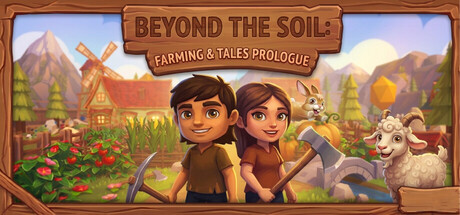
During the development of Beyond the Soil: Farming & Tales Prologue, generative AI technologies were used to optimize localization texts and assist in the design phase of certain visual marketing materials.
Character portraits, world objects, and background artwork utilize generative AI as a foundational base. However, every visual asset undergoes heavy, manual editing and refinement through multiple iterations by myself to achieve the game's specific art style.
Some visual assets were generated with AI tools as a starting
point, then hand-edited, pixel-refined, and composited by the
developer. All creative direction, design, and final polish
is human-made.
AI tools were used to assist with text editing, translation, illustrations, and marketing materials.
Game concept, writing, music direction, and narrative structure were created by a human.
As a solo developer, I used AI tools as a foundation to expand the game's scope, manually refining and finalizing every asset to ensure the final result is a high-quality, handcrafted experience.
Beaver's Pond's game design, creative direction, art direction, gameplay systems, and overall vision were conceived and directed by a solo human developer. All AI-generated content was curated, edited, and integrated by the developer.
AI was used to assist in the following areas:
All game code was written with AI assistance
Character sprite artwork was generated with AI assistance
Lure artwork was generated with AI assistance
Fish artwork was generated with AI assistance
All music tracks were generated with AI assistance
Some store artwork and promotional images were created or edited using generative AI tools. These assets are used only as marketing/store page artwork for Neuralic Race Engineer. The product does not include or redistribute third-party game assets, logos, screenshots, car models, track assets, or proprietary content.
Neuralic Race Engineer uses AI/ML-based logic to analyze telemetry data and provide setup recommendations. It does not generate illegal or infringing user-facing content in real time.
AI tools were used to assist in creating certain promotional/store assets such as capsule images and marketing artwork.
No AI-generated content is included in gameplay, game assets, or user interactions.
Generative AI tools were used as development assistance for scripting and for some marketing or store presentation assets.
All 3D models and core visual assets were created by the developer. The game does not use AI to generate content, code, images, audio, or text during gameplay, and it does not connect to any external AI services.
AI image generation tools were used to create some promotional artwork and store page images. The game does not connect to any AI services or generate AI content during play.
Nexus Legacy is made by a solo developer using AI-assisted production tools. These tools were used during development to help with visual iteration, asset production, prototyping and code assistance, making a larger persistent MMO possible with a small production pipeline.
The final game is not a live AI generator. Gameplay design, balance, economy, progression, PvE/PvP rules, server logic, world structure, final visuals and updates are selected, reviewed, edited and maintained by the developer.
No live generative AI is used to create player-facing content while the game is running.
EQUILIBRIUM uses generative AI to power its core gameplay mechanic: the Policy Terminal.
LIVE-GENERATED CONTENT
When a player types a directive or law in natural language (e.g., "Abolish the luxury car tax"), the AI Engine analyzes the request in real time and generates a structured governmental dossier, including:
- Legislative feasibility analysis
- Budget impact and financial coverage
- Macroeconomic effects (GDP, debt, inflation)
- Social and political consensus projections
- Parliamentary vote simulation
Model used: Anthropic Claude, accessed via API.
Guardrails: AI output is constrained to a fixed set of structured fields defined by the developer. All numeric effects are clamped within bounds enforced by the simulation engine, so no AI output can produce values outside the game's defined ranges. The model operates only on the simulation state provided to it and cannot invent game data: commands that cannot be mapped to a valid government action are refused, and the player is offered bounded policy alternatives instead. No image, audio, or user-data generation is involved, and no player data is used to train any model.
Because responses are generated at runtime, outputs vary between playthroughs: the same directive may produce different wording and different outcomes.
PRE-GENERATED CONTENT
The game's background music track was generated using AI tools during development and ships with the game.
Some promo art elements (promo character) and logo for the game were created using AI tools. Also parts of trailer and in-game soundtrack was created using AI-based tools.
During the game development process, we utilized artificial intelligence tools to assist with programming and created a variety of game assets, including images, icons, and localized content.
All assets generated or assisted by AI underwent thorough review and necessary adjustments before receiving official approval from our development team. This meticulous process ensured that the quality and style of all materials met the highest standards and remained consistent throughout the project.
AI disclosure: AI assistants were used during development to help write and refine the game's source code and to edit narrative text (board memos, news headlines, event copy). All AI-assisted output was reviewed, edited, and approved by a human before shipping.
Game Demon uses large language models (Llama 3.1/3.3 via Groq API, plus optional local Ollama inference) to generate coaching text in real time from the user's match data. Vision models analyze user-sampled frames. No user content is sent to third parties without explicit opt-in. No generative images or audio in final output.
Official AI Usage Statement:
Some of the soundtracks in the game have been procured from commercial music large-scale models and are accompanied by commercial licensing certificates.
The initial rough models of certain game elements were generated by commercially viable large-scale models to assist in the development process.
Some marketing assets for this game (capsule art) were created with the assistance of AI image generation tools. All gameplay content is procedurally generated by the NAGAS simulation engine — a custom-built system using deterministic algorithms, not generative AI.
Silly Agent is a labor of love by a single developer. To make a game of this scale possible, I've integrated AI technology for specific assets like background music, character voices, and some 3D model foundations. This tech acts as my "extended team," allowing me to deliver a rich, voiced, and musically atmospheric world that would otherwise take years for one person to build manually.
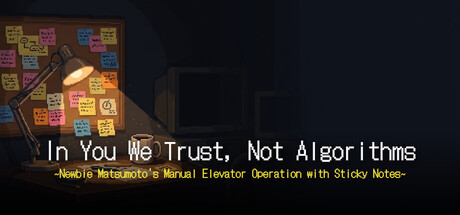
This game uses generative AI in the creation of the following in-game assets:
Background images for the title screen, game clear screen, and game over screen.
Sticky notes, bulletin boards, and elevator information panels within the game screen.
In-game image assets such as elevators.
Scenarios for using generative AI in games:
-Using generative AI to adjust game programs
-Using generative AI to create art assets
-Used AI tools to assist with multilingual localization translation (pre-generated text)
This game incorporates generative AI to enhance visual storytelling and character depth in the following ways:
Video Content: A portion of the ending cinematic utilizes footage generated by Sora 2, which can be identified by its watermark.
Character Illustrations: Three soldier profile photos displayed within the Personnel Search Center were created using ChatGPT (DALL-E).
We have used these tools to supplement the creative vision of our team and ensure a more immersive atmosphere for our players.
1. In-game artwork
Some visual assets (e.g., character/decor sprites, UI icons) are generated with Google Gemini and OpenAI ChatGPT
(image generation) and further edited, retouched, and composed by the developer in the final art pipeline.
2. Store page and marketing graphical assets
Capsule art, library hero, library capsule, and promotional images are generated with Google Gemini and OpenAI
ChatGPT, and further edited, retouched, and composed by the developer before upload.
3. In-game localization
Text translations are AI-assisted using Anthropic Claude, with developer review for tone and accuracy.
Runtime behavior:
- No generative AI models are bundled with or called from the shipped game binary.
- All AI-generated content is pre-rendered and baked into final assets at build time.
- No user inputs are sent to any AI service during gameplay.
This game uses generative AI to create and support fictional in-game content, including graphic assets, marketing materials, text, creator names, portraits, and related world-building elements. AI-generated content is used only for fictional game purposes and does not represent real people, companies, or events.
During the development of Beyond the Soil: Farming & Tales Prologue, generative AI technologies were used to optimize localization texts and assist in the design phase of certain visual marketing materials.
Character portraits, world objects, and background artwork utilize generative AI as a foundational base. However, every visual asset undergoes heavy, manual editing and refinement through multiple iterations by myself to achieve the game's specific art style.
Some visual assets were generated with AI tools as a starting
point, then hand-edited, pixel-refined, and composited by the
developer. All creative direction, design, and final polish
is human-made.
AI tools were used to assist with text editing, translation, illustrations, and marketing materials.
Game concept, writing, music direction, and narrative structure were created by a human.
As a solo developer, I used AI tools as a foundation to expand the game's scope, manually refining and finalizing every asset to ensure the final result is a high-quality, handcrafted experience.
Beaver's Pond's game design, creative direction, art direction, gameplay systems, and overall vision were conceived and directed by a solo human developer. All AI-generated content was curated, edited, and integrated by the developer.
AI was used to assist in the following areas:
All game code was written with AI assistance
Character sprite artwork was generated with AI assistance
Lure artwork was generated with AI assistance
Fish artwork was generated with AI assistance
All music tracks were generated with AI assistance
Some store artwork and promotional images were created or edited using generative AI tools. These assets are used only as marketing/store page artwork for Neuralic Race Engineer. The product does not include or redistribute third-party game assets, logos, screenshots, car models, track assets, or proprietary content.
Neuralic Race Engineer uses AI/ML-based logic to analyze telemetry data and provide setup recommendations. It does not generate illegal or infringing user-facing content in real time.
AI tools were used to assist in creating certain promotional/store assets such as capsule images and marketing artwork.
No AI-generated content is included in gameplay, game assets, or user interactions.
Generative AI tools were used as development assistance for scripting and for some marketing or store presentation assets.
All 3D models and core visual assets were created by the developer. The game does not use AI to generate content, code, images, audio, or text during gameplay, and it does not connect to any external AI services.
AI image generation tools were used to create some promotional artwork and store page images. The game does not connect to any AI services or generate AI content during play.
Nexus Legacy is made by a solo developer using AI-assisted production tools. These tools were used during development to help with visual iteration, asset production, prototyping and code assistance, making a larger persistent MMO possible with a small production pipeline.
The final game is not a live AI generator. Gameplay design, balance, economy, progression, PvE/PvP rules, server logic, world structure, final visuals and updates are selected, reviewed, edited and maintained by the developer.
No live generative AI is used to create player-facing content while the game is running.
EQUILIBRIUM uses generative AI to power its core gameplay mechanic: the Policy Terminal.
LIVE-GENERATED CONTENT
When a player types a directive or law in natural language (e.g., "Abolish the luxury car tax"), the AI Engine analyzes the request in real time and generates a structured governmental dossier, including:
- Legislative feasibility analysis
- Budget impact and financial coverage
- Macroeconomic effects (GDP, debt, inflation)
- Social and political consensus projections
- Parliamentary vote simulation
Model used: Anthropic Claude, accessed via API.
Guardrails: AI output is constrained to a fixed set of structured fields defined by the developer. All numeric effects are clamped within bounds enforced by the simulation engine, so no AI output can produce values outside the game's defined ranges. The model operates only on the simulation state provided to it and cannot invent game data: commands that cannot be mapped to a valid government action are refused, and the player is offered bounded policy alternatives instead. No image, audio, or user-data generation is involved, and no player data is used to train any model.
Because responses are generated at runtime, outputs vary between playthroughs: the same directive may produce different wording and different outcomes.
PRE-GENERATED CONTENT
The game's background music track was generated using AI tools during development and ships with the game.
Some promo art elements (promo character) and logo for the game were created using AI tools. Also parts of trailer and in-game soundtrack was created using AI-based tools.
During the game development process, we utilized artificial intelligence tools to assist with programming and created a variety of game assets, including images, icons, and localized content.
All assets generated or assisted by AI underwent thorough review and necessary adjustments before receiving official approval from our development team. This meticulous process ensured that the quality and style of all materials met the highest standards and remained consistent throughout the project.
AI disclosure: AI assistants were used during development to help write and refine the game's source code and to edit narrative text (board memos, news headlines, event copy). All AI-assisted output was reviewed, edited, and approved by a human before shipping.
Game Demon uses large language models (Llama 3.1/3.3 via Groq API, plus optional local Ollama inference) to generate coaching text in real time from the user's match data. Vision models analyze user-sampled frames. No user content is sent to third parties without explicit opt-in. No generative images or audio in final output.
Official AI Usage Statement:
Some of the soundtracks in the game have been procured from commercial music large-scale models and are accompanied by commercial licensing certificates.
The initial rough models of certain game elements were generated by commercially viable large-scale models to assist in the development process.
Some marketing assets for this game (capsule art) were created with the assistance of AI image generation tools. All gameplay content is procedurally generated by the NAGAS simulation engine — a custom-built system using deterministic algorithms, not generative AI.
Silly Agent is a labor of love by a single developer. To make a game of this scale possible, I've integrated AI technology for specific assets like background music, character voices, and some 3D model foundations. This tech acts as my "extended team," allowing me to deliver a rich, voiced, and musically atmospheric world that would otherwise take years for one person to build manually.
This game uses generative AI in the creation of the following in-game assets:
Background images for the title screen, game clear screen, and game over screen.
Sticky notes, bulletin boards, and elevator information panels within the game screen.
In-game image assets such as elevators.
Scenarios for using generative AI in games:
-Using generative AI to adjust game programs
-Using generative AI to create art assets
-Used AI tools to assist with multilingual localization translation (pre-generated text)
This game incorporates generative AI to enhance visual storytelling and character depth in the following ways:
Video Content: A portion of the ending cinematic utilizes footage generated by Sora 2, which can be identified by its watermark.
Character Illustrations: Three soldier profile photos displayed within the Personnel Search Center were created using ChatGPT (DALL-E).
We have used these tools to supplement the creative vision of our team and ensure a more immersive atmosphere for our players.
1. In-game artwork
Some visual assets (e.g., character/decor sprites, UI icons) are generated with Google Gemini and OpenAI ChatGPT
(image generation) and further edited, retouched, and composed by the developer in the final art pipeline.
2. Store page and marketing graphical assets
Capsule art, library hero, library capsule, and promotional images are generated with Google Gemini and OpenAI
ChatGPT, and further edited, retouched, and composed by the developer before upload.
3. In-game localization
Text translations are AI-assisted using Anthropic Claude, with developer review for tone and accuracy.
Runtime behavior:
- No generative AI models are bundled with or called from the shipped game binary.
- All AI-generated content is pre-rendered and baked into final assets at build time.
- No user inputs are sent to any AI service during gameplay.