Public Steam disclosure research25,706 disclosures tracked
Where do games disclose AI use?
Search developers’ Steam disclosures, compare classified AI use across
games, and follow recorded changes.
This index adds cross-game classifications and statistics to
statements published on individual store pages.
Groups reflect automatic analysis of public disclosures; mature records are excluded. These counts do not measure AI use across all of Steam.
Missing or unclear statements cannot establish whether a game uses AI.
Generative AI was used solely to assist with drafting and translating the Japanese and English descriptions for the Steam store page. Generative AI was not used for any other purpose. All content within the game itself was created by humans.
Some of the art in this game — the chef characters, the customer characters, the lane skins, and some of the plates — was created with the help of AI image generation tools. The sushi artwork does not use AI.
Generative AI tools were used during development to assist with programming and in the creation of certain pre-generated game assets. All AI-assisted content was reviewed, selected, edited when necessary, and manually integrated by the developer. No AI-generated content is produced in real time during gameplay.
Generative AI was used during development to assist with the creation of some pre-generated assets. The game does not generate AI content during gameplay and does not connect to any external AI services.
Generative AI was used during development to create the game’s pre-generated 2D visual assets, including card illustrations, backgrounds, UI decorative elements, and Steam marketing materials. It was also used to assist with portions of the store text and localization. All AI-assisted content was selected, edited, and reviewed by the developer before publication. The game does not use generative AI to generate content at runtime.
Portions of the in-game codex (character biographies, historical battle summaries) were drafted with the assistance of a large language model based on the developer's own lore notes and edited by hand. A subset of pixel-art tile and prop textures were procedurally generated from developer-written Python scripts. All content is reviewed and finalized by the developer; no generative image models (e.g. Stable Diffusion, Midjourney) were used to produce in-game art.
In-game background and character artwork, as well as store graphical assets, were pre-rendered using generative AI and manually reviewed and edited by the developer. All narrative text was written by the developer. No live-generated content.
This game makes extensive use of generative AI in the creation of most game assets, including 3D modeling, voice, sound, video, images, textures, scenario and narrative writing, and translation/localization. As a result, various content and assets included in the game may be generated or assisted using generative AI.
HaddyForge utilizes PixelLab AI as part of our development workflow to assist with the prototyping and production of select pixel-art sprites, character concepts, and animation frames.
AI-assisted output is primarily used as a starting point for development and is not typically considered game-ready in its initial form. Assets are reviewed, refined, edited, and iterated upon by the developer using PixelLab, Aseprite, and our broader pixel-art workflow until they meet the visual, animation, and technical requirements of the game.
As an independent studio combining pixel-art creation and software development, HaddyForge uses AI-assisted tools to accelerate experimentation and prototyping while maintaining direct creative control over the final assets included in the game.
AI-assisted development tools have also been used during software development to help review and iterate on game systems, identify potential bugs, improve testing, and increase development efficiency. All resulting game systems and implementations are reviewed, tested, and integrated by the developer before release.
Underkeep's visual assets — character and monster sprites, traps, tiles, effects, UI art, and store artwork — were produced using generative AI image tools. The developer selected, adjusted, and quality-checked every asset before it went into the game.
The English and Spanish text was machine-translated from the original Korean.
Parts of the source code were written with an AI coding assistant, under the developer's direction and review.
Music and sound effects are not AI-generated. They are human-made CC0 assets from Kenney and OpenGameArt, and the in-game font (Galmuri) is a human-made open-source font.
Underkeep does not use generative AI while you play. The game runs fully offline and generates no content at runtime.
Some of the content in TOWER TOWER was created with the help of generative AI tools. This applies to parts of the pixel art and the in-game music and sound effects, to the store page text and its translations, and to promotional materials such as the trailer and the capsule images. All AI-assisted content was reviewed and edited by the developer before being used. The game does not generate anything with AI while it is running — everything you see and hear in the game is finalized in advance.
Parts of this game's content were created with generative AI tools:
- 3D models and their textures (towers, enemies, terrain and scenery props) were generated with Meshy AI, then hand-adjusted and assembled by the developer.
- The English localization was AI-translated from the original Chinese text and then reviewed by the developer.
- Some in-game flavor text (event, relic and achievement descriptions) was drafted with an AI writing assistant.
- Some store page and marketing artwork was produced with AI image tools.
All of this content is generated ahead of time and ships as fixed assets. The game does not generate any content live during play and does not connect to any AI service at runtime. Sound effects and music are procedurally synthesized by our own scripts and are not AI-generated.
Generative AI was used to create some visual elements of the game's main menu and to assist with programming during development. Claude was used as a coding assistant to help write, review, and troubleshoot code.
AI generation tools were used to help create the character art on the Steam capsule and the in-game skill icons. AI was also used to assist with localization/translation. All assets were reviewed and finalized by the developer.
Generative AI tools were used during development to assist with the creation of pre-generated visual assets, including some game artwork and Steam store/marketing assets. All generated content is reviewed and curated before inclusion in the game or its marketing materials. The game does not generate AI content during gameplay.
Character/background art: ChatGPT (image generation)
Music: SOUNDRAW (AI music generation)
Translations other than Japanese (10 languages): Machine-translated via ChatGPT
No AI runs at runtime — everything is pre-generated and bundled
We use AI-based text-to-speech tools to generate the character voice-over in this game. Everything else that ships in the game is made by our own development team.
Some 2D art assets (backgrounds, characters, UI icons) were created with the assistance of generative AI tools and then edited, cropped and assembled manually. Localization text for some supported languages was assisted by AI translation. All generated content was reviewed by the developer.
We use generative AI in two limited ways.
Translation. Simplified Chinese, German, Japanese, and Brazilian Portuguese were machine-translated so the story reaches more players. English, Turkish, French, and Spanish were localized by our international friends and us. However, AI translation can miss nuance, so we warmly welcome player feedback to improve it.
Placeholder art. Three images are AI-generated: the Prologue background and the Mentor and Player portraits. They are placeholders. We believe in human expression and will replace them with commissioned art once the game has an audience.
Everything else (code, design, and all other artwork) is made by human hands.
The background images featured in the game were created using AI.
Some of the images used in the in-game UI were generated using AI.
The in-game background music (BGM) was created using AI.
Generative AI was used to draft this game's localized interface text (English, Japanese and Simplified Chinese); every line was reviewed and edited by the developer before shipping. The Han character data, spell descriptions and store artwork are not AI-generated: the characters come from Unicode IDS and public dictionary data, the spell descriptions are assembled by a deterministic algorithm from hand-written word pools, and the store images and trailer are drawn programmatically from real in-game captures. No AI runs during gameplay, and the game does not connect to any external AI service.
Generative AI tools were used in the artwork production process for this game. The resulting images were selected, edited, and integrated by the developer to match the game’s atmosphere and direction.
Some art assets, localized text, and store marketing materials were created with the assistance of generative AI during development, then reviewed, edited, and integrated by the developer. The game does not use generative AI to create content during gameplay.
Game Arena X uses AI-generated content only to a very limited extent. A small number of UI elements were initially created with the assistance of AI, after which they were extensively refined, adjusted, and customized by our in-house design team.
All other aspects of Game Arena X — including the platform’s concept, visual design, competitive systems, gameplay features, user experience, and overall development — are entirely original and created by our team.
Generative AI was used in a limited, supporting role during development:
• Portions of this store page description were drafted with the help of AI text tools and then reviewed and edited by the developer.
• A small number of icons (used on the store page) were created with the assistance of AI image generation tools and refined by the developer.
The game itself does not use generative AI at runtime.
Some assets in Crown Cribbage were made with the help of generative AI tools:
- in-game music was generated with AI music tools
- capsule/key art
- marketing copy drafts
- assistance with programming
One point of emphasis:
The computer opponents in this game are not generative AI. They are hand-written heuristics, a fixed set of rules for discarding and pegging, tuned by
difficulty.
They see only what you see. They do not look at your hand, and nothing about them is generated while you play.
No AI content of any kind is created during a match.
Generative AI was used in the development of this game. The background art and character illustrations were created with an image generation model; all images were selected, edited, and processed by the developer. The story text and game logic were drafted and implemented with a large language model, with the developer directing the story and scene design, reviewing and approving all content, and requesting revisions. No generative AI runs at runtime during gameplay.
Generative AI tools were used during the early production stage to create preliminary visual assets and reference materials. All AI-assisted assets included in the final game were manually edited, refined, and reviewed by our designers.
Store page and marketing artwork (capsule images, library assets)
were created with the assistance of generative AI image tools.
Some in-game art assets were also produced with AI assistance.
All generated content was reviewed, edited, and finalized by
the developer.
The six staff portrait images currently in the game are AI-generated placeholders. They are being replaced with commissioned, hand-painted portraits by a human artist before release. Everything else — the key art, the store art, every case, every line of dialogue, the music, and the simulation itself — is human-made. The game runs no AI at play time.
I used generative AI tools to assist in the creation of the graphical assets for this game, including the store page banners and library icons. The AI was used to generate base concepts and visual elements, which were then refined and adjusted to match the game's theme and branding.
AI tools were used during development to generate some of the visual assets (such as UI elements/background textures) and promotional/audio elements. All AI-generated content was reviewed, edited, and integrated manually into the game.
This game uses generative AI tools to help create static visual assets, including card illustrations and background artwork. All AI-generated content is produced during development and does not change during gameplay — nothing is generated in real time.
Some character, creature, environment, loop-video, and marketing artwork was created with generative AI during development, then reviewed, edited, and approved by the development team. The game does not generate content at runtime, connect to external AI services, or send player input to AI services.
We have AI placeholders for audio and visual 2D placements (i.e logo, 2D art). The rest of assets are purchased through Unity or hand made as of writing this (8/14/2026)
This game was developed with the help of generative AI.
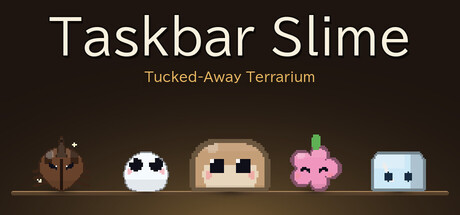
- Generative AI was used to write and translate text (slime descriptions,
in-game wording, and the English localisation). All of it was reviewed
and edited by a human.
- Generative AI was also used to write program code.
- The slime pixel art is not image-generated. It is drawn by a rendering
program written for this game.
- No AI runs while the game is playing. The game makes no network
connections and calls no AI models.
Generative AI was used during development to create a small amount of temporary placeholder imagery. AI-generated content is limited to pre-generated visual assets and no AI content is generated during gameplay.
Some 2D art assets (character portraits and a portion of the character sprites) and some in-game text (dialogue lines) were produced with the assistance of generative AI tools. All AI-generated output was manually edited, retouched and adjusted by the developer before being included in the game.
No content is generated at runtime; everything ships with the build as pre-generated assets.
I used generative AI in the process of creating most art/visual assets in Trouble Shooters, with touch ups made after generation. Music and sound effects were either composed without the use of generative AI or sourced from sound libraries that predate generative AI workflows. Nothing is generated on-the-fly.
Generative AI was used solely to assist with drafting and translating the Japanese and English descriptions for the Steam store page. Generative AI was not used for any other purpose. All content within the game itself was created by humans.
Some of the art in this game — the chef characters, the customer characters, the lane skins, and some of the plates — was created with the help of AI image generation tools. The sushi artwork does not use AI.
Generative AI tools were used during development to assist with programming and in the creation of certain pre-generated game assets. All AI-assisted content was reviewed, selected, edited when necessary, and manually integrated by the developer. No AI-generated content is produced in real time during gameplay.
Generative AI was used during development to assist with the creation of some pre-generated assets. The game does not generate AI content during gameplay and does not connect to any external AI services.
Generative AI was used during development to create the game’s pre-generated 2D visual assets, including card illustrations, backgrounds, UI decorative elements, and Steam marketing materials. It was also used to assist with portions of the store text and localization. All AI-assisted content was selected, edited, and reviewed by the developer before publication. The game does not use generative AI to generate content at runtime.
Portions of the in-game codex (character biographies, historical battle summaries) were drafted with the assistance of a large language model based on the developer's own lore notes and edited by hand. A subset of pixel-art tile and prop textures were procedurally generated from developer-written Python scripts. All content is reviewed and finalized by the developer; no generative image models (e.g. Stable Diffusion, Midjourney) were used to produce in-game art.
In-game background and character artwork, as well as store graphical assets, were pre-rendered using generative AI and manually reviewed and edited by the developer. All narrative text was written by the developer. No live-generated content.
This game makes extensive use of generative AI in the creation of most game assets, including 3D modeling, voice, sound, video, images, textures, scenario and narrative writing, and translation/localization. As a result, various content and assets included in the game may be generated or assisted using generative AI.
HaddyForge utilizes PixelLab AI as part of our development workflow to assist with the prototyping and production of select pixel-art sprites, character concepts, and animation frames.
AI-assisted output is primarily used as a starting point for development and is not typically considered game-ready in its initial form. Assets are reviewed, refined, edited, and iterated upon by the developer using PixelLab, Aseprite, and our broader pixel-art workflow until they meet the visual, animation, and technical requirements of the game.
As an independent studio combining pixel-art creation and software development, HaddyForge uses AI-assisted tools to accelerate experimentation and prototyping while maintaining direct creative control over the final assets included in the game.
AI-assisted development tools have also been used during software development to help review and iterate on game systems, identify potential bugs, improve testing, and increase development efficiency. All resulting game systems and implementations are reviewed, tested, and integrated by the developer before release.
Underkeep's visual assets — character and monster sprites, traps, tiles, effects, UI art, and store artwork — were produced using generative AI image tools. The developer selected, adjusted, and quality-checked every asset before it went into the game.
The English and Spanish text was machine-translated from the original Korean.
Parts of the source code were written with an AI coding assistant, under the developer's direction and review.
Music and sound effects are not AI-generated. They are human-made CC0 assets from Kenney and OpenGameArt, and the in-game font (Galmuri) is a human-made open-source font.
Underkeep does not use generative AI while you play. The game runs fully offline and generates no content at runtime.
Some of the content in TOWER TOWER was created with the help of generative AI tools. This applies to parts of the pixel art and the in-game music and sound effects, to the store page text and its translations, and to promotional materials such as the trailer and the capsule images. All AI-assisted content was reviewed and edited by the developer before being used. The game does not generate anything with AI while it is running — everything you see and hear in the game is finalized in advance.
Parts of this game's content were created with generative AI tools:
- 3D models and their textures (towers, enemies, terrain and scenery props) were generated with Meshy AI, then hand-adjusted and assembled by the developer.
- The English localization was AI-translated from the original Chinese text and then reviewed by the developer.
- Some in-game flavor text (event, relic and achievement descriptions) was drafted with an AI writing assistant.
- Some store page and marketing artwork was produced with AI image tools.
All of this content is generated ahead of time and ships as fixed assets. The game does not generate any content live during play and does not connect to any AI service at runtime. Sound effects and music are procedurally synthesized by our own scripts and are not AI-generated.
Generative AI was used to create some visual elements of the game's main menu and to assist with programming during development. Claude was used as a coding assistant to help write, review, and troubleshoot code.
AI generation tools were used to help create the character art on the Steam capsule and the in-game skill icons. AI was also used to assist with localization/translation. All assets were reviewed and finalized by the developer.
Generative AI tools were used during development to assist with the creation of pre-generated visual assets, including some game artwork and Steam store/marketing assets. All generated content is reviewed and curated before inclusion in the game or its marketing materials. The game does not generate AI content during gameplay.
Character/background art: ChatGPT (image generation)
Music: SOUNDRAW (AI music generation)
Translations other than Japanese (10 languages): Machine-translated via ChatGPT
No AI runs at runtime — everything is pre-generated and bundled
We use AI-based text-to-speech tools to generate the character voice-over in this game. Everything else that ships in the game is made by our own development team.
Some 2D art assets (backgrounds, characters, UI icons) were created with the assistance of generative AI tools and then edited, cropped and assembled manually. Localization text for some supported languages was assisted by AI translation. All generated content was reviewed by the developer.
We use generative AI in two limited ways.
Translation. Simplified Chinese, German, Japanese, and Brazilian Portuguese were machine-translated so the story reaches more players. English, Turkish, French, and Spanish were localized by our international friends and us. However, AI translation can miss nuance, so we warmly welcome player feedback to improve it.
Placeholder art. Three images are AI-generated: the Prologue background and the Mentor and Player portraits. They are placeholders. We believe in human expression and will replace them with commissioned art once the game has an audience.
Everything else (code, design, and all other artwork) is made by human hands.
The background images featured in the game were created using AI.
Some of the images used in the in-game UI were generated using AI.
The in-game background music (BGM) was created using AI.
Generative AI was used to draft this game's localized interface text (English, Japanese and Simplified Chinese); every line was reviewed and edited by the developer before shipping. The Han character data, spell descriptions and store artwork are not AI-generated: the characters come from Unicode IDS and public dictionary data, the spell descriptions are assembled by a deterministic algorithm from hand-written word pools, and the store images and trailer are drawn programmatically from real in-game captures. No AI runs during gameplay, and the game does not connect to any external AI service.
Generative AI tools were used in the artwork production process for this game. The resulting images were selected, edited, and integrated by the developer to match the game’s atmosphere and direction.
Some art assets, localized text, and store marketing materials were created with the assistance of generative AI during development, then reviewed, edited, and integrated by the developer. The game does not use generative AI to create content during gameplay.
Game Arena X uses AI-generated content only to a very limited extent. A small number of UI elements were initially created with the assistance of AI, after which they were extensively refined, adjusted, and customized by our in-house design team.
All other aspects of Game Arena X — including the platform’s concept, visual design, competitive systems, gameplay features, user experience, and overall development — are entirely original and created by our team.
Generative AI was used in a limited, supporting role during development:
• Portions of this store page description were drafted with the help of AI text tools and then reviewed and edited by the developer.
• A small number of icons (used on the store page) were created with the assistance of AI image generation tools and refined by the developer.
The game itself does not use generative AI at runtime.
Some assets in Crown Cribbage were made with the help of generative AI tools:
- in-game music was generated with AI music tools
- capsule/key art
- marketing copy drafts
- assistance with programming
One point of emphasis:
The computer opponents in this game are not generative AI. They are hand-written heuristics, a fixed set of rules for discarding and pegging, tuned by
difficulty.
They see only what you see. They do not look at your hand, and nothing about them is generated while you play.
No AI content of any kind is created during a match.
Generative AI was used in the development of this game. The background art and character illustrations were created with an image generation model; all images were selected, edited, and processed by the developer. The story text and game logic were drafted and implemented with a large language model, with the developer directing the story and scene design, reviewing and approving all content, and requesting revisions. No generative AI runs at runtime during gameplay.
Generative AI tools were used during the early production stage to create preliminary visual assets and reference materials. All AI-assisted assets included in the final game were manually edited, refined, and reviewed by our designers.
Store page and marketing artwork (capsule images, library assets)
were created with the assistance of generative AI image tools.
Some in-game art assets were also produced with AI assistance.
All generated content was reviewed, edited, and finalized by
the developer.
The six staff portrait images currently in the game are AI-generated placeholders. They are being replaced with commissioned, hand-painted portraits by a human artist before release. Everything else — the key art, the store art, every case, every line of dialogue, the music, and the simulation itself — is human-made. The game runs no AI at play time.
I used generative AI tools to assist in the creation of the graphical assets for this game, including the store page banners and library icons. The AI was used to generate base concepts and visual elements, which were then refined and adjusted to match the game's theme and branding.
AI tools were used during development to generate some of the visual assets (such as UI elements/background textures) and promotional/audio elements. All AI-generated content was reviewed, edited, and integrated manually into the game.
This game uses generative AI tools to help create static visual assets, including card illustrations and background artwork. All AI-generated content is produced during development and does not change during gameplay — nothing is generated in real time.
Some character, creature, environment, loop-video, and marketing artwork was created with generative AI during development, then reviewed, edited, and approved by the development team. The game does not generate content at runtime, connect to external AI services, or send player input to AI services.
We have AI placeholders for audio and visual 2D placements (i.e logo, 2D art). The rest of assets are purchased through Unity or hand made as of writing this (8/14/2026)
This game was developed with the help of generative AI.
- Generative AI was used to write and translate text (slime descriptions,
in-game wording, and the English localisation). All of it was reviewed
and edited by a human.
- Generative AI was also used to write program code.
- The slime pixel art is not image-generated. It is drawn by a rendering
program written for this game.
- No AI runs while the game is playing. The game makes no network
connections and calls no AI models.
Generative AI was used during development to create a small amount of temporary placeholder imagery. AI-generated content is limited to pre-generated visual assets and no AI content is generated during gameplay.
Some 2D art assets (character portraits and a portion of the character sprites) and some in-game text (dialogue lines) were produced with the assistance of generative AI tools. All AI-generated output was manually edited, retouched and adjusted by the developer before being included in the game.
No content is generated at runtime; everything ships with the build as pre-generated assets.
I used generative AI in the process of creating most art/visual assets in Trouble Shooters, with touch ups made after generation. Music and sound effects were either composed without the use of generative AI or sourced from sound libraries that predate generative AI workflows. Nothing is generated on-the-fly.