Public Steam disclosure research26,450 disclosures tracked
Where do games disclose AI use?
Search developers’ Steam disclosures, compare classified AI use across
games, and follow recorded changes.
This index adds cross-game classifications and statistics to
statements published on individual store pages.
Groups reflect automatic analysis of public disclosures; mature records are excluded. These counts do not measure AI use across all of Steam.
Missing or unclear statements cannot establish whether a game uses AI.
Generative AI was used to assist with some interface text, instructions, upgrade descriptions, localization, and promotional branding such as the game logo. No generative AI runs during gameplay, and the game does not connect to third-party AI services.
Echoes of the Broken is made by a single person, with no background in art or game development. Generative AI was used as a tool in this process, never as the creator of the game.
Visuals: some creatures, portraits and illustrations were drawn by hand, then reworked with AI tools to keep the style consistent.
Text: the story, characters and dialogue are written by the developer. The English version was translated with the help of AI, then proofread (I talk english but...like a french man hahaha).
Code: the game is programmed by the developer, with tutos and AI tools used as assistance.
No content is generated by AI while you play.
If the project is funded, part of the budget will go to hiring artists to improve the illustrations and animations.
The game texts are polished with AI assistance. Artwork and background music are generated by AI. The core story framework, character relationships and plot design are originally created by the developer. No runtime AI content will be produced during gameplay.
Generative AI is used to assist with game programming.
It is also used to create some of the in-game visual assets and sound effects, as well as to translate text.
Transparency notice:
The game features graphics (background menu, loading screens and animal encyclopaedia) that were generated with the aid of AI. The banners in the store were also generated with the aid of AI.
Some textures, 3D models and translations were created using generative AI tools, then selected and integrated by the developer. These tools were also used to produce visual references and promotional visuals.
No content is generated by AI during matches. The computer opponent uses programmed game logic.
Woke Busters was made by a solo developer using AI tools. The music was generated with AI (Suno) and some of the writing was drafted with AI assistance; everything was selected, edited and directed by the developer. The 3D models, animation and character voices are built by the game’s own code. No AI content is generated during gameplay.
We used AI tools while making this game. The music was composed with an AI model (the AI wrote the note data, and the game plays it on a real-time synthesizer). Some in-game text, including character dialogue and the lines in the story cutscenes, the names and descriptions of districts, cases, loot and achievements, and the short loot tags you type during cases, as well as the store page text and the trailer captions, were drafted with AI assistance. The 3D models, story cutscenes and animation, visual and sound effects, and interface were built procedurally in code with help from an AI coding assistant; no image-generation models were used. The typing passages are public-domain literature by human authors. The game does not generate any content with AI while you play.
Some of the in-game texts (dialogue, cutscenes, notes) as well as the store page texts were written with the help of an AI language model and then reviewed and edited by the developer. The graphics come from licensed asset packs or were created by the developer.
Generative AI tools were used during development to help create some of the game's content and the store page text. All AI-assisted content was reviewed and edited by the developer. The game does not generate any AI content live during gameplay.
AI tools were used during development to assist with selected parts of the production process, such as brainstorming, text editing, and the creation or refinement of some game mechanics.
Nearly all visual assets used in the game were either created by the developer or sourced from professional asset stores and their respective creators, rather than generated with AI.
All AI-assisted content was reviewed and tested by the developer to ensure it fits the game’s intended style and quality.
Pre-generated content: Some game assets were created with generative AI tools (ChatGPT, Gemini) and reviewed and edited by the developer: part and model icons, backgrounds, cut-in illustrations, the logo and store capsule art. About half of the customer order emails were drafted with AI and edited by the developer. BGM tracks were generated with SOUNDRAW. Translations into English, German, Polish, Traditional Chinese, Simplified Chinese, Russian and Ukrainian were produced with AI tools (Gemini, Claude) and are machine-translated.
Live-generated content: None. No AI runs while the game is played; all content is pre-made and bundled with the game.
Some of the game’s text (interface labels, descriptions and their translations) and the text of this store page were written with the help of an AI language model and reviewed by the developer. The rulers’ portraits and the start menu’s background are placeholder images made with an AI image model: they keep those spots from standing empty and are meant to be replaced by original artwork. Everything else on screen is rendered in real time by the game’s own engine, and its music and sounds are human-made recordings or synthesized by the game. No AI content is generated while you play.
We used generative AI during development to make the game's art: the pixel-art players, goalkeepers, referees and crowd, the logo and the football's texture. We wrote the specifications and checked every result. The trailer's music was made by code written with an AI model. Nothing is generated by AI while you play, and the game doesn't connect to any AI service.
Generative AI tools were used to help create some background music and sound effects, the logo, icons, Steam achievement icons and store artwork, and to assist with translating in-game text and drafting store descriptions. The developer reviews and selects the resulting assets and text, and edits them as needed. The bonsai and cities are procedurally generated by the game's own code. The game does not generate content using AI or connect to external AI services during gameplay.
This game contains art assets and music created with the assistance of generative AI tools. These outputs were screened, modified, and integrated into the game through human review.
The in-game post icons, the logo, the envelope and hard drive objects in the store art, and the achievement icons was made with ChatGPT image generation during development. Nothing is generated while the game runs.
This game uses generative AI tools to assist in creating some of its 2D artwork, character animations, and music assets, including MINIMAX and SUNO.
DNAXCAT is our company's original brand. The game's characters and world are based on our original designs and settings.
AI-generated assets are created during development, manually selected, edited, and reviewed for quality, then included as fixed game resources. The development team checks the applicable usage rights and commercial license terms for the assets used and excludes any identified infringing or inappropriate content.
The game does not use generative AI to generate images, music, text, or code during gameplay and does not connect to external AI services. Fortune draws randomly select entries from a fixed, prewritten and reviewed database of fortune messages.
Some NPC character artwork in the game was created using generative AI during development. These assets are pre-generated and included in the final build for players to see.
The illustrations and portraits were made with AI image-generation tools, working from historical photographs and engravings, and each image was reviewed and selected by the developer. Nothing is generated by AI while you play.
Generative AI tools were used to create some of the Steam store capsule artwork and library artwork for this game. These images are pre-generated assets used for promotional and display purposes. No AI tools are used or called during gameplay, and no AI content is generated in real time.
Pre-generated: AI coding assistants are used as a development tool: code suggestions, code review, refactoring, bug fixing and the structure of pull requests and issues. I work in IT professionally, writing and maintaining scripts in security-sensitive environments, so I know how to review the code these tools produce and I vouch for every line that ships.
Game design, systems, rules and balance are my own work. No artwork, 3D models, music, sound or fonts are AI-generated; every licensed asset is listed in the in-game credits.
All of the game's audio, the music and every sound effect, was generated with ElevenLabs and is AI-generated. All art is drawn by the game's own code at runtime and was not generated by an image model, except two licensed third-party icon sets that are not code-drawn and not AI-generated: the menu's 13 icons, which are Tabler Icons (tabler.io, MIT licence, recoloured), and the key and button prompt icons, which are Kenney's Input Prompts (kenney.nl, CC0). The five course backdrops and the game's icon are an exception too: they are vector art that an AI coding assistant wrote as SVG code, not images generated by an image model. Store capsules and screenshots are captures of the game. The trailer's music was also generated with ElevenLabs. The code and design were built by the developer working with AI coding assistants, with the game's feel judged by human playtest.
Starting in 2026, BullyBall Soccer uses AI in the following areas:
• Artwork: AI is used to create and enhance Steam artwork.
• Music: AI is used to generate additional in-game background music and songs.
• Code: AI, primarily Claude Sonnet, is used extensively to co-author the game's C++ code. All AI-generated code is supervised, reviewed, tested and integrated by the developer.
AI tools were used solely during the development process. The game does not generate content using artificial intelligence while it is being played.
- A portion of the program code was written with the help of AI coding assistants; it was subsequently reviewed and tested by the developers.
- Translations into other languages and certain in-game texts (such as chat lines for bots) were drafted using artificial intelligence; these were then reviewed and edited by the developers.
Generative AI was used to assist in the creation of some 2D visual assets, including certain fish and other artwork. AI-generated materials were reviewed, edited, and adjusted by the developer before being included in the game. Generative AI was also used as a development aid for ideation and production support. No content is generated by AI in real time during gameplay.
Generative AI was used solely to assist in creating certain promotional assets (specifically the game launch icon and store capsule/cover art). All in-game content—including artwork, music, sound effects, animations, and narrative design—was human-made without generative AI. The game does not feature any live or real-time AI-generated content.
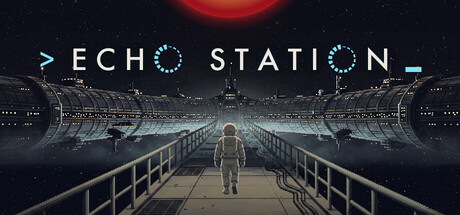
Some of the art in Echo Station was made using generative AI image tools. That covers the station's floor and wall textures, the character sprite, and the background image. Each was generated from prompts I wrote, then processed, recoloured, and assembled into the game by hand.
The writing is mine. Every crew log, every line of dialogue, and the story itself. The audio is not AI generated either; it is synthesised procedurally in code while you play.
Pre-generated AI content is used in some promotional artwork and Steam store capsule images. These images were generated and/or edited during development and are static. No generative AI is used live during gameplay and no AI-generated content is created while the game is running
Generative AI was used during development to help create some visual assets, including character and environment concept art, textures, UI decorations, item icons, and some 3D models, as well as to assist with some written content and store descriptions. These materials were selected, edited, processed, and integrated into the game as pre-generated content. The game does not generate AI content in real time during gameplay.
Generative AI was used during development to create the soundtrack, some prerecorded voices, sound effects, ambient audio and event illustrations, and to create or refine selected 3D models. AI-assisted tools were also used to translate in-game text. All AI-generated content was reviewed and edited by the developer before inclusion. The game does not generate content with AI during gameplay.