Public Steam disclosure research26,450 disclosures tracked
Where do games disclose AI use?
Search developers’ Steam disclosures, compare classified AI use across
games, and follow recorded changes.
This index adds cross-game classifications and statistics to
statements published on individual store pages.
Groups reflect automatic analysis of public disclosures; mature records are excluded. These counts do not measure AI use across all of Steam.
Missing or unclear statements cannot establish whether a game uses AI.
AI tools were used under the developer’s direction to create the game’s text and localization, and to write the code that generates its images, animations, sound effects and music. Store screenshots and gameplay footage are captured from the game. The game does not use live generative AI while you play.
The store artwork and some 3D models, such as a few landmark buildings, were first generated with AI tools and then edited, textured and placed by hand. AI tools also assisted with programming. No content is generated by AI while you play.
Generative AI was used to create some of the images in the game. As a solo developer working on my first game, I chose this approach. In the future, I intend to avoid using AI whenever possible.
this game contains AI generated content, in particular the in-game texts and localization are built with AI assistance, the graphics, music or sounds are not AI generated. in future the AI generated content will be progressively removed in favor of human generated content.
We are a student development team, and this game was created as our graduation project.
We value creating our own content, but we were unable to create the background music ourselves.
We therefore used generative AI only for the background music. All other game assets were created by us without AI.
Some pre-generated game artwork, including Event Mark imagery, was created with the help of generative AI tools during development and reviewed before inclusion. The game does not generate AI content during play.
AI tools were used in the later stages of development for game refinement, localization, and the creation of some visual and audio assets. The project is developed by a single creator, and AI-assisted tools are part of the workflow. All game sprites and animations were composed manually. All gameplay systems and implementation are authored and controlled by the developer. No generative AI is used at runtime.
We used AI tools to make some of the art that ships with the game, and to help write its text.
- Map ground: the textures of the sea, coasts, plains, forests, hills and mountains were generated with an AI pixel-art tool, then colour-graded and cleaned up by script.
- Buildings: the standard 3D-looking building pictures you see when you zoom in were generated with the same tool from sketches we drew, then cleaned up by script.
- Some emblems, profile banners, flags and emotes were made with AI pixel-art tools, then cleaned up and animated by script.
- Store art: our store capsule images were retouched with an AI image tool.
- Text: the game's menus, tutorial, mission briefings and update notes, and this store page, were written with AI assistance.
- Translations: all our translations from English were made with AI assistance.
Every AI-made asset was reviewed before it shipped. Nothing is generated by AI while you play.
The game currently contains a small number of visual elements (including some assets and icons) generated using generative AI tools. These elements are still present in the current version of the game and are being used temporarily.
They will be progressively replaced with assets created by our team. All of these AI-generated elements will be replaced before the game's official release.
All 100 historical-figure portrait illustrations included in the game were created using ChatGPT image generation. They are bundled as static game assets. No content is generated during play, and no player data is sent to OpenAI or another AI provider.
Dual Breach is designed and developed by a solo developer. Some of the content in the game was created with the help of AI tools during development, while more in-depth and detailed content was made entirely by the developer, or paid artists outside of the development team.
Any portion of the game's development that brought challenge to the developer's skillset, was tackled with commissioned work with professionals.
• Some 3D assets such as rigs and props were synthesised from code with AI assistance rather than modelled by hand by the developer for efficiency purposes.
• Some sound effects were synthesised from code with AI assistance rather than recorded by the developer for efficiency purposes.
The player character was modelled by a commissioned human artist, and many sounds come from third-party sound libraries. No AI is used while you play: all content was created and reviewed before release, and the game does not generate content or connect to any AI service.
Generative AI tools were used during development for portions of the 2D artwork, 3D assets, music and sound effects, written content and translations, and to assist with programming. These assets were prepared before distribution and selected and integrated under NeonVacaCola’s creative direction. The game does not generate AI content or code during play and does not connect to external generative AI services during gameplay.
Picdex runs a local AI model on your own PC to read the titles written in your screenshots. The model ships with the app, works offline and sends nothing off your computer. It creates no images, audio or video: for each screenshot it returns the title text it sees, a category from a fixed list and short remarks, which the app labels as the model's own words. The Picdex logo was made with the help of AI image-generation tools; the app icon and the store artwork are built from it.
Generative AI was used to create some background music, event background images, promotional library artwork, and app icons. All AI-generated content is pre-generated, and no AI content is generated during gameplay.
The non-English store page text and in-game translations (Spanish, Portuguese, French, German, Simplified Chinese) were produced with the help of generative AI and reviewed by the development team before publishing.
Some of the game's pixel art and audio were created with the assistance of generative AI tools. All assets were then carefully selected, edited, and refined by the developer. The game's text is originally written in English and Brazilian Portuguese, while other language versions were translated with the help of AI.
No content is generated by AI during gameplay.
As development continues, all AI-assisted art and music will be replaced with human-created work, unless they have already been replaced.
AI-generated content:
Music: During the development process, background music tracks generated by artificial intelligence were utilized. All audio generated by artificial intelligence underwent manual review, editing, and optimization to meet quality standards and align with the game's artistic direction.
User interface elements: Certain user interface resources (such as the game start screen and the player count selection screen) were initially generated using artificial intelligence tools, and were subsequently manually adjusted/corrected by the development team.
Manual review: All content generated by artificial intelligence undergoes manual review and modification to ensure it aligns with the game's creative vision and quality expectations, and does not contain inappropriate or unexpected content.
Generative AI tools have been used to assist with the creation of certain visual and audio assets within Record Store Tidy, including artwork, 3D assets, textures and music.
Generative AI tools were used during development to help create some pre-generated character and interface artwork, as well as pre-generated character voices. These assets were selected, edited, and integrated by the developer.
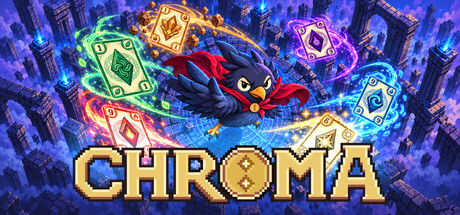
CHROMA uses generative AI tools to create some of its in-game visual assets and promotional materials. These tools have also assisted with writing and translating store page text. This content is prepared during development; the game does not generate content or code using AI during gameplay.
Some of the artwork in Forge to Stars — including illustrations, backgrounds, character portraits, terrain art and promotional images — was created with the help of generative AI tools during development. All AI-assisted assets were reviewed, curated and edited by the developer to ensure quality and that they do not infringe third-party rights. The game does not generate any AI content in real time during play.
Generative AI tools were used during development to assist in creating certain pre-generated [artwork/text/audio/etc.] included with MOTHERLODE. No generative AI is used during gameplay, and the game does not connect to external AI services while being played.
AI assistance has been used for some game content and localization. All AI-assisted code and 3D assets were reviewed, edited, tested, and integrated by the development team. AI-assisted tools were also used for selected Steam marketing artwork. The game does not generate AI content during play or send players' typed text to an AI service.
Chronicle of Gods is made by one person with the help of AI coding assistants. AI is used as a programming tool: writing, refactoring and testing source code to my specification. The game's English text (the interface, the tooltips and the sentence templates the chronicle is built from) was also written with these assistants, to my direction. No image, music or voice model was used. Everything visible, from the globe and the maps to the heraldry, the icons and the interface, is drawn by code, and that code was written with the same assistants to my direction. The lettering is set in open-licence typefaces by human type designers. The sound effects are my own recordings, plus one public-domain (CC0) recording; there is no music yet. The histories each world produces are assembled by procedural systems I designed, not by a language model. The shipped game contains no live-generated AI content: nothing calls out to an AI model while you play, and the game does not require a network connection to generate anything.
Generative AI tools helped create some of Just Dig's content: a few 3D models, the logo, some textures, the achievement icons, the store text and the translations. No content is generated by AI during play.
We used generative AI tools to create some of the content in this game:
- Images: the title logo, the application icon, the store capsule images, the achievement icons, and some of the structures placed on the maps.
- Text: some in-game text, including the English UI text and the achievement names and descriptions, was written or translated with the help of AI.
All AI-generated content was selected and integrated into the game by the developer. No content is generated by AI during gameplay.
During development, generative AI was used as a supporting tool to assist our team with content creation and development tasks. In particular, generative AI was utilized in the creation of in-game environment and map content, as well as in certain development processes. The generated content was then edited, refined, tested, and integrated into the game by our team. Character models were sourced from third-party assets.
AI-generated reference images were used during the creation of some of the game's art assets. The developer designed, hand-drew, and integrated these assets. The AI-generated images were used only as references and were not used directly as in-game assets.
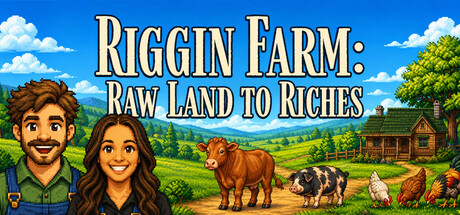
Riggin Farm: Raw Land to Riches incorporates AI-generated visual artwork created during development. These assets are incorporated into the game as pre-generated content.
The game's overall concept, design, mechanics, progression systems, and creative direction are guided by the developer and inspired by real-world farming experiences. AI tools are used to assist with asset creation and development.
The game does not use live generative AI to produce new content during gameplay.
The video game cover artwork was generated using AI tools. All covers are custom concepts that were individually reviewed, edited by hand, and adjusted to fit a cohesive visual art style.
Some 3D props used AI-generated assets as a starting point, with each manually refined for the final in-game version.
As a solo indie developer, generative tools made it feasible to create the large variety of fictional game covers required for this project. I would love to expand the game's collection in the future with commissioned artwork and community created designs. The game's environment, layout, textures, and materials were all created by hand.
The foundation of the game is built upon a genuine passion for the genre and the experience I wanted to create.
Use of AI-Generated Content
During development, we use AI image-generation tools (such as Google's Gemini) to help produce reference art and some in-game visual assets — buildings, characters, items, and UI elements — in our game's cute, chibi cartoon style. Every AI-generated image is reviewed, edited, cropped, and manually integrated by our art team before it is used in the final game; nothing is used as-is straight out of the AI tool.
For narrative text and dialogue, the outline, plot structure, and core content are all written by our development team. AI is used afterward in a supporting role — to expand on and polish existing human-written text — with all AI-assisted revisions reviewed and finalized by the team before inclusion.
No AI-generated content is created live, on-the-fly, or in response to player input during gameplay — all AI-assisted content (art and text alike) is fixed, pre-produced, and reviewed by humans before shipping with the game.
As a solo developer, I use generative AI tools to assist in creating certain visual assets (such as UI icons and 3D Models). All AI-generated content has been personally reviewed, edited, and curated before being included in the game.
I have used AI to generate the things that I currently can't do. Which is the art and audio design (I suck at that). Overal experience and cohesiveness of art are maintained and I've done a lot of checks by hand.
Full transparancy; Further down the line , I would love to work with an artist to create a new style for the game. But that is only when the game generated revenue, so I can actually pay someone to do that.
We use generative AI to support development, including some AI-generated or AI-assisted assets and coding assistance.
Everything is reviewed and refined by our experienced dev team, with game quality always our top priority.
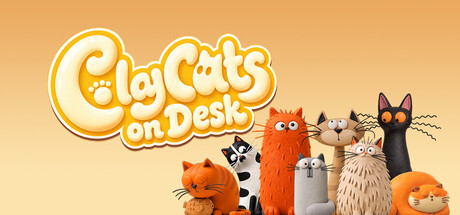
During the development of Clay Cats on the Desk, we used generative AI tools to assist in creating some visual assets, including cat character artwork, animations, and certain user interface elements. Our development team selected, edited, and integrated these assets.
The game does not use generative AI to generate content during gameplay.