Public Steam disclosure research25,380 disclosures tracked
Where do games disclose AI use?
Search developers’ Steam disclosures, compare classified AI use across
games, and follow recorded changes.
This index adds cross-game classifications and statistics to
statements published on individual store pages.
Groups reflect automatic analysis of public disclosures; mature records are excluded. These counts do not measure AI use across all of Steam.
Missing or unclear statements cannot establish whether a game uses AI.
Generative AI was used to assist with drafts of some visual, audio, narrative, and localization assets, as well as marketing materials. All AI-assisted content was reviewed, edited, and finalized manually by the developer.
The game does not generate AI content during gameplay and does not connect to any external AI service.
ChatGPT/Codex was used to assist with writing and editing code.
One main menu background image was generated using ChatGPT.
All AI-assisted work was reviewed by the developer.
RefmusePaper uses generative AI through the Refmuse online workbench to help users create and edit wallpaper images. Live AI generation requires an internet connection, a Refmuse account, and available credits. Users can enter prompts and optionally use reference images to generate or modify wallpaper artwork. Generated content is processed through the Refmuse service and is subject to safety, moderation, and abuse-prevention policies. RefmusePaper may also use AI-assisted sample artwork, screenshots, capsule/library artwork, and promotional materials to represent the wallpaper creation workflow.
Generative AI was used during the development of CORRUPT.EXE to assist with coding, design iteration, brainstorming, and the creation of certain visual assets. All AI-generated content was reviewed, edited, and curated by the developer before being included in the game. No live AI-generated content is created during gameplay, and players do not interact with generative AI systems while playing.
This game uses generative AI in two ways: (1) AI language models (LLM) to generate character dialogue text in real-time during conversations, and (2) AI text-to-speech (TTS) technology to generate character voice audio. AI processing is handled via cloud servers or optional local models. No conversation data is stored or saved on servers. All AI-generated content is produced live based on player input.
This game was developed with the assistance of generative AI tools. Specifically, generative AI was used to assist with the creation and refinement of some background art assets, the creation of some music assets, and the production of some promotional animation materials.
Sparrow God uses generative AI assistance for localization and some store-page/marketing copy. The game's design, mechanics, and mahjong rules are all original works by the developer. In-game visuals and audio are created through the developer's direction + algorithms (procedural rendering/synthesis), not AI-generated images or music. AI is a development-assist tool; the creative direction is led by a human.
The AI acts as your gameplay partner (either as a captain or a guesser). It analyzes the words on the game board and generates short text clues, or tries to guess the correct words based on the text clues you provide.
Some visual assets in Singularity Echoes and on this store page were created with generative AI tools during development, then reviewed and edited by the developer. This includes artwork for buildings, celestial bodies, and the Earth strategic map, as well as menu and store marketing imagery. Gameplay systems, UI logic, balance, and narrative text were implemented by the development team. The game does not use generative AI to create new content during play and does not connect to third-party AI services while you are playing.
Huiyu AI Image is a creative image editor and generator powered by local AI models running on the user's own hardware. All content — including edited images and AI-generated images — is produced by diffusion-based models executed locally on the user's GPU. No content is uploaded to external servers, and all generation remains private to the user's device.
LAST RITE TD uses generative AI tools during development to assist with creating and iterating some visual concepts, marketing artwork, store capsule images, trailer-related promotional materials, voice/audio elements, and certain worldbuilding or text-drafting support.
Some voice/audio elements may also be AI-assisted. All AI-assisted content is reviewed, selected, edited, and integrated by the developer before being used in the game or on the Steam store page.
The game does not use generative AI to create unpredictable real-time gameplay content for players during normal play.
Playstories uses live-generated AI during gameplay to create fictional interactive story prose, dialogue, player choices, scene keywords, branching follow-up scenes, and optional scene images from player prompts and actions through novelai.ai. AI does not control purchases, account actions, executable code, or system-level behavior.
This game uses AI language models to generate real-time conversational text content during gameplay. Players interact with AI-powered desktop companions through text chat. The AI responses are generated either locally on the player's PC or through optional cloud AI services (such as OpenAI, Deepseek, etc.). All AI-generated content consists of text-based conversations only — no AI-generated images, audio, or video are used.
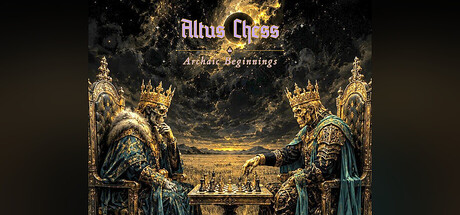
All visual artwork in Altus Chess: Archaic Beginnings — piece designs, board and background art, and promotional/store imagery — was created using generative AI image tools, directed by the developer through human-written prompts based on the game's own pieces and concepts, then reviewed and edited by hand. No content is generated live during gameplay. The game's opponent is a proprietary, hand-built algorithmic chess engine, not generative AI.
SonderSoft uses generative AI for localization to make games accessible to more players worldwide.
This free game with no monetization uses generated music that can be disabled in the settings. Whenever possible, SonderSoft prioritizes paying artists, creators, and actors.
Hire uses AI for its live character conversations and generated portraits, connecting to your own ChatGPT account (it uses your existing ChatGPT plan, with no separate purchase).
The game includes generative AI in the form of relatively structured conversation (voice and/or text to prompt) in context with the setting and era of the documented sites (caravanserai) you will visit.
About Art Assets
DesktopDaily does not use AI-generated artwork for its in-game art assets. Character designs, 3D models, textures, animations, UI assets, and other visual content are created by human artists or based on properly licensed materials.
About Character Voices and Speech Synthesis
DesktopDaily’s character voice models are trained or fine-tuned using voice materials with clear provenance and authorization, and are used for character speech synthesis at runtime. These voice materials come from publicly available or authorized audio materials provided by the corresponding character or voice provider, and are used in accordance with their usage terms and authorized scope.
The character voices played at runtime are synthesized speech and are not original voice recordings.
About the Use of Generative AI
During development, AI assistance was used for parts of the code implementation and for some non-Chinese UI text localization. At runtime, generative AI is used only in optional features, including the character conversation feature, the visual companion feature, and notification assistant tools.
Some non-Chinese UI text localization uses AI-assisted translation and editing. This is limited to UI text localization and is separate from the runtime generation of character dialogue.
In the optional character conversation feature, AI is used to generate character dialogue text and to synthesize speech based on that text. When this feature is enabled, player input may be sent to cloud AI services in order to generate character-style response text. These responses may also be used for speech synthesis and played back in the game. If the player chooses not to use an API, the character conversation feature will not be enabled, and only the basic features will be available.
In the optional visual companion feature, after the player actively enables the feature, the game may use a local vision-language model to analyze screen, window, or application content within the scope authorized by the player. The analysis results may be used as context for character dialogue, allowing the character to respond based on the player’s current computer usage scenario. This feature is disabled by default. If the analysis results are used in cloud-based character dialogue, necessary summary information may be sent as part of the dialogue context to the cloud AI service selected or configured by the player.
In the optional notification assistant tools, after the player actively enables the feature and grants permission, the game may read Windows system notifications, email summaries, or other information sources specified by the player. A local AI model may be used to filter, categorize, or judge the importance of this information in order to decide whether to notify the player. This feature is intended to assist with notification management, and will not reply to emails, send messages, or perform external actions on behalf of the player. AI-based classification and notification results may be inaccurate.
The official trial API provided by the game uses Alibaba Cloud Model Studio. Players may also configure other APIs themselves. When features that require cloud AI are enabled, the necessary conversation content or contextual information is sent directly to the corresponding cloud AI service and is not relayed through the developer’s own server.
Character dialogue generated by AI at runtime is intended only for everyday companion-style interaction. The game uses prompts, content rules, and safety measures to reduce the output of inappropriate, illegal, hateful, sexual, violent, or copyright-infringing content. AI-generated responses may vary and do not represent official statements by DesktopDaily, the game’s developer, any character rights holder, voice provider, or third-party asset creator.
The game includes AI-driven enemy characters ("LLM zombies") that players can interact with through dialogue. These characters use a language model to generate responses dynamically during gameplay. The AI is used only to produce in-game dialogue and behavior for these enemies and does not generate user-uploaded content or external assets.
Thirsty Snail uses an on-device local language model to generate short snail dialogue, personality-based reactions, and race taunts. AI-generated text is triggered by in-game interactions and constrained by character prompts and content moderation rules. Screen-aware reactions are processed locally on the player's device. Screenshots are never stored or uploaded, and private file contents are not read.
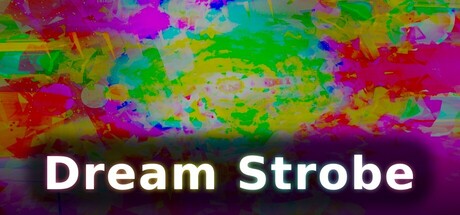
dreamstrobe uses generative AI as a core live feature. When you chat with the visualizer, your prompt is sent to Anthropic's Claude model. Claude writes a Three.js scene — geometry, shaders, motion, post-processing, and audio-reactive behavior — in real time, and the running engine loads and renders it on the fly. Each scene you create is freshly, generated JavaScript that runs in a sandboxed browser context. Outputs are filtered by Anthropic's built-in safety systems to block illegal or harmful content. Generated code is executed locally; no model weights ship with the game. Some textures, environment maps, and sample assets used by the engine were also created or refined with generative AI tools during development, and were reviewed before inclusion. You can use dreamstrobe without writing prompts — a library of pre-authored scenes ships with the game and runs on its own.
Some character artwork, visual assets, animations, and marketing images used in this game were created or assisted with generative AI tools during development. All such assets were reviewed and selected by the developer before being included in the game.
This game includes live-generated AI dialogue. When the player talks with Douki-Cyan, a language model may generate conversational responses in real time based on the player’s input and the current scene context.
All of your conversations with the “manita” character are generated by artificial intelligence. The design, UI/UX, and character design are not generated by artificial intelligenc
We have updated our AI disclosure in order to provide better transparency and clarity around the use of this support tool for Crazy Taxi: World Tour:
At SEGA Corporation, we utilize generative AI as an optional support tool for developers, with the aim of enabling developers to focus more on creative tasks and deliver better experiences to our players.
In Crazy Taxi: World Tour, generative AI was used as part of the ideation process for background objects. However, no AI-generated content will be included in the final game.
This game uses generative AI tools for code creation, refactoring, debugging assistance, and drafting and revising store text. All AI-generated output is reviewed and edited by the developer before use. The game does not generate AI content during gameplay, nor does it connect to any external AI services.
This product uses AI to generate conversation responses and voice output in real time. All AI processing runs locally on the user's machine. No content is pre-generated or stored on external servers.
Some visual assets and promotional materials for this game were created or assisted using generative AI tools. All content was reviewed, edited, and integrated by the developer.
AIvy is a next-generation desktop mascot whose character dialogue is generated by AI on the fly.When you talk to AIvy, or when the character spontaneously speaks up about something happening on your PC, the words aren't pre-written scripts — the AI thinks them up and replies in real time. The generated dialogue is then read aloud by a text-to-speech engine, synchronized to the character's lip movements.[What the AI generates]- The character's dialogue (text)[What the AI does NOT generate]The 3D character itself (VRM model), facial expressions, animations, UI, and sound effects are all pre-authored assets. No images, video, or music are generated by AI during use.[About the AI models]Dialogue generation (default, local inference): AIvy is a local LLM runner built on llama.cpp (the same kind of architecture used by LM Studio, Jan, GPT4All). On first launch you pick from a dropdown the open-source language model best suited to your language — Sarashina 2.2 3B (MIT) for Japanese, Qwen 2.5 3B (Apache 2.0) for the others — and download it once from HuggingFace. From then on inference happens entirely on your PC, and your conversations are never transmitted externally. The in-app catalog only offers models under permissive licenses (Apache 2.0 / MIT).Dialogue generation (optional, cloud LLM): For users without local-LLM-capable hardware, AIvy additionally offers optional cloud LLM integration with OpenAI, Anthropic Claude, and Google Gemini. Network traffic occurs only when the user has explicitly registered their own API key with the chosen provider in the in-app settings. API keys are stored with OS-level encryption (Windows DPAPI) on the user's device and are never sent to any AIvy server (we don't run one). Usage costs are billed directly by the chosen provider. When this feature is not used, no external traffic occurs and inference runs entirely locally.[Streaming / video creation]You may freely stream, record, and share content created with AIvy. Just follow the license terms of the VRM model, each TTS engine, and the language model you actually use — commercial use, monetization, and credit requirements vary per VRM/engine/model.[Things to know]AI responses vary every time, depending on the model you choose, the personality you configure, and what you say. For the rare case of an unexpected response, you can switch personality presets, change models, or pause speech at any time.
Some visual assets used for HackMeNow’s Steam store page, community assets, and marketing materials were created with the assistance of generative AI tools and then reviewed/selected by the developer.
The game itself does not use live generative AI during gameplay. No AI system generates player-facing text, images, audio, code, missions, or other dynamic content while the game is being played.
The feedback on the in-game world state and the dynamic dialogues with NPCs are generated in real time during the game's operation by integrating a large language model (LLM).
This game includes limited use of artificial intelligence in the creation process. Some translations, and a small number of voice lines may have been assisted, refined, or generated using AI tools. Most voice-acted dialogue was recorded traditionally, and the core narrative, writing, and overall creative direction were created by the development team.
VainGraphics is a local AI workspace application. Its core functionality heavily utilizes live-generated AI content, allowing users to run Large Language Models (LLMs) to generate text, stories, and code snippets, as well as image generation models to create local artwork. All generative processes run locally on the user's hardware.
The game's artwork and music content are partially generated by AI. However, extensive manual adjustments have been made to ensure a comfortable experience for you.
Generative AI was used to assist with drafts of some visual, audio, narrative, and localization assets, as well as marketing materials. All AI-assisted content was reviewed, edited, and finalized manually by the developer.
The game does not generate AI content during gameplay and does not connect to any external AI service.
ChatGPT/Codex was used to assist with writing and editing code.
One main menu background image was generated using ChatGPT.
All AI-assisted work was reviewed by the developer.
RefmusePaper uses generative AI through the Refmuse online workbench to help users create and edit wallpaper images. Live AI generation requires an internet connection, a Refmuse account, and available credits. Users can enter prompts and optionally use reference images to generate or modify wallpaper artwork. Generated content is processed through the Refmuse service and is subject to safety, moderation, and abuse-prevention policies. RefmusePaper may also use AI-assisted sample artwork, screenshots, capsule/library artwork, and promotional materials to represent the wallpaper creation workflow.
Generative AI was used during the development of CORRUPT.EXE to assist with coding, design iteration, brainstorming, and the creation of certain visual assets. All AI-generated content was reviewed, edited, and curated by the developer before being included in the game. No live AI-generated content is created during gameplay, and players do not interact with generative AI systems while playing.
This game uses generative AI in two ways: (1) AI language models (LLM) to generate character dialogue text in real-time during conversations, and (2) AI text-to-speech (TTS) technology to generate character voice audio. AI processing is handled via cloud servers or optional local models. No conversation data is stored or saved on servers. All AI-generated content is produced live based on player input.
This game was developed with the assistance of generative AI tools. Specifically, generative AI was used to assist with the creation and refinement of some background art assets, the creation of some music assets, and the production of some promotional animation materials.
Sparrow God uses generative AI assistance for localization and some store-page/marketing copy. The game's design, mechanics, and mahjong rules are all original works by the developer. In-game visuals and audio are created through the developer's direction + algorithms (procedural rendering/synthesis), not AI-generated images or music. AI is a development-assist tool; the creative direction is led by a human.
The AI acts as your gameplay partner (either as a captain or a guesser). It analyzes the words on the game board and generates short text clues, or tries to guess the correct words based on the text clues you provide.
Some visual assets in Singularity Echoes and on this store page were created with generative AI tools during development, then reviewed and edited by the developer. This includes artwork for buildings, celestial bodies, and the Earth strategic map, as well as menu and store marketing imagery. Gameplay systems, UI logic, balance, and narrative text were implemented by the development team. The game does not use generative AI to create new content during play and does not connect to third-party AI services while you are playing.
Huiyu AI Image is a creative image editor and generator powered by local AI models running on the user's own hardware. All content — including edited images and AI-generated images — is produced by diffusion-based models executed locally on the user's GPU. No content is uploaded to external servers, and all generation remains private to the user's device.
LAST RITE TD uses generative AI tools during development to assist with creating and iterating some visual concepts, marketing artwork, store capsule images, trailer-related promotional materials, voice/audio elements, and certain worldbuilding or text-drafting support.
Some voice/audio elements may also be AI-assisted. All AI-assisted content is reviewed, selected, edited, and integrated by the developer before being used in the game or on the Steam store page.
The game does not use generative AI to create unpredictable real-time gameplay content for players during normal play.
Playstories uses live-generated AI during gameplay to create fictional interactive story prose, dialogue, player choices, scene keywords, branching follow-up scenes, and optional scene images from player prompts and actions through novelai.ai. AI does not control purchases, account actions, executable code, or system-level behavior.
This game uses AI language models to generate real-time conversational text content during gameplay. Players interact with AI-powered desktop companions through text chat. The AI responses are generated either locally on the player's PC or through optional cloud AI services (such as OpenAI, Deepseek, etc.). All AI-generated content consists of text-based conversations only — no AI-generated images, audio, or video are used.
All visual artwork in Altus Chess: Archaic Beginnings — piece designs, board and background art, and promotional/store imagery — was created using generative AI image tools, directed by the developer through human-written prompts based on the game's own pieces and concepts, then reviewed and edited by hand. No content is generated live during gameplay. The game's opponent is a proprietary, hand-built algorithmic chess engine, not generative AI.
SonderSoft uses generative AI for localization to make games accessible to more players worldwide.
This free game with no monetization uses generated music that can be disabled in the settings. Whenever possible, SonderSoft prioritizes paying artists, creators, and actors.
Hire uses AI for its live character conversations and generated portraits, connecting to your own ChatGPT account (it uses your existing ChatGPT plan, with no separate purchase).
The game includes generative AI in the form of relatively structured conversation (voice and/or text to prompt) in context with the setting and era of the documented sites (caravanserai) you will visit.
About Art Assets
DesktopDaily does not use AI-generated artwork for its in-game art assets. Character designs, 3D models, textures, animations, UI assets, and other visual content are created by human artists or based on properly licensed materials.
About Character Voices and Speech Synthesis
DesktopDaily’s character voice models are trained or fine-tuned using voice materials with clear provenance and authorization, and are used for character speech synthesis at runtime. These voice materials come from publicly available or authorized audio materials provided by the corresponding character or voice provider, and are used in accordance with their usage terms and authorized scope.
The character voices played at runtime are synthesized speech and are not original voice recordings.
About the Use of Generative AI
During development, AI assistance was used for parts of the code implementation and for some non-Chinese UI text localization. At runtime, generative AI is used only in optional features, including the character conversation feature, the visual companion feature, and notification assistant tools.
Some non-Chinese UI text localization uses AI-assisted translation and editing. This is limited to UI text localization and is separate from the runtime generation of character dialogue.
In the optional character conversation feature, AI is used to generate character dialogue text and to synthesize speech based on that text. When this feature is enabled, player input may be sent to cloud AI services in order to generate character-style response text. These responses may also be used for speech synthesis and played back in the game. If the player chooses not to use an API, the character conversation feature will not be enabled, and only the basic features will be available.
In the optional visual companion feature, after the player actively enables the feature, the game may use a local vision-language model to analyze screen, window, or application content within the scope authorized by the player. The analysis results may be used as context for character dialogue, allowing the character to respond based on the player’s current computer usage scenario. This feature is disabled by default. If the analysis results are used in cloud-based character dialogue, necessary summary information may be sent as part of the dialogue context to the cloud AI service selected or configured by the player.
In the optional notification assistant tools, after the player actively enables the feature and grants permission, the game may read Windows system notifications, email summaries, or other information sources specified by the player. A local AI model may be used to filter, categorize, or judge the importance of this information in order to decide whether to notify the player. This feature is intended to assist with notification management, and will not reply to emails, send messages, or perform external actions on behalf of the player. AI-based classification and notification results may be inaccurate.
The official trial API provided by the game uses Alibaba Cloud Model Studio. Players may also configure other APIs themselves. When features that require cloud AI are enabled, the necessary conversation content or contextual information is sent directly to the corresponding cloud AI service and is not relayed through the developer’s own server.
Character dialogue generated by AI at runtime is intended only for everyday companion-style interaction. The game uses prompts, content rules, and safety measures to reduce the output of inappropriate, illegal, hateful, sexual, violent, or copyright-infringing content. AI-generated responses may vary and do not represent official statements by DesktopDaily, the game’s developer, any character rights holder, voice provider, or third-party asset creator.
The game includes AI-driven enemy characters ("LLM zombies") that players can interact with through dialogue. These characters use a language model to generate responses dynamically during gameplay. The AI is used only to produce in-game dialogue and behavior for these enemies and does not generate user-uploaded content or external assets.
Thirsty Snail uses an on-device local language model to generate short snail dialogue, personality-based reactions, and race taunts. AI-generated text is triggered by in-game interactions and constrained by character prompts and content moderation rules. Screen-aware reactions are processed locally on the player's device. Screenshots are never stored or uploaded, and private file contents are not read.
dreamstrobe uses generative AI as a core live feature. When you chat with the visualizer, your prompt is sent to Anthropic's Claude model. Claude writes a Three.js scene — geometry, shaders, motion, post-processing, and audio-reactive behavior — in real time, and the running engine loads and renders it on the fly. Each scene you create is freshly, generated JavaScript that runs in a sandboxed browser context. Outputs are filtered by Anthropic's built-in safety systems to block illegal or harmful content. Generated code is executed locally; no model weights ship with the game. Some textures, environment maps, and sample assets used by the engine were also created or refined with generative AI tools during development, and were reviewed before inclusion. You can use dreamstrobe without writing prompts — a library of pre-authored scenes ships with the game and runs on its own.
Some character artwork, visual assets, animations, and marketing images used in this game were created or assisted with generative AI tools during development. All such assets were reviewed and selected by the developer before being included in the game.
This game includes live-generated AI dialogue. When the player talks with Douki-Cyan, a language model may generate conversational responses in real time based on the player’s input and the current scene context.
All of your conversations with the “manita” character are generated by artificial intelligence. The design, UI/UX, and character design are not generated by artificial intelligenc
We have updated our AI disclosure in order to provide better transparency and clarity around the use of this support tool for Crazy Taxi: World Tour:
At SEGA Corporation, we utilize generative AI as an optional support tool for developers, with the aim of enabling developers to focus more on creative tasks and deliver better experiences to our players.
In Crazy Taxi: World Tour, generative AI was used as part of the ideation process for background objects. However, no AI-generated content will be included in the final game.
This game uses generative AI tools for code creation, refactoring, debugging assistance, and drafting and revising store text. All AI-generated output is reviewed and edited by the developer before use. The game does not generate AI content during gameplay, nor does it connect to any external AI services.
This product uses AI to generate conversation responses and voice output in real time. All AI processing runs locally on the user's machine. No content is pre-generated or stored on external servers.
Some visual assets and promotional materials for this game were created or assisted using generative AI tools. All content was reviewed, edited, and integrated by the developer.
AIvy is a next-generation desktop mascot whose character dialogue is generated by AI on the fly.When you talk to AIvy, or when the character spontaneously speaks up about something happening on your PC, the words aren't pre-written scripts — the AI thinks them up and replies in real time. The generated dialogue is then read aloud by a text-to-speech engine, synchronized to the character's lip movements.[What the AI generates]- The character's dialogue (text)[What the AI does NOT generate]The 3D character itself (VRM model), facial expressions, animations, UI, and sound effects are all pre-authored assets. No images, video, or music are generated by AI during use.[About the AI models]Dialogue generation (default, local inference): AIvy is a local LLM runner built on llama.cpp (the same kind of architecture used by LM Studio, Jan, GPT4All). On first launch you pick from a dropdown the open-source language model best suited to your language — Sarashina 2.2 3B (MIT) for Japanese, Qwen 2.5 3B (Apache 2.0) for the others — and download it once from HuggingFace. From then on inference happens entirely on your PC, and your conversations are never transmitted externally. The in-app catalog only offers models under permissive licenses (Apache 2.0 / MIT).Dialogue generation (optional, cloud LLM): For users without local-LLM-capable hardware, AIvy additionally offers optional cloud LLM integration with OpenAI, Anthropic Claude, and Google Gemini. Network traffic occurs only when the user has explicitly registered their own API key with the chosen provider in the in-app settings. API keys are stored with OS-level encryption (Windows DPAPI) on the user's device and are never sent to any AIvy server (we don't run one). Usage costs are billed directly by the chosen provider. When this feature is not used, no external traffic occurs and inference runs entirely locally.[Streaming / video creation]You may freely stream, record, and share content created with AIvy. Just follow the license terms of the VRM model, each TTS engine, and the language model you actually use — commercial use, monetization, and credit requirements vary per VRM/engine/model.[Things to know]AI responses vary every time, depending on the model you choose, the personality you configure, and what you say. For the rare case of an unexpected response, you can switch personality presets, change models, or pause speech at any time.
Some visual assets used for HackMeNow’s Steam store page, community assets, and marketing materials were created with the assistance of generative AI tools and then reviewed/selected by the developer.
The game itself does not use live generative AI during gameplay. No AI system generates player-facing text, images, audio, code, missions, or other dynamic content while the game is being played.
The feedback on the in-game world state and the dynamic dialogues with NPCs are generated in real time during the game's operation by integrating a large language model (LLM).
This game includes limited use of artificial intelligence in the creation process. Some translations, and a small number of voice lines may have been assisted, refined, or generated using AI tools. Most voice-acted dialogue was recorded traditionally, and the core narrative, writing, and overall creative direction were created by the development team.
VainGraphics is a local AI workspace application. Its core functionality heavily utilizes live-generated AI content, allowing users to run Large Language Models (LLMs) to generate text, stories, and code snippets, as well as image generation models to create local artwork. All generative processes run locally on the user's hardware.
The game's artwork and music content are partially generated by AI. However, extensive manual adjustments have been made to ensure a comfortable experience for you.