Public Steam disclosure research25,380 disclosures tracked
Where do games disclose AI use?
Search developers’ Steam disclosures, compare classified AI use across
games, and follow recorded changes.
This index adds cross-game classifications and statistics to
statements published on individual store pages.
Groups reflect automatic analysis of public disclosures; mature records are excluded. These counts do not measure AI use across all of Steam.
Missing or unclear statements cannot establish whether a game uses AI.
During the development of this game, AI tools were utilized to accelerate the production process and to assist a solo developer in realizing their vision. The use of AI was concentrated in two main areas:
Coding and Software Development: This AI language model (Gemini) was used as an assistant for writing, debugging, and refactoring the game's C# scripts for Unity. All code logic, game design, and final architectural decisions were directed by the developer. Code snippets generated by the AI were reviewed and integrated into the project by the developer.
3D Model and Asset Generation: AI-powered image and model generation tools were used to create some of the 3D models and other visual assets in the game. These tools served as a source of inspiration and a starting point to speed up the development workflow. All generated assets were curated, edited, and finalized by the developer to fit the artistic vision of the game.
The creative vision, game design, and the final version of the game were shaped entirely by human direction and effort.
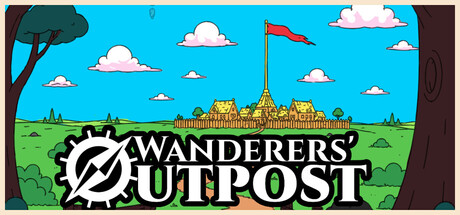
WilderLands uses AI to simulate NPC behavior and societies through reinforcement and deep learning.
AI agents adapt to the environment, form communities, make decisions, and learn over time.
They are not controlled by the player but evolve independently, creating personalized gameplay and unpredictable outcomes.
Embedded LLM for generating lore friendly Daily Journal based on event happening in the Outpost.
Might contains placeholder assets created during prototype to be replaced later during development.
This game uses a few UI icons and visual elements that were created using OpenAI's ChatGPT Pro image generation tool. These assets were generated with a paid license that allows commercial use. No AI-generated content is created during gameplay.
Parts of this game and its Steam page were created or refined using artificial intelligence technologies. All AI-assisted elements were carefully edited and approved by the developers to ensure coherence, artistic integrity, and overall quality.
Artificial intelligence has been used to support the development of this game. Primarily for refining in-game texts and generating UI elements. However, all core design, gameplay mechanics, and artistic direction have been crafted by hand. Everstead: Origins is the result of human creativity, supported by modern tools.
Hullrot uses AI to assist with background systems such as planning, summarizing game content, and managing progression flow. AI is not used to generate live player-facing content (such as dialogue, art, or assets) during gameplay. Instead, it supports behind-the-scenes balancing and pacing to ensure smoother progression and variety in encounters.
Background Music (Suno)
Voice Over Audio (XTTS)
All voice over audio was created with permission from the voice actor. Cosmic Construct has a constructed language (conlang) spoken by the game's characters.
As a solo developer, I use AI for localization tasks, followed by manual review and editing to ensure quality. It helps me save time and focus on creating a better game experience.When our financial situation improves, we will switch to fully human translations instead of AI-assisted localization.
Some promotional artwork and character portrait illustrations were created with AI assistance. All gameplay systems and code were written by the developer.
Image generation is used for quick concepts and temporary assets during development. LLMs are used for temporary localization, proofreading, research, and boilerplate or other low-impact code (such as tests).
Music, sound effects, text, and voice acting are entirely human-made. No AI-generated art will be present in the released game.
Noble Legacy uses AI-assisted voice for temporary placeholder lines during Early Access. All content is pre-generated and will be replaced with custom voice acting over time.
Players can prompt unique 3D realms into existence using Nyric. An API breaks down text inputs into a pipeline of world attributes in order to generate biomes from a pre-loaded cache of assets at runtime. World themes, weather, time periods, hostility, and unique asset names are generated at runtime for novel worldbuilding. AI companion moods, reactions, and personalities are generated at runtime using API responses.
During the development of this game, AI tools were utilized to accelerate the production process and to assist a solo developer in realizing their vision. The use of AI was concentrated in two main areas:
Coding and Software Development: This AI language model (Gemini) was used as an assistant for writing, debugging, and refactoring the game's C# scripts for Unity. All code logic, game design, and final architectural decisions were directed by the developer. Code snippets generated by the AI were reviewed and integrated into the project by the developer.
3D Model and Asset Generation: AI-powered image and model generation tools were used to create some of the 3D models and other visual assets in the game. These tools served as a source of inspiration and a starting point to speed up the development workflow. All generated assets were curated, edited, and finalized by the developer to fit the artistic vision of the game.
The creative vision, game design, and the final version of the game were shaped entirely by human direction and effort.
WilderLands uses AI to simulate NPC behavior and societies through reinforcement and deep learning.
AI agents adapt to the environment, form communities, make decisions, and learn over time.
They are not controlled by the player but evolve independently, creating personalized gameplay and unpredictable outcomes.
Embedded LLM for generating lore friendly Daily Journal based on event happening in the Outpost.
Might contains placeholder assets created during prototype to be replaced later during development.
This game uses a few UI icons and visual elements that were created using OpenAI's ChatGPT Pro image generation tool. These assets were generated with a paid license that allows commercial use. No AI-generated content is created during gameplay.
Parts of this game and its Steam page were created or refined using artificial intelligence technologies. All AI-assisted elements were carefully edited and approved by the developers to ensure coherence, artistic integrity, and overall quality.
Artificial intelligence has been used to support the development of this game. Primarily for refining in-game texts and generating UI elements. However, all core design, gameplay mechanics, and artistic direction have been crafted by hand. Everstead: Origins is the result of human creativity, supported by modern tools.
Hullrot uses AI to assist with background systems such as planning, summarizing game content, and managing progression flow. AI is not used to generate live player-facing content (such as dialogue, art, or assets) during gameplay. Instead, it supports behind-the-scenes balancing and pacing to ensure smoother progression and variety in encounters.
Background Music (Suno)
Voice Over Audio (XTTS)
All voice over audio was created with permission from the voice actor. Cosmic Construct has a constructed language (conlang) spoken by the game's characters.
As a solo developer, I use AI for localization tasks, followed by manual review and editing to ensure quality. It helps me save time and focus on creating a better game experience.When our financial situation improves, we will switch to fully human translations instead of AI-assisted localization.
Some promotional artwork and character portrait illustrations were created with AI assistance. All gameplay systems and code were written by the developer.
Image generation is used for quick concepts and temporary assets during development. LLMs are used for temporary localization, proofreading, research, and boilerplate or other low-impact code (such as tests).
Music, sound effects, text, and voice acting are entirely human-made. No AI-generated art will be present in the released game.
Noble Legacy uses AI-assisted voice for temporary placeholder lines during Early Access. All content is pre-generated and will be replaced with custom voice acting over time.
Players can prompt unique 3D realms into existence using Nyric. An API breaks down text inputs into a pipeline of world attributes in order to generate biomes from a pre-loaded cache of assets at runtime. World themes, weather, time periods, hostility, and unique asset names are generated at runtime for novel worldbuilding. AI companion moods, reactions, and personalities are generated at runtime using API responses.