Public Steam disclosure research25,380 disclosures tracked
Where do games disclose AI use?
Search developers’ Steam disclosures, compare classified AI use across
games, and follow recorded changes.
This index adds cross-game classifications and statistics to
statements published on individual store pages.
Groups reflect automatic analysis of public disclosures; mature records are excluded. These counts do not measure AI use across all of Steam.
Missing or unclear statements cannot establish whether a game uses AI.
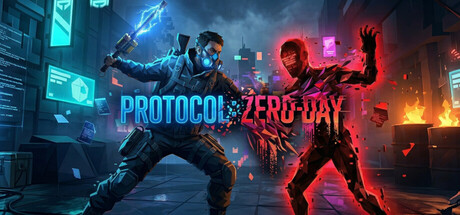
Generative AI tools were utilized during the pre-production and development phases to assist a solo developer in establishing the visual concepts, background art, and base textures for the cyber-apocalyptic world. All AI-generated base assets were subsequently reviewed, heavily curated, and manually integrated into the game engine to ensure they perfectly match the strict artistic direction and gameplay requirements of PROTOCOL: Zero-day.
As a solo developer, I’ve used AI-assisted tools to create some of the game’s assets. My goal is to replace these with fully hand-drawn artwork created by a professional artist.
Generative AI was used only during development to create part of the pre-generated content. This includes some marketing materials for the store page, part of the 3D models, as well as music and some sound effects. All such content was reviewed, selected, edited, and integrated manually by the developer before release.
The game does not use generative AI at runtime. Story content, gameplay logic, enemy behavior, game balance, and any real-time interaction with the player are created and executed without generative AI.
Generative AI was carefully used for structuring the majority of content available in the decks, given the vast breadth of the topics/languages available. However, every piece of information was extracted from publicly available curated sources, where AI was used for the re-writing the facts into questions. Also, in general the distractors (wrong answers) are intelligently chosen at runtime based on similar answers of similar length, however it can occur that certain answer pools where too small for reasonable gameplay. For this, fake answers were generated by AI as well, albeit rarely.
This game was 100% developed using AI (Claude Code by Anthropic) — including game design, programming, balancing, and localization. No AI is used during gameplay.
Some visual assets used in the game's store presence (such as capsule images) were initially generated with the help of AI tools and then significantly modified and refined by the developer.
No AI-generated content is used during gameplay. All in-game assets and mechanics are handcrafted.
AI-Generated Content Disclosure:
This game includes AI-generated and AI-assisted content. Most 2D art assets (including character/prop/environment illustrations, icons, and UI artwork) were created using generative AI tools and then reviewed and edited by the developer for consistency and quality.
Most audio assets (including sound effects and some music/ambience, if applicable) were also created using AI generation tools and then post-processed (editing, mixing, and mastering) by the developer.
All AI-generated content is curated and integrated by the developer, and the final in-game assets may include manual modifications and additional original work.
We use generative AI tools to assist with some game audio assets, such as dinosaur sounds and other sound effects, as well as some store page, marketing, and promotional artwork. These assets are reviewed, selected, edited, and integrated by the developer before use. Generative AI is not currently used to create live gameplay content during play.
All visual assets (sprites, terrain, UI, capsule art) were AI-generated and then manually edited in GIMP. Game design, direction, and integration were done entirely by the solo developer.
Game artwork (sprites for items, enemies, characters, and UI elements) was generated using Stable Diffusion
(DreamShaper model) running locally. Sound effects and music were generated using Meta AudioCraft (AudioGen/MusicGen)
running locally. Non-English translations were generated using local LLMs (Ollama) and manually reviewed. No external AI
services are used during gameplay. All AI-generated content was produced offline during development.
We confirm that AI-assisted tools were used in the development of our game. The specific scope and manner of use are as follows:
1. Type of AI-Generated Content:
* Text Content: We used AI text-generation tools to assist in creating initial drafts for some of the in-game copy during the early conceptual stages of development.
* This includes content for:
* Background stories and design documents for boss characters, frigates, and other units.
* Descriptive text for player skills.
* Preliminary outlines and descriptions for the game's overall story background.
* In-game text such as enemy names and skill descriptions.
2. Our Workflow and Human Oversight (The Key Part):
* AI's role was that of an "Assistant Tool": The AI was used solely to generate preliminary, unpolished text drafts and inspiration based on core ideas and directions provided by our producers.
* Deep Human Optimization and Review: All AI-generated text underwent strict review, selection, rewriting, and optimization by our producers and development team. We ensured:
* Creative Direction: The final design direction and core ideas were entirely determined by the human team.
* Content Ownership: We hold full and legal rights to all final content included in the game. The content, after profound human modification and optimization, is no longer a purely AI-generated product but the intellectual property of our team.
* Quality and Compliance Control: We ensured all textual content met our quality standards and Steam's distribution rules, containing no infringing, offensive, or inappropriate material.
3. Commitment and Assurance:
* We guarantee that the final version of the game does not directly include any unmodified AI-generated output.
* We take full responsibility for all content in our game.
In Summary: AI was used as a tool for assistance and inspiration during the design phase, but the final generation, approval, and copyright of all game content are the sole responsibility of our human development team.
This game uses generative AI for a limited amount of pre-made content created during development, including some achievement icons and certain voice lines we could not perform ourselves. No AI-generated content is created during gameplay, and the game does not connect to any external third-party AI services while you play.
This game includes content generated by generative AI.
Content created using generative AI:
BGM (in-game)
Advertisement images (in-game)
Translations (in-game)
Promotional video BGM (store page)
Advertisement images behind the logo (store page)
Translations of the game description (store page)
In the development of this game, generative AI was used in the following ways:
Visual Assets: Background illustrations for narrative events, UI elements, and icons were created with the assistance of generative AI. All assets were manually edited and refined by the developer to ensure stylistic consistency.
Narrative Content: Initial drafts for some random event descriptions and unit barks were generated with AI assistance and subsequently revised and rewritten by the developer to maintain the game's unique tone and military setting.
Audio: Some voiceover elements and unit barks may be produced using AI-assisted synthesis. All audio is pre-recorded and processed before being included in the game files.
Code Assistance: AI-based tools were used during the programming process for logic optimization and debugging.
Important: All AI-generated content is pre-generated and included in the static game files. No content is generated in real-time during gameplay.
I feel the AI tag for my game is not actually reasonable. i tried to explain myself to steam and to stop forcing me to set this AI toggle but the automated system is forcing me to say i used AI
God is not scripted. Every conversation is generated in real time by Claude, Anthropic's large language model — the same technology behind some of the most advanced AI assistants in the world. No two playthroughs are ever the same. All AI interactions are governed by Anthropic's strict safety guidelines and an additional in-game moderation layer. Visual elements crafted with generative tools.
We used AI to generate initial music tracks, concept art, and temporary translations into some languages.
All materials were then thoroughly edited, reworked, and finalized by humans.
Nothing went straight from the generator into the game.
This game uses generative AI-assisted tools in a small amount of non-core content, such as certain event illustration backgrounds, world map event displays, and some promotional materials used on the store page.
The core content of the game, including gameplay design, combat systems, character design, primary visual presentation, and programming, has been manually created and refined by the developer. AI-generated content is used only for supplementary visual purposes and does not affect the core gameplay experience.
Scope: Pre-generated 2D visual content only. Some visual assets use AI-generated source images created from developer prompts, while other visual assets come from licensed art packs. These assets are selected, composited, cropped, and edited by the developer for use in the game.
No runtime AI: The game does not generate any content during gameplay.
Guardrails: Players cannot generate or upload content in-game. AI-generated images are manually reviewed before use, and license records are kept for third-party art packs used in development.
This game uses generative AI for its multi-language localization to provide immediate support for French, German, Spanish, Portuguese, Russian, Japanese and Korean. While we strive for accuracy, some linguistic nuances may vary.
The vast majority of this game's content is hand-drawn and manually crafted. Generative AI was utilized only as a supportive tool for certain concept designs and ambient sound effects. Every asset has undergone manual correction and thorough refinement to ensure it perfectly aligns with the game’s unique quirky-comic art style.
As a small indie team, we have used generative AI tools to help create temporary placeholder assets during development, including some capsule artworks, localization support, and certain in-game icons. All AI-assisted content is reviewed and integrated manually by our team.
English and Italian localization have been handled internally by our team. All other currently available languages, such as Simplified Chinese, Spanish, Brazilian Portuguese, German, Japanese, Russian, and French, are temporarily supported through AI-assisted translation.
These translations are placeholder versions and will be gradually replaced with finalized localizations leading up to the 1.0 release of the game.
No AI-generated content has been used for any other aspect of development, including coding, art, music, or 3D modeling.
Tears of Adria was created by a very small team.
We used our resources to work with three talented artists. Most portraits along with some icons and images are AI-created.
Voice lines are primarily performed by real voice actors, very few are generated and some are AI enhanced.
Generative AI is initially used in the localization, but later replaced with human-translated text in the main release version. Additional languages only available in the optional "testing" beta branch contains AI-translated text that is not yet replaced.
Some development and marketing materials may have been assisted by generative AI during pre-production (concept exploration, references, and drafts). The game does not generate content in real time during gameplay.
In the interest of transparency, illustrations were created with the help of AI-assisted tools, used as creative support within a human-led artistic process.
Some visual assets and promotional materials for Slotbound were created with the assistance of generative AI tools.
All AI-generated content was reviewed, refined, and integrated by the developer to ensure consistency with the game's artistic direction and quality standards.
A limited number of visual assets (such as certain icons and ship concepts) were created using AI-assisted tools and refined by the developer. All gameplay systems, core content, and procedural planet simulations are original.
AI tools were used to assist with creating some artwork and localizing store page descriptions and in-game text. All outputs were reviewed and edited by the developer.
Generative AI tools were utilized during the pre-production and development phases to assist a solo developer in establishing the visual concepts, background art, and base textures for the cyber-apocalyptic world. All AI-generated base assets were subsequently reviewed, heavily curated, and manually integrated into the game engine to ensure they perfectly match the strict artistic direction and gameplay requirements of PROTOCOL: Zero-day.
As a solo developer, I’ve used AI-assisted tools to create some of the game’s assets. My goal is to replace these with fully hand-drawn artwork created by a professional artist.
Generative AI was used only during development to create part of the pre-generated content. This includes some marketing materials for the store page, part of the 3D models, as well as music and some sound effects. All such content was reviewed, selected, edited, and integrated manually by the developer before release.
The game does not use generative AI at runtime. Story content, gameplay logic, enemy behavior, game balance, and any real-time interaction with the player are created and executed without generative AI.
Generative AI was carefully used for structuring the majority of content available in the decks, given the vast breadth of the topics/languages available. However, every piece of information was extracted from publicly available curated sources, where AI was used for the re-writing the facts into questions. Also, in general the distractors (wrong answers) are intelligently chosen at runtime based on similar answers of similar length, however it can occur that certain answer pools where too small for reasonable gameplay. For this, fake answers were generated by AI as well, albeit rarely.
This game was 100% developed using AI (Claude Code by Anthropic) — including game design, programming, balancing, and localization. No AI is used during gameplay.
Some visual assets used in the game's store presence (such as capsule images) were initially generated with the help of AI tools and then significantly modified and refined by the developer.
No AI-generated content is used during gameplay. All in-game assets and mechanics are handcrafted.
AI-Generated Content Disclosure:
This game includes AI-generated and AI-assisted content. Most 2D art assets (including character/prop/environment illustrations, icons, and UI artwork) were created using generative AI tools and then reviewed and edited by the developer for consistency and quality.
Most audio assets (including sound effects and some music/ambience, if applicable) were also created using AI generation tools and then post-processed (editing, mixing, and mastering) by the developer.
All AI-generated content is curated and integrated by the developer, and the final in-game assets may include manual modifications and additional original work.
We use generative AI tools to assist with some game audio assets, such as dinosaur sounds and other sound effects, as well as some store page, marketing, and promotional artwork. These assets are reviewed, selected, edited, and integrated by the developer before use. Generative AI is not currently used to create live gameplay content during play.
All visual assets (sprites, terrain, UI, capsule art) were AI-generated and then manually edited in GIMP. Game design, direction, and integration were done entirely by the solo developer.
Game artwork (sprites for items, enemies, characters, and UI elements) was generated using Stable Diffusion
(DreamShaper model) running locally. Sound effects and music were generated using Meta AudioCraft (AudioGen/MusicGen)
running locally. Non-English translations were generated using local LLMs (Ollama) and manually reviewed. No external AI
services are used during gameplay. All AI-generated content was produced offline during development.
We confirm that AI-assisted tools were used in the development of our game. The specific scope and manner of use are as follows:
1. Type of AI-Generated Content:
* Text Content: We used AI text-generation tools to assist in creating initial drafts for some of the in-game copy during the early conceptual stages of development.
* This includes content for:
* Background stories and design documents for boss characters, frigates, and other units.
* Descriptive text for player skills.
* Preliminary outlines and descriptions for the game's overall story background.
* In-game text such as enemy names and skill descriptions.
2. Our Workflow and Human Oversight (The Key Part):
* AI's role was that of an "Assistant Tool": The AI was used solely to generate preliminary, unpolished text drafts and inspiration based on core ideas and directions provided by our producers.
* Deep Human Optimization and Review: All AI-generated text underwent strict review, selection, rewriting, and optimization by our producers and development team. We ensured:
* Creative Direction: The final design direction and core ideas were entirely determined by the human team.
* Content Ownership: We hold full and legal rights to all final content included in the game. The content, after profound human modification and optimization, is no longer a purely AI-generated product but the intellectual property of our team.
* Quality and Compliance Control: We ensured all textual content met our quality standards and Steam's distribution rules, containing no infringing, offensive, or inappropriate material.
3. Commitment and Assurance:
* We guarantee that the final version of the game does not directly include any unmodified AI-generated output.
* We take full responsibility for all content in our game.
In Summary: AI was used as a tool for assistance and inspiration during the design phase, but the final generation, approval, and copyright of all game content are the sole responsibility of our human development team.
This game uses generative AI for a limited amount of pre-made content created during development, including some achievement icons and certain voice lines we could not perform ourselves. No AI-generated content is created during gameplay, and the game does not connect to any external third-party AI services while you play.
This game includes content generated by generative AI.
Content created using generative AI:
BGM (in-game)
Advertisement images (in-game)
Translations (in-game)
Promotional video BGM (store page)
Advertisement images behind the logo (store page)
Translations of the game description (store page)
In the development of this game, generative AI was used in the following ways:
Visual Assets: Background illustrations for narrative events, UI elements, and icons were created with the assistance of generative AI. All assets were manually edited and refined by the developer to ensure stylistic consistency.
Narrative Content: Initial drafts for some random event descriptions and unit barks were generated with AI assistance and subsequently revised and rewritten by the developer to maintain the game's unique tone and military setting.
Audio: Some voiceover elements and unit barks may be produced using AI-assisted synthesis. All audio is pre-recorded and processed before being included in the game files.
Code Assistance: AI-based tools were used during the programming process for logic optimization and debugging.
Important: All AI-generated content is pre-generated and included in the static game files. No content is generated in real-time during gameplay.
I feel the AI tag for my game is not actually reasonable. i tried to explain myself to steam and to stop forcing me to set this AI toggle but the automated system is forcing me to say i used AI
God is not scripted. Every conversation is generated in real time by Claude, Anthropic's large language model — the same technology behind some of the most advanced AI assistants in the world. No two playthroughs are ever the same. All AI interactions are governed by Anthropic's strict safety guidelines and an additional in-game moderation layer. Visual elements crafted with generative tools.
We used AI to generate initial music tracks, concept art, and temporary translations into some languages.
All materials were then thoroughly edited, reworked, and finalized by humans.
Nothing went straight from the generator into the game.
This game uses generative AI-assisted tools in a small amount of non-core content, such as certain event illustration backgrounds, world map event displays, and some promotional materials used on the store page.
The core content of the game, including gameplay design, combat systems, character design, primary visual presentation, and programming, has been manually created and refined by the developer. AI-generated content is used only for supplementary visual purposes and does not affect the core gameplay experience.
Scope: Pre-generated 2D visual content only. Some visual assets use AI-generated source images created from developer prompts, while other visual assets come from licensed art packs. These assets are selected, composited, cropped, and edited by the developer for use in the game.
No runtime AI: The game does not generate any content during gameplay.
Guardrails: Players cannot generate or upload content in-game. AI-generated images are manually reviewed before use, and license records are kept for third-party art packs used in development.
This game uses generative AI for its multi-language localization to provide immediate support for French, German, Spanish, Portuguese, Russian, Japanese and Korean. While we strive for accuracy, some linguistic nuances may vary.
The vast majority of this game's content is hand-drawn and manually crafted. Generative AI was utilized only as a supportive tool for certain concept designs and ambient sound effects. Every asset has undergone manual correction and thorough refinement to ensure it perfectly aligns with the game’s unique quirky-comic art style.
As a small indie team, we have used generative AI tools to help create temporary placeholder assets during development, including some capsule artworks, localization support, and certain in-game icons. All AI-assisted content is reviewed and integrated manually by our team.
English and Italian localization have been handled internally by our team. All other currently available languages, such as Simplified Chinese, Spanish, Brazilian Portuguese, German, Japanese, Russian, and French, are temporarily supported through AI-assisted translation.
These translations are placeholder versions and will be gradually replaced with finalized localizations leading up to the 1.0 release of the game.
No AI-generated content has been used for any other aspect of development, including coding, art, music, or 3D modeling.
Tears of Adria was created by a very small team.
We used our resources to work with three talented artists. Most portraits along with some icons and images are AI-created.
Voice lines are primarily performed by real voice actors, very few are generated and some are AI enhanced.
Generative AI is initially used in the localization, but later replaced with human-translated text in the main release version. Additional languages only available in the optional "testing" beta branch contains AI-translated text that is not yet replaced.
Some development and marketing materials may have been assisted by generative AI during pre-production (concept exploration, references, and drafts). The game does not generate content in real time during gameplay.
In the interest of transparency, illustrations were created with the help of AI-assisted tools, used as creative support within a human-led artistic process.
Some visual assets and promotional materials for Slotbound were created with the assistance of generative AI tools.
All AI-generated content was reviewed, refined, and integrated by the developer to ensure consistency with the game's artistic direction and quality standards.
A limited number of visual assets (such as certain icons and ship concepts) were created using AI-assisted tools and refined by the developer. All gameplay systems, core content, and procedural planet simulations are original.
AI tools were used to assist with creating some artwork and localizing store page descriptions and in-game text. All outputs were reviewed and edited by the developer.