Public Steam disclosure research25,380 disclosures tracked
Where do games disclose AI use?
Search developers’ Steam disclosures, compare classified AI use across
games, and follow recorded changes.
This index adds cross-game classifications and statistics to
statements published on individual store pages.
Groups reflect automatic analysis of public disclosures; mature records are excluded. These counts do not measure AI use across all of Steam.
Missing or unclear statements cannot establish whether a game uses AI.
Some of this game's content was created with generative AI and then reworked and adjusted by hand by the developer. This applies in particular to code, the 3D models and textures, and the music and sound effects. Animations, game rules, simulation, balance and the structure of the game come entirely from the developer.
Generative AI tools were used during development to help create some visual and audio assets, including illustrations, textures, 3D asset sources and short character videos. This content is prepared in advance and included in the game. Hamsuri does not generate AI content during play or connect to external AI services.
Some AI tools were used during development to assist with code, artwork, and audio production. All content was reviewed, edited and assembled by the developer.
Some questions and answers in our quiz game are generated using AI. Additionally, we utilized pre-generated AI images included in the capsules and for in-game assets.
This game uses AI-generated content for some background music, sound effects, and artwork/visual assets. All other content, including game design and code, was created by the developer.
Generative AI tools were used during PowerPitch’s development to create its code and player-facing content, including artwork, audio, text, localization, and promotional materials.
Graphics & Concepts: Generative AI was used to design and refine initial concept art, textures, and UI elements.
Texts & Dialogues: Portions of the lore, background stories, and dialogue scripts were conceptualized using AI language models and subsequently revised manually.
Code & Optimization: AI-assisted tools were utilized to optimize programming code and assist in debugging.
Note: All final assets in the game have been thoroughly reviewed, edited, and curated by the developer.
We may use AI to speed up creation of marketing materials and how even we should do that "marketing". And we may use AI for finding new ways to write better code, AI may analyze our code and so on. That's pretty ok that days, especially for free project that runs by enthusiasts.
So please review our final work, that's what matters.
Shadow Rulers: World Order uses generative AI tools during development to help create certain visual assets, including faction icons for the game's Ruling Families, background and UI elements, and some in-game and promotional artwork. All AI-generated content is reviewed and curated by the developer before being included in the game. No content is generated live during gameplay, and the game does not connect to any external AI service during play.
This game and its store page use generative AI-assisted content, including artwork, music, sound, and other creative assets. Assets are created or assisted with AI tools, then curated and implemented by the developer. No live AI-generated player content is used during gameplay.
Generative AI tools are used during development to help create selected artwork, including ability icons, and to draft and edit text. This content is prepared before release. No content is generated by AI during gameplay, and the game does not connect to external AI services.
Some store artwork (capsules, hero art, page background) was created with generative AI and then edited by hand. All in-game art, audio and text are hand-made or licensed. The game does not generate any content at runtime.
Modern generative AI tools have been used alongside traditional development tools to assist with creating and modifying some visual and audio assets. This includes tasks such as retexturing assets to improve historical accuracy.
Generative AI assisted with development-time content, including procedural visual assets and pre-written store-page text. Content is prepared before release; the game does not generate AI content during gameplay or connect to an external AI service.
We use AI tools to assist with translations and to support our development process. Some graphics are currently AI-generated placeholders, which will be gradually replaced with original, human-made artwork.
Generative AI was used during development for some card artwork, textures, sound effects, text, and translations. These are fixed, pre-generated assets. No generative AI runs during gameplay.
Generative AI tools were used during development to create some of the game art assets, and written content and localization translations. AI tools were also used for coding assistance and debugging. The developer selected, adapted, and integrated these outputs into the game and its promotional materials. The game does not generate content using generative AI during gameplay or connect to external generative AI services.
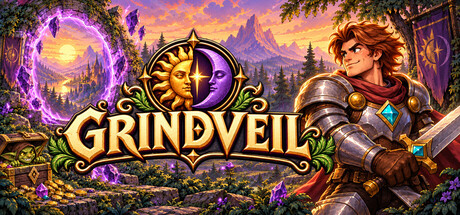
Grindveil's art is made with generative AI tools. We generate, then pick, crop, recolour and optimise every piece by hand before it ships, and we throw out the ones that do not fit. The same goes for part of the writing: item and location names, some of the lore in the in-game Codex, and the interface translations for our fourteen languages are drafted with AI help and reviewed by us.
Nothing is generated while you play. No AI runs on your machine, nothing you type is sent to an AI service, and every image and every line of text in the game was made and checked before release.
This game uses generative AI in the creation of some 3D objects and some background music. These contents were generated and edited during development, and no content is generated by generative AI in real time during gameplay.
Some 3D models and textures in this game were created with the help of
generative AI tools. All AI-generated assets were
reviewed, edited, optimized and integrated manually by the developer.
The game does not generate any content live during gameplay.
Generative AI tools were used to assist in the production and refinement of selected promotional and marketing materials for United Football. AI-assisted outputs were reviewed and edited by the development team before use. Generative AI is not used to generate live gameplay content.
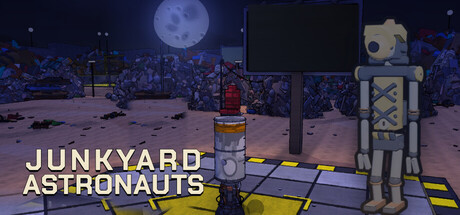
Junkyard Astronauts was developed with substantial help from an AI coding assistant (Claude), directed and reviewed by the developer. Specifically: the game's code was largely written with AI assistance; the 3D models, textures and yard layouts are produced by procedural generator scripts written with AI assistance; the sound effects are built from licensed, human-recorded sound libraries (Sonniss GDC bundles, Kenney) assembled and mixed by scripted tools written with AI assistance; the soundtrack is composed and rendered by a music engine written with AI assistance; parts of the store text and the achievement names were drafted with AI assistance. Everything was reviewed, edited and play-tested by the developer before shipping. No AI service is used during gameplay, and no content is generated at runtime. No AI-generated content imitates a real person or a third party's protected work.
Generative AI tools were used during development to help create some visual assets, including environment textures, branding and promotional artwork, as well as store copy and localization. These materials are selected, reviewed and integrated by the developer. Gameplay screenshots are captured from the game. No generative AI content is created during play, and the game does not connect to external AI services.
AI tools were used in a limited capacity to support coding, early prototyping, and the creation of a small number of icons. All AI-assisted elements were reviewed and refined by us.
This demo uses generative AI tools to create most of the character art, illustrations, and visual assets. All AI-generated content has been reviewed and edited by the development team to ensure quality and compliance with Steam policies. No illegal or infringing material is included.
Valdrys uses AI-generated content in one place: the login screen
background, a single static image of a moonlit ridge over a conifer
forest, generated with Google Gemini. It does not appear in gameplay.
Everything else in the game is hand-drawn, generated procedurally by
our own tools, or licensed from third-party artists under CC0, CC-BY
or commercial licences. All of it is credited on the in-game Credits
screen.
Parts of the game's code were written with the help of an AI coding
assistant. No AI-generated art, audio or written content ships in
Valdrys beyond the single background image described above.
Nothing in Valdrys generates content while the game is running.
The game's first trailer features images generated by artificial intelligence. The characters and map in the trailer, however, were created by our team and will also be used in the playable versions of the game.
AI Disclosure: Certain background textures, NPC portrait concepts, or promotional marketing assets in this game were generated with the assistance of AI tools.
Some of the content in this game was created with the help of generative AI tools.
This includes parts of the visual assets (icons, textures and UI images), some audio
(music and sound effects), parts of the in-game text (item descriptions, dialogue and
story text), and the translations of the game's text into other languages.
All of this content was generated during development, then reviewed, edited and
assembled by hand before being included in the game. The game itself does not generate
any content with AI while you play, and it does not send any player data to AI services.
Generative AI tools were used during development to create some decorative artwork and surface textures, including botanical table mats and room furnishings. These assets are reviewed and incorporated into the game by the developer. The game does not generate AI content during gameplay or connect to an external AI service.
Generative AI tools were used during development to create some artwork, including character art, environments, and promotional images. These are pre-made assets. No content is generated by AI during gameplay.
Generative AI tools were used during development to help create character artwork, menu backgrounds, some 3D assets, and pre-rendered cinematic videos. AI-assisted tools were also used for programming and debugging. These assets are prepared before release and incorporated into the game.
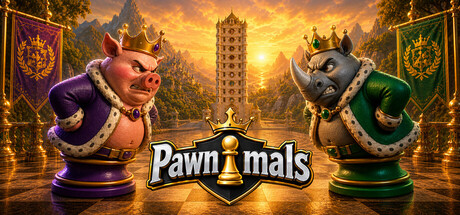
Pawnimals uses generative AI as part of its development and content creation process. Generative AI tools were used to assist with the creation and refinement of some visual assets, character artwork, animations, voice/audio content, and other creative elements in the game.
AI-generated content is reviewed, edited, directed, and integrated by the developer to maintain a consistent visual style, character design, and overall player experience. Generative AI is used as a production tool and does not generate unrestricted content based on player prompts during normal gameplay.
・We are using generative AI to reimagine characters based on original designs.
・We are using AI to generate characters based on some original designs.
・We use generative AI to create illustrations for store and website images.
・We conduct pattern testing using generative AI for logic and communication tests.
Some of this game's content was created with the assistance of generative AI tools and was then reviewed, edited and curated by the developer. This includes a portion of the 3D weapon and armor models (generated with AI 3D tools and hand-adjusted), the game logo and store/marketing artwork (AI image tools), and the translation of interface text into languages other than Turkish and English. No content is generated by AI at runtime and the game does not connect to any AI service.
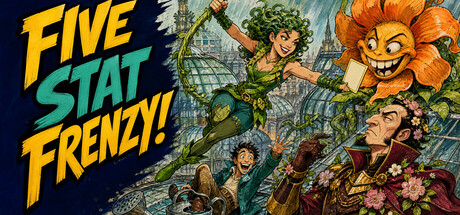
During development, generative AI tools were used to assist with selected pre-generated visual content, including some card illustrations, comic imagery and marketing artwork. Each included illustration was deliberately selected, art-directed and integrated into FIVE STAT FRENZY!’s own comic-watercolour style, cast of characters, game rules and connected Paperlight City story.
The released game uses no generative AI at runtime. Players do not enter AI prompts, and the game does not generate new images, text, dialogue, music or gameplay content while it is being played. Card values, rules, deckbuilding, rivals, campaign progression and comic unlocks are fixed, tested game content.
Some of this game's content was created with generative AI and then reworked and adjusted by hand by the developer. This applies in particular to code, the 3D models and textures, and the music and sound effects. Animations, game rules, simulation, balance and the structure of the game come entirely from the developer.
Generative AI tools were used during development to help create some visual and audio assets, including illustrations, textures, 3D asset sources and short character videos. This content is prepared in advance and included in the game. Hamsuri does not generate AI content during play or connect to external AI services.
Some AI tools were used during development to assist with code, artwork, and audio production. All content was reviewed, edited and assembled by the developer.
Some questions and answers in our quiz game are generated using AI. Additionally, we utilized pre-generated AI images included in the capsules and for in-game assets.
This game uses AI-generated content for some background music, sound effects, and artwork/visual assets. All other content, including game design and code, was created by the developer.
Generative AI tools were used during PowerPitch’s development to create its code and player-facing content, including artwork, audio, text, localization, and promotional materials.
Graphics & Concepts: Generative AI was used to design and refine initial concept art, textures, and UI elements.
Texts & Dialogues: Portions of the lore, background stories, and dialogue scripts were conceptualized using AI language models and subsequently revised manually.
Code & Optimization: AI-assisted tools were utilized to optimize programming code and assist in debugging.
Note: All final assets in the game have been thoroughly reviewed, edited, and curated by the developer.
We may use AI to speed up creation of marketing materials and how even we should do that "marketing". And we may use AI for finding new ways to write better code, AI may analyze our code and so on. That's pretty ok that days, especially for free project that runs by enthusiasts.
So please review our final work, that's what matters.
Shadow Rulers: World Order uses generative AI tools during development to help create certain visual assets, including faction icons for the game's Ruling Families, background and UI elements, and some in-game and promotional artwork. All AI-generated content is reviewed and curated by the developer before being included in the game. No content is generated live during gameplay, and the game does not connect to any external AI service during play.
This game and its store page use generative AI-assisted content, including artwork, music, sound, and other creative assets. Assets are created or assisted with AI tools, then curated and implemented by the developer. No live AI-generated player content is used during gameplay.
Generative AI tools are used during development to help create selected artwork, including ability icons, and to draft and edit text. This content is prepared before release. No content is generated by AI during gameplay, and the game does not connect to external AI services.
Some store artwork (capsules, hero art, page background) was created with generative AI and then edited by hand. All in-game art, audio and text are hand-made or licensed. The game does not generate any content at runtime.
Modern generative AI tools have been used alongside traditional development tools to assist with creating and modifying some visual and audio assets. This includes tasks such as retexturing assets to improve historical accuracy.
Generative AI assisted with development-time content, including procedural visual assets and pre-written store-page text. Content is prepared before release; the game does not generate AI content during gameplay or connect to an external AI service.
We use AI tools to assist with translations and to support our development process. Some graphics are currently AI-generated placeholders, which will be gradually replaced with original, human-made artwork.
Generative AI was used during development for some card artwork, textures, sound effects, text, and translations. These are fixed, pre-generated assets. No generative AI runs during gameplay.
Generative AI tools were used during development to create some of the game art assets, and written content and localization translations. AI tools were also used for coding assistance and debugging. The developer selected, adapted, and integrated these outputs into the game and its promotional materials. The game does not generate content using generative AI during gameplay or connect to external generative AI services.
Grindveil's art is made with generative AI tools. We generate, then pick, crop, recolour and optimise every piece by hand before it ships, and we throw out the ones that do not fit. The same goes for part of the writing: item and location names, some of the lore in the in-game Codex, and the interface translations for our fourteen languages are drafted with AI help and reviewed by us.
Nothing is generated while you play. No AI runs on your machine, nothing you type is sent to an AI service, and every image and every line of text in the game was made and checked before release.
This game uses generative AI in the creation of some 3D objects and some background music. These contents were generated and edited during development, and no content is generated by generative AI in real time during gameplay.
Some 3D models and textures in this game were created with the help of
generative AI tools. All AI-generated assets were
reviewed, edited, optimized and integrated manually by the developer.
The game does not generate any content live during gameplay.
Generative AI tools were used to assist in the production and refinement of selected promotional and marketing materials for United Football. AI-assisted outputs were reviewed and edited by the development team before use. Generative AI is not used to generate live gameplay content.
Junkyard Astronauts was developed with substantial help from an AI coding assistant (Claude), directed and reviewed by the developer. Specifically: the game's code was largely written with AI assistance; the 3D models, textures and yard layouts are produced by procedural generator scripts written with AI assistance; the sound effects are built from licensed, human-recorded sound libraries (Sonniss GDC bundles, Kenney) assembled and mixed by scripted tools written with AI assistance; the soundtrack is composed and rendered by a music engine written with AI assistance; parts of the store text and the achievement names were drafted with AI assistance. Everything was reviewed, edited and play-tested by the developer before shipping. No AI service is used during gameplay, and no content is generated at runtime. No AI-generated content imitates a real person or a third party's protected work.
Generative AI tools were used during development to help create some visual assets, including environment textures, branding and promotional artwork, as well as store copy and localization. These materials are selected, reviewed and integrated by the developer. Gameplay screenshots are captured from the game. No generative AI content is created during play, and the game does not connect to external AI services.
AI tools were used in a limited capacity to support coding, early prototyping, and the creation of a small number of icons. All AI-assisted elements were reviewed and refined by us.
This demo uses generative AI tools to create most of the character art, illustrations, and visual assets. All AI-generated content has been reviewed and edited by the development team to ensure quality and compliance with Steam policies. No illegal or infringing material is included.
Valdrys uses AI-generated content in one place: the login screen
background, a single static image of a moonlit ridge over a conifer
forest, generated with Google Gemini. It does not appear in gameplay.
Everything else in the game is hand-drawn, generated procedurally by
our own tools, or licensed from third-party artists under CC0, CC-BY
or commercial licences. All of it is credited on the in-game Credits
screen.
Parts of the game's code were written with the help of an AI coding
assistant. No AI-generated art, audio or written content ships in
Valdrys beyond the single background image described above.
Nothing in Valdrys generates content while the game is running.
The game's first trailer features images generated by artificial intelligence. The characters and map in the trailer, however, were created by our team and will also be used in the playable versions of the game.
AI Disclosure: Certain background textures, NPC portrait concepts, or promotional marketing assets in this game were generated with the assistance of AI tools.
Some of the content in this game was created with the help of generative AI tools.
This includes parts of the visual assets (icons, textures and UI images), some audio
(music and sound effects), parts of the in-game text (item descriptions, dialogue and
story text), and the translations of the game's text into other languages.
All of this content was generated during development, then reviewed, edited and
assembled by hand before being included in the game. The game itself does not generate
any content with AI while you play, and it does not send any player data to AI services.
Generative AI tools were used during development to create some decorative artwork and surface textures, including botanical table mats and room furnishings. These assets are reviewed and incorporated into the game by the developer. The game does not generate AI content during gameplay or connect to an external AI service.
Generative AI tools were used during development to create some artwork, including character art, environments, and promotional images. These are pre-made assets. No content is generated by AI during gameplay.
Generative AI tools were used during development to help create character artwork, menu backgrounds, some 3D assets, and pre-rendered cinematic videos. AI-assisted tools were also used for programming and debugging. These assets are prepared before release and incorporated into the game.
Pawnimals uses generative AI as part of its development and content creation process. Generative AI tools were used to assist with the creation and refinement of some visual assets, character artwork, animations, voice/audio content, and other creative elements in the game.
AI-generated content is reviewed, edited, directed, and integrated by the developer to maintain a consistent visual style, character design, and overall player experience. Generative AI is used as a production tool and does not generate unrestricted content based on player prompts during normal gameplay.
・We are using generative AI to reimagine characters based on original designs.
・We are using AI to generate characters based on some original designs.
・We use generative AI to create illustrations for store and website images.
・We conduct pattern testing using generative AI for logic and communication tests.
Some of this game's content was created with the assistance of generative AI tools and was then reviewed, edited and curated by the developer. This includes a portion of the 3D weapon and armor models (generated with AI 3D tools and hand-adjusted), the game logo and store/marketing artwork (AI image tools), and the translation of interface text into languages other than Turkish and English. No content is generated by AI at runtime and the game does not connect to any AI service.
During development, generative AI tools were used to assist with selected pre-generated visual content, including some card illustrations, comic imagery and marketing artwork. Each included illustration was deliberately selected, art-directed and integrated into FIVE STAT FRENZY!’s own comic-watercolour style, cast of characters, game rules and connected Paperlight City story.
The released game uses no generative AI at runtime. Players do not enter AI prompts, and the game does not generate new images, text, dialogue, music or gameplay content while it is being played. Card values, rules, deckbuilding, rivals, campaign progression and comic unlocks are fixed, tested game content.