Public Steam disclosure research26,628 disclosures tracked
Where do games disclose AI use?
Search developers’ Steam disclosures, compare classified AI use across
games, and follow recorded changes.
This index adds cross-game classifications and statistics to
statements published on individual store pages.
Groups reflect automatic analysis of public disclosures; mature records are excluded. These counts do not measure AI use across all of Steam.
Missing or unclear statements cannot establish whether a game uses AI.
We use AI to assist with ideation for some art assets, music, and programming, as well as to support asset creation during the prototyping stage. All final assets are manually recreated, arranged, refined, and exported by our team.
Some visual assets, including certain 3D models, textures, UI icons, and promotional artwork, were created with the assistance of generative AI tools. All generated content was reviewed, selected, and edited by the developer before inclusion in the game. The game does not generate AI content during gameplay
All visual artwork used in the game was created directly by the developer.
Generative AI tools were used as part of the production process for certain audio assets and for translation/localization assistance. AI-generated or AI-assisted outputs were reviewed and edited by the developer before being included in the final game.
Generative AI was used during development to create some visual artwork and background music. The generated content was reviewed by the development team before being included in the game. The game does not generate AI content during gameplay.
StreamLay does not include AI-generated art, audio, or video assets.
Users provide character sprites or create them independently.
AI assistance was used during development to
help write code and draft store page text and documentation only.
Generative AI was used to create or edit selected artwork, including title and menu illustrations, world-map scenery, and promotional images. No content is generated by AI during gameplay.
This game uses generative AI tools to assist in the creation of pre-rendered visual assets (concept art, textures, background illustrations, key visuals), sound effects, and background music. All AI-generated content is reviewed, edited, and curated by the developer before being included in the final build. No AI generation occurs during gameplay, and no external AI services are connected at runtime.
During the development, we may use AI-assisted tools to help create procedural 3D models, environments, interface elements, animations, and sound effects. These tools were used under the developer’s direction, and in every case the end result reflects their creativity.
All game content was created using generative AI, including visuals, 3D models, textures, music, sound effects, and text. Generative AI was also used to create the store descriptions and marketing materials.
The game does not generate AI content during play or connect to external AI services.
AI was used to help generate the store page capsule and background artwork. The visuals are procedurally constructed vector graphics built with AI-assisted code, not raster images from an image-generation model. The wordmark and color palette were designed by the developer.
Generative AI was used during development to create or refine some of the game’s visual assets and music, and to assist with localization. These assets were selected by the developer and edited and adapted as needed. The game does not generate AI content in real time during gameplay.
Some of the artwork in Clash of Crests was produced with generative AI image tools and then cropped, composited, retouched and finished by the developer. This includes unit and character portraits, faction crests, campaign banners and key art, and some environment and prop art. Parts of the in-game lore and flavour text were drafted with AI assistance and then edited by the developer. Nothing is generated by AI while you play: all content ships with the game as fixed, pre-made assets.
Part of the game's visual content (location backgrounds and some animated CG scenes) was created using generative neural networks based on references and artistic descriptions developed by the author.
Some of Voxitect's promotional artwork was created with the assistance of generative AI image tools. The game itself contains no generative AI: it generates nothing at runtime, sends nothing to any AI service, and requires no AI account or API key.
Some game assets, such as ship and crew images, were created with the help of generative AI tools and subsequently reviewed and edited by the development team.
Some of the promotional and storefront images were created with AI tools and then refined by hand. All of the in-game assets were designed by a 3D artist.
Some of this game's assets were created with the assistance of generative AI tools and were then reviewed, edited, and finalized by our development team. This applies to portions of the 2D artwork, such as UI elements, decorative frames, backgrounds, and illustrations, as well as some localized text. All AI-assisted content was pre-generated during development. The live-action video footage features real actors filmed by our production team, and no content is generated by AI during gameplay.
Generative AI was used during development to assist with programming and the creation of some visual assets. AI-generated and AI-assisted content may be included in the final game.
Generative AI tools were used throughout development: the game's code and its in-game text, the paintings, achievement icons and interface art, the 3D models, and the music and sound effects. Everything was reviewed, edited and tested, and ships as fixed content. Nothing is generated while you play: the game runs no model and makes no network call.
Generative AI was used during development for certain supernatural visual elements and pre-rendered video sequences, and to assist with some visual design, UI, localization, code modifications, and limited narrative design. All live-action footage of Osaka Castle Park was filmed on location. No AI-generated content is created during gameplay.
Generative AI assisted the creation of pre-made cursor artwork and localized text during development. These assets are included with CURSORLOOM. The application does not generate AI content during use or connect to an external AI service.
English localization text in the game was produced with AI assistance and reviewed by the developer. Parts of the store page description were also drafted with AI assistance.
The game includes pre-generated AI-assisted content, including some character and card illustrations, boss videos, and portions of localized text. These assets are produced during development and included with the game. The game does not request new images, text, or voices from generative AI services during play.
Generative AI assisted with programming. The game artwork, music, and sound effects were human made. The game does not generate AI content during gameplay or connect to an AI service.
AI tools assisted in the creation of some 3D models, images, and localized text. These assets are reviewed and refined by the developer to align with the game's visual style and quality standards, with final creative decisions remaining in human hands.
Generative AI is currently used during development for temporary placeholder music and artwork, including some Steam store page and marketing materials. These assets are temporary and will be replaced before release. The final version of the game and its final store and marketing materials will not use AI-generated content.
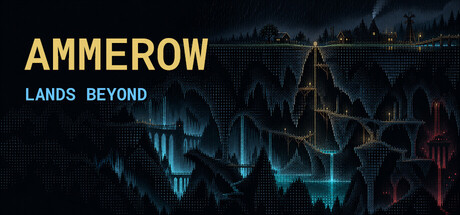
The music in Ammerow: Lands Beyond was created with Claude Compose, a bespoke composition system built for this project. Rather than a generative music model, it works like a tireless studio composer: an AI assistant (Anthropic's Claude) writes and runs code that composes each piece note by note — melody, harmony, counterpoint and orchestration derived from music theory — and performs it through real, licensed virtual instruments in a professional DAW (Ableton Live). It then "listens back" by analysing the rendered audio to refine the balance. No generative audio/music model was used, no AI was trained on other artists' recordings, and no track was produced from a prompt. Every note is placed deliberately, and every piece is directed, reviewed and approved by a human. The result is authored, not generated.
The sound effects are an original, human-directed procedural synthesis library. Claude Code assisted in writing custom Python DSP software and individual cue recipes; every waveform was deterministically rendered from mathematical models and recorded seeds. No recordings, performers, samples, stock audio, sample libraries or generative-audio service were used.
Ammerow is designed primarily as a coloured ASCII game. Selected creature, item and shopkeeper illustrations began as AI-generated source images and are converted through a deterministic ASCII-art pipeline. The optional tile mode is a work-in-progress secondary presentation. Its small atlases were programmatically drawn in a custom SDL application using natural-language Codex direction. No generative-image model, inherited tileset, traced artwork or third-party graphical asset was used.
Some narrative, gameplay data and other player-facing material were also developed with AI assistance under human direction and review.
Some Steam marketing backgrounds were created using OpenAI image-generation tools and then selected, reviewed and combined with deterministic Ammerow branding by the developer.
No AI runs while the game is being played.
Generative AI was used during development to create artwork, music and sound effects, and to assist with translations. This content is prepared before release. The game does not generate AI content or connect to AI services during gameplay.