Public Steam disclosure research25,508 disclosures tracked
Where do games disclose AI use?
Search developers’ Steam disclosures, compare classified AI use across
games, and follow recorded changes.
This index adds cross-game classifications and statistics to
statements published on individual store pages.
Groups reflect automatic analysis of public disclosures; mature records are excluded. These counts do not measure AI use across all of Steam.
Missing or unclear statements cannot establish whether a game uses AI.
This game utilizes【AI】to generate pre-rendered content.
This game does NOT employ【AI】for real-time content or code generation during gameplay.
Please note that【certain music files】and【certain image files】within this game were created with AI-assisted tools. Specifically:
- 【Certain music files】were produced using SUNO AI (The developer is a paying user of SUNO AI. According to SUNO AI's official policy, music created during the paid subscription period belongs to the paying user, who holds the rights to use such AI-generated music for both personal creations and commercial purposes).
- 【Certain image files】were generated using GPT-4o. Notably, all images used in the game were created without referencing any copyrighted works from the internet, thus they do not infringe upon any copyrights.
This game uses AI-assisted tools in the development of art assets. As a solo indie developer, I utilize AI to enhance workflow efficiency while maintaining creative direction and manual refinement of all final assets.
This game uses an AI language model for dialogue. Please comply with local laws and regulations and do not guide the AI model to generate content that violates local laws!
In-game illustrations are designed with AI assistance;
Character dialogue and voice tones are optimized via AI;
Integrated AI models enable free chat interactions with NPCs.
AI is used for generating towns and dungeons in the game, outputting the results of actions, generating NPCs and items, and handling conversations with NPCs.
The main character's dialogue is created with real human performances from the developer and altered with an Elevenlabs voice changer to change the timbre.
We used AI tools to refine and translate our store description to English in a more professional tone. Additionally, we used AI-assisted design tools to create and enhance our store assets, such as the logo and promotional images (e.g., capsule art, header, key visual), including color adjustments and minor visual improvements. No AI-generated content is used within the gameplay itself.
AI was used to create or enhance the fidelity of in game sprites such as characters, enemies and ground textures. AI was also used in creation of graphical materials on the store page.
Some in-game content (e.g., art, text) was created with AI assistance, then rigorously edited by our team. We only use ethically sourced data and comply with copyright standards.
There is some writing which is provided for the player to simulate the conversational style of LLMs when the player is pretending to be the ship's computer. This text was generated via LLM.
Type of content involved: Store page posters
Usage: Pre-generated materials
Safety measures: All AI content has been manually reviewed to ensure there is no infringement/inappropriate content.
AI was used solely to generate the store page artwork, specifically for the title image. No AI was used in the actual game itself—game assets, environments, and mechanics are all created manually. All in-game screenshots displayed on the store page are genuine and accurately represent the gameplay experience.
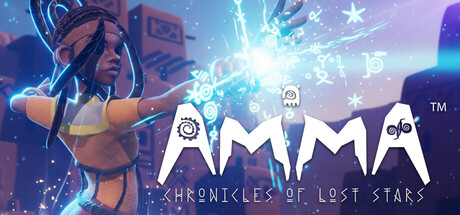
The AI integrated into Amma: Chronicles of Lost Stars is not used to generate random content or replace artists.
It is mainly used to optimize certain gameplay mechanics and improve the behavior of Nzuri spirits and enemies, making confrontations more tactical and unpredictable.
All narrative, visual and sound content remains entirely manualy created by our team of artists and narrative designers. AI is only used to enhance fluidity and depth.
Generative AI tools were used to create or initialize some store page material, as I am a game developer not a graphic designer. This made preparing some store page art assets easier, allowing me to spend more time working on the game itself.
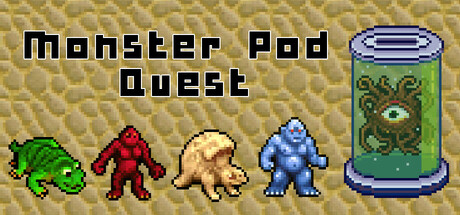
Monster Pod Quest uses a custom AI model to generate content (monsters, tiles, etc) during gameplay, to create a dynamic and customisable experience. All pixel art used for training was either purchased or was freely available under a creative commons license, and all artists are credited in-game.
We’ve been working since 2009 (when the Bot Colony concept was unveiled at GDC) on a game where players can say ANYTHING to a character and be understood. Adding a Generative AI component to our proprietary dialogue technology enables us to make the dream come true.
Game art assets are generated using AI tools to create initial concept art, which is then manually adjusted and modified by artists. The final works combine AI-generated foundational designs with human artistic revisions.
Some dynamic art assets are assisted in their creation by AI tools.
This game uses generative AI within its chat system to provide a richer and more personalized text-based interaction experience. The AI is used solely for real-time generation of dialogue and does not involve images, voice, or other media. All generated content is moderated through filtering mechanisms to prevent inappropriate or copyright-infringing output.
The game part utilized the texture materials and UI icons generated by Midjourney for 3D models, such as those in 3D paintings. Suno AI was used to generate some of the game music (about one-third). All AI materials in the game were sourced from legal paid channels. No protected artworks were used for training. The development team will promptly update the game to ensure that it conforms to the latest policy adjustments.
This game utilizes【AI】to generate pre-rendered content.
This game does NOT employ【AI】for real-time content or code generation during gameplay.
Please note that【certain music files】and【certain image files】within this game were created with AI-assisted tools. Specifically:
- 【Certain music files】were produced using SUNO AI (The developer is a paying user of SUNO AI. According to SUNO AI's official policy, music created during the paid subscription period belongs to the paying user, who holds the rights to use such AI-generated music for both personal creations and commercial purposes).
- 【Certain image files】were generated using GPT-4o. Notably, all images used in the game were created without referencing any copyrighted works from the internet, thus they do not infringe upon any copyrights.
This game uses AI-assisted tools in the development of art assets. As a solo indie developer, I utilize AI to enhance workflow efficiency while maintaining creative direction and manual refinement of all final assets.
This game uses an AI language model for dialogue. Please comply with local laws and regulations and do not guide the AI model to generate content that violates local laws!
In-game illustrations are designed with AI assistance;
Character dialogue and voice tones are optimized via AI;
Integrated AI models enable free chat interactions with NPCs.
AI is used for generating towns and dungeons in the game, outputting the results of actions, generating NPCs and items, and handling conversations with NPCs.
The main character's dialogue is created with real human performances from the developer and altered with an Elevenlabs voice changer to change the timbre.
We used AI tools to refine and translate our store description to English in a more professional tone. Additionally, we used AI-assisted design tools to create and enhance our store assets, such as the logo and promotional images (e.g., capsule art, header, key visual), including color adjustments and minor visual improvements. No AI-generated content is used within the gameplay itself.
AI was used to create or enhance the fidelity of in game sprites such as characters, enemies and ground textures. AI was also used in creation of graphical materials on the store page.
Some in-game content (e.g., art, text) was created with AI assistance, then rigorously edited by our team. We only use ethically sourced data and comply with copyright standards.
There is some writing which is provided for the player to simulate the conversational style of LLMs when the player is pretending to be the ship's computer. This text was generated via LLM.
Type of content involved: Store page posters
Usage: Pre-generated materials
Safety measures: All AI content has been manually reviewed to ensure there is no infringement/inappropriate content.
AI was used solely to generate the store page artwork, specifically for the title image. No AI was used in the actual game itself—game assets, environments, and mechanics are all created manually. All in-game screenshots displayed on the store page are genuine and accurately represent the gameplay experience.
The AI integrated into Amma: Chronicles of Lost Stars is not used to generate random content or replace artists.
It is mainly used to optimize certain gameplay mechanics and improve the behavior of Nzuri spirits and enemies, making confrontations more tactical and unpredictable.
All narrative, visual and sound content remains entirely manualy created by our team of artists and narrative designers. AI is only used to enhance fluidity and depth.
Generative AI tools were used to create or initialize some store page material, as I am a game developer not a graphic designer. This made preparing some store page art assets easier, allowing me to spend more time working on the game itself.
Monster Pod Quest uses a custom AI model to generate content (monsters, tiles, etc) during gameplay, to create a dynamic and customisable experience. All pixel art used for training was either purchased or was freely available under a creative commons license, and all artists are credited in-game.
We’ve been working since 2009 (when the Bot Colony concept was unveiled at GDC) on a game where players can say ANYTHING to a character and be understood. Adding a Generative AI component to our proprietary dialogue technology enables us to make the dream come true.
Game art assets are generated using AI tools to create initial concept art, which is then manually adjusted and modified by artists. The final works combine AI-generated foundational designs with human artistic revisions.
Some dynamic art assets are assisted in their creation by AI tools.
This game uses generative AI within its chat system to provide a richer and more personalized text-based interaction experience. The AI is used solely for real-time generation of dialogue and does not involve images, voice, or other media. All generated content is moderated through filtering mechanisms to prevent inappropriate or copyright-infringing output.
The game part utilized the texture materials and UI icons generated by Midjourney for 3D models, such as those in 3D paintings. Suno AI was used to generate some of the game music (about one-third). All AI materials in the game were sourced from legal paid channels. No protected artworks were used for training. The development team will promptly update the game to ensure that it conforms to the latest policy adjustments.