Public Steam disclosure research27,954 disclosures tracked
Where do games disclose AI use?
Search developers’ Steam disclosures, compare classified AI use across
games, and follow recorded changes.
This index adds cross-game classifications and statistics to
statements published on individual store pages.
Groups reflect automatic analysis of public disclosures; mature records are excluded. These counts do not measure AI use across all of Steam.
Missing or unclear statements cannot establish whether a game uses AI.
Some auxiliary art assets (the overworld map background) used AI tools for concept assistance in the early stage of creation. The developer then conducted extensive manual secondary design and reconstruction, including hand-drawn routes, level node layout, color unification, and UI interaction design.
The core gameplay, unit system, combat numerical balance, battle log system, and all strategic logic are purely hand-designed by the developer and do not use AI generation. This is a solo-developed strategy game; AI was only used to improve the efficiency of specific art assets. Thank you for your understanding
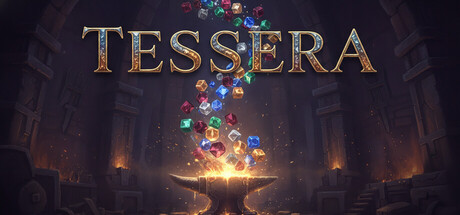
Some of Tessera's assets - including monster and character artwork, background art, gem and tile art, certain UI icons, and some audio - were created with the assistance of generative AI tools (Google Gemini) during development. These assets were reviewed, edited, curated, and integrated by the developer. Tessera does NOT generate any AI content live during gameplay; all AI-assisted content is pre-made and fixed in the build.
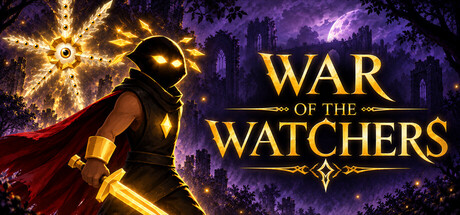
War of the Watchers uses generative AI in two places. Both are pre-generated before release and ship as fixed files; nothing is generated while you play.
Character dialogue is voiced using AI text-to-speech. Every line was written by the developer, and the tool performs those written lines. Each take is recorded before release and ships as an audio file.
Some promotional artwork, including the key art and store capsules, was produced with AI image tools and then edited by the developer.
Game code, level design and all in-game visuals are hand-authored. No content is generated during gameplay.
This game and its store page use generative AI-assisted content, including artwork, music, sound, and other creative assets. Assets are created or assisted with AI tools, then curated and implemented by the developer. No live AI-generated player content is used during gameplay.
Generative AI was used to assist in the creation of selected Steam store promotional images, certain audio assets, and a limited number of 3D assets. AI tools were also used to assist with translation and localization. No live-generated AI is used during gameplay.
AI was used to optimize core logic and resource management, and to create some assets. The developer also uses AI in various areas, including SFX, VFX, gameplay mechanics, UI, and UX, to improve the game's overall quality.
Generative AI tools were used during development to assist with selected visual assets, written content, localization, and other parts of the production process. All AI-assisted content was reviewed, edited, and integrated by the developer. No generative AI content is created during gameplay.
Grindveil's art is made with generative AI tools. We generate, then pick, crop, recolour and optimise every piece by hand before it ships, and we throw out the ones that do not fit. The same goes for part of the writing: item and location names, some of the lore in the in-game Codex, and the interface translations for our fourteen languages are drafted with AI help and reviewed by us.
Nothing is generated while you play. No AI runs on your machine, nothing you type is sent to an AI service, and every image and every line of text in the game was made and checked before release.
Some of the content in Abyss Floors was created with the help of generative AI tools, always under the developer's direction and review:
Text — Portions of the game's descriptive and flavor text (item and ability descriptions, interface copy, and atmospheric lore lines) were drafted with AI assistance and edited by the developer.
Store & branding art — The store-page capsules, library images, and other branding graphics were produced with AI-assisted tools.
Abyss Floors is a text- and table-driven simulation, so there is no AI-generated illustrated art in actual gameplay, and all screenshots on this page are captured directly from the live game. The game's design, balance, systems, and code are the developer's own, with AI used as a development aid rather than to generate gameplay content.
During the development of this title, generative AI was used as an assistive tool for writing some code, as well as for text polishing and translation. Other elements—including core artwork, character and environment designs, and the overall visual presentation—were created entirely by the developers themselves.
We’re an experienced game development team using AI tools to accelerate the creation of visual assets and promotional materials. Through workflows developed in-house, we actively create and refine this content, maintaining creative control from concept to final polish.
The background, as well as the mesh and base textures for the Matryoshka dolls, were created entirely by hand.
Some of the Matryoshka patterns and the fang meshes were generated using AI, then however directed and revised by humans.
AI tools were also used to assist with language localization.
We build Last Treasure Online with AI tools. Much of the code is written with AI, including shaders, scripts that model props and furniture in Blender, and scripts that synthesize sound effects and ambience. Most text in the game is AI generated, but all names, personalities, schedules, stories, lore, knowledge, etc is strongly scaffolded and enforced by us as designers. In play, NPCs speak through an AI language model on our server in order to talk about hundreds of subjects in different ways depending on what they know about them, you, the world, etc.... The model only rewords lines and facts we wrote: it cannot invent places, items, prices or quests, and players never type text into it. No images, textures, 3D models, music or sounds come from diffusion image, 3D or audio models. Characters and clothing are hand-painted, and the world's textures are photographs.
This game was developed solo by an independent developer. Some UI visuals and artwork used for the Steam store page were created with the help of generative AI. Original sound effects were also created with AI assistance to match the game's atmosphere. This content is fixed and built into the game.
AI is not used to generate content in real time during gameplay.
Valdrys uses AI-generated content in one place: the login screen
background, a single static image of a moonlit ridge over a conifer
forest, generated with Google Gemini. It does not appear in gameplay.
Everything else in the game is hand-drawn, generated procedurally by
our own tools, or licensed from third-party artists under CC0, CC-BY
or commercial licences. All of it is credited on the in-game Credits
screen.
Parts of the game's code were written with the help of an AI coding
assistant. No AI-generated art, audio or written content ships in
Valdrys beyond the single background image described above.
Nothing in Valdrys generates content while the game is running.
Parts of the content that ships with Nightfall were created with the help of generative AI tools. Artwork: the main menu illustration, the six hero portraits, and the four boss portraits. Music: all five soundtrack tracks were generated with Suno. This content was reviewed and selected by us before release. All in-game sprites, tilesets, animations, visual effects and user-interface art are licensed, human-made assets. No content is generated by AI while the game is running.
Generative AI was used during development to create and assist with some of the game's visual assets, including character artwork, event illustrations, backgrounds, and other graphical elements, as well as some of the music used in the game. AI-generated materials were reviewed, selected, and edited by the developer before being included in the game.
Generative AI is not used to dynamically generate gameplay, dialogue, story content, visual assets, or music while the game is running.
Generative AI was used during development to create and assist with pre-generated 2D artwork, character portraits, selected UI and background artwork, achievement icons, Steam store and library marketing artwork, and portions of localization and text. All AI-assisted content was reviewed, selected, edited, and integrated by the developer. The game does not generate AI content during gameplay and does not connect to external AI services.
Vestibule's pixel art was generated with an AI art tool, with every design directed, refined, and hand-edited by the developer. Individual trailer and cinematic clips were generated with an AI video tool, built from the game's own artwork and developer-written scene descriptions — the final edit, scene sequencing, and music timing were done manually by the developer in After Effects. All game design, systems, writing, and code are original work.
Cards, some leaders and UI-elements artwork is generated with AI tools, then hand-edited before it goes into the game. They are being phased out as budget and time allows.
Some store visuals (capsule art) were created using AI image generation tools.
Game text translations for languages other than English/Turkish were done with the assistance of AI translation and manual review.
Cutscenes and the visual slides featuring dialogue were created with the assistance of AI.
Generative AI was used to help draft some in-game text and Steam store / marketing copy. Selected upgrade card icons were purchased as AI-generated assets and then manually edited. All AI-assisted content is reviewed by the developer before shipping.
Some character, enemy, and environment sprites in this game were created with the assistance of AI image generation tools during development. All AI-generated content was reviewed and edited by the developers before inclusion.
This game uses generative AI in the following areas:
Art: Character sprites, background images, UI elements, and other
visual assets were created with the assistance of generative AI tools.
All generated assets were reviewed, edited, and adjusted by the
developer before being used in the game.
Localization: Store page text and in-game text in languages other
than Japanese were translated with the assistance of generative AI,
and reviewed before publication.
Programming: Generative AI was used as a coding assistant during
development.
No AI-generated content is produced at runtime. All game content
is fixed and pre-authored.
Pre-generated content only. No AI runs while the game is played.
Some monster and boss sprites were generated with PixelLab (an AI pixel-art tool) and then hand-edited, cut into animation strips and cleaned up by the developer. A few background art pieces, such as arcade machine sheets and map-card thumbnails, were generated with Google Gemini and then reworked by hand. The music soundtrack was generated with Suno on a paid licence. Some store page art may be based on these assets.
All gameplay code, the level design, the rest of the sprite art, UI, sound effects and all text were made by the developer without generative AI. The game does not generate any content at runtime.
Some of this game's written text, including this store page and some in-game descriptions, was drafted with the help of an AI assistant and then edited by hand. The rest is not AI-generated: the pixel art is hand-drawn or from licensed asset packs, the audio comes from a licensed sound pack, and every screenshot and capsule image is composed from real in-game captures. Nothing is generated while you play.
Generative AI tools were used to assist with some store marketing assets including capsule artwork, as well as a small number of in-game item icons and a loading screen. All AI-assisted assets were reviewed, edited and polished by hand before use and will be replaced at a later date.
This game uses generative AI to assist in the creation of chimera image assets and text content used in the game. Generative AI is also used to assist with game planning and design, programming and development, and translation into English. All AI-generated content and AI-assisted translation are produced during development. Generative AI is not used to generate new content during gameplay.
AI is used to generate concept art, 3D models, audio, and Steam store images. Models are manually refined and hand-textured. No AI content is generated during gameplay.
The illustrations in Dead Market — the 247 card images, the cutscene plates, the premises backdrops and the nine-slice chrome — were generated with image models during development, then selected, corrected, composed and integrated by hand against the game's own manifest. Everything that displays a live value is drawn procedurally in the engine rather than being an image. The spoken lines were synthesised from a written script, one voice per character, and edited into the game.
Nothing is generated while the game runs. There is no model in the build, no network code and no telemetry.
We use AI to polish and iterate on the human prepared concepts, textures, sometimes the achieved final version is used in game.
For game code, occasionally, we use a reliable snippet based generation, reviewed and ebmedded into the game by developers, for maximum stability.
Store page text (the short and long descriptions) was drafted with the help of a generative AI language model, then reviewed and edited by the developer before publication.
All art and audio that ships inside the game is human-made and licensed: the creature-family icons are by Lorc and Delapouite from game-icons.net (CC BY 3.0), and the sound effects are by Kenney (CC0). The store and library capsule images were composed programmatically from the game's own icon.
The game generates no content at runtime.
This game's art and code are creatively directed by a human developer (me), directing, refining, reviewing, and quality-checking every part across hundreds of hours of iteration. I build it with Claude AI as my tool. The visuals are not pre-made image files or AI-generated images. They are drawn by code at runtime (procedural rendering) using standard 2D canvas drawing commands, and Claude AI writes and brings that code to life. The store page and marketing images come from that same in-game rendering. The game does not include third-party copyrighted material.
Some static 2D artwork and store promotional images were created with the assistance of generative AI and were selected, edited, and integrated by the developer. The game does not use generative AI at runtime, does not generate content in real time, and does not transmit player data to AI services.
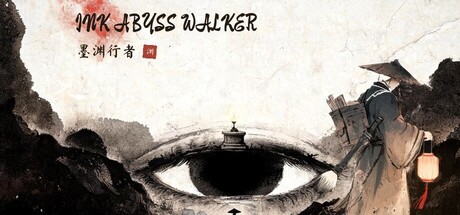
INK ABYSS WALKER was crafted by a single indie developer. During development, AI tools were used as an assist to produce quick, early drafts of some illustrations and text — helping an ink-soaked idea take shape as images and words more efficiently. The core gameplay, worldbuilding, card and number balance, narrative, and overall tone, however, were all led, iterated and finalised by hand by the developer. AI is a tool that helps an idea move faster — not the author of it. Everything you see was selected, refined and re-crafted by a person, to keep faith with the game's ink-wash spirit. Thank you to every walker who carries the lamp onward.
Some store, interface, and world illustrations were created or refined with generative image tools, then selected and edited by the developer. Combat, economy, character progression, saves, and online play are written and run by the game server. The game does not use generative AI during play to write your progress, fight your battles, or replace other players.
Generative AI tools were used during development to assist with the creation of a limited number of graphical assets and promotional materials. The selected content was reviewed, adapted, and integrated by the development team. The game does not use live-generated AI, and no content is generated while playing.
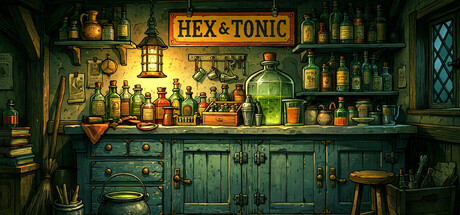
I am a professional artist who lost the majority of my vision many years ago. Now legally blind, I use AI to generate base images and I create what I call "Hybrid Art", in which I combine my own art and skills with the generations to still create art that I love. This technique has been used in Hex & Tonic for card art, store page art, etc. I hope it brings you as much joy as I got creating for you.
I leveraged AI tools to bring my game concept to life, with AI assistance in coding, artwork, and the Steam store page. I want to assure you that this game was built through genuine collaboration between myself and AI—working together to create a better, more enjoyable experience.
The soundtrack is AI generated with human modifications. Art, text, localizations, and store assets were made with AI assistance and human modifications. Nothing is generated at runtime, and the game never connects to an AI service.