Public Steam disclosure research25,380 disclosures tracked
Where do games disclose AI use?
Search developers’ Steam disclosures, compare classified AI use across
games, and follow recorded changes.
This index adds cross-game classifications and statistics to
statements published on individual store pages.
Groups reflect automatic analysis of public disclosures; mature records are excluded. These counts do not measure AI use across all of Steam.
Missing or unclear statements cannot establish whether a game uses AI.
As a solo developer, I use AI tools as creative assistants. This allows me to include full voice acting and detailed environments that would otherwise be impossible for a single person. This is not mindless generation – every asset has been carefully curated, manually edited, and implemented to serve the game's story and atmosphere.
If you could peek inside my code or topology, you would BEG me to use AI to fix it. BUT NO. This crap is handmade and stays that way! The soundtrack, however, is a hybrid: I used generative AI to create raw textures, which I then manually arranged and mixed.
The images used in the game are created using generative AI.
The names of the characters are also created using generative AI.
The shop text is created using AI.
Uses AI to determine minimum system requirements.
This game is created by a solo developer with a limited budget and some AI-assisted tools were used during production.
– All robot voices are based on AI-generated voice lines that were then hand-edited, processed and mixed.
– Some background images and visual effects were created or enhanced using AI-assisted art tools.
– All game design, code, gameplay systems and written story/content were created by hand by the developer.
Some sound effects and portions of the music soundtrack were created using AI-assisted audio tools. AI is used only as a creative aid for generating and polishing audio assets; it does not affect gameplay, player data, or in-game decision making.
Some of the game's artwork, such as supporting illustrations and auxiliary images, was initially created with the help of AI tools for visual prototyping. All content used in the final product has been reviewed, edited, and curated by humans to ensure consistent style and alignment with the game's universe.
The game does not use AI for gameplay decisions, character behavior, progression, dialogues, or any functional part of the experience. All narrative, mechanics, programming, and design were developed manually.
We used AI tools during the development process solely to assist in writing standard game scripts (coding assistance) and to generate musical notation for some background tracks. The game does not use any AI generation in real-time; all assets are pre-made.
To keep this project viable without selling a kidney, generative AI was used to assist with Tablo Escobar's motivational dialogues and localization. However, I didn’t make AI slop... I manually reviewed and edited every line to make sure the robots didn't accidentally declare war on the player.
"The game's visual and audio assets (art, sound, music, and primary narrative) do not contain generative AI content. The development process utilized standard algorithmic tools for code generation and debugging assistance. Gameplay relies on basic procedural and deterministic logic (e.g., enemy spawning, score calculation)."
The developer utilized AI image generation tools to assist in the creation of specific static visual assets where professional human artist craft was not financially viable for a solo project. These assets include the store capsule art, menu background textures, and narrative event illustrations. All AI generated output was heavily curated, edited, and painfully amended by the developer to ensure consistency with the game's 1970s pulp fantasy aesthetic and pixel-art gameplay. No AI is used to generate content live during gameplay.
1.The game utilizes AI-assisted ideas for programming logic to accelerate the development process.
2.Current music was created with the help of an AI-based platform.
3. This game does not use any form of AI for image generation.
Certain visual content within the game was created using generative AI. This includes the static background images and illustrations that appear as part of the main storyline and narrative progression
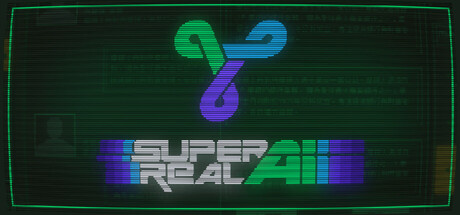
Super Real AI reverses the traditional use of artificial intelligence.
Instead of AI serving humans, humans now serve AI.
A local LLM powers simulated users who constantly send unpredictable queries—while real players, acting as AI workers, must respond, classify, and adapt.
It’s not a game using AI; it’s a game about using AI.
All AI-generated visuals used in this project were produced using a Generative Adversarial Network trained exclusively on artwork to which we hold full copyright and usage rights.
All generated artwork underwent manual intervention and polishing to ensure artistic quality.
Much of the enemy graphics were made with the help of generative AI. However, none of them are simply used "as is." Getting the artwork to match Hong Kong 97's SNES graphics requires downscaling resolution and adjusting contrast, saturation etc.
Some visual assets, including promotional artwork and character models, were created with generative AI. The game itself does not generate content with AI during gameplay.
This game does not include AI "art". Anything with an artistic quality, rather than an attempt to emulate a realistic texture, was created by a human.
Photorealistic AI-generated images were sampled to create some of the game's textures, and often heavily edited since raw output is unsuitable.
3D models, sounds, and music in this game were created by a human with zero AI assistance.
Some visual elements in this game were partially created using AI-assisted tools. Specifically, we used AI to help generate certain UI elements and card artwork. -Generated by AI
AI tools were used in a limited, supporting role during development to assist with certain technical and creative tasks. The vast majority of the game including gameplay design, environments, story, music, and presentation is created directly by human developers. AI-generated content is not central to the experience and is used only as part of the normal development workflow.
As a solo developer, I use AI tools as creative assistants. This allows me to include full voice acting and detailed environments that would otherwise be impossible for a single person. This is not mindless generation – every asset has been carefully curated, manually edited, and implemented to serve the game's story and atmosphere.
If you could peek inside my code or topology, you would BEG me to use AI to fix it. BUT NO. This crap is handmade and stays that way! The soundtrack, however, is a hybrid: I used generative AI to create raw textures, which I then manually arranged and mixed.
The images used in the game are created using generative AI.
The names of the characters are also created using generative AI.
The shop text is created using AI.
Uses AI to determine minimum system requirements.
This game is created by a solo developer with a limited budget and some AI-assisted tools were used during production.
– All robot voices are based on AI-generated voice lines that were then hand-edited, processed and mixed.
– Some background images and visual effects were created or enhanced using AI-assisted art tools.
– All game design, code, gameplay systems and written story/content were created by hand by the developer.
Some sound effects and portions of the music soundtrack were created using AI-assisted audio tools. AI is used only as a creative aid for generating and polishing audio assets; it does not affect gameplay, player data, or in-game decision making.
Some of the game's artwork, such as supporting illustrations and auxiliary images, was initially created with the help of AI tools for visual prototyping. All content used in the final product has been reviewed, edited, and curated by humans to ensure consistent style and alignment with the game's universe.
The game does not use AI for gameplay decisions, character behavior, progression, dialogues, or any functional part of the experience. All narrative, mechanics, programming, and design were developed manually.
We used AI tools during the development process solely to assist in writing standard game scripts (coding assistance) and to generate musical notation for some background tracks. The game does not use any AI generation in real-time; all assets are pre-made.
To keep this project viable without selling a kidney, generative AI was used to assist with Tablo Escobar's motivational dialogues and localization. However, I didn’t make AI slop... I manually reviewed and edited every line to make sure the robots didn't accidentally declare war on the player.
"The game's visual and audio assets (art, sound, music, and primary narrative) do not contain generative AI content. The development process utilized standard algorithmic tools for code generation and debugging assistance. Gameplay relies on basic procedural and deterministic logic (e.g., enemy spawning, score calculation)."
The developer utilized AI image generation tools to assist in the creation of specific static visual assets where professional human artist craft was not financially viable for a solo project. These assets include the store capsule art, menu background textures, and narrative event illustrations. All AI generated output was heavily curated, edited, and painfully amended by the developer to ensure consistency with the game's 1970s pulp fantasy aesthetic and pixel-art gameplay. No AI is used to generate content live during gameplay.
1.The game utilizes AI-assisted ideas for programming logic to accelerate the development process.
2.Current music was created with the help of an AI-based platform.
3. This game does not use any form of AI for image generation.
Certain visual content within the game was created using generative AI. This includes the static background images and illustrations that appear as part of the main storyline and narrative progression
Super Real AI reverses the traditional use of artificial intelligence.
Instead of AI serving humans, humans now serve AI.
A local LLM powers simulated users who constantly send unpredictable queries—while real players, acting as AI workers, must respond, classify, and adapt.
It’s not a game using AI; it’s a game about using AI.
All AI-generated visuals used in this project were produced using a Generative Adversarial Network trained exclusively on artwork to which we hold full copyright and usage rights.
All generated artwork underwent manual intervention and polishing to ensure artistic quality.
Much of the enemy graphics were made with the help of generative AI. However, none of them are simply used "as is." Getting the artwork to match Hong Kong 97's SNES graphics requires downscaling resolution and adjusting contrast, saturation etc.
Some visual assets, including promotional artwork and character models, were created with generative AI. The game itself does not generate content with AI during gameplay.
This game does not include AI "art". Anything with an artistic quality, rather than an attempt to emulate a realistic texture, was created by a human.
Photorealistic AI-generated images were sampled to create some of the game's textures, and often heavily edited since raw output is unsuitable.
3D models, sounds, and music in this game were created by a human with zero AI assistance.
Some visual elements in this game were partially created using AI-assisted tools. Specifically, we used AI to help generate certain UI elements and card artwork. -Generated by AI
AI tools were used in a limited, supporting role during development to assist with certain technical and creative tasks. The vast majority of the game including gameplay design, environments, story, music, and presentation is created directly by human developers. AI-generated content is not central to the experience and is used only as part of the normal development workflow.