Public Steam disclosure research25,380 disclosures tracked
Where do games disclose AI use?
Search developers’ Steam disclosures, compare classified AI use across
games, and follow recorded changes.
This index adds cross-game classifications and statistics to
statements published on individual store pages.
Groups reflect automatic analysis of public disclosures; mature records are excluded. These counts do not measure AI use across all of Steam.
Missing or unclear statements cannot establish whether a game uses AI.
Pre-generated voice-over and minor environmental assets were created using generative AI.
All generated content was selected, edited, and integrated by the development team. No generative AI is used during gameplay.
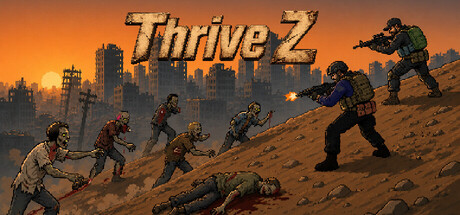
Ive used AI for my Store Page and my title screen, added some of my own flare to it.
I used AI for my portraits in game for my shop keepers
Everything else was used from a humble bundle I bought back in 2020 - Zombie TDS 2d Game kit
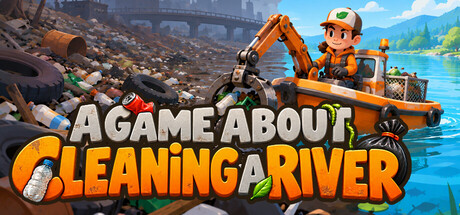
Some sound effects in the game, including boat and engine sounds, were generated using AI tools during development and are included as pre-generated audio assets. This was intended as a temporary solution, with the goal of replacing them with original, professionally recorded sound effects once the necessary resources become available.
During development, generative AI is used to explore visual concepts and create prototype. Also used on Translation. Textures, animations, and 3D models are created manually. The game does not generate AI content during gameplay.
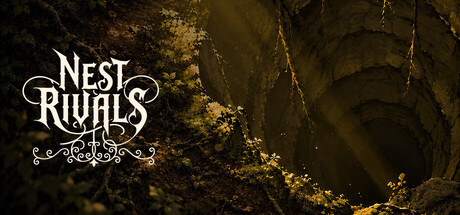
Nest Rivals uses pre-generated AI-assisted artwork in selected sprites, environment textures, bestiary illustrations and marketing images. Some music and sound effects, as well as parts of this Steam store description, were also created with AI assistance. These materials were selected and integrated by the developer. The game does not generate AI content during gameplay.
AstralX uses generative AI only for some 2D illustrative images, primarily certain biome visuals and depictions of some races/species. The game contains well over 1,000 such visual elements, which is why generative AI was used to assist with part of this 2D artwork.
Generative AI is not used for the game's simulation, mathematical calculations, gameplay rules, mechanics, or underlying systems. These elements were designed and developed manually by the developer. 3D content is also not generated using AI.
The music was composed manually and performed by a real pianist. The sound design was likewise created through traditional human production rather than generative AI.
No generative AI is used dynamically during gameplay.
This game was made with the help of generative AI tools, which were used for its art, music, sound, text and marketing materials. Nothing is generated by AI while you play.
Generative AI tools were used to assist with some visual assets and localization. All AI-assisted content was reviewed and edited by the development team before being included in the final game.
Generative AI tools were used during development to assist with the creation of some visual assets, textures, and promotional artwork. All AI-assisted content was reviewed, selected, edited where appropriate, and integrated by the developer.
Some artwork, cinematic sequences, and music were created with the assistance of generative AI tools and then selected, edited, and integrated by the developer. No AI-generated content is created during gameplay, and the game does not connect to external AI services.
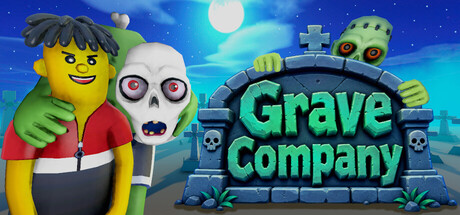
Some artwork and localization in Grave Company were created with the assistance of generative AI. This content was reviewed and adjusted by the development team before release.
Generative AI tools were used during development to assist with the creation and refinement of some visual assets and localization. All AI-assisted content is reviewed, edited, and curated by the developer before being included in the game.
This game is fully programmed by a human developer, including all gameplay systems, level design, and dungeon creation. Generative AI is used to assist with artistic elements such as textures, 3D objects/characters, and store visuals. All creative and technical decisions remain entirely human‑made.
AI-assisted tools were used during development to create fixed assets that are baked into the build and the store page:
- Pixel-art sprites for the sea creatures, the guardians, battle effects and Ariel
- Store page art (capsules, library images, logo)
- Drafts of some in-game text and the EN / RU / JA localization, reviewed by the developer
Game design, code, level layouts and music are human-authored. All music and sound effects are generated procedurally by the game's own code at runtime - there are no audio files and no AI model is involved.
No AI model runs while the game is playing. The build is fully offline.
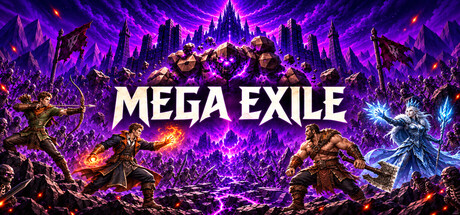
Generative AI tools were used during development to help create some 3D character assets and store page text. This content is prepared in advance. Mega Exile does not generate AI content during gameplay or connect to external AI services while you play.
This game was vibe coded in C++ with Claude Code Opus 5, and some GPT-6 Astra while I operated Unreal Engine 5.7. Many of the assets were purchased at fab.com, and the voices are from elevenlabs.io. Call it shovelware if you like, I had fun shoveling.
Generative AI tools were used during the development of Forgotten Horizons to assist with the creation of some content. AI-generated content was reviewed and edited by the development team before being included in the game or its store and marketing materials. The game does not generate AI content in real time during gameplay.
Generative AI was used in two areas for this project: First, 2D character artwork hand-drawn by a human artist was converted into 3D models using AI-powered tools. Second, AI was used for the localization and translation of the game's text into multiple languages. All other game assets, including sound design, music, and the core story, were created entirely without the use of AI.
Generative AI tools were used during development to assist with the creation of some visual assets, promotional artwork, and selected localization or text drafts. All AI-assisted content was reviewed by the developer and, where needed, edited before being included in the game or its Steam store materials.
The game does not generate AI content during gameplay and does not connect to external AI services.
Generative AI was used as a design assistant for the title logo. The generated layout was reviewed, edited, and incorporated by the developer. No content is generated during gameplay.
Ai was only used to help polish the content on the store page and to create the company and game logos. All code and assets used in game were created by humans (the author, online verified sources, or contracted/paid designers).
Generative AI was used during development to help create some of the game's 3D models, music, sound effects, and program code, as well as to draft or revise portions of the in-game text and translate in-game text into English.
The store page also includes image assets created using generative AI. Generative AI was also used to help write the store description and translate it into English.
Generative AI tools were used during development to assist with programming, concept development, and the creation or refinement of some visual assets. All AI-assisted content included in the game was reviewed, edited, and integrated by the developer. The game does not generate AI content during gameplay and does not connect to any external AI service.
AI tools were used only to check visual concepts, translate text into some languages, and create music placeholders. All such materials are currently significantly reworked by humans. By release, we plan to replace the music placeholders with original compositions and have the translations reviewed by human editors.
Generative AI was used during development to create or refine some of the game’s visual assets and music, and to assist with localization. These assets were selected by the developer and edited and adapted as needed. The game does not generate AI content in real time during gameplay.
Some of the promotional and storefront images were created with AI tools and then refined by hand. All of the in-game assets were designed by a 3D artist.
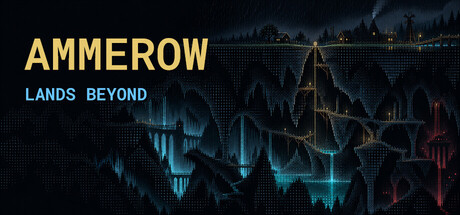
The music in Ammerow: Lands Beyond was created with Claude Compose, a bespoke composition system built for this project. Rather than a generative music model, it works like a tireless studio composer: an AI assistant (Anthropic's Claude) writes and runs code that composes each piece note by note — melody, harmony, counterpoint and orchestration derived from music theory — and performs it through real, licensed virtual instruments in a professional DAW (Ableton Live). It then "listens back" by analysing the rendered audio to refine the balance. No generative audio/music model was used, no AI was trained on other artists' recordings, and no track was produced from a prompt. Every note is placed deliberately, and every piece is directed, reviewed and approved by a human. The result is authored, not generated.
The sound effects are an original, human-directed procedural synthesis library. Claude Code assisted in writing custom Python DSP software and individual cue recipes; every waveform was deterministically rendered from mathematical models and recorded seeds. No recordings, performers, samples, stock audio, sample libraries or generative-audio service were used.
Ammerow is designed primarily as a coloured ASCII game. Selected creature, item and shopkeeper illustrations began as AI-generated source images and are converted through a deterministic ASCII-art pipeline. The optional tile mode is a work-in-progress secondary presentation. Its small atlases were programmatically drawn in a custom SDL application using natural-language Codex direction. No generative-image model, inherited tileset, traced artwork or third-party graphical asset was used.
Some narrative, gameplay data and other player-facing material were also developed with AI assistance under human direction and review.
Some Steam marketing backgrounds were created using OpenAI image-generation tools and then selected, reviewed and combined with deterministic Ammerow branding by the developer.
No AI runs while the game is being played.
Generative AI was used during development to assist with some pre-generated artwork, audio, music, sound effects, and written content. All AI-assisted content was reviewed and edited by the developer before being included in the game. No live-generated AI is used during gameplay.
Generative AI tools were used during development to assist with programming, writing in-game dialogue and descriptive text, translation into multiple languages, implementing graphics and sound effects, and creating promotional artwork and descriptions for the Steam store page.
These materials were created and incorporated during development. The game does not use generative AI to create new dialogue, images, or audio during gameplay. The autonomous behavior of residents and monsters, as well as their context-sensitive conversations, is driven by pre-programmed game logic and pre-written dialogue.
Generative AI tools were used during development to assist with creating and refining a limited number of sprites, images, and sound effects. All resulting assets were reviewed, edited where necessary, and approved before inclusion in the game. The game does not generate AI content during gameplay.
AI translation tools were used to assist with localization from English to other languages.
The original English script was hand written, and no generative AI art, sound, or music was used in the game or promo materials.
This game utilizes Artificial Intelligence solely for text translation and localization across different languages. All translated text has been manually reviewed and proofread for quality and coherence. All other aspects of development, including game design, mechanics, and art, are original assets. The audio features a mix of original work and third-party assets used under their respective licenses.
Pre-generated content: part of the game's art (backgrounds, character and enemy sprites, portraits, props, key art and capsule images) was created with generative image tools (Google Gemini, PixelLab) and then reviewed, cut, edited and assembled by hand by the developer. Some sound effects were produced with AI audio tools (ElevenLabs). Parts of the source code were written with the assistance of an AI coding assistant (Anthropic Claude) under the developer's direction and review. The story, game design, world, dialogue and puzzles are the developer's own work.
Live-generated content: none. The game does not generate any content with AI while it is running.
Generative AI assisted with selected store and library artwork and some localization text. This content was created before release; the game does not use real-time AI generation.
Generative AI tools were used during development to create or assist with 3D models, voice audio, and translations/localization. Generative AI was also used to create and edit promotional artwork for the Steam store and library, including capsule images, backgrounds, and logo artwork.
Pre-generated voice-over and minor environmental assets were created using generative AI.
All generated content was selected, edited, and integrated by the development team. No generative AI is used during gameplay.
Ive used AI for my Store Page and my title screen, added some of my own flare to it.
I used AI for my portraits in game for my shop keepers
Everything else was used from a humble bundle I bought back in 2020 - Zombie TDS 2d Game kit
Some sound effects in the game, including boat and engine sounds, were generated using AI tools during development and are included as pre-generated audio assets. This was intended as a temporary solution, with the goal of replacing them with original, professionally recorded sound effects once the necessary resources become available.
During development, generative AI is used to explore visual concepts and create prototype. Also used on Translation. Textures, animations, and 3D models are created manually. The game does not generate AI content during gameplay.
Nest Rivals uses pre-generated AI-assisted artwork in selected sprites, environment textures, bestiary illustrations and marketing images. Some music and sound effects, as well as parts of this Steam store description, were also created with AI assistance. These materials were selected and integrated by the developer. The game does not generate AI content during gameplay.
AstralX uses generative AI only for some 2D illustrative images, primarily certain biome visuals and depictions of some races/species. The game contains well over 1,000 such visual elements, which is why generative AI was used to assist with part of this 2D artwork.
Generative AI is not used for the game's simulation, mathematical calculations, gameplay rules, mechanics, or underlying systems. These elements were designed and developed manually by the developer. 3D content is also not generated using AI.
The music was composed manually and performed by a real pianist. The sound design was likewise created through traditional human production rather than generative AI.
No generative AI is used dynamically during gameplay.
This game was made with the help of generative AI tools, which were used for its art, music, sound, text and marketing materials. Nothing is generated by AI while you play.
Generative AI tools were used to assist with some visual assets and localization. All AI-assisted content was reviewed and edited by the development team before being included in the final game.
Generative AI tools were used during development to assist with the creation of some visual assets, textures, and promotional artwork. All AI-assisted content was reviewed, selected, edited where appropriate, and integrated by the developer.
Some artwork, cinematic sequences, and music were created with the assistance of generative AI tools and then selected, edited, and integrated by the developer. No AI-generated content is created during gameplay, and the game does not connect to external AI services.
Some artwork and localization in Grave Company were created with the assistance of generative AI. This content was reviewed and adjusted by the development team before release.
Generative AI tools were used during development to assist with the creation and refinement of some visual assets and localization. All AI-assisted content is reviewed, edited, and curated by the developer before being included in the game.
This game is fully programmed by a human developer, including all gameplay systems, level design, and dungeon creation. Generative AI is used to assist with artistic elements such as textures, 3D objects/characters, and store visuals. All creative and technical decisions remain entirely human‑made.
AI-assisted tools were used during development to create fixed assets that are baked into the build and the store page:
- Pixel-art sprites for the sea creatures, the guardians, battle effects and Ariel
- Store page art (capsules, library images, logo)
- Drafts of some in-game text and the EN / RU / JA localization, reviewed by the developer
Game design, code, level layouts and music are human-authored. All music and sound effects are generated procedurally by the game's own code at runtime - there are no audio files and no AI model is involved.
No AI model runs while the game is playing. The build is fully offline.
Generative AI tools were used during development to help create some 3D character assets and store page text. This content is prepared in advance. Mega Exile does not generate AI content during gameplay or connect to external AI services while you play.
This game was vibe coded in C++ with Claude Code Opus 5, and some GPT-6 Astra while I operated Unreal Engine 5.7. Many of the assets were purchased at fab.com, and the voices are from elevenlabs.io. Call it shovelware if you like, I had fun shoveling.
Generative AI tools were used during the development of Forgotten Horizons to assist with the creation of some content. AI-generated content was reviewed and edited by the development team before being included in the game or its store and marketing materials. The game does not generate AI content in real time during gameplay.
Generative AI was used in two areas for this project: First, 2D character artwork hand-drawn by a human artist was converted into 3D models using AI-powered tools. Second, AI was used for the localization and translation of the game's text into multiple languages. All other game assets, including sound design, music, and the core story, were created entirely without the use of AI.
Generative AI tools were used during development to assist with the creation of some visual assets, promotional artwork, and selected localization or text drafts. All AI-assisted content was reviewed by the developer and, where needed, edited before being included in the game or its Steam store materials.
The game does not generate AI content during gameplay and does not connect to external AI services.
Generative AI was used as a design assistant for the title logo. The generated layout was reviewed, edited, and incorporated by the developer. No content is generated during gameplay.
Ai was only used to help polish the content on the store page and to create the company and game logos. All code and assets used in game were created by humans (the author, online verified sources, or contracted/paid designers).
Generative AI was used during development to help create some of the game's 3D models, music, sound effects, and program code, as well as to draft or revise portions of the in-game text and translate in-game text into English.
The store page also includes image assets created using generative AI. Generative AI was also used to help write the store description and translate it into English.
Generative AI tools were used during development to assist with programming, concept development, and the creation or refinement of some visual assets. All AI-assisted content included in the game was reviewed, edited, and integrated by the developer. The game does not generate AI content during gameplay and does not connect to any external AI service.
AI tools were used only to check visual concepts, translate text into some languages, and create music placeholders. All such materials are currently significantly reworked by humans. By release, we plan to replace the music placeholders with original compositions and have the translations reviewed by human editors.
Generative AI was used during development to create or refine some of the game’s visual assets and music, and to assist with localization. These assets were selected by the developer and edited and adapted as needed. The game does not generate AI content in real time during gameplay.
Some of the promotional and storefront images were created with AI tools and then refined by hand. All of the in-game assets were designed by a 3D artist.
The music in Ammerow: Lands Beyond was created with Claude Compose, a bespoke composition system built for this project. Rather than a generative music model, it works like a tireless studio composer: an AI assistant (Anthropic's Claude) writes and runs code that composes each piece note by note — melody, harmony, counterpoint and orchestration derived from music theory — and performs it through real, licensed virtual instruments in a professional DAW (Ableton Live). It then "listens back" by analysing the rendered audio to refine the balance. No generative audio/music model was used, no AI was trained on other artists' recordings, and no track was produced from a prompt. Every note is placed deliberately, and every piece is directed, reviewed and approved by a human. The result is authored, not generated.
The sound effects are an original, human-directed procedural synthesis library. Claude Code assisted in writing custom Python DSP software and individual cue recipes; every waveform was deterministically rendered from mathematical models and recorded seeds. No recordings, performers, samples, stock audio, sample libraries or generative-audio service were used.
Ammerow is designed primarily as a coloured ASCII game. Selected creature, item and shopkeeper illustrations began as AI-generated source images and are converted through a deterministic ASCII-art pipeline. The optional tile mode is a work-in-progress secondary presentation. Its small atlases were programmatically drawn in a custom SDL application using natural-language Codex direction. No generative-image model, inherited tileset, traced artwork or third-party graphical asset was used.
Some narrative, gameplay data and other player-facing material were also developed with AI assistance under human direction and review.
Some Steam marketing backgrounds were created using OpenAI image-generation tools and then selected, reviewed and combined with deterministic Ammerow branding by the developer.
No AI runs while the game is being played.
Generative AI was used during development to assist with some pre-generated artwork, audio, music, sound effects, and written content. All AI-assisted content was reviewed and edited by the developer before being included in the game. No live-generated AI is used during gameplay.
Generative AI tools were used during development to assist with programming, writing in-game dialogue and descriptive text, translation into multiple languages, implementing graphics and sound effects, and creating promotional artwork and descriptions for the Steam store page.
These materials were created and incorporated during development. The game does not use generative AI to create new dialogue, images, or audio during gameplay. The autonomous behavior of residents and monsters, as well as their context-sensitive conversations, is driven by pre-programmed game logic and pre-written dialogue.
Generative AI tools were used during development to assist with creating and refining a limited number of sprites, images, and sound effects. All resulting assets were reviewed, edited where necessary, and approved before inclusion in the game. The game does not generate AI content during gameplay.
AI translation tools were used to assist with localization from English to other languages.
The original English script was hand written, and no generative AI art, sound, or music was used in the game or promo materials.
This game utilizes Artificial Intelligence solely for text translation and localization across different languages. All translated text has been manually reviewed and proofread for quality and coherence. All other aspects of development, including game design, mechanics, and art, are original assets. The audio features a mix of original work and third-party assets used under their respective licenses.
Pre-generated content: part of the game's art (backgrounds, character and enemy sprites, portraits, props, key art and capsule images) was created with generative image tools (Google Gemini, PixelLab) and then reviewed, cut, edited and assembled by hand by the developer. Some sound effects were produced with AI audio tools (ElevenLabs). Parts of the source code were written with the assistance of an AI coding assistant (Anthropic Claude) under the developer's direction and review. The story, game design, world, dialogue and puzzles are the developer's own work.
Live-generated content: none. The game does not generate any content with AI while it is running.
Generative AI assisted with selected store and library artwork and some localization text. This content was created before release; the game does not use real-time AI generation.
Generative AI tools were used during development to create or assist with 3D models, voice audio, and translations/localization. Generative AI was also used to create and edit promotional artwork for the Steam store and library, including capsule images, backgrounds, and logo artwork.