Public Steam disclosure research25,380 disclosures tracked
Where do games disclose AI use?
Search developers’ Steam disclosures, compare classified AI use across
games, and follow recorded changes.
This index adds cross-game classifications and statistics to
statements published on individual store pages.
Groups reflect automatic analysis of public disclosures; mature records are excluded. These counts do not measure AI use across all of Steam.
Missing or unclear statements cannot establish whether a game uses AI.
Our Policy on AI & Procedural Generation
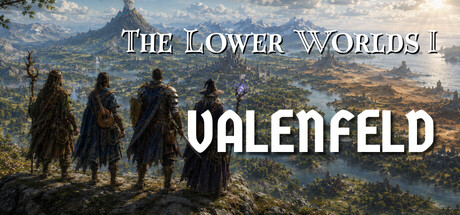
Valenfeld is built by one person, on a shoestring budget, with an Elder Scrolls–sized ambition. Here is exactly how, and why, AI fits into that.
Why we use it
Valenfeld is a solo indie project chasing a scope that normally takes a studio of dozens: a massive, hand-lorekept world you can wander for years without hitting an edge. That scope is not achievable by one person typing every tree, every ruin, and every line of dialogue by hand on a shoestring budget and an ambitious timeline. So we lean on AI-enabled workflows and, more importantly, cutting-edge procedural algorithms to scale content production and world scale to match the ambition — not to replace it.
What always stays human
Every piece of content in the game — every place, character, creature, item, quest, and line of lore — is built and overseen by a human creator and judge, grounded in our own ideas, our own lore, and our own systems design. AI does not decide what Valenfeld is. It never originates the world's canon, its themes, or its design intent on its own; it accelerates producing what we've already decided the world should be, and everything it touches is reviewed before it ships.
Not AI slop — procedural generation is the point
We're not interested in dumping raw model output into the game and calling it done. Our actual goal is an experimental, large-scale world built on cutting-edge procedural algorithms — terrain, dungeons, towns, ecosystems, even history — designed to be massively replayable for years, not a one-and-done AI slideshow. AI-assisted tooling is one part of the production pipeline that gets us there faster on a small budget; the procedural systems and the authored lore they run on are the actual craft, and that's where our attention to detail goes.
Our bet
We believe that if we focus relentlessly on delivering the best game possible — with a genuinely obsessive eye for detail on everything we ship — we can produce something great on a low budget and a small team of one. That is the bar we hold ourselves to, not "shipped fast" or "shipped cheap."
As we grow
This is how we build today, as a solo project with an ambitious scope and timeline. If and when Valenfeld earns a bigger budget for this game or for future releases, we intend to keep building just as ambitiously — with a team of art, lore, and gameplay experts working alongside these same tools, not replaced by them. Thinking about the best possible game comes first; everything else, including how we scale to build it, follows from that.
— Metatransformer Studios
Some of concept art and in-game promotional materials on the game's Steam store page were created using generative artificial intelligence tools. The game's coding and script were entirely written by developer.
Some in-game visual assets were created or refined using generative AI during development. These assets are pre-generated and included with the game. The game does not generate AI content while running.
Ai is used to create some loading-screens and other branding materials, also can be used in descriptive texts of the game.
All game code/assets are 100% made by humans.
Generative AI was used for some game assets, music, and promotional materials. All content was manually reviewed and selected. No AI is used during gameplay.
Some marketing artwork on this Steam store page was created with OpenAI image generation using current in-game screenshots and existing brand artwork as references. The game itself does not generate AI content during play.
Ever since I was a child, I dreamed of making my own game. I tried again and again — I gathered teams, but something always fell apart and I would give up halfway. This time is different: with the help of AI, I am finally able to bring my dream to life. AI helped me with some of the text and translations — all the art, music, and sound are human-made or licensed, and the game uses no AI while you play.
I am an honest person, and I will keep giving this game everything I have. Thank you for taking the time to read this. 💚
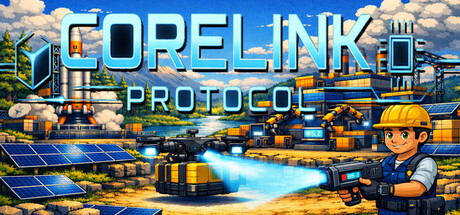
Corelink Protocol uses generative AI as part of its creative workflow, including artwork, sprites, music, and certain development assets. All AI‑assisted content is manually reviewed and refined before being included in the game. No content is generated live during gameplay; everything is pre‑produced to ensure a consistent and curated player experience.
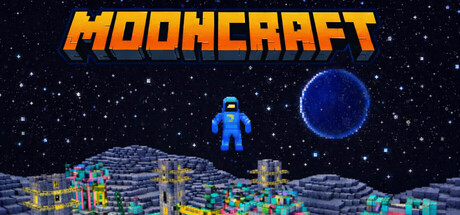
Some of the promotional artwork for MoonCraft was created using generative AI tools.
All in‑game content, gameplay assets, code, and visuals were created manually without AI.
Only the store page art uses AI; the game itself does not include AI‑generated content.
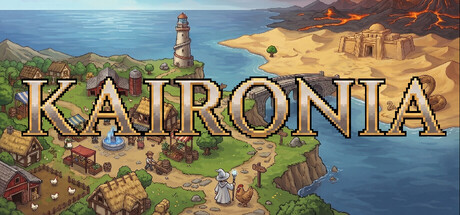
Kaironia uses generative AI tools during the development process to create pre-rendered assets. Specifically, AI-assisted tools were used to help create background music tracks, certain 2D environmental icons and images, and to assist with multi-language text localization. None of these assets are generated dynamically or live during gameplay.
The game is hanadcrafted by very talented individuals in our team. But as a small studio that is still learning and growing, we leveraged AI to aid us in production. We used AI to generate a few textures for the game. Having said that, we assure everyone that the final game is a result of the hardwork and dedication of a very talented and passionate team.
Some pre-rendered artwork and visual assets used in Retro Flight Simulator 2026 were created with the assistance of generative AI and then reviewed and edited by the developer before being included in the game. The game does not use AI-generated content during gameplay and does not rely on external AI services.
The game's design, game systems, balance, and English narrative are human-developed. AI tools were used during development as a coding assistant, with any recommended code changes specified, reviewed, and tested by the developer. The Japanese localization was produced with AI assistance and hand-edited for nuances, idioms, and accuracy. AI tools were also used for grammar and spell checking. No content is AI-generated at runtime.
During gameplay, the AI generates regional information and sightseeing guides (utilizing the Google Gemini API ). These generated texts change in real time and may occasionally contain inaccurate information.
Additionally, some images displayed within the game and on the store page utilize assets pre-generated by Google Gemini. (These are pre-generated contents, not live-generated during gameplay.)
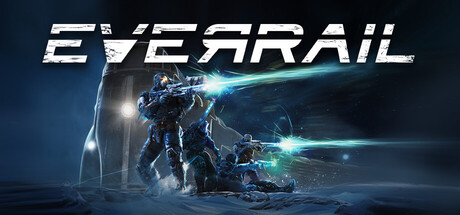
In EverRail, AI-generated voiceover is used only for machine characters: the train's AI board computer and robot enemies, voices that are artificial in the story itself, which also lets us offer them in multiple languages. Beyond that, our team uses generative AI as a tool to support development, with our artists, designers, and engineers refining and hand-building every asset that makes it into the game.
Generative AI tools were used during the production of the game as creative and technical support. This applies only to content prepared in advance during development.
AI was used in several areas, including:
Artwork and promotional materials — generating base images, character concepts, interface concepts, reference images, and materials later used as a foundation for manual editing or further production.
3D models — some models are created with the help of AI tools and an image-to-3D workflow, then selected, adjusted, and integrated into the game.
Voice acting — character voices are created using AI-based voice synthesis.
Code and production tools — AI assistants support coding, code analysis, refactoring, and optimization.
Design consultation — AI tools are used as support for analyzing ideas, designing interfaces, refining descriptions, and planning game systems.
The main concept of the game, story structure, quest dependencies, world direction, and dialogue content are created and supervised by the game’s author. Content created with the help of AI is selected, edited, and implemented manually.
The game does not contain AI-generated content created in real time during gameplay.
Some temporary horror sound effects and vocal effects in this game were created using generative AI tools during development. These assets have been reviewed and integrated by the developer. As development continues and resources become available, these temporary AI-generated audio assets may be replaced with recordings created by professional voice actors and sound engineers to further enhance the game's atmosphere and realism.
Some static art candidate assets were assisted by generative AI tools during development. Any such assets included in the game are manually reviewed, selected, edited, cleaned, style-matched, and checked before being shipped as fixed static game assets. The game does not use generative AI at runtime and does not generate text, images, audio, video, or other content in response to player input while the game is running.
This game includes some AI generated content using Adobe Firefly.
Some of the dialog backgrounds are AI generated textures.
The Story video and the Level Loading videos are AI generated.
This disclosure is provided so players can make an informed purchasing decision based on their own preferences.
AI was not used to create any gameplay code, Blueprints, game systems, level design, environments, or game mechanics.
Salt and Soil uses generative AI during gameplay to create some Annual Family Council narrative text and structured choice outcomes based on the current campaign state. Generated council content is constrained by the game’s historical setting, family data, localization rules, and gameplay schema, then validated before it is shown to the player.
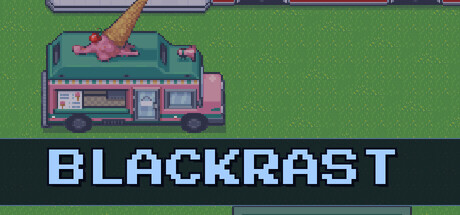
Ice Cream Express uses generative AI-assisted artwork in some packaging visuals for in-game products/items. Generative AI is not used in any other part of the game, and we are working to remove these AI-assisted visuals before the full release.
Some 2D images and promotional artwork used in the game and on the Steam store page were created or assisted using generative AI tools and then reviewed, modified, and integrated by the developer. No real-time AI-generated content is created during gameplay.
This game includes some pre-generated visual assets and music created with the help of AI tools during development. No AI content is generated live during gameplay.
Some visual assets in this game, including certain character and background art, were created with the assistance of generative AI tools and then reviewed and edited by the developer. All gameplay, code, and design are human-directed. This game does not use AI to generate any content during gameplay.
This game uses AI-assisted tools to create character voices. All dialogue was written, directed, edited, and implemented by the developer to fit the characters and story.
Generative AI was used only to assist with localization/translation partially. All localized text was reviewed and edited before release. No AI-generated content was used otherwise.
Generative AI was used solely to assist in the creation of promotional materials, including some Steam store banners. All in-game assets, gameplay, and content were created without the use of generative AI.
This game is developed by a solo developer. To ship a project of this scope in a reasonable timeframe, some assets are created with the help of generative AI tools. This includes parts of the user interface, certain icons, and the game logo. All core gameplay, code, systems, and world generation are built by hand. AI is used only as a support tool for visual assets, and all generated content is reviewed and edited before use.
Our Policy on AI & Procedural Generation
Valenfeld is built by one person, on a shoestring budget, with an Elder Scrolls–sized ambition. Here is exactly how, and why, AI fits into that.
Why we use it
Valenfeld is a solo indie project chasing a scope that normally takes a studio of dozens: a massive, hand-lorekept world you can wander for years without hitting an edge. That scope is not achievable by one person typing every tree, every ruin, and every line of dialogue by hand on a shoestring budget and an ambitious timeline. So we lean on AI-enabled workflows and, more importantly, cutting-edge procedural algorithms to scale content production and world scale to match the ambition — not to replace it.
What always stays human
Every piece of content in the game — every place, character, creature, item, quest, and line of lore — is built and overseen by a human creator and judge, grounded in our own ideas, our own lore, and our own systems design. AI does not decide what Valenfeld is. It never originates the world's canon, its themes, or its design intent on its own; it accelerates producing what we've already decided the world should be, and everything it touches is reviewed before it ships.
Not AI slop — procedural generation is the point
We're not interested in dumping raw model output into the game and calling it done. Our actual goal is an experimental, large-scale world built on cutting-edge procedural algorithms — terrain, dungeons, towns, ecosystems, even history — designed to be massively replayable for years, not a one-and-done AI slideshow. AI-assisted tooling is one part of the production pipeline that gets us there faster on a small budget; the procedural systems and the authored lore they run on are the actual craft, and that's where our attention to detail goes.
Our bet
We believe that if we focus relentlessly on delivering the best game possible — with a genuinely obsessive eye for detail on everything we ship — we can produce something great on a low budget and a small team of one. That is the bar we hold ourselves to, not "shipped fast" or "shipped cheap."
As we grow
This is how we build today, as a solo project with an ambitious scope and timeline. If and when Valenfeld earns a bigger budget for this game or for future releases, we intend to keep building just as ambitiously — with a team of art, lore, and gameplay experts working alongside these same tools, not replaced by them. Thinking about the best possible game comes first; everything else, including how we scale to build it, follows from that.
— Metatransformer Studios
Some of concept art and in-game promotional materials on the game's Steam store page were created using generative artificial intelligence tools. The game's coding and script were entirely written by developer.
Some in-game visual assets were created or refined using generative AI during development. These assets are pre-generated and included with the game. The game does not generate AI content while running.
Ai is used to create some loading-screens and other branding materials, also can be used in descriptive texts of the game.
All game code/assets are 100% made by humans.
Generative AI was used for some game assets, music, and promotional materials. All content was manually reviewed and selected. No AI is used during gameplay.
Some marketing artwork on this Steam store page was created with OpenAI image generation using current in-game screenshots and existing brand artwork as references. The game itself does not generate AI content during play.
Ever since I was a child, I dreamed of making my own game. I tried again and again — I gathered teams, but something always fell apart and I would give up halfway. This time is different: with the help of AI, I am finally able to bring my dream to life. AI helped me with some of the text and translations — all the art, music, and sound are human-made or licensed, and the game uses no AI while you play.
I am an honest person, and I will keep giving this game everything I have. Thank you for taking the time to read this. 💚
Corelink Protocol uses generative AI as part of its creative workflow, including artwork, sprites, music, and certain development assets. All AI‑assisted content is manually reviewed and refined before being included in the game. No content is generated live during gameplay; everything is pre‑produced to ensure a consistent and curated player experience.
Some of the promotional artwork for MoonCraft was created using generative AI tools.
All in‑game content, gameplay assets, code, and visuals were created manually without AI.
Only the store page art uses AI; the game itself does not include AI‑generated content.
Kaironia uses generative AI tools during the development process to create pre-rendered assets. Specifically, AI-assisted tools were used to help create background music tracks, certain 2D environmental icons and images, and to assist with multi-language text localization. None of these assets are generated dynamically or live during gameplay.
The game is hanadcrafted by very talented individuals in our team. But as a small studio that is still learning and growing, we leveraged AI to aid us in production. We used AI to generate a few textures for the game. Having said that, we assure everyone that the final game is a result of the hardwork and dedication of a very talented and passionate team.
Some pre-rendered artwork and visual assets used in Retro Flight Simulator 2026 were created with the assistance of generative AI and then reviewed and edited by the developer before being included in the game. The game does not use AI-generated content during gameplay and does not rely on external AI services.
The game's design, game systems, balance, and English narrative are human-developed. AI tools were used during development as a coding assistant, with any recommended code changes specified, reviewed, and tested by the developer. The Japanese localization was produced with AI assistance and hand-edited for nuances, idioms, and accuracy. AI tools were also used for grammar and spell checking. No content is AI-generated at runtime.
During gameplay, the AI generates regional information and sightseeing guides (utilizing the Google Gemini API ). These generated texts change in real time and may occasionally contain inaccurate information.
Additionally, some images displayed within the game and on the store page utilize assets pre-generated by Google Gemini. (These are pre-generated contents, not live-generated during gameplay.)
In EverRail, AI-generated voiceover is used only for machine characters: the train's AI board computer and robot enemies, voices that are artificial in the story itself, which also lets us offer them in multiple languages. Beyond that, our team uses generative AI as a tool to support development, with our artists, designers, and engineers refining and hand-building every asset that makes it into the game.
Generative AI tools were used during the production of the game as creative and technical support. This applies only to content prepared in advance during development.
AI was used in several areas, including:
Artwork and promotional materials — generating base images, character concepts, interface concepts, reference images, and materials later used as a foundation for manual editing or further production.
3D models — some models are created with the help of AI tools and an image-to-3D workflow, then selected, adjusted, and integrated into the game.
Voice acting — character voices are created using AI-based voice synthesis.
Code and production tools — AI assistants support coding, code analysis, refactoring, and optimization.
Design consultation — AI tools are used as support for analyzing ideas, designing interfaces, refining descriptions, and planning game systems.
The main concept of the game, story structure, quest dependencies, world direction, and dialogue content are created and supervised by the game’s author. Content created with the help of AI is selected, edited, and implemented manually.
The game does not contain AI-generated content created in real time during gameplay.
Some temporary horror sound effects and vocal effects in this game were created using generative AI tools during development. These assets have been reviewed and integrated by the developer. As development continues and resources become available, these temporary AI-generated audio assets may be replaced with recordings created by professional voice actors and sound engineers to further enhance the game's atmosphere and realism.
Some static art candidate assets were assisted by generative AI tools during development. Any such assets included in the game are manually reviewed, selected, edited, cleaned, style-matched, and checked before being shipped as fixed static game assets. The game does not use generative AI at runtime and does not generate text, images, audio, video, or other content in response to player input while the game is running.
This game includes some AI generated content using Adobe Firefly.
Some of the dialog backgrounds are AI generated textures.
The Story video and the Level Loading videos are AI generated.
This disclosure is provided so players can make an informed purchasing decision based on their own preferences.
AI was not used to create any gameplay code, Blueprints, game systems, level design, environments, or game mechanics.
Salt and Soil uses generative AI during gameplay to create some Annual Family Council narrative text and structured choice outcomes based on the current campaign state. Generated council content is constrained by the game’s historical setting, family data, localization rules, and gameplay schema, then validated before it is shown to the player.
Ice Cream Express uses generative AI-assisted artwork in some packaging visuals for in-game products/items. Generative AI is not used in any other part of the game, and we are working to remove these AI-assisted visuals before the full release.
Some 2D images and promotional artwork used in the game and on the Steam store page were created or assisted using generative AI tools and then reviewed, modified, and integrated by the developer. No real-time AI-generated content is created during gameplay.
This game includes some pre-generated visual assets and music created with the help of AI tools during development. No AI content is generated live during gameplay.
Some visual assets in this game, including certain character and background art, were created with the assistance of generative AI tools and then reviewed and edited by the developer. All gameplay, code, and design are human-directed. This game does not use AI to generate any content during gameplay.
This game uses AI-assisted tools to create character voices. All dialogue was written, directed, edited, and implemented by the developer to fit the characters and story.
Generative AI was used only to assist with localization/translation partially. All localized text was reviewed and edited before release. No AI-generated content was used otherwise.
Generative AI was used solely to assist in the creation of promotional materials, including some Steam store banners. All in-game assets, gameplay, and content were created without the use of generative AI.
This game is developed by a solo developer. To ship a project of this scope in a reasonable timeframe, some assets are created with the help of generative AI tools. This includes parts of the user interface, certain icons, and the game logo. All core gameplay, code, systems, and world generation are built by hand. AI is used only as a support tool for visual assets, and all generated content is reviewed and edited before use.