Public Steam disclosure research27,953 disclosures tracked
Where do games disclose AI use?
Search developers’ Steam disclosures, compare classified AI use across
games, and follow recorded changes.
This index adds cross-game classifications and statistics to
statements published on individual store pages.
Groups reflect automatic analysis of public disclosures; mature records are excluded. These counts do not measure AI use across all of Steam.
Missing or unclear statements cannot establish whether a game uses AI.
Generative AI was used to assist in creating certain promotional art assets, including the Steam achievement icons and Steam store thumbnails. All gameplay, code, and core game content were created by the developer.
This game uses generative artificial intelligence as a supporting tool for the creation of some visual and graphic assets, such as the game icon, logo, promotional images, main menu artwork, buttons, and certain visual or typography styles used within the game.
All AI-generated or AI-assisted content was reviewed, edited, and manually selected by the developer before being included in the game. Generative AI is not used during gameplay to create real-time content or to dynamically modify the player experience.
AI-assisted tools were used during development to help create and refine some visual assets, sound effects, and music used in the game. All AI-assisted content was reviewed, selected, and edited by the development team before being included in the final game.
Generative AI tools were used during development as creative and technical assistance, including support for programming, debugging, text drafting, localization, and some visual/marketing asset iteration. The game does not generate AI content during gameplay. All final content included in the game and store page was reviewed, selected, and edited by the developer before publication.
Generative AI was used to assist with some images, sound effects, music, and translations. All AI-assisted content was reviewed, edited, and curated by the developer before being included in the game.
The in-game music was created through a collaboration between human composition and AI-assisted tools.
Some promotional images displayed on the Steam Store page were also created using AI-assisted tools.
Some visual assets used in the game and on the Steam store page were created with the assistance of generative AI and have been further refined and integrated into the game by the developer. No live-generated AI content is used during gameplay.
Some artwork and store page assets were created with the assistance of generative AI and were reviewed and edited by the developer before use. Gameplay and programming were created by the developer.
This game uses generative AI tools during development to assist with the creation of pre-generated game content.
AI tools were used as part of the production workflow for concept/reference images, some 3D model generation, and audio/source material discovery or selection support. The final assets included in the game were reviewed, edited, and integrated by the developer before being added to the game.
The game does not use generative AI to create new content during gameplay.
A small number of texture assets use generative AI as a starting point and were manually edited for use in-game. Most visual assets are original, licensed, purchased, or used with creator permission.
Generative AI was used solely to assist in creating certain graphical assets for the Steam store page, including store capsules, banners, and promotional images. All game content, including programming, gameplay mechanics, in-game art, music, and other assets, was created and reviewed by the developer and does not rely on generative AI during gameplay.
The game was designed, assembled, reworked, tested, and integrated by the developer, with a manually defined artistic direction and gameplay experience.
Generative AI tools were used as creative assistance for certain visual, audio, cinematic, code-related, and promotional content.
This content was then selected, edited, adapted, and adjusted to match the game’s artistic identity, gameplay, and final experience.
Generative AI tools were used during development to assist in the creation of certain visual assets, including Steam store capsules, and some UI button icons (keyboard and controller prompts). AI was also used to assist with text translation, writing improvements, and programming assistance during development. All AI-assisted content has been reviewed, edited, and integrated by the developer before being included in the game or on the Steam store page. The game does not generate AI content during gameplay.
Our game utilized Generative AI tools strictly for specific conceptual and design elements during development, ensuring no automated content replaces our team's hand-crafted work:
- Characters & Monsters: We used Midjourney to generate initial visual concepts for the main playable character and a few specific monsters. Our pixel artists used these generated images purely as a creative reference to manually draw and animate the final 2D pixel-art sprites from scratch.
- Relics & UI Elements: ChatGPT was utilized during the brainstorming phase to conceptualize the initial ideas for in-game relics and various UI design layouts. Based on the generated outputs, we thoroughly refined the designs, adjusted the details, and performed visual post-processing to adapt and implement them into the game as our final production assets.
We are committed to delivering a high-quality game where AI is only used as a selective tool to spark creativity, respecting the dedicated work of our development team.
During the development of this game, generative AI tools were used to assist in creating specific 2D visual assets. This includes decorative murals on environmental walls (such as character paintings) and certain UI icons for the achievement system.
The core content of the game, including all 3D level design, physics-based climbing mechanics, the economic system, and core programming, was entirely handcrafted and developed by the creator. We are committed to providing players with a pure, hardcore, and challenging vertical parkour experience.
This game uses generative artificial intelligence in the development of certain content, including NPC dialogue, visual art assets, and music/sound elements. All AI-generated content was created prior to the game's release and is not generated in real time during gameplay. This content has been reviewed and curated by our development team to ensure it meets our creative vision and quality standards.
AI-assisted tools were used during development to help create certain cinematic images, visual effects, music, and localization content. Some cinematic sequences incorporate AI-generated imagery or AI-assisted animation techniques.
The majority of the game’s artwork, environments, gameplay content, puzzle design, story content, and overall development were created by hand by the development team. Some music was also created by human collaborators.
Dither Paradox is created and directed by Michał Kita. The game's final pixel art, animation, and visual design are made by hand, and every artistic and creative decision is made by people. We use generative AI as a production tool that supports - but does not replace - this work. In the visual layer, AI is sometimes used during the concept and iteration stage - to explore ideas and variations - while the final art assets that ship in the game are made by hand. AI also assists in producing music and voiceover, which are then curated, edited, and approved by the team, as well as some promotional materials. AI also supports the technical side - a significant part of the codebase is built using AI tools, with all oversight, testing, and integration handled by the developer. The story, dialogue, and in-game writing, however, are written by a human. AI lets us reach a higher level of polish in less time, but authorship, art direction, and final responsibility for everything players see and hear remain with the people who make the game.
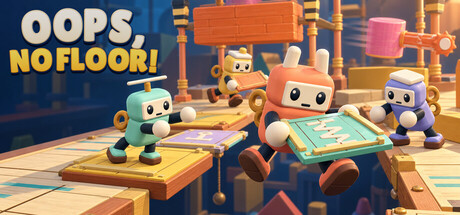
As an independent development team, we use generative AI tools to assist in creating some of the game’s background artwork and decorative wallpapers. These images are used as supporting visual elements and do not replace the game’s 3D assets, animation, gameplay design, programming, or overall creative direction.
All AI-assisted artwork is selected, reviewed, edited, and integrated by our development team to ensure it fits the visual identity of Oops, No Floor. The game does not generate content during gameplay.
We respect and value the work of professional artists. Our use of AI reflects the practical resources available to us as a small indie team and allows us to focus our budget and time on building, polishing, and supporting the game.
This game contains a limited amount of AI-assisted content, including some visual assets and music. All such content was reviewed and integrated by the developer.
The developer used generative AI tools during development to help create some of the game's code, sound effects, and music. All AI-assisted content was reviewed and curated by the developer.
AI was used to create initial concept images for the main character (the funny copter). These images were then edited, redrawn and polished by a human artist. All other sprites, animations, backgrounds, sounds, music, and code in the game have nothing to do with AI.
Some background sound effects and ambient audio clips used in the game were sourced from Pixabay, where they were flagged as AI-generated by their respective creators. No graphics, code, or core gameplay elements were generated by AI; all other assets were developed entirely by me.
AI tools were used to assist with parts of the game's code, the drafting of narrative and dialogue content, and initial translations of in-game and store page text. All AI-assisted output has been reviewed and edited by the development team.
Generative AI tools were used as development assistance for code drafting/debugging and for creating some visual source materials. All AI-assisted code and visuals included in the game were reviewed, modified, edited, and integrated by the development team.