Public Steam disclosure research25,380 disclosures tracked
Where do games disclose AI use?
Search developers’ Steam disclosures, compare classified AI use across
games, and follow recorded changes.
This index adds cross-game classifications and statistics to
statements published on individual store pages.
Groups reflect automatic analysis of public disclosures; mature records are excluded. These counts do not measure AI use across all of Steam.
Missing or unclear statements cannot establish whether a game uses AI.
Some visual assets used in the store page (such as promotional images and graphics) were created with the assistance of AI tools and then reviewed and refined by the developer.
The application itself does not use AI to generate content during gameplay and functions as a standalone reading and training tool.
Generative AI was used during the development of this game for creating initial concepts and draft versions of certain art assets, including the main menu background and UI icons. These assets were then manually refined, polished, and integrated by the developer to fit the game's final aesthetic.
Some visual assets in this game were created with the assistance of AI and further refined by the developer. The game does not use live-generated AI at runtime.
As a solo developer, I use AI selectively to support my workflow, not to replace creativity. For example, AI may be used to assist in generating or processing certain audio elements, which are then manually edited and curated before being included in the game. No 3D assets are AI-generated. AI is used purely as a tool to enhance development, and I aim to be transparent about its use.
Burner Empire uses generative AI in the following ways:
During Development
Some visual assets in the game were created with the assistance of AI image generation tools. These assets were reviewed, curated, and integrated by the development team as part of the game's overall visual design.
In Gameplay
Burner Empire features an AI-driven bot fleet that populates the game world with computer-controlled players. These bots use a combination of scripted decision logic and AI-driven behavior modeling to simulate realistic player activity — cooking drugs, deploying dealers, traveling between districts, and engaging in PvP. The bot fleet exists to ensure the game world feels active and competitive regardless of the current number of human players online.
The bot fleet is not generative AI in the traditional sense — it does not produce text, images, or creative content. It is a behavioral simulation system designed to make the multiplayer environment feel alive during off-peak hours and at launch while the player community grows.
What AI Does Not Do
No generative AI is used to create real-time dialogue, procedurally generate game content during play, or make decisions that affect monetization or player accounts.
Graphics (Title Screen):
AI was used to generate the base image for the title screen. This output was then manually edited, adjusted for layout, and refined to create the final visual.
Localization (Translation):
AI was used as an assistant in the translation process. Following the initial AI-generated draft, all text has been manually reviewed and edited to ensure contextual accuracy and quality.
This game has used Generative AI during the development process. It was used minimally during coding, mostly for auto complete, <1% of the code is a result of the output from AI. More extensively is AIs use in the artwork, in order to speed up the process sketches were created by artist, details were filled in by AI, then artists corrected the output.
Some of the images and audio assets used in this game are created with the assistance of generative artificial intelligence, based on the creator’s original concepts and design.
All narrative content presented in the game is conceived and written by the creator, with generative artificial intelligence used to assist in text refinement and multilingual translation.
Supermarcat uses AI-generated content for marketing and promotional materials, including:
• Store page visual assets (capsule images, backgrounds, promotional artwork)
• Marketing screenshots and promotional images for Steam store presence
• Visual elements for social media and community content
All AI-generated content is used exclusively for marketing purposes and does not affect gameplay mechanics, game balance, or core game content. The actual game assets (sprites, animations, code, audio) are created by human developers.
AI tools are used to enhance the visual presentation of the game on digital storefronts and promotional channels, ensuring professional quality marketing materials while maintaining authentic gameplay developed entirely by human creators.
In the development of Mudventure, we utilized generative AI technologies to streamline our workflow and enhance the overall gaming experience as follows:
Coding Assistance: ChatGPT and Gemini were used as auxiliary tools for code optimization and system architecture design. This allowed our team to focus more on building a stable multiplayer environment.
Visual Content: ChatGPT (DALL-E) was used to generate certain static images, such as in-game item icons and textures. All AI-generated assets underwent a manual refinement process to ensure they align perfectly with our game’s unique art style.
Audio and Music: We utilized Suno to create the background music (BGM). We carefully curated and edited tracks generated by AI to best capture the mysterious yet casual atmosphere of our mudflat island.
LingoHUD's output is strictly limited to language translation and speech-to-text
transcription of content already present on the user's screen or audio. It does not
generate creative, original, or open-ended content.
Content moderation: The translation and recognition models process only user-initiated
input that the user explicitly captures via a hotkey. The software does not produce
novel content; it converts existing content from one language to another, or from
speech and images to text. All processing is deterministic and bounded to the captured
input.
AI-generated tools were used only for limited promotional materials, such as marketing images displayed on the store page.
All in-game content, including gameplay visuals, UI, and assets, is created by human artists and does not involve AI generation.
AI-generated content does not affect gameplay, user experience, or core game assets.
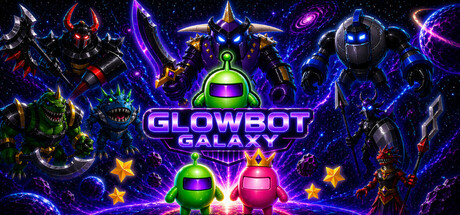
Some store assets (such as capsules and promotional images) were created with the assistance of AI tools due to limited resources during development. All gameplay, design, and core content of Glowbot Galaxy Defense are fully original and developed by me.
As future projects grow, I plan to collaborate with artists to further enhance the visual presentation.
This game uses generative AI for some NPC images and background music.
These assets are reviewed and adjusted by the developer before being implemented in the game.
This game uses generative AI only to create some 2D visual assets (e.g. key art, logos, achievement icons and other marketing/store artwork). All AI-generated content is pre-rendered, manually reviewed, and static.
The game itself does not perform any live AI generation, does not take user prompts for AI, and does not send any user data to AI services.
Generative AI is used to assist with the creation of some art assets, voice content, and localization/translation. All localized text is reviewed and edited by the developer.
All game works are either original hand-made works that we own, or they were AI-assisted and redrawn or touched up by hand.
Our trailers were also AI-assisted with original works we own to enhance their quality.
All AI voices were trained on licensed material that has commercial rights to use or that we own and were manually directed by the developer.
For the development of The Bus, AI was used occasionally and to a limited extent as a supportive tool, for example for passenger voices or textures. All content was ultimately reviewed, revised, and integrated into the game by our team.
The pipes, ley lines, and gas mains of Arcana, Gas & Waterworks Inc. were designed, debated, and duct-taped together by a single developer. All music was licensed from real indie musicians, who did NOT use generative AI in any way, and who are credited in the game. Generative AI tools helped bring AGW Inc. to life by turning hand-drawn sketches into finished art, scripting sound effects, and contributing early drafts of in-game text. All of this content was rewritten, expanded, or replaced by the developer to fit the game's voice and world. Thanks to the help of these AI tools, I was able to finally answer the burning question, "What if fantasy worlds needed infrastructure?"
This game uses generative AI tools in a limited capacity during development. A small number of environmental textures were created with AI assistance. The majority of in-game assets are licensed assets (e.g., Craftpix) or custom-developed by the creator.
All gameplay systems, mechanics, level design, and core development were created by the developer. AI-generated content does not affect gameplay functionality and is used only as a supplemental production tool.
Generative AI was used in a limited and supportive way during development. AI tools were utilized to help draft and refine parts of the store page description, and to assist in editing or enhancing some visual assets for presentation and marketing purposes.
AI coding assistants were used during development to help write and debug game code. All game content — visuals, audio, color palettes, recipes, and gameplay mechanics — is procedurally generated by the game's own algorithms, not by generative AI.
I was the archaic and fragmented DNA in the amber bound insect. AI was the frog DNA.
Original Card Game: All card art is original, hand painted on canvas and physically printed on real cards (5,000 in total). The face images are scans of those pained canvas prints/ cards. AI was used to generate the card's backs and some of the playing surfaces/backgrounds.
Coding: While I on and off experience in JavaScript since 2002, AI was used to help generate and debug portions of the code. I especially used AI when predicting potential conflicts and integration problems (especially Steam integration) before implementing new code. I found it very helpful when changing long sets of repetitive blocks of code. The volume of human error that was cut down was tremendous.
Localization: Localization will be finalized in Beta. Initial translations were done with AI. Corrections and finalization will be done after input from the community (new game, some new terms).
Music: We are Streamer first. Streamer need background music that won't affect their monetization. From the beginning, music that was all original, was critical to me. I wanted Streamers to have no worries when letting our background music play for hours. Musicians want astronomical payments and deals that will leave me perpetually paying them. I generated all of our music in Suno and own it all. I plan on releasing more, in two hour blocks, that will be available as free DLC's.
All AI I used was after human talent quoted cost ineffective numbers or outright turned me down. This is a simple card game. A vehicle for a game and art I have made. I set out to make an affordable, sturdy, reliable, user focused game. AI helped me make the best product I could.
Remove virus does not use generative AI to generate gameplay content, dialogue, code, or assets during play. The game does not connect to external AI services. All content included in the build is pre-created by the developer.
Some visual assets used in the store page (such as promotional images and graphics) were created with the assistance of AI tools and then reviewed and refined by the developer.
The application itself does not use AI to generate content during gameplay and functions as a standalone reading and training tool.
Generative AI was used during the development of this game for creating initial concepts and draft versions of certain art assets, including the main menu background and UI icons. These assets were then manually refined, polished, and integrated by the developer to fit the game's final aesthetic.
Some visual assets in this game were created with the assistance of AI and further refined by the developer. The game does not use live-generated AI at runtime.
As a solo developer, I use AI selectively to support my workflow, not to replace creativity. For example, AI may be used to assist in generating or processing certain audio elements, which are then manually edited and curated before being included in the game. No 3D assets are AI-generated. AI is used purely as a tool to enhance development, and I aim to be transparent about its use.
Burner Empire uses generative AI in the following ways:
During Development
Some visual assets in the game were created with the assistance of AI image generation tools. These assets were reviewed, curated, and integrated by the development team as part of the game's overall visual design.
In Gameplay
Burner Empire features an AI-driven bot fleet that populates the game world with computer-controlled players. These bots use a combination of scripted decision logic and AI-driven behavior modeling to simulate realistic player activity — cooking drugs, deploying dealers, traveling between districts, and engaging in PvP. The bot fleet exists to ensure the game world feels active and competitive regardless of the current number of human players online.
The bot fleet is not generative AI in the traditional sense — it does not produce text, images, or creative content. It is a behavioral simulation system designed to make the multiplayer environment feel alive during off-peak hours and at launch while the player community grows.
What AI Does Not Do
No generative AI is used to create real-time dialogue, procedurally generate game content during play, or make decisions that affect monetization or player accounts.
Graphics (Title Screen):
AI was used to generate the base image for the title screen. This output was then manually edited, adjusted for layout, and refined to create the final visual.
Localization (Translation):
AI was used as an assistant in the translation process. Following the initial AI-generated draft, all text has been manually reviewed and edited to ensure contextual accuracy and quality.
This game has used Generative AI during the development process. It was used minimally during coding, mostly for auto complete, <1% of the code is a result of the output from AI. More extensively is AIs use in the artwork, in order to speed up the process sketches were created by artist, details were filled in by AI, then artists corrected the output.
Some of the images and audio assets used in this game are created with the assistance of generative artificial intelligence, based on the creator’s original concepts and design.
All narrative content presented in the game is conceived and written by the creator, with generative artificial intelligence used to assist in text refinement and multilingual translation.
Supermarcat uses AI-generated content for marketing and promotional materials, including:
• Store page visual assets (capsule images, backgrounds, promotional artwork)
• Marketing screenshots and promotional images for Steam store presence
• Visual elements for social media and community content
All AI-generated content is used exclusively for marketing purposes and does not affect gameplay mechanics, game balance, or core game content. The actual game assets (sprites, animations, code, audio) are created by human developers.
AI tools are used to enhance the visual presentation of the game on digital storefronts and promotional channels, ensuring professional quality marketing materials while maintaining authentic gameplay developed entirely by human creators.
In the development of Mudventure, we utilized generative AI technologies to streamline our workflow and enhance the overall gaming experience as follows:
Coding Assistance: ChatGPT and Gemini were used as auxiliary tools for code optimization and system architecture design. This allowed our team to focus more on building a stable multiplayer environment.
Visual Content: ChatGPT (DALL-E) was used to generate certain static images, such as in-game item icons and textures. All AI-generated assets underwent a manual refinement process to ensure they align perfectly with our game’s unique art style.
Audio and Music: We utilized Suno to create the background music (BGM). We carefully curated and edited tracks generated by AI to best capture the mysterious yet casual atmosphere of our mudflat island.
LingoHUD's output is strictly limited to language translation and speech-to-text
transcription of content already present on the user's screen or audio. It does not
generate creative, original, or open-ended content.
Content moderation: The translation and recognition models process only user-initiated
input that the user explicitly captures via a hotkey. The software does not produce
novel content; it converts existing content from one language to another, or from
speech and images to text. All processing is deterministic and bounded to the captured
input.
AI-generated tools were used only for limited promotional materials, such as marketing images displayed on the store page.
All in-game content, including gameplay visuals, UI, and assets, is created by human artists and does not involve AI generation.
AI-generated content does not affect gameplay, user experience, or core game assets.
Some store assets (such as capsules and promotional images) were created with the assistance of AI tools due to limited resources during development. All gameplay, design, and core content of Glowbot Galaxy Defense are fully original and developed by me.
As future projects grow, I plan to collaborate with artists to further enhance the visual presentation.
This game uses generative AI for some NPC images and background music.
These assets are reviewed and adjusted by the developer before being implemented in the game.
This game uses generative AI only to create some 2D visual assets (e.g. key art, logos, achievement icons and other marketing/store artwork). All AI-generated content is pre-rendered, manually reviewed, and static.
The game itself does not perform any live AI generation, does not take user prompts for AI, and does not send any user data to AI services.
Generative AI is used to assist with the creation of some art assets, voice content, and localization/translation. All localized text is reviewed and edited by the developer.
All game works are either original hand-made works that we own, or they were AI-assisted and redrawn or touched up by hand.
Our trailers were also AI-assisted with original works we own to enhance their quality.
All AI voices were trained on licensed material that has commercial rights to use or that we own and were manually directed by the developer.
For the development of The Bus, AI was used occasionally and to a limited extent as a supportive tool, for example for passenger voices or textures. All content was ultimately reviewed, revised, and integrated into the game by our team.
The pipes, ley lines, and gas mains of Arcana, Gas & Waterworks Inc. were designed, debated, and duct-taped together by a single developer. All music was licensed from real indie musicians, who did NOT use generative AI in any way, and who are credited in the game. Generative AI tools helped bring AGW Inc. to life by turning hand-drawn sketches into finished art, scripting sound effects, and contributing early drafts of in-game text. All of this content was rewritten, expanded, or replaced by the developer to fit the game's voice and world. Thanks to the help of these AI tools, I was able to finally answer the burning question, "What if fantasy worlds needed infrastructure?"
This game uses generative AI tools in a limited capacity during development. A small number of environmental textures were created with AI assistance. The majority of in-game assets are licensed assets (e.g., Craftpix) or custom-developed by the creator.
All gameplay systems, mechanics, level design, and core development were created by the developer. AI-generated content does not affect gameplay functionality and is used only as a supplemental production tool.
Generative AI was used in a limited and supportive way during development. AI tools were utilized to help draft and refine parts of the store page description, and to assist in editing or enhancing some visual assets for presentation and marketing purposes.
AI coding assistants were used during development to help write and debug game code. All game content — visuals, audio, color palettes, recipes, and gameplay mechanics — is procedurally generated by the game's own algorithms, not by generative AI.
I was the archaic and fragmented DNA in the amber bound insect. AI was the frog DNA.
Original Card Game: All card art is original, hand painted on canvas and physically printed on real cards (5,000 in total). The face images are scans of those pained canvas prints/ cards. AI was used to generate the card's backs and some of the playing surfaces/backgrounds.
Coding: While I on and off experience in JavaScript since 2002, AI was used to help generate and debug portions of the code. I especially used AI when predicting potential conflicts and integration problems (especially Steam integration) before implementing new code. I found it very helpful when changing long sets of repetitive blocks of code. The volume of human error that was cut down was tremendous.
Localization: Localization will be finalized in Beta. Initial translations were done with AI. Corrections and finalization will be done after input from the community (new game, some new terms).
Music: We are Streamer first. Streamer need background music that won't affect their monetization. From the beginning, music that was all original, was critical to me. I wanted Streamers to have no worries when letting our background music play for hours. Musicians want astronomical payments and deals that will leave me perpetually paying them. I generated all of our music in Suno and own it all. I plan on releasing more, in two hour blocks, that will be available as free DLC's.
All AI I used was after human talent quoted cost ineffective numbers or outright turned me down. This is a simple card game. A vehicle for a game and art I have made. I set out to make an affordable, sturdy, reliable, user focused game. AI helped me make the best product I could.
Remove virus does not use generative AI to generate gameplay content, dialogue, code, or assets during play. The game does not connect to external AI services. All content included in the build is pre-created by the developer.