Public Steam disclosure research25,706 disclosures tracked
Where do games disclose AI use?
Search developers’ Steam disclosures, compare classified AI use across
games, and follow recorded changes.
This index adds cross-game classifications and statistics to
statements published on individual store pages.
Groups reflect automatic analysis of public disclosures; mature records are excluded. These counts do not measure AI use across all of Steam.
Missing or unclear statements cannot establish whether a game uses AI.
Some marketing and promotional materials for this game were created or assisted using generative AI tools. These materials are used solely for marketing purposes and do not affect gameplay or in-game content.
Generative AI is used only to assist with localization/translation. All localized text is reviewed and edited by the developer. No AI-generated art, audio, or in-game live generation is used.
Some of the game's visual elements were created using AI tools during the development stage (for example, the design of Albums). Artists manually refined all such materials. Generative AI is not used in the gameplay and does not generate any content during the game.
Some of the game's visual elements were created using AI tools during the development stage (for example, the design of Albums). Artists manually refined all such materials. Generative AI is not used in the gameplay and does not generate any content during the game.
Some of the game's visual elements were created using AI tools during the development stage (for example, the design of Albums). Artists manually refined all such materials. Generative AI is not used in the gameplay and does not generate any content during the game.
Some of the game's visual elements were created using AI tools during the development stage (for example, the design of Albums). Artists manually refined all such materials. Generative AI is not used in the gameplay and does not generate any content during the game.
Generative Ai is used for mainly Localization and to make a few Images (artwork) in game. Rest artwork, assets, sounds used in game are made by Real Human Artists.
NPC dialogue in the game is generated at runtime using a fully local, private AI model that runs entirely on the player’s computer. This AI is used solely to generate NPC text responses during gameplay. No external servers or datacenters are used, and all interactions remain fully local. The AI output is constrained to in-game interactions and does not generate prohibited content. No AI was used in the development of the game’s code, art, soundtrack, or Steam store page.
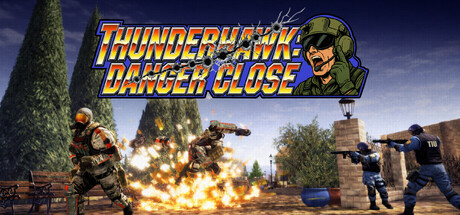
Thunderhawk: Danger Close uses a minimal amount of AI generated assets, including a handful of textures, marketing art, and dialog. Roughly 95% of the game's total content is human-authored, including all models, sound effects, music, and code. A detailed AI-generated content disclosure can be found on our website.
We use generative AI as a support tool in development, mainly for music and some textures. The generated material was reviewed and adjusted by the human team before being integrated into the game.
Generative AI is used during development as an auxiliary tool for internal optimization processes, evaluating gameplay structure and ideas, and supporting the developer’s creative workflow and mental well-being.
It is also used to assist with researching asset resources and supporting outsourcing-related tasks.
Generative AI is not used to generate final in-game content, and no player data is collected or used to train AI models.
AI-generated images were used for the cover and parts of the UI, and AI models were used in the 3D modeling of the characters and some background elements (characters, dam).
Generative artificial intelligence tools were used during the development process to assist with creating certain assets such as visual concepts, UI text, and/or placeholder content. All AI-generated content was reviewed, edited, and curated by the developer before being included in the final game. The game does not use AI to generate content dynamically during gameplay.
As a husband and wife team, we use AI tools to help us prototype ideas and styles, but are working with artists to update as many assets as possible with a focus on allowing artists to do what they do best.
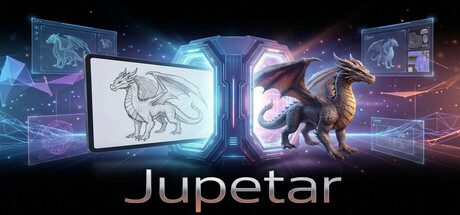
Jupetar is a dedicated 2D-to-3D asset generation engine powered entirely by generative artificial intelligence. The software utilizes localized, open-weights AI networks (including diffusion and 3D generation models) running directly on the user's hardware to convert user-provided 2D concept art and images into 3D meshes and textures. All AI processing is performed offline on your local GPU. Jupetar does not connect to external cloud generation services, and your personal assets, images, and prompts are never uploaded, collected, or used to train external AI models.
The creation of some 2D textures and illustrative assets was aided by the use of image-generation tools, and a small number of 3D models were generated using AI-based modeling services. These assets were selected, edited, and integrated manually by the developer and are part of a larger set of handcrafted and traditionally created content.
This project is developed by a single independent developer with no external art team. Given the scope of the game and the scale of required environmental and illustrative assets, the limited use of AI-assisted tools makes it feasible to build and maintain a world of this size while remaining an independently developed project. All AI-assisted content is curated, modified, and incorporated by the developer to fit the game’s artistic direction and gameplay needs.
Character art is AI-generated and finely tuned to fit our game’s unique aesthetic and immersion. Additionally, parts of the soundtrack are created using AI.
Generative AI was used during the development process to create a portion of the game assets, including textures, 3D models, and music. These assets were subsequently reviewed and refined by our development team to ensure quality and originality.
Generative AI tools were used exclusively for the creation of certain store page visuals (such as promotional or illustrative images).
All AI-assisted visuals were reviewed, refined, and finalized by our artists before publication. No gameplay content, in-game assets, or core game elements were created using AI.
AI was used strictly as a supportive tool for marketing visuals.
This game utilizes pre-generated AI content in the following areas:
Artwork: The game's cover art and certain promotional assets were created using AI generation tools.
Audio: Character voice-overs and the in-game soundtrack (radio music) were generated using AI tools.
All AI-generated assets have been manually reviewed, edited, and curated by the developer to ensure they fit the game's narrative and artistic quality.
Development utilized AI for the following:
- Interior textures for building decor (book covers and paintings)
- Code generation and programming assistance during the latter half of development
Some visual assets used in this game (such as promotional images and UI artwork) were created or refined with the assistance of generative AI tools during development.
All AI-assisted content is static, curated by the developer, and fully reviewed before inclusion. The game does not generate AI content dynamically during gameplay, and no player input is processed by AI systems.
Generative AI tools are used in a limited capacity during development for coding assistance and early prototyping.
AI may occasionally be used to help generate placeholder assets during experimentation and iteration. Any such placeholder content is intended to be replaced with original, hand-crafted assets before release.
No generative AI content is intended to appear in the final shipped game.
The game uses traditional in-game artificial intelligence for zombie behavior, such as movement, combat, and player detection.
These systems are part of normal gameplay logic and were manually implemented and configured by the developer.
No generative artificial intelligence tools were used to create game content such as art, audio, models, animations, or written text.
Some pre-rendered artwork and narrative content for this game were created with the assistance of generative artificial intelligence during development. All content is curated and finalized by the developer, and no AI systems are used during gameplay.
Some marketing and promotional materials for this game were created or assisted using generative AI tools. These materials are used solely for marketing purposes and do not affect gameplay or in-game content.
Generative AI is used only to assist with localization/translation. All localized text is reviewed and edited by the developer. No AI-generated art, audio, or in-game live generation is used.
Some of the game's visual elements were created using AI tools during the development stage (for example, the design of Albums). Artists manually refined all such materials. Generative AI is not used in the gameplay and does not generate any content during the game.
Some of the game's visual elements were created using AI tools during the development stage (for example, the design of Albums). Artists manually refined all such materials. Generative AI is not used in the gameplay and does not generate any content during the game.
Some of the game's visual elements were created using AI tools during the development stage (for example, the design of Albums). Artists manually refined all such materials. Generative AI is not used in the gameplay and does not generate any content during the game.
Some of the game's visual elements were created using AI tools during the development stage (for example, the design of Albums). Artists manually refined all such materials. Generative AI is not used in the gameplay and does not generate any content during the game.
Generative Ai is used for mainly Localization and to make a few Images (artwork) in game. Rest artwork, assets, sounds used in game are made by Real Human Artists.
NPC dialogue in the game is generated at runtime using a fully local, private AI model that runs entirely on the player’s computer. This AI is used solely to generate NPC text responses during gameplay. No external servers or datacenters are used, and all interactions remain fully local. The AI output is constrained to in-game interactions and does not generate prohibited content. No AI was used in the development of the game’s code, art, soundtrack, or Steam store page.
Thunderhawk: Danger Close uses a minimal amount of AI generated assets, including a handful of textures, marketing art, and dialog. Roughly 95% of the game's total content is human-authored, including all models, sound effects, music, and code. A detailed AI-generated content disclosure can be found on our website.
We use generative AI as a support tool in development, mainly for music and some textures. The generated material was reviewed and adjusted by the human team before being integrated into the game.
Generative AI is used during development as an auxiliary tool for internal optimization processes, evaluating gameplay structure and ideas, and supporting the developer’s creative workflow and mental well-being.
It is also used to assist with researching asset resources and supporting outsourcing-related tasks.
Generative AI is not used to generate final in-game content, and no player data is collected or used to train AI models.
AI-generated images were used for the cover and parts of the UI, and AI models were used in the 3D modeling of the characters and some background elements (characters, dam).
Generative artificial intelligence tools were used during the development process to assist with creating certain assets such as visual concepts, UI text, and/or placeholder content. All AI-generated content was reviewed, edited, and curated by the developer before being included in the final game. The game does not use AI to generate content dynamically during gameplay.
As a husband and wife team, we use AI tools to help us prototype ideas and styles, but are working with artists to update as many assets as possible with a focus on allowing artists to do what they do best.
Jupetar is a dedicated 2D-to-3D asset generation engine powered entirely by generative artificial intelligence. The software utilizes localized, open-weights AI networks (including diffusion and 3D generation models) running directly on the user's hardware to convert user-provided 2D concept art and images into 3D meshes and textures. All AI processing is performed offline on your local GPU. Jupetar does not connect to external cloud generation services, and your personal assets, images, and prompts are never uploaded, collected, or used to train external AI models.
The creation of some 2D textures and illustrative assets was aided by the use of image-generation tools, and a small number of 3D models were generated using AI-based modeling services. These assets were selected, edited, and integrated manually by the developer and are part of a larger set of handcrafted and traditionally created content.
This project is developed by a single independent developer with no external art team. Given the scope of the game and the scale of required environmental and illustrative assets, the limited use of AI-assisted tools makes it feasible to build and maintain a world of this size while remaining an independently developed project. All AI-assisted content is curated, modified, and incorporated by the developer to fit the game’s artistic direction and gameplay needs.
Character art is AI-generated and finely tuned to fit our game’s unique aesthetic and immersion. Additionally, parts of the soundtrack are created using AI.
Generative AI was used during the development process to create a portion of the game assets, including textures, 3D models, and music. These assets were subsequently reviewed and refined by our development team to ensure quality and originality.
Generative AI tools were used exclusively for the creation of certain store page visuals (such as promotional or illustrative images).
All AI-assisted visuals were reviewed, refined, and finalized by our artists before publication. No gameplay content, in-game assets, or core game elements were created using AI.
AI was used strictly as a supportive tool for marketing visuals.
This game utilizes pre-generated AI content in the following areas:
Artwork: The game's cover art and certain promotional assets were created using AI generation tools.
Audio: Character voice-overs and the in-game soundtrack (radio music) were generated using AI tools.
All AI-generated assets have been manually reviewed, edited, and curated by the developer to ensure they fit the game's narrative and artistic quality.
Development utilized AI for the following:
- Interior textures for building decor (book covers and paintings)
- Code generation and programming assistance during the latter half of development
Some visual assets used in this game (such as promotional images and UI artwork) were created or refined with the assistance of generative AI tools during development.
All AI-assisted content is static, curated by the developer, and fully reviewed before inclusion. The game does not generate AI content dynamically during gameplay, and no player input is processed by AI systems.
Generative AI tools are used in a limited capacity during development for coding assistance and early prototyping.
AI may occasionally be used to help generate placeholder assets during experimentation and iteration. Any such placeholder content is intended to be replaced with original, hand-crafted assets before release.
No generative AI content is intended to appear in the final shipped game.
The game uses traditional in-game artificial intelligence for zombie behavior, such as movement, combat, and player detection.
These systems are part of normal gameplay logic and were manually implemented and configured by the developer.
No generative artificial intelligence tools were used to create game content such as art, audio, models, animations, or written text.
Some pre-rendered artwork and narrative content for this game were created with the assistance of generative artificial intelligence during development. All content is curated and finalized by the developer, and no AI systems are used during gameplay.