Public Steam disclosure research25,380 disclosures tracked
Where do games disclose AI use?
Search developers’ Steam disclosures, compare classified AI use across
games, and follow recorded changes.
This index adds cross-game classifications and statistics to
statements published on individual store pages.
Groups reflect automatic analysis of public disclosures; mature records are excluded. These counts do not measure AI use across all of Steam.
Missing or unclear statements cannot establish whether a game uses AI.
AI has been used in image generation for the portraits of the characters. These images are then post-processed through a quantizer, which lowers the resolution and quantizes the image into only having the colors from my color palette.
Some voice acting is generated using AI models trained on professional voice actors who have given their consent and are being compensated for their work.
AI tools have been like an extra set of hands (or brains) for our small indie dev team. They've played a quiet yet invaluable role in helping us draft initial concept art and brainstorm our way through tricky design challenges. Being Polish native speakers, AI has also been particularly helpful in fine-tuning our writing, ensuring our game's narrative is as engaging as possible.
We used AI to create the voices for John, Ellie, Matt, and Becca. This is a temporary solution; we intend to replace these audio tracks with professional voice acting as soon as possible.
Art and Music was generated by AI.
Please note that we want to respect artists. No artist name or artist art have been used as reference for prompting. And the art used is very generic and doesn't not infringe any IP.
The game uses real-time AI models to simulate immersive conversations with the non-player characters you meet in-game. Each character has a hand-written backstory that impacts how the conversation goes. This technology complements the manual worldbuilding and lore writing, and I would love your feedback on how well you think this works!
We utilized AI tools to generate internal references for composition and framing. These outputs were then used as a base to manually create handcrafted pixel art assets, ensuring all final in-game visuals follow our custom palettes and artistic standards.
Use of AI for Artistic Elements:
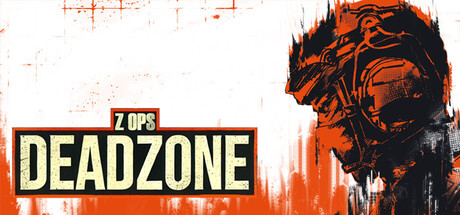
In Z Ops: Deadzone, we use artificial intelligence to generate certain artistic assets, including characters, environments, and icons. AI allows us to explore a wide variety of visual styles and create graphical elements more efficiently. Each AI-generated asset is carefully refined to ensure it aligns with the overall art direction of the game and integrates seamlessly into the game’s universe. This approach helps speed up the creative process while maintaining a consistent and immersive quality.
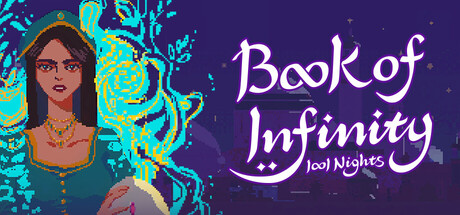
1001 Nights is a story-crafting game that started development as early as 2020, exploring creative narrative gameplay to bring players novel experiences they've never had before: telling stories and turning those stories into reality.All traditional game art assets are hand-crafted by our talented human artists. This includes character illustrations, scene models, UI elements, and all visual components that form the core aesthetic of our game. The game features an adaptive LLM-based storytelling system that responds to your unique inputs based on a language model called Qwen. Our narrative engine draws from the rich tradition of Persian folklore and our original hand-written story frameworks by paid writers, then dynamically adapts these materials to create personalized experiences based on your inputs. Each playthrough becomes a unique collaboration between you and our narrative system.Our guiding principle has always been to create gaming experiences that were previously impossible - where technology serves as a creative collaborator rather than a replacement for human imagination. The soul of 1001 Nights comes from our human creators, inspired by ancient Persian folklore and brought to life through innovative narrative systems.For technical details about our implementation and the academic research behind our systems, please refer to the in-game introduction, and our published papers available on our official website. We're a small indie team committed to pushing the boundaries of interactive storytelling while respecting both player creativity and artistic integrity.We welcome any questions or feedback about our creative process via adaeden1001[at]gmail[dot]com or through our Discord community. Your input helps us continue improving this unique storytelling experience.
There is no AI generated content in this game. All artwork and scenes were made by me or asset creators on the marketplace without the use of AI generated content.
The game banner was generated with AI based on a screenshot taken from our game. We chose a graphical style different from the one in-game.
We also used IA to generate musics for our game.
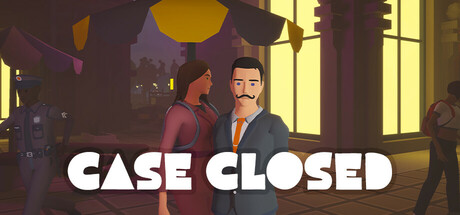
Our game leverages sophisticated artificial intelligence to create an immersive and unpredictable gameplay experience. Each citizen is powered by AI, enabling them to exhibit distinct personalities, react dynamically to player actions, and contribute uniquely to the mystery. This AI integration not only enhances the realism of the city environment but also ensures that no two playthroughs are the same, providing a fresh challenge every time.
The game’s logo + the achievment logos was generated using AI and then manually edited and finalized by the developer. No gameplay, art, or audio content was AI-generated.
All in-game content was manually created. The AI-generated logo does not affect gameplay or user experience.
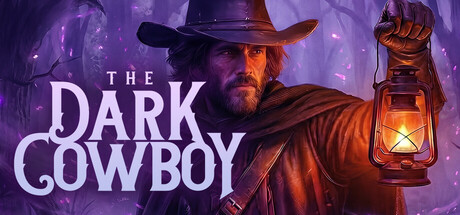
The Dark Cowboy is a solo-developed project created over several years in Unreal Engine. To achieve a cinematic experience as a single creator, AI tools were integrated into the production workflow in a few specific areas.
Cinematics & Visuals
Generative AI tools assisted in creating visual material for cinematic sequences, as well as static artwork for loading screens and promotional imagery.
Audio & Voice Performances
Character dialogue is performed using voice models derived from licensed human voice performances, alongside select atmospheric tracks to enhance the game’s immersive soundscape.
Writing & Localization
Language models assisted with editorial review of scripts and helped produce translations across the game's 14 supported languages.
All such elements were carefully directed, manually refined, and integrated by the developer to ensure they fully support the atmosphere and storytelling of The Dark Cowboy.
- Capsule images: The images were created by a professional artist who partially used AI
- Title screen: The background image on the title screen was partially AI generated
Some of the store artwork (Steam capsules) are designed with assistance of generative AI.
The game itself - includding the music, levels, code and all artwork - is "hand made" without any of this AI stuff.
Nothorian is an original work developed by our creative team. Some artwork and promotional text were assisted by AI tools (GPT) during development. No AI content is generated during gameplay, and all content has been carefully reviewed and adapted by humans.
We use it as a support tool for some things (as almost everyone does these days), but our team designed the story and the entire game and oversaw everything. There is no crazy or dangerous real-time generation.
Traditionally, NPCs (non-player characters) do not play active roles in video games. However, with the use of AI, they become the main characters of the game. Players can communicate with NPCs verbally through a microphone, and it is the AI that responds
The game uses some AI generated and manually modified content only for paitings and photographs as well as for some of the text content (modified and reworded).
Generative AI is used for translations into languages I do not master and to create early 3D model prototypes. These prototypes are manually refined before being integrated into the game. No generative AI is used during gameplay or to dynamically generate in-game content.
**Disclosure on Use of Generative AI in Development**
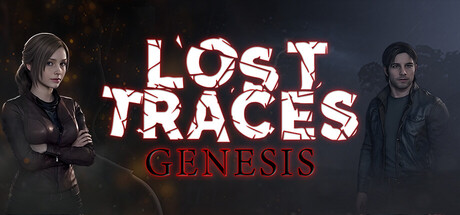
*Lost Traces: False Awakening* and *Lost Traces: Genesis* are ambitious projects developed by a **small indie team**. To efficiently achieve the large scope and detail of the game's world, we made selective use of pre-generated tools during development.
This approach was strictly limited to foundational elements which were then heavily refined by human artists and engineers:
* **Character Designs (Images):** A portion of the initial character design concepts and visual elements (used on the store page and in-game) were informed by licensed image generation tools, such as **Stable Diffusion**. Every single piece of content has since been **manually edited, digitally painted, and extensively refined** by our artists to ensure unique visual identity and high quality.
* **Voice Dialogue (Audio):** A portion of the in-game voice dialogue was generated using licensed text-to-speech or AI voice tools. This audio was subsequently run through **professional editing, mastering, and processing** to ensure vocal quality, pacing, and consistency across the game's soundscape.
Our team maintains **full creative and artistic control** over all final assets. We did not use any AI tools to generate content *live* during gameplay.
We have used open source LLMs trained on our game's lore and dialogue to generate quests.
We have used our own private NeRF systems to generate some 3D models.
Some of our marketing materials, game icons, and concept art was generated using art we had designers create under contract for this game. That art was used to train an open source generative system.
The cover art and character poses and expressions in our game were initially generated using AI during the development phase to enhance the creative process. These elements were then redrawn by our art team to ensure quality and originality. Additionally, the story text within the game was refined, proofread, and translated with the assistance of AI tools. No real-time AI content is generated during gameplay, ensuring players receive a consistent and controlled gaming experience.
This game uses AI-generated content for:
Store capsule artwork
All AI content has been reviewed and edited by our development team to ensure quality and appropriateness.
For the MVP of the Development version of the game 3D models, 2D sprites, sound and music are part wise AI generated. These assets will not be used for the release of the game but instead replaced by human-made assets.
Some object textures are AI generated to apparently look AI generated as a commentary, distorted and non human (dreamtexture plugin for Blender with prompts like "AI looking alien food" and such.
Pictures of faces have been generated with this-person-does-not-exist.com to look like conventionnaly beautiful but generic portraits, again foreshadowing the idea what a person looks like, from an AI, algorithmically driven system.
A tiny number of in-world 2D assets (poster designs and paintings) were created with limited AI assistance and refined by a graphic designer. All 3D art, characters, music, voice work, writing, design, VFX, and SFX were made entirely by humans, meaning over 99.99% of the game was crafted by real people.
Narrator uses AI voice over work as a placeholder.
Currently the final game is slotted to feature 100% human actors for maximum expression. An example of this is the demo's ending cutscene.
The main uses of AI in the creation of this game were for minor coding problems, such as what sorting algorithm to use and detecting bugs occasionally. The second main use was the art. The majority of art in the game is ai generated, but there are no influences on the generation based off of real images. All generated images are random and pre-generated.
Keep in mind none of the names in the game are ai generated.
GenAI is used to create 2D character design concepts as reference images for 3D modeling.
It is also used for some UI icons, a limited number of 3D asset models, and translation of in-game character dialogue.
AI has been used in image generation for the portraits of the characters. These images are then post-processed through a quantizer, which lowers the resolution and quantizes the image into only having the colors from my color palette.
Some voice acting is generated using AI models trained on professional voice actors who have given their consent and are being compensated for their work.
AI tools have been like an extra set of hands (or brains) for our small indie dev team. They've played a quiet yet invaluable role in helping us draft initial concept art and brainstorm our way through tricky design challenges. Being Polish native speakers, AI has also been particularly helpful in fine-tuning our writing, ensuring our game's narrative is as engaging as possible.
We used AI to create the voices for John, Ellie, Matt, and Becca. This is a temporary solution; we intend to replace these audio tracks with professional voice acting as soon as possible.
Art and Music was generated by AI.
Please note that we want to respect artists. No artist name or artist art have been used as reference for prompting. And the art used is very generic and doesn't not infringe any IP.
The game uses real-time AI models to simulate immersive conversations with the non-player characters you meet in-game. Each character has a hand-written backstory that impacts how the conversation goes. This technology complements the manual worldbuilding and lore writing, and I would love your feedback on how well you think this works!
We utilized AI tools to generate internal references for composition and framing. These outputs were then used as a base to manually create handcrafted pixel art assets, ensuring all final in-game visuals follow our custom palettes and artistic standards.
Use of AI for Artistic Elements:
In Z Ops: Deadzone, we use artificial intelligence to generate certain artistic assets, including characters, environments, and icons. AI allows us to explore a wide variety of visual styles and create graphical elements more efficiently. Each AI-generated asset is carefully refined to ensure it aligns with the overall art direction of the game and integrates seamlessly into the game’s universe. This approach helps speed up the creative process while maintaining a consistent and immersive quality.
1001 Nights is a story-crafting game that started development as early as 2020, exploring creative narrative gameplay to bring players novel experiences they've never had before: telling stories and turning those stories into reality.All traditional game art assets are hand-crafted by our talented human artists. This includes character illustrations, scene models, UI elements, and all visual components that form the core aesthetic of our game. The game features an adaptive LLM-based storytelling system that responds to your unique inputs based on a language model called Qwen. Our narrative engine draws from the rich tradition of Persian folklore and our original hand-written story frameworks by paid writers, then dynamically adapts these materials to create personalized experiences based on your inputs. Each playthrough becomes a unique collaboration between you and our narrative system.Our guiding principle has always been to create gaming experiences that were previously impossible - where technology serves as a creative collaborator rather than a replacement for human imagination. The soul of 1001 Nights comes from our human creators, inspired by ancient Persian folklore and brought to life through innovative narrative systems.For technical details about our implementation and the academic research behind our systems, please refer to the in-game introduction, and our published papers available on our official website. We're a small indie team committed to pushing the boundaries of interactive storytelling while respecting both player creativity and artistic integrity.We welcome any questions or feedback about our creative process via adaeden1001[at]gmail[dot]com or through our Discord community. Your input helps us continue improving this unique storytelling experience.
There is no AI generated content in this game. All artwork and scenes were made by me or asset creators on the marketplace without the use of AI generated content.
The game banner was generated with AI based on a screenshot taken from our game. We chose a graphical style different from the one in-game.
We also used IA to generate musics for our game.
Our game leverages sophisticated artificial intelligence to create an immersive and unpredictable gameplay experience. Each citizen is powered by AI, enabling them to exhibit distinct personalities, react dynamically to player actions, and contribute uniquely to the mystery. This AI integration not only enhances the realism of the city environment but also ensures that no two playthroughs are the same, providing a fresh challenge every time.
The game’s logo + the achievment logos was generated using AI and then manually edited and finalized by the developer. No gameplay, art, or audio content was AI-generated.
All in-game content was manually created. The AI-generated logo does not affect gameplay or user experience.
The Dark Cowboy is a solo-developed project created over several years in Unreal Engine. To achieve a cinematic experience as a single creator, AI tools were integrated into the production workflow in a few specific areas.
Cinematics & Visuals
Generative AI tools assisted in creating visual material for cinematic sequences, as well as static artwork for loading screens and promotional imagery.
Audio & Voice Performances
Character dialogue is performed using voice models derived from licensed human voice performances, alongside select atmospheric tracks to enhance the game’s immersive soundscape.
Writing & Localization
Language models assisted with editorial review of scripts and helped produce translations across the game's 14 supported languages.
All such elements were carefully directed, manually refined, and integrated by the developer to ensure they fully support the atmosphere and storytelling of The Dark Cowboy.
- Capsule images: The images were created by a professional artist who partially used AI
- Title screen: The background image on the title screen was partially AI generated
Some of the store artwork (Steam capsules) are designed with assistance of generative AI.
The game itself - includding the music, levels, code and all artwork - is "hand made" without any of this AI stuff.
Nothorian is an original work developed by our creative team. Some artwork and promotional text were assisted by AI tools (GPT) during development. No AI content is generated during gameplay, and all content has been carefully reviewed and adapted by humans.
We use it as a support tool for some things (as almost everyone does these days), but our team designed the story and the entire game and oversaw everything. There is no crazy or dangerous real-time generation.
Traditionally, NPCs (non-player characters) do not play active roles in video games. However, with the use of AI, they become the main characters of the game. Players can communicate with NPCs verbally through a microphone, and it is the AI that responds
The game uses some AI generated and manually modified content only for paitings and photographs as well as for some of the text content (modified and reworded).
Generative AI is used for translations into languages I do not master and to create early 3D model prototypes. These prototypes are manually refined before being integrated into the game. No generative AI is used during gameplay or to dynamically generate in-game content.
**Disclosure on Use of Generative AI in Development**
*Lost Traces: False Awakening* and *Lost Traces: Genesis* are ambitious projects developed by a **small indie team**. To efficiently achieve the large scope and detail of the game's world, we made selective use of pre-generated tools during development.
This approach was strictly limited to foundational elements which were then heavily refined by human artists and engineers:
* **Character Designs (Images):** A portion of the initial character design concepts and visual elements (used on the store page and in-game) were informed by licensed image generation tools, such as **Stable Diffusion**. Every single piece of content has since been **manually edited, digitally painted, and extensively refined** by our artists to ensure unique visual identity and high quality.
* **Voice Dialogue (Audio):** A portion of the in-game voice dialogue was generated using licensed text-to-speech or AI voice tools. This audio was subsequently run through **professional editing, mastering, and processing** to ensure vocal quality, pacing, and consistency across the game's soundscape.
Our team maintains **full creative and artistic control** over all final assets. We did not use any AI tools to generate content *live* during gameplay.
We have used open source LLMs trained on our game's lore and dialogue to generate quests.
We have used our own private NeRF systems to generate some 3D models.
Some of our marketing materials, game icons, and concept art was generated using art we had designers create under contract for this game. That art was used to train an open source generative system.
The cover art and character poses and expressions in our game were initially generated using AI during the development phase to enhance the creative process. These elements were then redrawn by our art team to ensure quality and originality. Additionally, the story text within the game was refined, proofread, and translated with the assistance of AI tools. No real-time AI content is generated during gameplay, ensuring players receive a consistent and controlled gaming experience.
This game uses AI-generated content for:
Store capsule artwork
All AI content has been reviewed and edited by our development team to ensure quality and appropriateness.
For the MVP of the Development version of the game 3D models, 2D sprites, sound and music are part wise AI generated. These assets will not be used for the release of the game but instead replaced by human-made assets.
Some object textures are AI generated to apparently look AI generated as a commentary, distorted and non human (dreamtexture plugin for Blender with prompts like "AI looking alien food" and such.
Pictures of faces have been generated with this-person-does-not-exist.com to look like conventionnaly beautiful but generic portraits, again foreshadowing the idea what a person looks like, from an AI, algorithmically driven system.
A tiny number of in-world 2D assets (poster designs and paintings) were created with limited AI assistance and refined by a graphic designer. All 3D art, characters, music, voice work, writing, design, VFX, and SFX were made entirely by humans, meaning over 99.99% of the game was crafted by real people.
Narrator uses AI voice over work as a placeholder.
Currently the final game is slotted to feature 100% human actors for maximum expression. An example of this is the demo's ending cutscene.
The main uses of AI in the creation of this game were for minor coding problems, such as what sorting algorithm to use and detecting bugs occasionally. The second main use was the art. The majority of art in the game is ai generated, but there are no influences on the generation based off of real images. All generated images are random and pre-generated.
Keep in mind none of the names in the game are ai generated.
GenAI is used to create 2D character design concepts as reference images for 3D modeling.
It is also used for some UI icons, a limited number of 3D asset models, and translation of in-game character dialogue.