Public Steam disclosure research25,376 disclosures tracked
Where do games disclose AI use?
Search developers’ Steam disclosures, compare classified AI use across
games, and follow recorded changes.
This index adds cross-game classifications and statistics to
statements published on individual store pages.
Groups reflect automatic analysis of public disclosures; mature records are excluded. These counts do not measure AI use across all of Steam.
Missing or unclear statements cannot establish whether a game uses AI.
The core art direction and a portion of the artwork were hand-drawn by the developer, and AI was used to produce additional assets in a matching style, which were then reviewed, edited and integrated by hand. The game's music was generated with AI tools. No AI content is generated live while the game is running.
Generative AI was used to assist with some pre-generated 2D artwork. All AI-assisted assets were selected, edited and integrated by the developer. No generative AI is used during gameplay.
This game uses generative AI as part of its content creation pipeline. Some elements of the store page cover art were generated using AI and then combined with additional artwork created by our designer. Certain in-game environment textures were processed using AI-assisted tools as part of the texturing workflow. Character voices were recorded by our own team and then processed with AI-based voice conversion to transform them into different character voices. All AI-assisted content was reviewed and refined by our team before being included in the final game.
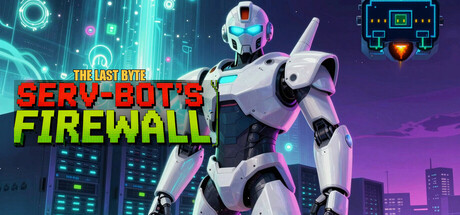
Serv-Bot's Firewall uses AI tools in its art and media pipeline, always under human direction and review:
Sprite art. The game's original hand-authored sprites were upscaled and repainted at native resolution with an image-editing model (Qwen-Image-Edit), then reviewed, corrected and in many cases restored to the originals by hand. Concept art for the six "arsenal" enemy types, the Serv-Bot HUD portraits and the achievement icon motifs were generated with local image models (Z-Image Turbo, Qwen-Image-Edit) from our own designs and reference art, then composited and finished in code. Canon elements such as the Greeb ship in the icons are the game's own sprite art, not generated.
Cutscenes. The in-game story videos come from our SIGNAL series. Keyframes were generated with a local image model trained on our own characters, motion with a local video model (Wan 2.2), narration with a text-to-speech model (Kokoro) and music with local music models (ACE-Step, Stable Audio Open). Scripts, story, character designs, editing and direction are ours.
Localization. Interface text in 28 languages was machine-translated with an AI model from our English source and has not yet been reviewed by native speakers.
Code. Parts of the game's code were written with AI coding assistance, reviewed and tested by the developer.
Sound effects are procedurally synthesised, not AI-generated. All AI generation ran on the developer's own hardware; no copyrighted third-party works were used as inputs beyond our own assets and characters.
Generative AI tools were used during development to assist with coding, music, dialogue writing, and texture assets. All content has been reviewed and approved by the developer.
Pre-generated AI-assisted artwork is used for some store/marketing graphical assets. The game does not generate AI content at runtime. All assets are reviewed by the developer before release.
Generative AI tools were used during the development of the game to assist with creating parts of the game. AI was used as a development aid, while the final content and implementation were reviewed and integrated by the developer.
Generative AI tools were used during development for programming assistance and debugging support. No AI-generated player-facing content is included in the game.
The music, a few sound effects. And very few of the menus have been created using AI. I know that many communities hate games with AI. And yes, lads, I’ve used it. But I can assure you that 90 per cent of the game has been lovingly crafted by a developer.
We used an AI diffusion tool in Krita to help create the background for the small capsule shown in search results. Our artist then worked over it with several extra layers, a bit like matte painting. For now, it's a placeholder until our artist finishes the hand-painted version of the small capsule.
The logo and the other capsule images were already hand-painted by our artist. The in-game portraits were also drawn by another artist on our team.
We have a devlog on our website about how we made the capsule artwork and hero portraits, and we'll share the full process on the Steam Community soon too.
The playtest build also includes a few placeholder assets made with AI tools in Krita. Our new UI artist is working on a new UI, so we'll be replacing those placeholders soon. As mentioned above, the hero portraits are also hand-drawn by our artist.
“AI tools were used to upscale/enhance original artwork created by the developer. The resulting assets were subsequently manually reworked and edited to match the game's intended art direction.”
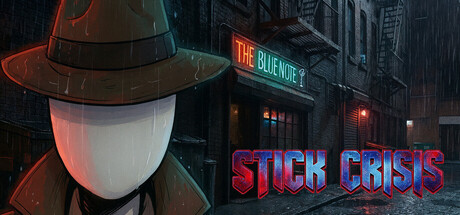
Stick Crisis was developed with assistance from generative AI tools. AI-assisted image and animation tools were used to create selected visual assets, character animation frames and pre-rendered cinematics; these materials were reviewed, edited and integrated by the developer. AI coding assistants also contributed to portions of the source code. The game does not generate content during gameplay or connect to generative AI services at runtime.
AI-Generated code has been used to help speed up development, debug code, and optimize core systems. All engine architecture, structural logic, and tool designs remain fully custom-built from scratch. The final compiled software consists entirely of human-written and human-reviewed code to ensure strict stability, performance, and integrity.
Generative AI was used to assist in creating certain promotional and store page artwork. All AI-generated content was reviewed, edited, and refined by the developer. No generative AI is used during gameplay.
1. Game Logo (Marketing / Store Page Asset)
The game's logo was created using generative AI tools. This logo appears on the store page, marketing materials, and within the game itself
2. Player Battle Armor Voice (In-Game Audio)
The player's battle armor uses voice samples generated using the ElevenLabs AI voice synthesis platform. This voice is heard in-game when the player receives feedback from the armor system (e.g., status alerts, warnings, or interactions).
Generative AI tools were used during development to assist with the creation of game content. All final content was reviewed and refined by the development team.
AI-generated content was used for promotional/store artwork, including capsule and library images. The game build itself does not use generative AI during gameplay.
Generative AI was used to assist with writing, editing, and translating store page text and marketing copy. No generative AI content is generated in real time during gameplay.
This game may include pre-generated content created or assisted by generative artificial intelligence tools during development, mainly for support with visual materials, promotional text, localization/translation, and marketing assets.
All content included in the game and on the store page has been manually reviewed, edited, and approved by the development team before publication. The game does not use generative artificial intelligence in real time during gameplay, so no new AI-generated content is created while the user is playing.
The game does not use generative artificial intelligence in real time. No images, text, sounds, dialogue, missions, or any other content are generated by AI while the game is running.
Artificial intelligence (AI) was leveraged for key aspects of the game's development, including in-game logic, support systems, and certain artistic assets.
Stickplosion makes extensive use of generative AI in its creation. Visual assets — including character art, environment art, UI elements, and logo — were generated with AI tools and curated by the developer. Sound effects and music were similarly produced with AI assistance. In-game text and store-page copy were written with AI assistance as well. All generated content was reviewed, selected, and edited by the developer before inclusion in the final game.
The core art direction and a portion of the artwork were hand-drawn by the developer, and AI was used to produce additional assets in a matching style, which were then reviewed, edited and integrated by hand. The game's music was generated with AI tools. No AI content is generated live while the game is running.
Generative AI was used to assist with some pre-generated 2D artwork. All AI-assisted assets were selected, edited and integrated by the developer. No generative AI is used during gameplay.
This game uses generative AI as part of its content creation pipeline. Some elements of the store page cover art were generated using AI and then combined with additional artwork created by our designer. Certain in-game environment textures were processed using AI-assisted tools as part of the texturing workflow. Character voices were recorded by our own team and then processed with AI-based voice conversion to transform them into different character voices. All AI-assisted content was reviewed and refined by our team before being included in the final game.
Serv-Bot's Firewall uses AI tools in its art and media pipeline, always under human direction and review:
Sprite art. The game's original hand-authored sprites were upscaled and repainted at native resolution with an image-editing model (Qwen-Image-Edit), then reviewed, corrected and in many cases restored to the originals by hand. Concept art for the six "arsenal" enemy types, the Serv-Bot HUD portraits and the achievement icon motifs were generated with local image models (Z-Image Turbo, Qwen-Image-Edit) from our own designs and reference art, then composited and finished in code. Canon elements such as the Greeb ship in the icons are the game's own sprite art, not generated.
Cutscenes. The in-game story videos come from our SIGNAL series. Keyframes were generated with a local image model trained on our own characters, motion with a local video model (Wan 2.2), narration with a text-to-speech model (Kokoro) and music with local music models (ACE-Step, Stable Audio Open). Scripts, story, character designs, editing and direction are ours.
Localization. Interface text in 28 languages was machine-translated with an AI model from our English source and has not yet been reviewed by native speakers.
Code. Parts of the game's code were written with AI coding assistance, reviewed and tested by the developer.
Sound effects are procedurally synthesised, not AI-generated. All AI generation ran on the developer's own hardware; no copyrighted third-party works were used as inputs beyond our own assets and characters.
Generative AI tools were used during development to assist with coding, music, dialogue writing, and texture assets. All content has been reviewed and approved by the developer.
Pre-generated AI-assisted artwork is used for some store/marketing graphical assets. The game does not generate AI content at runtime. All assets are reviewed by the developer before release.
Generative AI tools were used during the development of the game to assist with creating parts of the game. AI was used as a development aid, while the final content and implementation were reviewed and integrated by the developer.
Generative AI tools were used during development for programming assistance and debugging support. No AI-generated player-facing content is included in the game.
The music, a few sound effects. And very few of the menus have been created using AI. I know that many communities hate games with AI. And yes, lads, I’ve used it. But I can assure you that 90 per cent of the game has been lovingly crafted by a developer.
We used an AI diffusion tool in Krita to help create the background for the small capsule shown in search results. Our artist then worked over it with several extra layers, a bit like matte painting. For now, it's a placeholder until our artist finishes the hand-painted version of the small capsule.
The logo and the other capsule images were already hand-painted by our artist. The in-game portraits were also drawn by another artist on our team.
We have a devlog on our website about how we made the capsule artwork and hero portraits, and we'll share the full process on the Steam Community soon too.
The playtest build also includes a few placeholder assets made with AI tools in Krita. Our new UI artist is working on a new UI, so we'll be replacing those placeholders soon. As mentioned above, the hero portraits are also hand-drawn by our artist.
“AI tools were used to upscale/enhance original artwork created by the developer. The resulting assets were subsequently manually reworked and edited to match the game's intended art direction.”
Stick Crisis was developed with assistance from generative AI tools. AI-assisted image and animation tools were used to create selected visual assets, character animation frames and pre-rendered cinematics; these materials were reviewed, edited and integrated by the developer. AI coding assistants also contributed to portions of the source code. The game does not generate content during gameplay or connect to generative AI services at runtime.
AI-Generated code has been used to help speed up development, debug code, and optimize core systems. All engine architecture, structural logic, and tool designs remain fully custom-built from scratch. The final compiled software consists entirely of human-written and human-reviewed code to ensure strict stability, performance, and integrity.
Generative AI was used to assist in creating certain promotional and store page artwork. All AI-generated content was reviewed, edited, and refined by the developer. No generative AI is used during gameplay.
1. Game Logo (Marketing / Store Page Asset)
The game's logo was created using generative AI tools. This logo appears on the store page, marketing materials, and within the game itself
2. Player Battle Armor Voice (In-Game Audio)
The player's battle armor uses voice samples generated using the ElevenLabs AI voice synthesis platform. This voice is heard in-game when the player receives feedback from the armor system (e.g., status alerts, warnings, or interactions).
Generative AI tools were used during development to assist with the creation of game content. All final content was reviewed and refined by the development team.
AI-generated content was used for promotional/store artwork, including capsule and library images. The game build itself does not use generative AI during gameplay.
Generative AI was used to assist with writing, editing, and translating store page text and marketing copy. No generative AI content is generated in real time during gameplay.
This game may include pre-generated content created or assisted by generative artificial intelligence tools during development, mainly for support with visual materials, promotional text, localization/translation, and marketing assets.
All content included in the game and on the store page has been manually reviewed, edited, and approved by the development team before publication. The game does not use generative artificial intelligence in real time during gameplay, so no new AI-generated content is created while the user is playing.
The game does not use generative artificial intelligence in real time. No images, text, sounds, dialogue, missions, or any other content are generated by AI while the game is running.
Artificial intelligence (AI) was leveraged for key aspects of the game's development, including in-game logic, support systems, and certain artistic assets.
Stickplosion makes extensive use of generative AI in its creation. Visual assets — including character art, environment art, UI elements, and logo — were generated with AI tools and curated by the developer. Sound effects and music were similarly produced with AI assistance. In-game text and store-page copy were written with AI assistance as well. All generated content was reviewed, selected, and edited by the developer before inclusion in the final game.