Public Steam disclosure research25,376 disclosures tracked
Where do games disclose AI use?
Search developers’ Steam disclosures, compare classified AI use across
games, and follow recorded changes.
This index adds cross-game classifications and statistics to
statements published on individual store pages.
Groups reflect automatic analysis of public disclosures; mature records are excluded. These counts do not measure AI use across all of Steam.
Missing or unclear statements cannot establish whether a game uses AI.
Some pre-made assets were created with the help of generative AI tools and then selected and edited by the developers: power-up card illustrations, achievement icons, store and key art, and some 3D chess piece models for cosmetic sets. The game does not generate any AI content while you play.
Generative AI tools were used during development to help create portions of the game's audio, visual assets, and written content, including background music and sound effects. AI assistance was also used for promotional artwork. These materials were selected, edited, and reviewed by the developer before inclusion. The core gameplay rules, design decisions, and final implementation were directed by the developer. The game uses pre-generated content and does not generate new content with AI during gameplay.
ENROQUIA uses generative AI for pre-made content included in the game; nothing is generated during play and the game does not connect to any AI service. Made with AI: the voice of James, the coach (an original synthetic voice that does not imitate any real person), the music, the club entrance video, the 3D props and textures, the paintings on the club walls, the character designs (the 20 opponents and James), the in-game text and its translations into 12 languages, and the promotional material. The chess engine and its analysis are the game's own, with no AI models, and James's comments on your games are chosen during play based on that analysis.
Some translations were generated with AI and are in beta, so more players can enjoy the game in their language.
The art and music were made without AI.
"Generative artificial intelligence was used to create visual assets for the game, including illustrations for the store page, promotional materials, and in-game graphic elements."
Powered by some of the most advanced chess engines ever created. It also uses two neural networks to recognize chess positions directly from game diagrams, turning images into playable positions in seconds.
As a solo developer with a big dream and limited resources, I want to be entirely upfront how this game was built. The vast majority of this game is completely human-made: I crafted the pixel characters, animations, code, and story over the past 10 years. I also utilized incredible royalty-free and purchased assets from human creators like gyvr, Eunity, RafaelMatos, penusbmic, Winlu, Geoff Harvey.
The use of generative AI was for touching up and refining the marketing capsule images using Adobe Photoshop tools.
Pre-generated AI-assisted content is present for background art, portions of the Steam/Windows key art and logo derivatives. Kingside Break contains no runtime generative-AI system or live AI-content generation. Its chess opponent is conventional gameplay AI, not generative AI.
Pawnimals uses generative AI as part of its development and content creation process. Generative AI tools were used to assist with the creation and refinement of some visual assets, character artwork, animations, voice/audio content, and other creative elements in the game.
AI-generated content is reviewed, edited, directed, and integrated by the developer to maintain a consistent visual style, character design, and overall player experience. Generative AI is used as a production tool and does not generate unrestricted content based on player prompts during normal gameplay.
We've leveraged the capabilities of Generative AI technology to create some of the unique themed backgrounds, characters, and content elements featured in our game. This innovative approach allows us to deliver a richer, more immersive experience, filled with visually captivating and creatively inspired designs that enhance every moment of gameplay.
Generative AI tools were used during development to assist in the creation of visual and audio content. All AI-assisted content was created prior to release, reviewed and curated by the developer, and is included as part of the finished game. No generative AI is used during gameplay.
We used generative AI to create artwork for this store page and for promotional
materials. All generated material was reviewed and adjusted
by humans before use. No content is generated by AI during gameplay.
Pocket Pawns was made with the help of generative AI, and the game's own credits name every tool used.
Images and music: the chess piece art was generated with ChatGPT, the board art with Gemini, and the world and environment art from assets created with Nano Banana Pro alongside free-to-use CC0 packs found online. The soundtrack is from Suno.
Claude wrote the game's code, its writing, and its translations into ten languages — and made much of what you see and hear directly in code rather than from an image generator: the character pixel art, the in-world props and interface, the three-dimensional rooms, the animation, and the sound effects.
The chess itself is not generated. The puzzles come from the Lichess puzzle database, released under CC0, and your opponent is Stockfish, a classical open-source chess engine. Real positions, a real engine.
Nothing is generated while you play. Pocket Pawns creates no content at runtime and never connects to an AI service. It does not need an internet connection to play.
Hostile Boards uses AI-generated content minimally, primarily for image creation and touch-ups in some of our visual assets. All AI-generated images are based on original designs and concepts created by our team. No live AI content generation or dynamic AI use occurs during gameplay
This game was developed with the assistance of generative AI. Music, sound effects, translation, and some visual art were AI-generated, then curated and adjusted by the developer.
Some shipped content was created with the help of generative AI tools and then reviewed and edited by the developer: parts of the store and marketing artwork, the trailer music, and the first drafts of the interface translations (German, Spanish, French, Polish, Brazilian Portuguese). All gameplay, rules logic and code are deterministic and human-reviewed. The game does not generate any AI content at runtime.
All pixel artwork is hand-made by a human artist (Dani Maccari, licensed and credited). Sound effects are procedurally synthesized from hand-authored code and Suno AI. AI tools were used during development as a programming assistant and to help draft and edit some in-game and store text, all of which was human-directed, reviewed, and curated. No generative AI runs at runtime, and no AI-generated imagery ships with the game.
Kingsfall:Chess uses pre-generated AI-generated imagery for some visual assets within the game and promotional/store materials. Other visual assets were created by artists using traditional methods. No content is generated by AI during gameplay.
Generative AI tools were used during development to assist with the creation of some visual assets, store artwork and initial localization drafts. All generated content was reviewed, edited, and integrated by the developer.
Immortal Chess does not generate AI content during gameplay.
Pre-generated content only. Some 2D artwork (menu and loading-screen key art) and UI sound effects were created or processed with generative AI tools, then reviewed and edited by the developer. No content is AI-generated at runtime.
AI translation tools were used to produce the localized text for the game. Additionally, initial concept drafts for select visual assets were generated using AI, but were subsequently heavily modified, painted over, and finalized by human artists.
[Pre-Generated AI Content] Generative AI (Anthropic Claude) was used during development to write game code, to create the BGM (note data transcribed from a public-domain piece and procedurally generated music), and to compose store artwork from in-game assets. No content is generated by AI at runtime.
Generative AI was used to assist in creating selected promotional capsule and library artwork for this Steam store page. These assets were reviewed and selected by the developer. No generative AI features are used during gameplay, and no content is generated at runtime.
Portions of this game's code, artwork, music arrangement, and text were created with the assistance of generative AI tools (Anthropic Claude). All AI-assisted content was reviewed, tested, and curated by the developer. The game does not generate any content using AI at runtime.
No art or sound generation was used. Some help for coding the complex in-game enemy AI interactions were utilized from LLM models. Also the game analysis was made with coding help.
Topological Board Game used generative AI tools during development to assist with programming, documentation, store-page text, localization drafts, and design iteration. All AI-assisted material is reviewed and edited by the developer before being included in the game or store page.
The game does not use generative AI to create live player-facing content during gameplay. It does not connect to external third-party AI services during normal gameplay. Local robot opponents, rule-based analysis, search, simulation, and self-play/research tools may be included, but these are gameplay/strategy systems rather than live generative AI content systems.
We use generative AI to help create this game. It's part of what lets a small team build a game like this. We believe in being transparent about the tools we use, but they're only tools. Every part of this game is reviewed, refined, and curated by our team to meet our creative vision and quality standards, and we hope you'll enjoy the game for the experience it delivers.
AI was utilized in the following areas:
* Art Assets: Two textures (the move marker and UI background) were generated using AI tools.
* Development: AI was primarily used for code review, debugging, and localization support.
* Audio: Some musical tracks and voices may have been AI-generated.
Text: Help text was generated and proofread with AI assistance.
* In-Game Feature: The game includes llama.cpp, enabling an experimental feature where players can consult an AI about chess moves.
This game uses generative AI to create concept art, some background illustrations. All AI-generated content has been reviewed, edited, and refined by human hands to ensure it does not infringe on any copyrights.
This game uses generative artificial intelligence as part of the development process. AI tools were used to assist with creating certain visual assets and design elements. All AI-generated content has been reviewed, edited, and integrated by the developer to ensure quality and consistency.
No AI is used during gameplay, and the player experience is entirely handcrafted.
AI-generated content is used only during the concept art and asset planning phase to generate initial creative ideas. No AI-generated content is present in the final game.
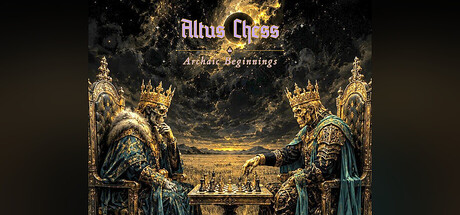
All visual artwork in Altus Chess: Archaic Beginnings — piece designs, board and background art, and promotional/store imagery — was created using generative AI image tools, directed by the developer through human-written prompts based on the game's own pieces and concepts, then reviewed and edited by hand. No content is generated live during gameplay. The game's opponent is a proprietary, hand-built algorithmic chess engine, not generative AI.
Pre-generated AI-assisted artwork is used for fictional chess player avatars and selected promotional visuals. These assets are reviewed before inclusion. No live generative AI is used during gameplay.
We've harnessed the power of Generative AI technology to create several of our game's unique theme background artworks, enhancing your gaming experience with visually stunning designs.
Some pre-made assets were created with the help of generative AI tools and then selected and edited by the developers: power-up card illustrations, achievement icons, store and key art, and some 3D chess piece models for cosmetic sets. The game does not generate any AI content while you play.
Generative AI tools were used during development to help create portions of the game's audio, visual assets, and written content, including background music and sound effects. AI assistance was also used for promotional artwork. These materials were selected, edited, and reviewed by the developer before inclusion. The core gameplay rules, design decisions, and final implementation were directed by the developer. The game uses pre-generated content and does not generate new content with AI during gameplay.
ENROQUIA uses generative AI for pre-made content included in the game; nothing is generated during play and the game does not connect to any AI service. Made with AI: the voice of James, the coach (an original synthetic voice that does not imitate any real person), the music, the club entrance video, the 3D props and textures, the paintings on the club walls, the character designs (the 20 opponents and James), the in-game text and its translations into 12 languages, and the promotional material. The chess engine and its analysis are the game's own, with no AI models, and James's comments on your games are chosen during play based on that analysis.
Some translations were generated with AI and are in beta, so more players can enjoy the game in their language.
The art and music were made without AI.
"Generative artificial intelligence was used to create visual assets for the game, including illustrations for the store page, promotional materials, and in-game graphic elements."
Powered by some of the most advanced chess engines ever created. It also uses two neural networks to recognize chess positions directly from game diagrams, turning images into playable positions in seconds.
As a solo developer with a big dream and limited resources, I want to be entirely upfront how this game was built. The vast majority of this game is completely human-made: I crafted the pixel characters, animations, code, and story over the past 10 years. I also utilized incredible royalty-free and purchased assets from human creators like gyvr, Eunity, RafaelMatos, penusbmic, Winlu, Geoff Harvey.
The use of generative AI was for touching up and refining the marketing capsule images using Adobe Photoshop tools.
Pre-generated AI-assisted content is present for background art, portions of the Steam/Windows key art and logo derivatives. Kingside Break contains no runtime generative-AI system or live AI-content generation. Its chess opponent is conventional gameplay AI, not generative AI.
Pawnimals uses generative AI as part of its development and content creation process. Generative AI tools were used to assist with the creation and refinement of some visual assets, character artwork, animations, voice/audio content, and other creative elements in the game.
AI-generated content is reviewed, edited, directed, and integrated by the developer to maintain a consistent visual style, character design, and overall player experience. Generative AI is used as a production tool and does not generate unrestricted content based on player prompts during normal gameplay.
We've leveraged the capabilities of Generative AI technology to create some of the unique themed backgrounds, characters, and content elements featured in our game. This innovative approach allows us to deliver a richer, more immersive experience, filled with visually captivating and creatively inspired designs that enhance every moment of gameplay.
Generative AI tools were used during development to assist in the creation of visual and audio content. All AI-assisted content was created prior to release, reviewed and curated by the developer, and is included as part of the finished game. No generative AI is used during gameplay.
We used generative AI to create artwork for this store page and for promotional
materials. All generated material was reviewed and adjusted
by humans before use. No content is generated by AI during gameplay.
Pocket Pawns was made with the help of generative AI, and the game's own credits name every tool used.
Images and music: the chess piece art was generated with ChatGPT, the board art with Gemini, and the world and environment art from assets created with Nano Banana Pro alongside free-to-use CC0 packs found online. The soundtrack is from Suno.
Claude wrote the game's code, its writing, and its translations into ten languages — and made much of what you see and hear directly in code rather than from an image generator: the character pixel art, the in-world props and interface, the three-dimensional rooms, the animation, and the sound effects.
The chess itself is not generated. The puzzles come from the Lichess puzzle database, released under CC0, and your opponent is Stockfish, a classical open-source chess engine. Real positions, a real engine.
Nothing is generated while you play. Pocket Pawns creates no content at runtime and never connects to an AI service. It does not need an internet connection to play.
Hostile Boards uses AI-generated content minimally, primarily for image creation and touch-ups in some of our visual assets. All AI-generated images are based on original designs and concepts created by our team. No live AI content generation or dynamic AI use occurs during gameplay
This game was developed with the assistance of generative AI. Music, sound effects, translation, and some visual art were AI-generated, then curated and adjusted by the developer.
Some shipped content was created with the help of generative AI tools and then reviewed and edited by the developer: parts of the store and marketing artwork, the trailer music, and the first drafts of the interface translations (German, Spanish, French, Polish, Brazilian Portuguese). All gameplay, rules logic and code are deterministic and human-reviewed. The game does not generate any AI content at runtime.
All pixel artwork is hand-made by a human artist (Dani Maccari, licensed and credited). Sound effects are procedurally synthesized from hand-authored code and Suno AI. AI tools were used during development as a programming assistant and to help draft and edit some in-game and store text, all of which was human-directed, reviewed, and curated. No generative AI runs at runtime, and no AI-generated imagery ships with the game.
Kingsfall:Chess uses pre-generated AI-generated imagery for some visual assets within the game and promotional/store materials. Other visual assets were created by artists using traditional methods. No content is generated by AI during gameplay.
Generative AI tools were used during development to assist with the creation of some visual assets, store artwork and initial localization drafts. All generated content was reviewed, edited, and integrated by the developer.
Immortal Chess does not generate AI content during gameplay.
Pre-generated content only. Some 2D artwork (menu and loading-screen key art) and UI sound effects were created or processed with generative AI tools, then reviewed and edited by the developer. No content is AI-generated at runtime.
AI translation tools were used to produce the localized text for the game. Additionally, initial concept drafts for select visual assets were generated using AI, but were subsequently heavily modified, painted over, and finalized by human artists.
[Pre-Generated AI Content] Generative AI (Anthropic Claude) was used during development to write game code, to create the BGM (note data transcribed from a public-domain piece and procedurally generated music), and to compose store artwork from in-game assets. No content is generated by AI at runtime.
Generative AI was used to assist in creating selected promotional capsule and library artwork for this Steam store page. These assets were reviewed and selected by the developer. No generative AI features are used during gameplay, and no content is generated at runtime.
Portions of this game's code, artwork, music arrangement, and text were created with the assistance of generative AI tools (Anthropic Claude). All AI-assisted content was reviewed, tested, and curated by the developer. The game does not generate any content using AI at runtime.
No art or sound generation was used. Some help for coding the complex in-game enemy AI interactions were utilized from LLM models. Also the game analysis was made with coding help.
Topological Board Game used generative AI tools during development to assist with programming, documentation, store-page text, localization drafts, and design iteration. All AI-assisted material is reviewed and edited by the developer before being included in the game or store page.
The game does not use generative AI to create live player-facing content during gameplay. It does not connect to external third-party AI services during normal gameplay. Local robot opponents, rule-based analysis, search, simulation, and self-play/research tools may be included, but these are gameplay/strategy systems rather than live generative AI content systems.
We use generative AI to help create this game. It's part of what lets a small team build a game like this. We believe in being transparent about the tools we use, but they're only tools. Every part of this game is reviewed, refined, and curated by our team to meet our creative vision and quality standards, and we hope you'll enjoy the game for the experience it delivers.
AI was utilized in the following areas:
* Art Assets: Two textures (the move marker and UI background) were generated using AI tools.
* Development: AI was primarily used for code review, debugging, and localization support.
* Audio: Some musical tracks and voices may have been AI-generated.
Text: Help text was generated and proofread with AI assistance.
* In-Game Feature: The game includes llama.cpp, enabling an experimental feature where players can consult an AI about chess moves.
This game uses generative AI to create concept art, some background illustrations. All AI-generated content has been reviewed, edited, and refined by human hands to ensure it does not infringe on any copyrights.
This game uses generative artificial intelligence as part of the development process. AI tools were used to assist with creating certain visual assets and design elements. All AI-generated content has been reviewed, edited, and integrated by the developer to ensure quality and consistency.
No AI is used during gameplay, and the player experience is entirely handcrafted.
AI-generated content is used only during the concept art and asset planning phase to generate initial creative ideas. No AI-generated content is present in the final game.
All visual artwork in Altus Chess: Archaic Beginnings — piece designs, board and background art, and promotional/store imagery — was created using generative AI image tools, directed by the developer through human-written prompts based on the game's own pieces and concepts, then reviewed and edited by hand. No content is generated live during gameplay. The game's opponent is a proprietary, hand-built algorithmic chess engine, not generative AI.
Pre-generated AI-assisted artwork is used for fictional chess player avatars and selected promotional visuals. These assets are reviewed before inclusion. No live generative AI is used during gameplay.
We've harnessed the power of Generative AI technology to create several of our game's unique theme background artworks, enhancing your gaming experience with visually stunning designs.