Public Steam disclosure research25,497 disclosures tracked
Where do games disclose AI use?
Search developers’ Steam disclosures, compare classified AI use across
games, and follow recorded changes.
This index adds cross-game classifications and statistics to
statements published on individual store pages.
Groups reflect automatic analysis of public disclosures; mature records are excluded. These counts do not measure AI use across all of Steam.
Missing or unclear statements cannot establish whether a game uses AI.
Golden Pan is made by a one-person studio. Visual assets were generated with AI image tools, then hand-selected, edited and composed by the developer. All music and sound effects were produced with AI audio tools (ElevenLabs). Store and in-game text was written by the developer in English/Turkish; the other 15 languages were AI-translated and reviewed. All game design, code logic, level layout and economy tuning are the developer's own work. No AI content is generated while the game runs.
The game's code, some in-game text (English/Turkish dialogue and UI) and some poster artwork were created with the help of generative AI and then reviewed and edited by the developer. The game does not generate any AI content at runtime.
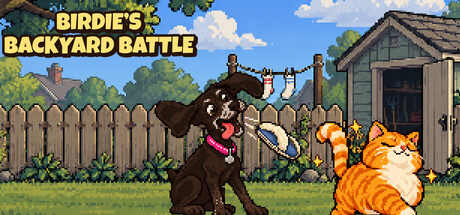
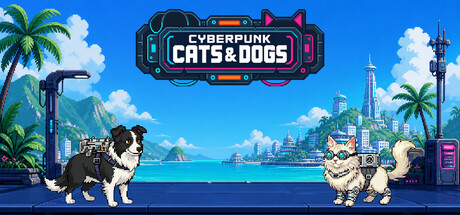
Character, enemy and background pixel art was created with AI image tools (ChatGPT, PixelLab) from photos of our real dog and cat and our own design notes, then edited, cut and arranged by the developer. Sprite animations were generated with PixelLab from that art. Game code was written with AI coding assistance (Claude) under the developer's direction. All game text was written or approved by the developer. The music is original, written note by note as code with AI coding assistance (Claude) and rendered with the free GeneralUser GS SoundFont; no AI audio generation and nothing sampled.
Generative AI tools were used during development to assist with the creation of some artwork, music, and game code. All AI-assisted content was reviewed, edited, and integrated by the developer as part of the game’s creative and development process.
The in-game pixel art (fields, characters, vehicles, backgrounds, etc.), sound effects, and skill icons in this title were rendered and composited using a program created by AI under the developer’s direction, and were then reviewed and adjusted by the developer. The AI does not generate any content while the game is being played.
Generative AI was used for a large portion of the game's visual assets, including character artwork, backgrounds, icons, and some promotional materials.
These assets were not used directly without review. Most of them went through repeated generation, selection, editing, and adjustment to keep the characters and overall art style consistent. A significant amount of time was also spent integrating the assets into the game and correcting issues where necessary.
The game design, gameplay systems, balancing, level design, UI design, programming, and overall direction were done by me.
The game does not generate AI content during gameplay.
AI was used to assist with the localization of some language versions. The translations were reviewed by the developer through proofreading and back-translation checks.
AI-generated images were used as composition references during the creation of a small number of CG illustrations. The image generation was based on the developer's own original hand-drawn character illustrations, provided as input references. All final character illustrations, CG illustrations, and other art assets were drawn entirely by hand. All characters are original designs.
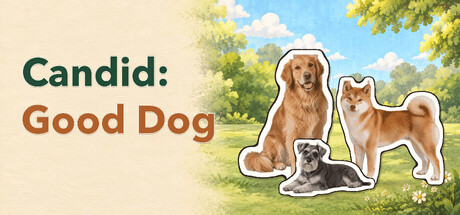
Generative AI was used during development to create some illustrations, visual assets, and built-in example dog images. These assets are included with the game. Your own pet photos are processed locally on your computer to create animated paper cutouts; they are never uploaded to online AI services or redrawn using generative AI.
Some included character, animal, creature and sample images were created with generative AI and then edited and prepared for the product. Generative AI also assisted with localization. MEMEMINT does not generate new images or text with generative AI during use and does not connect to a third-party generative AI service. Its local background-removal feature uses a non-generative segmentation model.
AI was used as an interface and scripting assistant for industry standard tools such as Reaper, Godot, Blender, Aseprite, and Deepl for enhancing the quality and consistency of the game content and building systems I otherwise would not have the capacity to design and implement as solo developer.
Where possible, artists are and will continue to be supported via use of their paid or free assets. For this game, the most money spent was on Quaternius source level packages.
Notable exception to this is the UI, which was generated using RetroDiffusion with a python pipeline built in house for consistent design around UI elements using color normalization and targeting from a theme palette, which is then imported and tweaked in Godot.
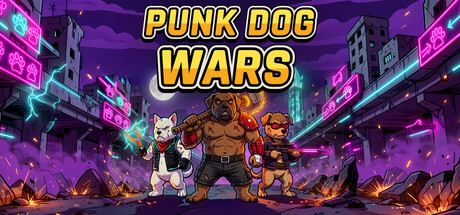
Punk Dog Wars uses AI-assisted tools during development. Character, effect and environment art, the music, and the announcer and dog voices were generated with AI models and then selected, composited and edited by our team. The store art was made the same way. No content is generated while you play.
The developer used generative AI tools to help create some of the game's artwork and 3D models, sound effects and music, and text, including the store description and translations. All AI-assisted content was reviewed and edited by the developer before being included. The game does not generate any AI content while you play.
During the development of this game, we utilized generative artificial intelligence tools—specifically Claude, Gemini, and Codex (GPT)—to assist with programming, debugging, and drafting text/documentation.
Code and Systems: AI models were used as development assistants to help write, refactor, and troubleshoot code logic.
Text and Documentation: AI assistants were used to brainstorm and draft text content, which was then thoroughly reviewed, edited, and manually integrated by our development team.
Detonator Squad was developed almost entirely using AI tools, under extensive human direction, ongoing refinement and review. The game is built on my own custom 3D engine that I have been working on for a while, using AI coding tools. AI was also used to create interface and promotional artwork and to author or assist with code, 3D assets, level layouts, game text, music and sound effects. The original core game logic was handwritten for an earlier project, then ported and adapted using AI. All content is supplied with the game; no content is generated by an AI service during gameplay.
We use generative AI as a reference and drafting tool, and always finish by hand. Early in development we generated AI concept images to explore ideas and mood; those are reference only. All in-game models, animation and UI are built by hand in 3D by the two of us. Some in-game textures were first generated with AI as a guide and then retouched by hand. The store key art is rendered from the game's own 3D characters and scenes, run through an AI tool for style, then composited and retouched by hand. Store text was drafted with an AI assistant and rewritten by us. The game does not use generative AI while you play.
AI was used for:
developing content concepts, such as structures, locations, and some smaller details;
creating parts of the environment, such as the day/night cycle and clouds;
generating animals.
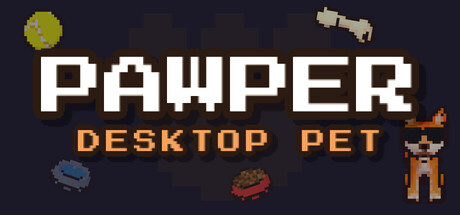
I'm a solo developer and I'm not a 3D modeler. Generative AI is what made Pawper possible at all: the in-game items and the game's icons were created with AI 3D tools, and I assembled the store capsules by hand from those elements. Sound effects and music are mostly licensed or hand-made. Nothing is generated by AI while the game is running.
Parts of this game's text were created with the assistance of generative AI: the translation of the interface into several of its 13 supported languages, and portions of the store page text. All in-game art, music and sound effects are procedurally generated by hand-written code, not by AI, and no AI-generated content is created while you play.
Suno (commercial rights) was used to generate the game's music and the hobo's spoken lines, then hand-selected and edited to match the tone of the game. The translated dialogues were produced with the assistance of a language model.
The game's design and direction are entirely my own. All visuals are generated procedurally by the game's own code.
This app uses AI tools during the development process, for example to configure some behavior algorithms. All dog sprite art consists of hand-drawn works by human artists, purchased under a commercial license. No generative AI is used during gameplay.
PupRacers is developed by a solo human developer. AI tools are used as development assistants for various tasks including translations, code assistance, and content creation. All AI output is reviewed, edited, and validated by the developer. The creative vision, game design, and final decisions are 100% human-driven.
Pre-generated pixel-art character artwork, animation frames, and localization text were created with assistance from generative AI tools during development. All shipped results are fixed in the build, human-reviewed, and based on original prompts or project-owned references. The application performs no live AI generation.
Explanation about the game development process:
In the early concept design and creative ideation stage of this game, we did use AI technology as an auxiliary tool to help us explore and validate various artistic styles and creative directions more quickly. These AI-generated reference materials provided us with initial inspiration.
However, the core creative concepts, story writing, character design, and all artistic assets presented in the final game were personally conceived and carefully crafted by our creative team. Each game element underwent repeated human optimization and fine-tuning to ensure the best gaming experience.
AI was only used as an auxiliary tool, and the final game content presented is the result of human creation. We have always adhered to human creation as the main driver, committed to bringing players a unique and meticulously polished gaming experience.
AI-assisted translation tools are used to help localize this game's text for international audiences, including English and any additional languages added in the future.
No AI-generated content is used for graphics, sound, or narrative/story content.
Generative AI was used selectively during development for certain materials; all final content was refined by the developer. No real-time AI generation is used.
Some in-game artwork, including assets shown in screenshots and store capsules, was created by modifying AI-generated imagery. All AI-assisted content was created and reviewed in advance, and no generative AI runs during gameplay.
We use AI tools to assist with some parts of development, such as localization and improving our art production workflow. All designs and creative ideas come from our team, and AI-assisted assets are reviewed and refined before being used in the game.
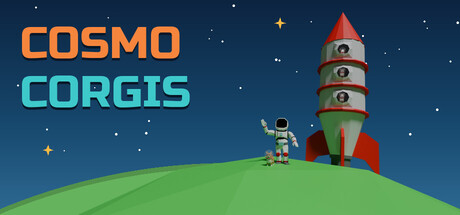
Cosmo Corgis is designed and directed by one person. During development, AI tools were used as a production assistant — helping write and test the game's code and assisting with portions of the 3D asset work, always under the developer's direction. The music and sound effects were generated with AI tools. Every design decision, and the game's look and feel, are the developer's own. Nothing is generated by AI while you play: everything in the game ships fixed and tested.
2D item and character sprites in this game were created using generative AI image tools and then manually reviewed, edited, curated, and integrated by the developer. In-game item names and their translations were also produced with AI assistance and manually checked. All AI-generated content was created during development (pre-generated); the game does not generate any content live while playing.
Generative AI tools assisted with English Steam store-page copy, and were used to create pre-generated illustrative key art for Steam store capsules, library artwork, and the store-page background. All AI-assisted outputs are reviewed, edited, integrated, and tested by the developer. The artwork is promotional and is not presented as gameplay footage; screenshots and trailers are captured from the actual game. The game does not use generative AI at runtime or generate live player-facing content.
Generative AI was used during development to assist with programming and the creation of certain visual, textual, and other development assets. All content included in the final game was reviewed, edited, and approved by the developer. The game does not generate AI content during gameplay.
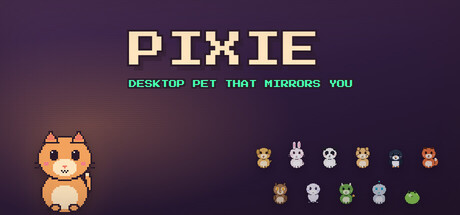
Live-generated: Pixie's chat feature generates the pet's replies with a language model that ships inside the product and runs entirely on the player's own computer. There is no third-party AI service, no API key and no account of any kind; the feature makes no network requests at all and works with the machine fully offline. The model is Gemma 4 E2B, licensed under the Apache License 2.0 and redistributed with the notices required by that license.
Pre-generated: written text in the product and on this store page — including the interface strings and their translations into the supported languages — was produced with the help of an AI writing assistant.
All art, animation and characters are hand-made: every sprite is drawn at runtime by a parametric pixel renderer written for this project, with no generative AI involved at any stage.
Camera and microphone input are processed entirely on-device (MediaPipe) and are never sent to any server.
Golden Pan is made by a one-person studio. Visual assets were generated with AI image tools, then hand-selected, edited and composed by the developer. All music and sound effects were produced with AI audio tools (ElevenLabs). Store and in-game text was written by the developer in English/Turkish; the other 15 languages were AI-translated and reviewed. All game design, code logic, level layout and economy tuning are the developer's own work. No AI content is generated while the game runs.
The game's code, some in-game text (English/Turkish dialogue and UI) and some poster artwork were created with the help of generative AI and then reviewed and edited by the developer. The game does not generate any AI content at runtime.
Character, enemy and background pixel art was created with AI image tools (ChatGPT, PixelLab) from photos of our real dog and cat and our own design notes, then edited, cut and arranged by the developer. Sprite animations were generated with PixelLab from that art. Game code was written with AI coding assistance (Claude) under the developer's direction. All game text was written or approved by the developer. The music is original, written note by note as code with AI coding assistance (Claude) and rendered with the free GeneralUser GS SoundFont; no AI audio generation and nothing sampled.
Generative AI tools were used during development to assist with the creation of some artwork, music, and game code. All AI-assisted content was reviewed, edited, and integrated by the developer as part of the game’s creative and development process.
The in-game pixel art (fields, characters, vehicles, backgrounds, etc.), sound effects, and skill icons in this title were rendered and composited using a program created by AI under the developer’s direction, and were then reviewed and adjusted by the developer. The AI does not generate any content while the game is being played.
Generative AI was used for a large portion of the game's visual assets, including character artwork, backgrounds, icons, and some promotional materials.
These assets were not used directly without review. Most of them went through repeated generation, selection, editing, and adjustment to keep the characters and overall art style consistent. A significant amount of time was also spent integrating the assets into the game and correcting issues where necessary.
The game design, gameplay systems, balancing, level design, UI design, programming, and overall direction were done by me.
The game does not generate AI content during gameplay.
AI was used to assist with the localization of some language versions. The translations were reviewed by the developer through proofreading and back-translation checks.
AI-generated images were used as composition references during the creation of a small number of CG illustrations. The image generation was based on the developer's own original hand-drawn character illustrations, provided as input references. All final character illustrations, CG illustrations, and other art assets were drawn entirely by hand. All characters are original designs.
Generative AI was used during development to create some illustrations, visual assets, and built-in example dog images. These assets are included with the game. Your own pet photos are processed locally on your computer to create animated paper cutouts; they are never uploaded to online AI services or redrawn using generative AI.
Some included character, animal, creature and sample images were created with generative AI and then edited and prepared for the product. Generative AI also assisted with localization. MEMEMINT does not generate new images or text with generative AI during use and does not connect to a third-party generative AI service. Its local background-removal feature uses a non-generative segmentation model.
AI was used as an interface and scripting assistant for industry standard tools such as Reaper, Godot, Blender, Aseprite, and Deepl for enhancing the quality and consistency of the game content and building systems I otherwise would not have the capacity to design and implement as solo developer.
Where possible, artists are and will continue to be supported via use of their paid or free assets. For this game, the most money spent was on Quaternius source level packages.
Notable exception to this is the UI, which was generated using RetroDiffusion with a python pipeline built in house for consistent design around UI elements using color normalization and targeting from a theme palette, which is then imported and tweaked in Godot.
Punk Dog Wars uses AI-assisted tools during development. Character, effect and environment art, the music, and the announcer and dog voices were generated with AI models and then selected, composited and edited by our team. The store art was made the same way. No content is generated while you play.
The developer used generative AI tools to help create some of the game's artwork and 3D models, sound effects and music, and text, including the store description and translations. All AI-assisted content was reviewed and edited by the developer before being included. The game does not generate any AI content while you play.
During the development of this game, we utilized generative artificial intelligence tools—specifically Claude, Gemini, and Codex (GPT)—to assist with programming, debugging, and drafting text/documentation.
Code and Systems: AI models were used as development assistants to help write, refactor, and troubleshoot code logic.
Text and Documentation: AI assistants were used to brainstorm and draft text content, which was then thoroughly reviewed, edited, and manually integrated by our development team.
Detonator Squad was developed almost entirely using AI tools, under extensive human direction, ongoing refinement and review. The game is built on my own custom 3D engine that I have been working on for a while, using AI coding tools. AI was also used to create interface and promotional artwork and to author or assist with code, 3D assets, level layouts, game text, music and sound effects. The original core game logic was handwritten for an earlier project, then ported and adapted using AI. All content is supplied with the game; no content is generated by an AI service during gameplay.
We use generative AI as a reference and drafting tool, and always finish by hand. Early in development we generated AI concept images to explore ideas and mood; those are reference only. All in-game models, animation and UI are built by hand in 3D by the two of us. Some in-game textures were first generated with AI as a guide and then retouched by hand. The store key art is rendered from the game's own 3D characters and scenes, run through an AI tool for style, then composited and retouched by hand. Store text was drafted with an AI assistant and rewritten by us. The game does not use generative AI while you play.
AI was used for:
developing content concepts, such as structures, locations, and some smaller details;
creating parts of the environment, such as the day/night cycle and clouds;
generating animals.
I'm a solo developer and I'm not a 3D modeler. Generative AI is what made Pawper possible at all: the in-game items and the game's icons were created with AI 3D tools, and I assembled the store capsules by hand from those elements. Sound effects and music are mostly licensed or hand-made. Nothing is generated by AI while the game is running.
Parts of this game's text were created with the assistance of generative AI: the translation of the interface into several of its 13 supported languages, and portions of the store page text. All in-game art, music and sound effects are procedurally generated by hand-written code, not by AI, and no AI-generated content is created while you play.
Suno (commercial rights) was used to generate the game's music and the hobo's spoken lines, then hand-selected and edited to match the tone of the game. The translated dialogues were produced with the assistance of a language model.
The game's design and direction are entirely my own. All visuals are generated procedurally by the game's own code.
This app uses AI tools during the development process, for example to configure some behavior algorithms. All dog sprite art consists of hand-drawn works by human artists, purchased under a commercial license. No generative AI is used during gameplay.
PupRacers is developed by a solo human developer. AI tools are used as development assistants for various tasks including translations, code assistance, and content creation. All AI output is reviewed, edited, and validated by the developer. The creative vision, game design, and final decisions are 100% human-driven.
Pre-generated pixel-art character artwork, animation frames, and localization text were created with assistance from generative AI tools during development. All shipped results are fixed in the build, human-reviewed, and based on original prompts or project-owned references. The application performs no live AI generation.
Explanation about the game development process:
In the early concept design and creative ideation stage of this game, we did use AI technology as an auxiliary tool to help us explore and validate various artistic styles and creative directions more quickly. These AI-generated reference materials provided us with initial inspiration.
However, the core creative concepts, story writing, character design, and all artistic assets presented in the final game were personally conceived and carefully crafted by our creative team. Each game element underwent repeated human optimization and fine-tuning to ensure the best gaming experience.
AI was only used as an auxiliary tool, and the final game content presented is the result of human creation. We have always adhered to human creation as the main driver, committed to bringing players a unique and meticulously polished gaming experience.
AI-assisted translation tools are used to help localize this game's text for international audiences, including English and any additional languages added in the future.
No AI-generated content is used for graphics, sound, or narrative/story content.
Generative AI was used selectively during development for certain materials; all final content was refined by the developer. No real-time AI generation is used.
Some in-game artwork, including assets shown in screenshots and store capsules, was created by modifying AI-generated imagery. All AI-assisted content was created and reviewed in advance, and no generative AI runs during gameplay.
We use AI tools to assist with some parts of development, such as localization and improving our art production workflow. All designs and creative ideas come from our team, and AI-assisted assets are reviewed and refined before being used in the game.
Cosmo Corgis is designed and directed by one person. During development, AI tools were used as a production assistant — helping write and test the game's code and assisting with portions of the 3D asset work, always under the developer's direction. The music and sound effects were generated with AI tools. Every design decision, and the game's look and feel, are the developer's own. Nothing is generated by AI while you play: everything in the game ships fixed and tested.
2D item and character sprites in this game were created using generative AI image tools and then manually reviewed, edited, curated, and integrated by the developer. In-game item names and their translations were also produced with AI assistance and manually checked. All AI-generated content was created during development (pre-generated); the game does not generate any content live while playing.
Generative AI tools assisted with English Steam store-page copy, and were used to create pre-generated illustrative key art for Steam store capsules, library artwork, and the store-page background. All AI-assisted outputs are reviewed, edited, integrated, and tested by the developer. The artwork is promotional and is not presented as gameplay footage; screenshots and trailers are captured from the actual game. The game does not use generative AI at runtime or generate live player-facing content.
Generative AI was used during development to assist with programming and the creation of certain visual, textual, and other development assets. All content included in the final game was reviewed, edited, and approved by the developer. The game does not generate AI content during gameplay.
Live-generated: Pixie's chat feature generates the pet's replies with a language model that ships inside the product and runs entirely on the player's own computer. There is no third-party AI service, no API key and no account of any kind; the feature makes no network requests at all and works with the machine fully offline. The model is Gemma 4 E2B, licensed under the Apache License 2.0 and redistributed with the notices required by that license.
Pre-generated: written text in the product and on this store page — including the interface strings and their translations into the supported languages — was produced with the help of an AI writing assistant.
All art, animation and characters are hand-made: every sprite is drawn at runtime by a parametric pixel renderer written for this project, with no generative AI involved at any stage.
Camera and microphone input are processed entirely on-device (MediaPipe) and are never sent to any server.