Public Steam disclosure research25,376 disclosures tracked
Where do games disclose AI use?
Search developers’ Steam disclosures, compare classified AI use across
games, and follow recorded changes.
This index adds cross-game classifications and statistics to
statements published on individual store pages.
Groups reflect automatic analysis of public disclosures; mature records are excluded. These counts do not measure AI use across all of Steam.
Missing or unclear statements cannot establish whether a game uses AI.
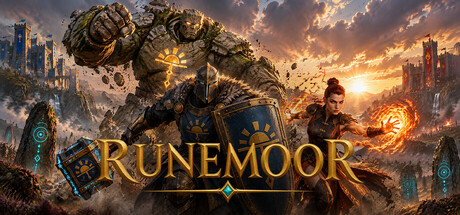
Runemoor was made by a small independent team with the help of generative AI tools. Every AI output was directed, reviewed, edited and integrated by the developer, and checked to keep all designs original. No AI content is generated while you play.
- 3D characters: the champion models, their weapons and props were generated with Meshy (image-to-3D), including its auto-rigging and animation clips, then cleaned up and integrated by hand and with our own scripts.
- 2D art: concept art, key art and store artwork, the logo and app icon, UI artwork and backgrounds, item and spell icons, and material and terrain textures were generated with an OpenAI image model, then selected, post-processed and composited.
- Environment: the map, buildings, rocks and plants are built by our own procedural modeling scripts (no AI model generates the geometry) and use the AI-generated textures listed above.
- Voice: the match announcer voice lines are AI-generated speech (Google Gemini text-to-speech).
- Music (trailer): the music of the store trailer was generated with Google Lyria and carries Google's inaudible SynthID watermark. The in-game music is not AI-generated: it is synthesized procedurally by our own audio code.
- Sound effects and ambience: not AI-generated. They are synthesized procedurally by our own audio code.
Generative AI was used to create some of the game's content. The illustrations and the characters (character designs and artwork and models) were created with the help of generative AI tools, then selected, edited and integrated by the developer. Some English localization text (UI and character descriptions) and the store page description were also drafted with an AI assistant and reviewed and edited by the developer. The game does not generate any content with AI while it is running.
Generative AI was used for a large portion of the game's visual assets, including character artwork, backgrounds, icons, and some promotional materials.
These assets were not used directly without review. Most of them went through repeated generation, selection, editing, and adjustment to keep the characters and overall art style consistent. A significant amount of time was also spent integrating the assets into the game and correcting issues where necessary.
The game design, gameplay systems, balancing, level design, UI design, programming, and overall direction were done by me.
The game does not generate AI content during gameplay.
Some of the game's content was created with the help of generative AI tools and then reviewed, edited and integrated by the developer: parts of the 3D unit and vehicle models and their textures, the key art and store artwork, backgrounds, voice lines and music.
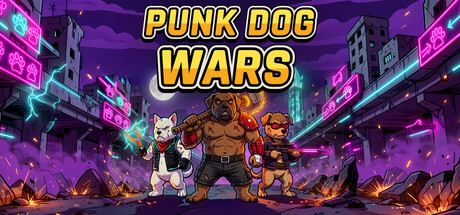
Punk Dog Wars uses AI-assisted tools during development. Character, effect and environment art, the music, and the announcer and dog voices were generated with AI models and then selected, composited and edited by our team. The store art was made the same way. No content is generated while you play.
We used AI to generate the code, UI assets, localization, and promotional materials for this project (the reference images for the AI were sourced from *Oath of Miko*).
Generative AI was used during development to create or refine some visual assets and localized text, including character and background artwork, logos, textures, and pre-rendered presentation videos. This content is prepared in advance. The game does not generate AI content during gameplay or connect to an external AI service.
Generative AI tools were used during development to create portions of the game's visual artwork, sound effects, music, and localized text, as well as promotional artwork for the Steam store page. This includes pre-rendered background illustrations, promotional capsule images, audio assets, and AI-generated translations.
Mythbound features a small portion of generated assets in the form of environmental props for it's Early Access period. No generated assets will be featured in the final release of the game.
The champion artwork, portraits and various visual assets are generated. The generated visuals are a starting point rather than a settled choice, and if the game's funding allows it I intend to have them redone by an artist.
No content is generated by AI while you play, since the match simulation runs on a hand-written decision engine where each player evaluates their situation against authored rules, rather than on a generative model.
Cosmo Arena uses generative AI tools during development to assist with the creation and refinement of certain visual assets, concept art, UI elements, textures, and other game content. All AI-assisted content is reviewed, edited, and integrated by the developer. Generative AI is not used to create content dynamically during gameplay.
During development, generative AI was used to assist in creating selected game images and promotional artwork, including library images, the game logo, and capsule art. All AI-generated images were manually reviewed, edited, and unified in style by the development team. All in-game code, gameplay systems, audio, and text were created by hand. The game itself does not generate, display, or depend on any AI content at runtime.
This game was created by an independent developer. Generative AI tools were used during development to assist with programming, debugging, text editing, and the initial localization of Simplified Chinese, Traditional Chinese, English, Japanese, and Korean. All AI-assisted content was manually reviewed, edited, and approved by the developer. The game does not use generative AI to create content during gameplay, and player data is not used for AI training.
Generative AI tools were utilized for auxiliary purposes in the production of some assets. These assets were modified and supplemented by professional art personnel and were finally applied to the game.
Generative AI tools were used during development to assist in creating pre-generated visual assets for the game, including character and hero artwork, team logos, backgrounds, interface elements, and other decorative assets. All generated content is reviewed, selected, edited, and integrated into the game by the developer. The game does not generate AI content during gameplay.
Generative AI was used throughout development to create the game's visual assets and other production content. All game design, extensive balancing, and fine-tuning were done manually by the development team.
AI tools including ChatGPT, Lovart, and others were used during development to generate early concept art for characters, weapons, props, UI, and pet animations. All final in-game assets were manually redrawn and refined by our art team.
本游戏在开发过程中使用了生成式人工智能工具辅助制作预生成内容。
游戏中绝大部分美术素材,包括角色形象、角色序列帧动画、战斗场景背景、用户界面图形、物品与武器图标以及部分视觉特效,使用AI图像生成功能制作。所有生成图片均在加入游戏前经过开发者人工筛选,并根据实际需要进行裁切、缩放、色彩调整、组合、动画帧整理、局部修正和游戏内适配。
开发过程中也使用了 AI 编程辅助工具,帮助编写、整理、重构和排查部分程序代码。所有 AI 辅助代码均由开发者人工审阅、修改、整合和测试后才会加入游戏。
本游戏运行时不会连接生成式 AI 服务,也不会根据玩家输入实时生成图片、文本、音频、代码或其他内容。玩家无法通过游戏生成、上传、分享或导出 AI 内容。
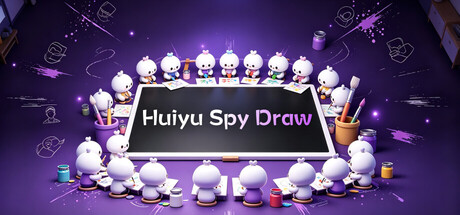
This game uses generative AI in limited, non-gameplay-critical areas:
- AI-assisted code refactoring and performance optimization during development
- AI-assisted translation polishing for multi-language support
- UI layout refinement suggested by AI tools during the design process
All core gameplay logic, the unique drawing-and-deduction design, and all original game artwork were created, reviewed and refined by human developers.
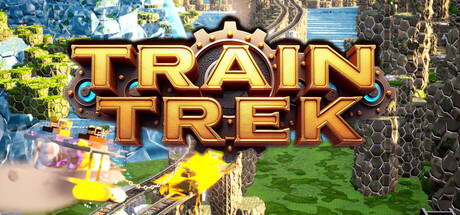
Train Trek uses generative AI in two ways.
During development we used AI tools to help make some assets: the user-interface art (HUD and menu icons, menu artwork, frames, button plates, mouse cursors), the instrumental soundtrack, and some sound effects. All of it was chosen, edited and finished by hand before it shipped. The 3D models are built procedurally by our own scripts, and the design, world generation and balancing are authored by hand. Parts of the source code were written with an AI coding assistant, reviewed and tested by the developer.
While you play, the game speaks using a text-to-speech model that ships inside the game and runs entirely on your own computer. It voices tutorial guidance, hints and menu narration instead of pre-recorded audio. It needs no internet connection, sends nothing anywhere, and never records or listens to you. It only reads lines we wrote and shipped with the game - it does not invent dialogue.
Some non-core content in this game was created with the assistance of generative AI, including certain concept artwork, icons, promotional materials, and text. All AI-generated content has been reviewed, edited, and integrated by the development team to ensure it meets the game's quality standards and artistic direction.
This game utilizes artificial intelligence (AI) tools to assist in generating some of the promotional materials on
the store page, as well as certain in-game visual assets
Lane Wars uses generative AI only for some pre-made 2D artwork: the game's icon, main-menu key art, and the Steam store capsule/promotional images were created with AI image-generation tools and then edited by the developer. Some trailer and marketing music was made with an AI music tool. Everything you interact with in-game — the 3D characters, environments, HUD, visual and sound effects, and all gameplay systems — is hand-built and procedurally generated in code, not AI-generated. The game does not use any generative AI at runtime.
This game uses AI-assisted tools during development, including assistance with coding and the creation or iteration of some promotional and visual art assets.
During gameplay, AI may be used to help interpret the player’s spoken spell commands and map them to predefined in-game spell actions.
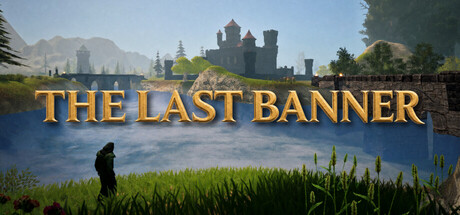
Built by a two-person studio, The Last Banner deploys AI tools as supplements only. All art and code are curated, hand crafted and built by us. We strive to create the best game possible with the best tools of the modern day.
Most character avatars, icons and in-game buildings are generated or modified with AI tools. Building names and certain text content are AI-generated, while all remaining assets are manually created.
AI-assisted tools were used to help create some splash screen visuals and store page promotional artwork. All assets were reviewed and finalized by the developer before being included in the game and store materials.
Generative AI tools were used during development to assist with early concept art, visual ideation, logos, and certain promotional materials. All final in-game content and gameplay implementation were curated, edited, and integrated by the developers.
Realm of Balls was developed with the help of generative AI tools during production, but the game does not include live AI-generated content for players.
Game Demon uses large language models (Llama 3.1/3.3 via Groq API, plus optional local Ollama inference) to generate coaching text in real time from the user's match data. Vision models analyze user-sampled frames. No user content is sent to third parties without explicit opt-in. No generative images or audio in final output.
This project is being developed by a small two-person team.
The use of AI tools in this project is strictly limited to the following assets:
- flag textures
- selected marketing assets and voice lines
We plan to replace these elements with fully original, custom-created assets and professionally recorded voice acting as soon as funding allows.
All AI-assisted content is reviewed, edited, and integrated by the development team to ensure consistency and quality.
Runemoor was made by a small independent team with the help of generative AI tools. Every AI output was directed, reviewed, edited and integrated by the developer, and checked to keep all designs original. No AI content is generated while you play.
- 3D characters: the champion models, their weapons and props were generated with Meshy (image-to-3D), including its auto-rigging and animation clips, then cleaned up and integrated by hand and with our own scripts.
- 2D art: concept art, key art and store artwork, the logo and app icon, UI artwork and backgrounds, item and spell icons, and material and terrain textures were generated with an OpenAI image model, then selected, post-processed and composited.
- Environment: the map, buildings, rocks and plants are built by our own procedural modeling scripts (no AI model generates the geometry) and use the AI-generated textures listed above.
- Voice: the match announcer voice lines are AI-generated speech (Google Gemini text-to-speech).
- Music (trailer): the music of the store trailer was generated with Google Lyria and carries Google's inaudible SynthID watermark. The in-game music is not AI-generated: it is synthesized procedurally by our own audio code.
- Sound effects and ambience: not AI-generated. They are synthesized procedurally by our own audio code.
Generative AI was used to create some of the game's content. The illustrations and the characters (character designs and artwork and models) were created with the help of generative AI tools, then selected, edited and integrated by the developer. Some English localization text (UI and character descriptions) and the store page description were also drafted with an AI assistant and reviewed and edited by the developer. The game does not generate any content with AI while it is running.
Generative AI was used for a large portion of the game's visual assets, including character artwork, backgrounds, icons, and some promotional materials.
These assets were not used directly without review. Most of them went through repeated generation, selection, editing, and adjustment to keep the characters and overall art style consistent. A significant amount of time was also spent integrating the assets into the game and correcting issues where necessary.
The game design, gameplay systems, balancing, level design, UI design, programming, and overall direction were done by me.
The game does not generate AI content during gameplay.
Some of the game's content was created with the help of generative AI tools and then reviewed, edited and integrated by the developer: parts of the 3D unit and vehicle models and their textures, the key art and store artwork, backgrounds, voice lines and music.
Punk Dog Wars uses AI-assisted tools during development. Character, effect and environment art, the music, and the announcer and dog voices were generated with AI models and then selected, composited and edited by our team. The store art was made the same way. No content is generated while you play.
We used AI to generate the code, UI assets, localization, and promotional materials for this project (the reference images for the AI were sourced from *Oath of Miko*).
Generative AI was used during development to create or refine some visual assets and localized text, including character and background artwork, logos, textures, and pre-rendered presentation videos. This content is prepared in advance. The game does not generate AI content during gameplay or connect to an external AI service.
Generative AI tools were used during development to create portions of the game's visual artwork, sound effects, music, and localized text, as well as promotional artwork for the Steam store page. This includes pre-rendered background illustrations, promotional capsule images, audio assets, and AI-generated translations.
Mythbound features a small portion of generated assets in the form of environmental props for it's Early Access period. No generated assets will be featured in the final release of the game.
The champion artwork, portraits and various visual assets are generated. The generated visuals are a starting point rather than a settled choice, and if the game's funding allows it I intend to have them redone by an artist.
No content is generated by AI while you play, since the match simulation runs on a hand-written decision engine where each player evaluates their situation against authored rules, rather than on a generative model.
Cosmo Arena uses generative AI tools during development to assist with the creation and refinement of certain visual assets, concept art, UI elements, textures, and other game content. All AI-assisted content is reviewed, edited, and integrated by the developer. Generative AI is not used to create content dynamically during gameplay.
During development, generative AI was used to assist in creating selected game images and promotional artwork, including library images, the game logo, and capsule art. All AI-generated images were manually reviewed, edited, and unified in style by the development team. All in-game code, gameplay systems, audio, and text were created by hand. The game itself does not generate, display, or depend on any AI content at runtime.
This game was created by an independent developer. Generative AI tools were used during development to assist with programming, debugging, text editing, and the initial localization of Simplified Chinese, Traditional Chinese, English, Japanese, and Korean. All AI-assisted content was manually reviewed, edited, and approved by the developer. The game does not use generative AI to create content during gameplay, and player data is not used for AI training.
Generative AI tools were utilized for auxiliary purposes in the production of some assets. These assets were modified and supplemented by professional art personnel and were finally applied to the game.
Generative AI tools were used during development to assist in creating pre-generated visual assets for the game, including character and hero artwork, team logos, backgrounds, interface elements, and other decorative assets. All generated content is reviewed, selected, edited, and integrated into the game by the developer. The game does not generate AI content during gameplay.
Generative AI was used throughout development to create the game's visual assets and other production content. All game design, extensive balancing, and fine-tuning were done manually by the development team.
AI tools including ChatGPT, Lovart, and others were used during development to generate early concept art for characters, weapons, props, UI, and pet animations. All final in-game assets were manually redrawn and refined by our art team.
本游戏在开发过程中使用了生成式人工智能工具辅助制作预生成内容。
游戏中绝大部分美术素材,包括角色形象、角色序列帧动画、战斗场景背景、用户界面图形、物品与武器图标以及部分视觉特效,使用AI图像生成功能制作。所有生成图片均在加入游戏前经过开发者人工筛选,并根据实际需要进行裁切、缩放、色彩调整、组合、动画帧整理、局部修正和游戏内适配。
开发过程中也使用了 AI 编程辅助工具,帮助编写、整理、重构和排查部分程序代码。所有 AI 辅助代码均由开发者人工审阅、修改、整合和测试后才会加入游戏。
本游戏运行时不会连接生成式 AI 服务,也不会根据玩家输入实时生成图片、文本、音频、代码或其他内容。玩家无法通过游戏生成、上传、分享或导出 AI 内容。
This game uses generative AI in limited, non-gameplay-critical areas:
- AI-assisted code refactoring and performance optimization during development
- AI-assisted translation polishing for multi-language support
- UI layout refinement suggested by AI tools during the design process
All core gameplay logic, the unique drawing-and-deduction design, and all original game artwork were created, reviewed and refined by human developers.
Train Trek uses generative AI in two ways.
During development we used AI tools to help make some assets: the user-interface art (HUD and menu icons, menu artwork, frames, button plates, mouse cursors), the instrumental soundtrack, and some sound effects. All of it was chosen, edited and finished by hand before it shipped. The 3D models are built procedurally by our own scripts, and the design, world generation and balancing are authored by hand. Parts of the source code were written with an AI coding assistant, reviewed and tested by the developer.
While you play, the game speaks using a text-to-speech model that ships inside the game and runs entirely on your own computer. It voices tutorial guidance, hints and menu narration instead of pre-recorded audio. It needs no internet connection, sends nothing anywhere, and never records or listens to you. It only reads lines we wrote and shipped with the game - it does not invent dialogue.
Some non-core content in this game was created with the assistance of generative AI, including certain concept artwork, icons, promotional materials, and text. All AI-generated content has been reviewed, edited, and integrated by the development team to ensure it meets the game's quality standards and artistic direction.
This game utilizes artificial intelligence (AI) tools to assist in generating some of the promotional materials on
the store page, as well as certain in-game visual assets
Lane Wars uses generative AI only for some pre-made 2D artwork: the game's icon, main-menu key art, and the Steam store capsule/promotional images were created with AI image-generation tools and then edited by the developer. Some trailer and marketing music was made with an AI music tool. Everything you interact with in-game — the 3D characters, environments, HUD, visual and sound effects, and all gameplay systems — is hand-built and procedurally generated in code, not AI-generated. The game does not use any generative AI at runtime.
This game uses AI-assisted tools during development, including assistance with coding and the creation or iteration of some promotional and visual art assets.
During gameplay, AI may be used to help interpret the player’s spoken spell commands and map them to predefined in-game spell actions.
Built by a two-person studio, The Last Banner deploys AI tools as supplements only. All art and code are curated, hand crafted and built by us. We strive to create the best game possible with the best tools of the modern day.
Most character avatars, icons and in-game buildings are generated or modified with AI tools. Building names and certain text content are AI-generated, while all remaining assets are manually created.
AI-assisted tools were used to help create some splash screen visuals and store page promotional artwork. All assets were reviewed and finalized by the developer before being included in the game and store materials.
Generative AI tools were used during development to assist with early concept art, visual ideation, logos, and certain promotional materials. All final in-game content and gameplay implementation were curated, edited, and integrated by the developers.
Realm of Balls was developed with the help of generative AI tools during production, but the game does not include live AI-generated content for players.
Game Demon uses large language models (Llama 3.1/3.3 via Groq API, plus optional local Ollama inference) to generate coaching text in real time from the user's match data. Vision models analyze user-sampled frames. No user content is sent to third parties without explicit opt-in. No generative images or audio in final output.
This project is being developed by a small two-person team.
The use of AI tools in this project is strictly limited to the following assets:
- flag textures
- selected marketing assets and voice lines
We plan to replace these elements with fully original, custom-created assets and professionally recorded voice acting as soon as funding allows.
All AI-assisted content is reviewed, edited, and integrated by the development team to ensure consistency and quality.