Public Steam disclosure research25,376 disclosures tracked
Where do games disclose AI use?
Search developers’ Steam disclosures, compare classified AI use across
games, and follow recorded changes.
This index adds cross-game classifications and statistics to
statements published on individual store pages.
Groups reflect automatic analysis of public disclosures; mature records are excluded. These counts do not measure AI use across all of Steam.
Missing or unclear statements cannot establish whether a game uses AI.
Generative AI was used to create or edit some images, generate English voice audio, and assist with translation. All content was prepared before release. No content is generated and no external AI services are accessed during gameplay.
The store page description was drafted with help from an AI writing assistant and reviewed by the developer. The game includes AI-generated voice audio made with Kokoro TTS from developer-written scripts, including waiting-room broadcasts, public-address announcements, and story voices. The game does not generate new content with AI during play; staff and patient behavior uses authored, rule-based simulation systems. No game art or text is AI-generated.
Generative AI tools were used during development to create some of the game’s 3D models, artwork, and audio, as well as promotional artwork. This content is pre-generated and integrated into the game or its marketing materials. The game does not generate AI content during gameplay.
NBD2 is an AI game development studio. As a solo indie dev who is unlikely to ever make a dime from any of my games, there's no other way I could bring my ideas to life.
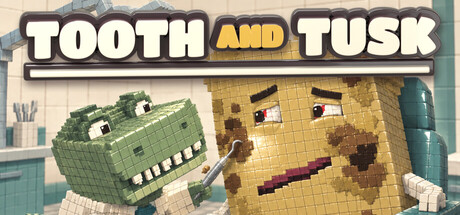
Tooth and Tusk was created using generative AI throughout development, including its artwork and visuals, music, sound effects, character voices, text and dialogue, and game code. All AI generation took place during development. The game does not generate AI content or code during play or connect to an external AI service.
I recognize AI in game development is an extremely sensitive topic and I appreciate both sides. I only hope the game is fun.
The goal should always be making something that human beings will enjoy.
-- Store page capsule art was created in a comprehensive workflow with OpenArt.ai, using Blender and Windows Paint3D, and by employing painstakingly crafted text prompts over dozens of A.I. generations, while incorporating thousands of my own brushstrokes and adhering to my own artistic vision for composition and mood.
-- The game’s main logo texture was refined with OpenArt.ai.
-- 30+ characters may be heard with distinct voices speaking in the background, commenting generally about the situation at hand with any of dozens of phrases, or hundreds of snippets of phrases. The things they say are my creation, but as an early development budget consideration the voices were generated using OpenArt.ai. Clerk P.A. announcements are also an A.I.-generated voice.
-- Some vehicle sounds and background activity sound loops were generated using A.I. from OpenArt.ai or freesound.org.
Generative AI was used during development to assist in the creation of some pre-generated visual and audio assets, as well as portions of promotional and store-page materials. All AI-assisted content is generated and reviewed during development and included as fixed content. No generative AI content is created during gameplay.
The six staff portrait images currently in the game are AI-generated placeholders. They are being replaced with commissioned, hand-painted portraits by a human artist before release. Everything else — the key art, the store art, every case, every line of dialogue, the music, and the simulation itself — is human-made. The game runs no AI at play time.
Generative AI tools were used during development to create and refine selected 2D artwork and UI elements, and to assist with some narrative text and localization. All AI-assisted content was reviewed, edited, and integrated by the developer. The game does not generate content using AI during gameplay.
Some pre-generated visual artwork used in Vitro: Bloodstream (including store artwork) was created with the assistance of generative AI tools and reviewed, edited, and integrated by the developer. No generative AI is used during gameplay or to generate content at runtime.
We use generative AI tools to assist in producing some pre-rendered visual assets, including concept art and promotional imagery used on this store page. All AI-assisted output is reviewed, edited and art-directed by our team. The game contains no live-generated AI content.
This game uses pre-generated AI only for certain UI background images and promotional store visuals. These assets were created before release and remain fixed. The game does not include any live AI generation during gameplay.
Hot Seat Triage uses AI tools during development only; the game contains no live AI generation at runtime.
Code: The game's code was written with the assistance of Claude (Anthropic). All AI-assisted code was directed, reviewed and tested by the developer.
Art: The in-game background image was initially generated with Nano Banana 2, then manually edited and finalized by the developer. All other art and UI assets are human-made.
Text: Clinical case scenarios were drafted with AI assistance and then reviewed, corrected and medically approved by the developer, an emergency medicine physician.
Audio: The theme music and some sound effects were created by the developer using Suno.
All AI-assisted content was human-reviewed before inclusion.
Some promotional artwork and marketing materials for this game were created with the assistance of generative AI tools. All gameplay content, systems, and game assets are developed and reviewed by the development team.
Generative artificial intelligence was used in the creation of some images and video assets in the game. The production process of the promotional images on the store page utilized generative artificial intelligence. The voice-over materials for the game were produced using generative artificial intelligence.
Generative AI was used during development to assist with the creation of some background art elements and early drafts of certain dialogue. All generated content was substantially modified, edited, and integrated into the final game by the developer.
Cellula was developed with the assistance of generative AI tools. The developer used AI to help write C++ code, generate 3D organelle models from text descriptions, and create UI button artwork. No AI-generated content appears in the final game without human modification, curation, and integration.
This project is itself a demonstration of how AI can democratize game development — allowing a single developer with domain expertise but limited programming experience to build something that previously required a full studio.
All game design, biological accuracy, educational content, and creative direction were provided by a human physician and educator.
Artificial Intelligence was used to help in the development of game code only. No art, sound, or other visual assets use or employed AI and were done by a real artist on the team.
AI tools were only used in the development phase for code, textures, texts, audio and music production. There is no player-accessible AI generation feature or external AI service connection in the released game, and all built-in content has passed full manual compliance review.
Godwright ships some generative-AI content, all pre-rendered (baked into the build, never live-generated):
Localization: the non-English UI text (Simplified Chinese, Spanish, Portuguese-BR, Russian, German, French, Japanese, Korean, Turkish, Indonesian) was machine-translated.
We want to be upfront about how AI tools were used during the development of Golden Years. This is a small indie project built mostly by hand, but a few AI assisted elements were used to help speed up production.
Where AI Was Used
A handful of environmental textures, about five or six total, were created or retextured using AI tools. These are simple surface materials used to add extra detail to the environment. Every AI assisted texture was manually edited, cleaned up, and adjusted to fit the game's style.
Where AI Was Not Used
All of the core creative work in Golden Years is fully handcrafted. This includes:
Level design and layout
Atmosphere, lighting, and mood
Gameplay systems and mechanics
Environmental storytelling
Overall direction and feel of the game
No AI tools were used to design gameplay, build levels, or shape the game's atmosphere.
Store Page and Descriptions
Some of the text on the Steam store page may use AI assistance for drafting or polishing. All final wording is reviewed and edited to make sure it accurately represents the game.
Gameplay Logic
AI is not used for in game decision making, player behavior, or gameplay logic. Everything that affects how the game plays is traditionally designed and implemented.
Code Blue Idle was developed with the assistance of generative AI tools during the production process. Specifically:
VOICE NARRATION: The in-game tutorial voice narration was generated using ElevenLabs, an AI voice synthesis service. No human voice actor was recorded for this content.
DEVELOPMENT ASSISTANCE: Game code, game design, balancing, and written content (case descriptions, event text, upgrade descriptions, and UI copy) were developed with assistance from Claude, an AI assistant made by Anthropic. All content was reviewed, edited, and approved by the developer.
No AI-generated content is created during gameplay. All assets, text, and audio were finalized before release and are not generated in real time. The game does not use AI to generate images, music, or any runtime content.
AI tools were used as a support during development.
- Assistance with coding and English localization
- Some character artwork was initially sketched by the developer, then refined using AI tools and further manually adjusted
All final content was reviewed and edited by the developer.
Nothing is outside the scope of AI usage. Images were generated with an AI workflow. Sounds are free and edited. Code includes consultation with free tier LLMs.
Some 2D assets and audio used in the game were created with the assistance of AI tools and later reviewed, edited, and integrated by the developers as part of the final game content.
AI tools were used to accelerate game development and localization.
No real-time AI generation during gameplay.
The game contains a humorous nod to AI culture inspired by the development process.
This game uses pre-generated AI-assisted images only in the opening video.
The AI-assisted content is limited to pre-rendered video material included in the game build. It is not used in the store page trailer, screenshots, Steam community assets, or other marketing materials.
The game does not use live generative AI. No AI content is generated during gameplay, and players cannot enter prompts or otherwise cause new AI-generated content to be created.
All AI-assisted images used in the opening video have been reviewed and edited by the developer to ensure they are appropriate for the game, consistent with the game's content disclosures, and do not intentionally include illegal or infringing content.
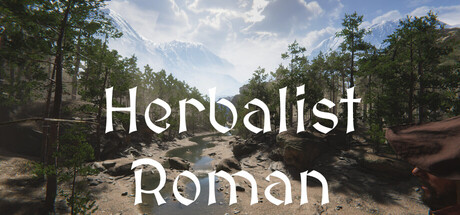
Artificial intelligence was used to create a portion of the game's visual assets. This includes illustrations within the herbal book, as well as loading, summary, and game-over screens.
AI tools were used to generate localizations for languages other than English and Polish.
Dialogue voice lines are currently generated using TTS tools. The game is still in development, and these generated voices are temporary placeholders that will be replaced by voice actors once the story and scripts are finalized.
This game is adapted from an original short story written and owned by the developer. The story and all narrative content are original creative works with no AI-generated writing. The English script was produced with Claude's assistance to adapt the setting and dialogue style to small-town Ohio. Visual assets were generated using Seedance 2.0. Game code is built on Nova, an open-source visual novel framework, and is not AI-generated.
Some in-game images are generated using AI. It has also been used to facilitate case creation and test consistency. In many texts, it has been used to correct grammar or potential errors.
Some promotional and marketing images were partially created using generative AI tools. No AI-generated content appears in the actual gameplay or in-game assets
Some background images are generated using AI, as well as the images of the department leaders in the game. The voices of a news reporter in the game and the voices in the game trailer and in the educational tutorials (on the tutorial website) are created with the help of AI.
This product uses generative AI tools during development to assist with certain content such as text, images, and design elements used on the store page and within the application.
All AI-assisted content has been reviewed, edited, and integrated by the developer to ensure it meets the intended functionality and quality of the product.
The application itself does not autonomously generate or distribute harmful or illegal content.
Some in-game illustrations were initially created using AI-generated images to speed up the creative process. These visuals are now progressively being replaced with original artwork by our artists to better match the game’s style. Eventually, all AI-generated images will be removed from the game.
Generative AI was used to create or edit some images, generate English voice audio, and assist with translation. All content was prepared before release. No content is generated and no external AI services are accessed during gameplay.
The store page description was drafted with help from an AI writing assistant and reviewed by the developer. The game includes AI-generated voice audio made with Kokoro TTS from developer-written scripts, including waiting-room broadcasts, public-address announcements, and story voices. The game does not generate new content with AI during play; staff and patient behavior uses authored, rule-based simulation systems. No game art or text is AI-generated.
Generative AI tools were used during development to create some of the game’s 3D models, artwork, and audio, as well as promotional artwork. This content is pre-generated and integrated into the game or its marketing materials. The game does not generate AI content during gameplay.
NBD2 is an AI game development studio. As a solo indie dev who is unlikely to ever make a dime from any of my games, there's no other way I could bring my ideas to life.
Tooth and Tusk was created using generative AI throughout development, including its artwork and visuals, music, sound effects, character voices, text and dialogue, and game code. All AI generation took place during development. The game does not generate AI content or code during play or connect to an external AI service.
I recognize AI in game development is an extremely sensitive topic and I appreciate both sides. I only hope the game is fun.
The goal should always be making something that human beings will enjoy.
-- Store page capsule art was created in a comprehensive workflow with OpenArt.ai, using Blender and Windows Paint3D, and by employing painstakingly crafted text prompts over dozens of A.I. generations, while incorporating thousands of my own brushstrokes and adhering to my own artistic vision for composition and mood.
-- The game’s main logo texture was refined with OpenArt.ai.
-- 30+ characters may be heard with distinct voices speaking in the background, commenting generally about the situation at hand with any of dozens of phrases, or hundreds of snippets of phrases. The things they say are my creation, but as an early development budget consideration the voices were generated using OpenArt.ai. Clerk P.A. announcements are also an A.I.-generated voice.
-- Some vehicle sounds and background activity sound loops were generated using A.I. from OpenArt.ai or freesound.org.
Generative AI was used during development to assist in the creation of some pre-generated visual and audio assets, as well as portions of promotional and store-page materials. All AI-assisted content is generated and reviewed during development and included as fixed content. No generative AI content is created during gameplay.
The six staff portrait images currently in the game are AI-generated placeholders. They are being replaced with commissioned, hand-painted portraits by a human artist before release. Everything else — the key art, the store art, every case, every line of dialogue, the music, and the simulation itself — is human-made. The game runs no AI at play time.
Generative AI tools were used during development to create and refine selected 2D artwork and UI elements, and to assist with some narrative text and localization. All AI-assisted content was reviewed, edited, and integrated by the developer. The game does not generate content using AI during gameplay.
Some pre-generated visual artwork used in Vitro: Bloodstream (including store artwork) was created with the assistance of generative AI tools and reviewed, edited, and integrated by the developer. No generative AI is used during gameplay or to generate content at runtime.
We use generative AI tools to assist in producing some pre-rendered visual assets, including concept art and promotional imagery used on this store page. All AI-assisted output is reviewed, edited and art-directed by our team. The game contains no live-generated AI content.
This game uses pre-generated AI only for certain UI background images and promotional store visuals. These assets were created before release and remain fixed. The game does not include any live AI generation during gameplay.
Hot Seat Triage uses AI tools during development only; the game contains no live AI generation at runtime.
Code: The game's code was written with the assistance of Claude (Anthropic). All AI-assisted code was directed, reviewed and tested by the developer.
Art: The in-game background image was initially generated with Nano Banana 2, then manually edited and finalized by the developer. All other art and UI assets are human-made.
Text: Clinical case scenarios were drafted with AI assistance and then reviewed, corrected and medically approved by the developer, an emergency medicine physician.
Audio: The theme music and some sound effects were created by the developer using Suno.
All AI-assisted content was human-reviewed before inclusion.
Some promotional artwork and marketing materials for this game were created with the assistance of generative AI tools. All gameplay content, systems, and game assets are developed and reviewed by the development team.
Generative artificial intelligence was used in the creation of some images and video assets in the game. The production process of the promotional images on the store page utilized generative artificial intelligence. The voice-over materials for the game were produced using generative artificial intelligence.
Generative AI was used during development to assist with the creation of some background art elements and early drafts of certain dialogue. All generated content was substantially modified, edited, and integrated into the final game by the developer.
Cellula was developed with the assistance of generative AI tools. The developer used AI to help write C++ code, generate 3D organelle models from text descriptions, and create UI button artwork. No AI-generated content appears in the final game without human modification, curation, and integration.
This project is itself a demonstration of how AI can democratize game development — allowing a single developer with domain expertise but limited programming experience to build something that previously required a full studio.
All game design, biological accuracy, educational content, and creative direction were provided by a human physician and educator.
Artificial Intelligence was used to help in the development of game code only. No art, sound, or other visual assets use or employed AI and were done by a real artist on the team.
AI tools were only used in the development phase for code, textures, texts, audio and music production. There is no player-accessible AI generation feature or external AI service connection in the released game, and all built-in content has passed full manual compliance review.
Godwright ships some generative-AI content, all pre-rendered (baked into the build, never live-generated):
Localization: the non-English UI text (Simplified Chinese, Spanish, Portuguese-BR, Russian, German, French, Japanese, Korean, Turkish, Indonesian) was machine-translated.
We want to be upfront about how AI tools were used during the development of Golden Years. This is a small indie project built mostly by hand, but a few AI assisted elements were used to help speed up production.
Where AI Was Used
A handful of environmental textures, about five or six total, were created or retextured using AI tools. These are simple surface materials used to add extra detail to the environment. Every AI assisted texture was manually edited, cleaned up, and adjusted to fit the game's style.
Where AI Was Not Used
All of the core creative work in Golden Years is fully handcrafted. This includes:
Level design and layout
Atmosphere, lighting, and mood
Gameplay systems and mechanics
Environmental storytelling
Overall direction and feel of the game
No AI tools were used to design gameplay, build levels, or shape the game's atmosphere.
Store Page and Descriptions
Some of the text on the Steam store page may use AI assistance for drafting or polishing. All final wording is reviewed and edited to make sure it accurately represents the game.
Gameplay Logic
AI is not used for in game decision making, player behavior, or gameplay logic. Everything that affects how the game plays is traditionally designed and implemented.
Code Blue Idle was developed with the assistance of generative AI tools during the production process. Specifically:
VOICE NARRATION: The in-game tutorial voice narration was generated using ElevenLabs, an AI voice synthesis service. No human voice actor was recorded for this content.
DEVELOPMENT ASSISTANCE: Game code, game design, balancing, and written content (case descriptions, event text, upgrade descriptions, and UI copy) were developed with assistance from Claude, an AI assistant made by Anthropic. All content was reviewed, edited, and approved by the developer.
No AI-generated content is created during gameplay. All assets, text, and audio were finalized before release and are not generated in real time. The game does not use AI to generate images, music, or any runtime content.
AI tools were used as a support during development.
- Assistance with coding and English localization
- Some character artwork was initially sketched by the developer, then refined using AI tools and further manually adjusted
All final content was reviewed and edited by the developer.
Nothing is outside the scope of AI usage. Images were generated with an AI workflow. Sounds are free and edited. Code includes consultation with free tier LLMs.
Some 2D assets and audio used in the game were created with the assistance of AI tools and later reviewed, edited, and integrated by the developers as part of the final game content.
AI tools were used to accelerate game development and localization.
No real-time AI generation during gameplay.
The game contains a humorous nod to AI culture inspired by the development process.
This game uses pre-generated AI-assisted images only in the opening video.
The AI-assisted content is limited to pre-rendered video material included in the game build. It is not used in the store page trailer, screenshots, Steam community assets, or other marketing materials.
The game does not use live generative AI. No AI content is generated during gameplay, and players cannot enter prompts or otherwise cause new AI-generated content to be created.
All AI-assisted images used in the opening video have been reviewed and edited by the developer to ensure they are appropriate for the game, consistent with the game's content disclosures, and do not intentionally include illegal or infringing content.
Artificial intelligence was used to create a portion of the game's visual assets. This includes illustrations within the herbal book, as well as loading, summary, and game-over screens.
AI tools were used to generate localizations for languages other than English and Polish.
Dialogue voice lines are currently generated using TTS tools. The game is still in development, and these generated voices are temporary placeholders that will be replaced by voice actors once the story and scripts are finalized.
This game is adapted from an original short story written and owned by the developer. The story and all narrative content are original creative works with no AI-generated writing. The English script was produced with Claude's assistance to adapt the setting and dialogue style to small-town Ohio. Visual assets were generated using Seedance 2.0. Game code is built on Nova, an open-source visual novel framework, and is not AI-generated.
Some in-game images are generated using AI. It has also been used to facilitate case creation and test consistency. In many texts, it has been used to correct grammar or potential errors.
Some promotional and marketing images were partially created using generative AI tools. No AI-generated content appears in the actual gameplay or in-game assets
Some background images are generated using AI, as well as the images of the department leaders in the game. The voices of a news reporter in the game and the voices in the game trailer and in the educational tutorials (on the tutorial website) are created with the help of AI.
This product uses generative AI tools during development to assist with certain content such as text, images, and design elements used on the store page and within the application.
All AI-assisted content has been reviewed, edited, and integrated by the developer to ensure it meets the intended functionality and quality of the product.
The application itself does not autonomously generate or distribute harmful or illegal content.
Some in-game illustrations were initially created using AI-generated images to speed up the creative process. These visuals are now progressively being replaced with original artwork by our artists to better match the game’s style. Eventually, all AI-generated images will be removed from the game.