Public Steam disclosure research25,376 disclosures tracked
Where do games disclose AI use?
Search developers’ Steam disclosures, compare classified AI use across
games, and follow recorded changes.
This index adds cross-game classifications and statistics to
statements published on individual store pages.
Groups reflect automatic analysis of public disclosures; mature records are excluded. These counts do not measure AI use across all of Steam.
Missing or unclear statements cannot establish whether a game uses AI.
Except for gameplay design and some sound effects and art assets, the game’s code, 3D models, localization text, and other content were generated by GPT during development. Development was carried out through direct conversations with the 6.0-Astra and 6.1sol large language models, without predefined workflows or external Skills. The 3D models were created from written descriptions and reference images, with GPT writing and executing Blender scripts.
All such content was created during development. The game does not use generative AI to create content in real time during gameplay.
In the future, we may use newer large language models to further improve the game’s art quality and visual presentation, while comparing how different large language models perform in game development.
Soundgun does not use AI while it runs, and it ships no AI-generated sounds. Some of its interface text, translations and store page text were drafted with the help of AI tools and reviewed by the developer.
Q-Rely uses locally running artificial intelligence to provide interactive AI-generated responses during use. The AI can generate text responses based on the user's input and, depending on the user's configuration, can also generate voice output using locally installed Text-to-Speech (TTS) engines.
Generative AI was used during development to assist in creating the application's logo. The logo is a fixed visual asset and is not generated or modified by generative AI during use of the application.
Q-Rely does not use generative AI to create the application's default character artwork, backgrounds, or other visual assets during use. The application's AI-generated content is primarily conversational text and, when voice output is enabled, synthesized speech.
Q-Rely is designed to allow users to run AI models locally on their own computer. Users can select and install compatible AI models and configure the application's AI and voice settings according to their preferences.
Vectorline uses on-device AI for its optional voice features. When you speak commands to aircraft, a local speech-recognition model transcribes your voice into ATC instructions. Pilot and controller radio readbacks are spoken aloud using a local neural text-to-speech model. Both models run entirely on your own machine — no audio, text, or data is ever sent to an external server, and no internet connection is required for these features. The spoken content is limited to standard air-traffic-control phraseology generated by the simulator itself.
You can disable these features in the settings without impacting gameplay.
Generative AI tools were used to assist in creating some promotional artwork for the Steam store and library, and in drafting and translating portions of the store description. All outputs were reviewed and edited by the developer. The application does not generate AI content at runtime.
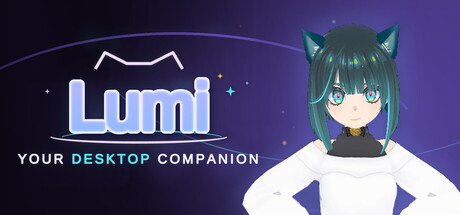
Lumi uses generative AI to create dynamic conversations and spoken responses in real time. AI inference, speech recognition and speech synthesis run locally on the player's PC. AI model files are downloaded during setup, but player conversations and generated responses are not sent to an external AI service. Available capabilities may vary depending on the locally selected model.
Asiden uses generative AI to create companion conversations, custom personality text and spoken responses during use. When screen awareness is enabled, AI can interpret screen content to inform its responses. Local AI features run on your computer. Optional cloud features send the information needed for the selected feature through Asiden’s managed service to external AI providers. Generated responses may be inaccurate and can include mature language, humour and non-explicit flirtation.
Generating general in-game scripts
Music
Level design
In general, the developer uses AI to create like a cubes; ultimately, they decide where to place each cube to build a castle—or, in this case, the video game itself.
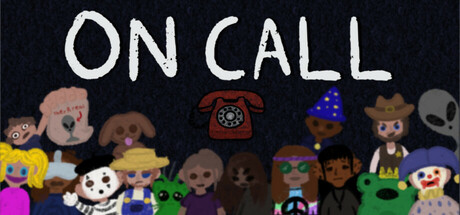
Some background art, still images, videos, and music were created with the assistance of generative AI tools; every asset was reviewed and curated by the developer. During gameplay, callers' dialogue is performed by an AI language model running entirely on the player's PC — fully offline, with no external AI service. The AI performs characters only within hand-written script boundaries, all story outcomes are decided by deterministic game logic, and generated text is filtered before display. Voice input is transcribed locally and never leaves your machine.
Generative AI tools were used during development to assist with prototyping and writing portions of the game's code and Blueprint logic. AI-generated images were also used as source material for some Niagara visual effects. All AI-assisted content was reviewed, modified, and integrated by the development team.
Save Point has been in continuous development since 2021 and is, to our knowledge, the world’s first purpose-built AI-native interactive cinematic engine. The Needle uses this technology to deliver a continuously responsive cinematic experience that goes far beyond conventional branching video. AI-assisted production tools helped create portions of the game’s pre-rendered audiovisual content, with every shipped asset human-directed, reviewed, edited, and integrated. The game also offers locally processed voice controls, alongside keyboard and gamepad support. No unreviewed audiovisual content is generated and delivered to players during gameplay. The project represents tens of thousands of hours of human design, engineering, direction, editing, and testing, with AI serving as the enabling technology behind an experience an independent studio could not otherwise produce at any cost, much less a reasonable one. We didn't use AI to save money, we used it because without AI there wasn't enough money in the world to build a game like this.
AI generated content is used for store page and for meshes in game, I am a solo developer can't really afford the time to make custom meshes nor to pay and buy it.
This software uses generative artificial intelligence to create custom voice output based on user‑provided text or prompts. The AI system analyzes the input and produces natural‑sounding speech in real time.
GenderShift uses generative AI in two ways:
1. Live audio: AI converts your speech or text into the voice you select
2. Voice portraits and sample audio (in the app, trailer, and screenshots) were pre-created with generative AI. You can also generate these yourself in the app.
MultiScope Air Traffic Control uses a local neural text-to-speech model (Piper) to generate the pilot voice read-backs in real time on your own machine. It runs entirely offline, no voice input or player data is sent anywhere or used to train any AI model. Your spoken commands are recognized locally by your operating system, not by generative AI.
AI-assisted artwork and promotional images have been used for certain store page and marketing materials. No AI-generated content is created, modified, or delivered to users during use of the software.
This game uses a custom-built local AI language model running entirely on the player's machine via the proprietary GROLAF3D ENGINE. The AI generates all dialogue, actions, and narrative responses from the kidnapper character in real time during gameplay. No internet connection is required and no player input is transmitted to external servers. The AI also powers an optional voice synthesis system for spoken responses. All AI-generated content is produced live based on player input and is unique to each session.
This game uses AI-assisted tools during development for certain visual and technical elements. All generated content has been manually reviewed, refined, and integrated to ensure a cohesive artistic direction and high-quality player experience.
Some of the game's visual assets and parts of the soundtrack were created with the assistance of generative AI tools. These AI-generated outputs were then manually edited, curated, and refined by the developers before being included in the game. All AI-assisted content is pre-generated; no live-generated AI content is used during gameplay.
This game uses generative AI tools during development for text, art assets, audio content, voice recognition features, and selected marketing materials. All content is reviewed and implemented by the developer.
Some placeholder music is AI Generated (will eventually be replaced with custom music but AI is easier for now due to not having copyright issues for content creators. If you make music contact us).
Sidekick AI is a live AI gaming companion, so most of what your sidekick says is generated on the fly — it is not pre-scripted.
Some artwork / marketing images were created with AI assistance.
Voice2Action uses artificial intelligence to enhance voice command recognition. While the application works fully offline, the AI mode allows more natural commands to be understood, even if spoken with variations or errors. The AI system does not create copyrighted or harmful content; it is only used to improve usability and provide more flexible, accurate voice-to-action interactions.
We are an independent game studio. In this title, every keyframe composition, concept art, and storyboard originates from the original designs of our human artists. Our vision is for players to also take part in the creation of in-game content. To bring the "Player-Customized Spell Visuals" feature to life in future updates, we have experimentally introduced AI as an auxiliary tool during the rendering stage of combat visual effects. Rest assured, we invest an average of over 120 hours of hand-drawn work and refinement for every minute of combat footage, ensuring the most striking visual impact. All art assets in the game are fully copyrighted, comply with applicable laws and regulations, and represent the dedication of our team. Thank you for supporting independent developers!
This game uses AI to enable real-time conversations and interactions with a desktop companion. It features speech recognition powered by Kyutai ASR, language understanding and generation using Meta’s LLaMA model, and expressive voice responses through Sesame CSM’s text-to-speech system. All AI runs locally on your device, with no internet connection required.
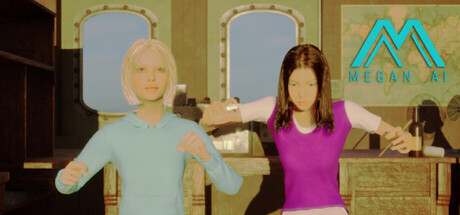
Megan AI runs a local language model on your PC to generate dialogue and text-to-speech replies in real time. No conversation data leaves your machine.
AI is used to parse results relating to the question they are asking. When playing a game, the results are tailored to the specific game. We also used a bit in the trailer.
AI-powered NPCs allow for immersive, real-time voice interactions. Speak directly to the grandparents using your microphone, and they’ll respond with natural, dynamic dialogue. Their advanced AI adapts to your choices, creating a unique experience where every conversation shapes the unfolding mystery. As you explore their remote house, the NPCs will react to your actions, listen to your questions, and even talk to each other, making each encounter unpredictable and intense.
In order to create an experimental mystery game that focuses on interactive conversations with characters, I also used generative AI to create the visuals, as I don't have an artistic background or the funds to hire a professional artist.
Suck Up! uses advanced AI to create dynamic gameplay. Players interact with AI characters using their voice, and the AI responds in real time based on tone and strategy. With unique personalities and behaviors, the AI challenges players to outwit them, ensuring immersive and unpredictable experiences.
This application allows usage of elevenlab's text to speech feature. Shall the user choose to use this feature, they should create an account over elevenlabs.com and import their API key. It's entirely optional and subject to both Noise-o-matic's EULA as well as elevenlab's EULA.
The TTS feature also uses Sherpa TTS. Some of the redistributable models available from Sherpa's project (https://github.com/k2-fsa/sherpa-onnx/releases/tag/asr-models) are downloadable in-app.
Except for gameplay design and some sound effects and art assets, the game’s code, 3D models, localization text, and other content were generated by GPT during development. Development was carried out through direct conversations with the 6.0-Astra and 6.1sol large language models, without predefined workflows or external Skills. The 3D models were created from written descriptions and reference images, with GPT writing and executing Blender scripts.
All such content was created during development. The game does not use generative AI to create content in real time during gameplay.
In the future, we may use newer large language models to further improve the game’s art quality and visual presentation, while comparing how different large language models perform in game development.
Soundgun does not use AI while it runs, and it ships no AI-generated sounds. Some of its interface text, translations and store page text were drafted with the help of AI tools and reviewed by the developer.
Q-Rely uses locally running artificial intelligence to provide interactive AI-generated responses during use. The AI can generate text responses based on the user's input and, depending on the user's configuration, can also generate voice output using locally installed Text-to-Speech (TTS) engines.
Generative AI was used during development to assist in creating the application's logo. The logo is a fixed visual asset and is not generated or modified by generative AI during use of the application.
Q-Rely does not use generative AI to create the application's default character artwork, backgrounds, or other visual assets during use. The application's AI-generated content is primarily conversational text and, when voice output is enabled, synthesized speech.
Q-Rely is designed to allow users to run AI models locally on their own computer. Users can select and install compatible AI models and configure the application's AI and voice settings according to their preferences.
Vectorline uses on-device AI for its optional voice features. When you speak commands to aircraft, a local speech-recognition model transcribes your voice into ATC instructions. Pilot and controller radio readbacks are spoken aloud using a local neural text-to-speech model. Both models run entirely on your own machine — no audio, text, or data is ever sent to an external server, and no internet connection is required for these features. The spoken content is limited to standard air-traffic-control phraseology generated by the simulator itself.
You can disable these features in the settings without impacting gameplay.
Generative AI tools were used to assist in creating some promotional artwork for the Steam store and library, and in drafting and translating portions of the store description. All outputs were reviewed and edited by the developer. The application does not generate AI content at runtime.
Lumi uses generative AI to create dynamic conversations and spoken responses in real time. AI inference, speech recognition and speech synthesis run locally on the player's PC. AI model files are downloaded during setup, but player conversations and generated responses are not sent to an external AI service. Available capabilities may vary depending on the locally selected model.
Asiden uses generative AI to create companion conversations, custom personality text and spoken responses during use. When screen awareness is enabled, AI can interpret screen content to inform its responses. Local AI features run on your computer. Optional cloud features send the information needed for the selected feature through Asiden’s managed service to external AI providers. Generated responses may be inaccurate and can include mature language, humour and non-explicit flirtation.
Generating general in-game scripts
Music
Level design
In general, the developer uses AI to create like a cubes; ultimately, they decide where to place each cube to build a castle—or, in this case, the video game itself.
Some background art, still images, videos, and music were created with the assistance of generative AI tools; every asset was reviewed and curated by the developer. During gameplay, callers' dialogue is performed by an AI language model running entirely on the player's PC — fully offline, with no external AI service. The AI performs characters only within hand-written script boundaries, all story outcomes are decided by deterministic game logic, and generated text is filtered before display. Voice input is transcribed locally and never leaves your machine.
Generative AI tools were used during development to assist with prototyping and writing portions of the game's code and Blueprint logic. AI-generated images were also used as source material for some Niagara visual effects. All AI-assisted content was reviewed, modified, and integrated by the development team.
Save Point has been in continuous development since 2021 and is, to our knowledge, the world’s first purpose-built AI-native interactive cinematic engine. The Needle uses this technology to deliver a continuously responsive cinematic experience that goes far beyond conventional branching video. AI-assisted production tools helped create portions of the game’s pre-rendered audiovisual content, with every shipped asset human-directed, reviewed, edited, and integrated. The game also offers locally processed voice controls, alongside keyboard and gamepad support. No unreviewed audiovisual content is generated and delivered to players during gameplay. The project represents tens of thousands of hours of human design, engineering, direction, editing, and testing, with AI serving as the enabling technology behind an experience an independent studio could not otherwise produce at any cost, much less a reasonable one. We didn't use AI to save money, we used it because without AI there wasn't enough money in the world to build a game like this.
AI generated content is used for store page and for meshes in game, I am a solo developer can't really afford the time to make custom meshes nor to pay and buy it.
This software uses generative artificial intelligence to create custom voice output based on user‑provided text or prompts. The AI system analyzes the input and produces natural‑sounding speech in real time.
GenderShift uses generative AI in two ways:
1. Live audio: AI converts your speech or text into the voice you select
2. Voice portraits and sample audio (in the app, trailer, and screenshots) were pre-created with generative AI. You can also generate these yourself in the app.
MultiScope Air Traffic Control uses a local neural text-to-speech model (Piper) to generate the pilot voice read-backs in real time on your own machine. It runs entirely offline, no voice input or player data is sent anywhere or used to train any AI model. Your spoken commands are recognized locally by your operating system, not by generative AI.
AI-assisted artwork and promotional images have been used for certain store page and marketing materials. No AI-generated content is created, modified, or delivered to users during use of the software.
This game uses a custom-built local AI language model running entirely on the player's machine via the proprietary GROLAF3D ENGINE. The AI generates all dialogue, actions, and narrative responses from the kidnapper character in real time during gameplay. No internet connection is required and no player input is transmitted to external servers. The AI also powers an optional voice synthesis system for spoken responses. All AI-generated content is produced live based on player input and is unique to each session.
This game uses AI-assisted tools during development for certain visual and technical elements. All generated content has been manually reviewed, refined, and integrated to ensure a cohesive artistic direction and high-quality player experience.
Some of the game's visual assets and parts of the soundtrack were created with the assistance of generative AI tools. These AI-generated outputs were then manually edited, curated, and refined by the developers before being included in the game. All AI-assisted content is pre-generated; no live-generated AI content is used during gameplay.
This game uses generative AI tools during development for text, art assets, audio content, voice recognition features, and selected marketing materials. All content is reviewed and implemented by the developer.
Some placeholder music is AI Generated (will eventually be replaced with custom music but AI is easier for now due to not having copyright issues for content creators. If you make music contact us).
Sidekick AI is a live AI gaming companion, so most of what your sidekick says is generated on the fly — it is not pre-scripted.
Some artwork / marketing images were created with AI assistance.
Voice2Action uses artificial intelligence to enhance voice command recognition. While the application works fully offline, the AI mode allows more natural commands to be understood, even if spoken with variations or errors. The AI system does not create copyrighted or harmful content; it is only used to improve usability and provide more flexible, accurate voice-to-action interactions.
We are an independent game studio. In this title, every keyframe composition, concept art, and storyboard originates from the original designs of our human artists. Our vision is for players to also take part in the creation of in-game content. To bring the "Player-Customized Spell Visuals" feature to life in future updates, we have experimentally introduced AI as an auxiliary tool during the rendering stage of combat visual effects. Rest assured, we invest an average of over 120 hours of hand-drawn work and refinement for every minute of combat footage, ensuring the most striking visual impact. All art assets in the game are fully copyrighted, comply with applicable laws and regulations, and represent the dedication of our team. Thank you for supporting independent developers!
This game uses AI to enable real-time conversations and interactions with a desktop companion. It features speech recognition powered by Kyutai ASR, language understanding and generation using Meta’s LLaMA model, and expressive voice responses through Sesame CSM’s text-to-speech system. All AI runs locally on your device, with no internet connection required.
Megan AI runs a local language model on your PC to generate dialogue and text-to-speech replies in real time. No conversation data leaves your machine.
AI is used to parse results relating to the question they are asking. When playing a game, the results are tailored to the specific game. We also used a bit in the trailer.
AI-powered NPCs allow for immersive, real-time voice interactions. Speak directly to the grandparents using your microphone, and they’ll respond with natural, dynamic dialogue. Their advanced AI adapts to your choices, creating a unique experience where every conversation shapes the unfolding mystery. As you explore their remote house, the NPCs will react to your actions, listen to your questions, and even talk to each other, making each encounter unpredictable and intense.
In order to create an experimental mystery game that focuses on interactive conversations with characters, I also used generative AI to create the visuals, as I don't have an artistic background or the funds to hire a professional artist.
Suck Up! uses advanced AI to create dynamic gameplay. Players interact with AI characters using their voice, and the AI responds in real time based on tone and strategy. With unique personalities and behaviors, the AI challenges players to outwit them, ensuring immersive and unpredictable experiences.
This application allows usage of elevenlab's text to speech feature. Shall the user choose to use this feature, they should create an account over elevenlabs.com and import their API key. It's entirely optional and subject to both Noise-o-matic's EULA as well as elevenlab's EULA.
The TTS feature also uses Sherpa TTS. Some of the redistributable models available from Sherpa's project (https://github.com/k2-fsa/sherpa-onnx/releases/tag/asr-models) are downloadable in-app.