Public Steam disclosure research25,508 disclosures tracked
Where do games disclose AI use?
Search developers’ Steam disclosures, compare classified AI use across
games, and follow recorded changes.
This index adds cross-game classifications and statistics to
statements published on individual store pages.
Groups reflect automatic analysis of public disclosures; mature records are excluded. These counts do not measure AI use across all of Steam.
Missing or unclear statements cannot establish whether a game uses AI.
Generative AI tools were used during development to create and refine some pre-generated content. Codex was used for parts of the 3D model work, GPT Image was used to generate parts of the user interface, and AI tools assisted with some text and some Steam store and marketing visuals. These assets were reviewed and integrated by the developer. No audio or music was created with generative AI. The game does not generate AI content during gameplay.
AI assistance (a large language model) was used to translate the store page description into English. No in-game assets — 3D models, textures, music, or sound — were created using generative AI.
Generative AI was used during development to assist in creating some pre-generated content, including certain visual assets, music and sound assets, as well as some text and localization content. All such content was generated during development and was reviewed, selected, edited, adjusted, and integrated by the developer before being included in the game.
The game does not use generative AI at runtime and does not generate new text, images, audio, or other game content dynamically in response to player input.
This game was created by a solo developer. During development, generative AI was used to assist with some artwork, store promotional images, localized text, and narrative materials. While the game is running, it connects to external AI services to dynamically generate Froggy’s dialogue, travel letters, postcard images, and parts of its travel stories based on player conversations, character memories, real-world weather, and current travel status. Generated content may vary depending on player input and service availability.
Generative AI is used to draft the written text on this store page and in our announcement and update posts. A human reads, edits and approves every line before it is published. AI coding assistants are also used while building the game. The game itself does not generate any content with AI while you play, and it does not connect to any AI service.
Generative AI tools were used during development to assist with the creation and refinement of some visual assets, text, localization, and other pre-generated game content. All AI-assisted content included in the game has been reviewed and validated by the developer. The game does not generate AI content during gameplay and does not connect to external AI services.
Pre-generated AI content: Generative AI tools were used extensively during development to create and assist with artwork, game assets, music, written content, and promotional materials. AI-assisted development tools were also used. All content in the final game was reviewed and curated by the development team. The game does not generate AI content during gameplay.
Some of the 2D art and textures in this game were created with the help of generative AI tools. Generative AI was also used to assist with writing and translating parts of the in-game text. All AI-assisted content was reviewed and edited by the developer before release. No content is generated by AI while you play.
We used generative AI tools (such as Claude) during development to assist with creating certain in-game assets, textures, or text elements. All AI-generated content has been reviewed, selected, and integrated by human creators into the final game.
During the development of the application, artificial intelligence was utilized to generate supporting utility code and translate user interface localization options into different languages.
Some of the artwork, audio, text, and program code in this game were created with the assistance of generative AI tools and were reviewed, edited, and integrated by the developer. The game does not use generative AI to create content in real time during gameplay.
Some of PitWal's artwork and store images were made with help from AI tools and then finished by a person. PitWal's in-app commentary lines were also written with help from AI during development and ship as a fixed set. While you play, PitWal picks from those prewritten lines and fills in your own numbers from your own driving.
PitWal does not run any AI while you play and does not send your data to any AI service. If you want, PitWal lets you connect your own AI assistant, such as Claude or a coding agent local or paid, to read your own data on your own machine. That is optional, uses your own tool, and is never required to use PitWal.
As an individual developer, during development of this game, AI tools were heavily used. I disclose this honestly and transparently.
1. In-Game Assets
Illustrations & Art: Unit portraits and the opening cinematic illustrations were generated using AI image models, then manually curated, retouched, and unified in style. All assets were human-reviewed under strict art direction to ensure historical tone and consistency.
Opening Cinematic: Subtle motion effects on the illustrations were produced with an AI image-to-video model and assembled by using the Remotion pipeline.
Background Music: The soundtrack was generated by an AI music model in multiple takes, then human-selected, mixed, and mastered.
Telegram Voice-overs: The historical telegram voice-overs in-game were synthesized by an AI TTS system. Each character's reference voice was human-approved through listening tests before use.
2. Development Assistance
Code: Game code was written and debugged with the aid of AI coding assistants. All code was human-reviewed and validated through automated testing.
Localization: The game supports Simplified Chinese, Traditional Chinese, and English. The English text was AI-drafted and human-proofread.
3. What Is NOT AI-Generated
Historical Text: The telegrams in-game are taken from historical archives, 34 are verbatim transcriptions of the original documents, and 12 were written based on the sources. They were not AI-generated.
Terrain & Map: The battlefield map was procedurally rendered from real elevation data (SRTM), not generated by AI.
Game Balance & Statistics: Troop strength, Unit Introduction, and values were researched and set manually from historical sources, cross-checked for accuracy and play balance.
AI-assisted development tools were used during production to help write game code, in-game text, and the English localization. All AI-assisted content was reviewed and tested by the developer.
Parts of this game were made with the help of generative AI tools. AI assistance was used for the source code, the in-game and store text, the store and library artwork, and the music and sound effects. Everything generated was reviewed and edited by the developer before it shipped. Nothing is generated while you play: the game ships fixed assets and makes no calls to any AI service.
Artificial intelligence was used as a development assistant to generate the game's source code, as well as to write and translate the interface text (localization).
Epoch Studio is a private writing and worldbuilding studio. When you ask it to, it can generate text suggestions and illustrations to help you develop your own manuscript. All generation runs locally on your own machine using bundled, permissively-licensed AI models — or optional cloud providers you connect with your own API key. Nothing is generated on its own: every suggestion is a deliberate action you take, and you review, edit, and decide what becomes part of your book. Your writing never leaves your device and is never used to train any AI model.
This game was developed with the assistance of generative AI tools. AI was used during development to help write and refactor portions of the game's code, and to assist with design iteration. Some in-game assets (such as placeholder art, sound effects, or text) may have been created or refined with AI assistance. All AI-assisted content was reviewed and edited by the developer before inclusion. The game does not generate any content using AI at runtime, and no live AI features are present in the released product.
Generative AI tools were used during development to assist with portions of the game's code and some in-game text, including interface descriptions and procedural name pools. All AI-assisted content was reviewed, edited, and tested by the developer before inclusion.
Brainrot Fire uses generative AI to assist with translating in-game text and interface content into multiple languages, helping us support a wider range of players around the world.
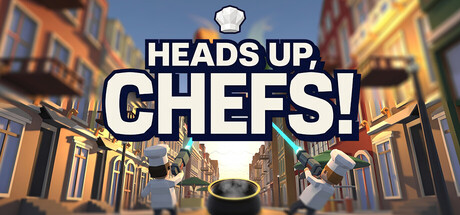
Shirt Happens! was made with the help of generative AI. We used it to write and review
code, to bring the game's mechanics online, to support our UI work, to generate visual
assets and reference images for our 2D and 3D art, to draft written text including parts
of this store page, and as a sounding board for design ideas. Everything it produced was
reviewed, edited and finished by us before it shipped.
Neural Defense was developed by a five-person indie team using a combination of hand-crafted work and generative AI tools. Generative AI was used during development to assist with music composition, concept art, portions of the game's code, and the editing and expansion of some narrative text. All final in-game assets — including 3D models, textures, and visual art seen during gameplay — were hand-crafted by the studio's artists. No content or code is generated live during gameplay; everything was created, reviewed, and finalized by the team prior to release.
Generative AI was used during the development of this game. AI-assisted tools were used to create or assist with visual assets, UI elements, backgrounds, in-game text, localization, and portions of the game's code and development process. Music used in the game was not generated by AI.
All AI-assisted content was created during development. The game does not use generative AI to create content in real time during gameplay.
Dream Simulators uses generative AI to create dynamic dialogue, story continuations, characters, missions, and narrative events based on player input and the active Lore system. Each Expansion Pack features its own world, Lore, characters, and adventures, creating a unique storytelling experience. The AI also generates creative scene descriptions and prompts that players can use as inspiration for creating images and videos. Because the experience is driven by player input, generated content may vary between playthroughs.
AI is used only for text translation/localization (in-game and store page), with every line reviewed and edited by the developer.
No AI-generated graphics, music, audio, or live content generation are used in the game.
This game uses generative AI to provide personalized choices and free-form conversations based on player input and profile information. The main story and scenarios are written by human writers.
AI-assistive tools were used for development support, including prototyping, coding, testing, documentation, and workflows; all player-facing creative content such as Art, UI, VFX, music, voice acting, and marketing materials was created by human developers and artists.
Google Translate aided in the japanese translation of the game. but it kept throwing out overly polite phrases, so I still had to do a lot to get it done.
The text used in the game and on the Steam store page has currently been translated primarily with the assistance of AI tools.
Most of the graphical assets used in the game are based on real photographs or renders of 3D objects. However, AI-generated imagery was used in cases where no suitable real-world source material was available, or where the available material was insufficient to complete or supplement the required assets.
Some of this game's assets were created with the assistance of generative AI tools and were then reviewed, edited, and integrated by the developer. This includes: base meshes of some 3D character models, some 2D artwork such as card illustrations and icons, voice lines and sound effects created with AI voice/audio generation, and parts of the localized text. All such content was pre-generated during development — the game does not generate any content with AI at runtime.
This game uses content created with the assistance of generative AI tools. 2D image assets (including the game logo and in-game textures), 3D models, and some sound effects and music were generated with AI and then reviewed, edited, and integrated by the developer. Localization into supported languages was also produced with AI assistance. All game design, narrative, and text content were written by the developer. No content is generated in real time during gameplay.
All code, game design, maps, and audio behavior were created using AI. AI tools were also used for in-game character 3D models (subsequently hand-optimized and rigged), main menu background videos, store trailer cinematic shots, and store artwork (logo and capsule backgrounds). All content is based on the game's own original characters.
Generative AI was used only to assist with drafting and translating written text for the Steam store page. No in-game artwork, audio, gameplay assets, or runtime content is generated by AI.
During the development of this game, generative AI was used to assist with the creation of some art assets, sound effects, music, text translations, and development reference materials. All AI-assisted generated content was manually reviewed, edited, integrated, and approved before being included in the game. No content is generated in real time based on player input during gameplay.
Guildfire uses pre-generated AI-assisted content in parts of its visual art, localization, sound effects, and soundtrack. AI-generated material is manually selected, edited, and integrated by the developer. No generative AI is used during gameplay, and the game does not connect to external AI services at runtime.
**Pre-Generated AI Content**
Generative AI tools were used during development to assist in creating some of the pre-generated content included in the game. The AI-assisted content includes images, music, written text, and translations.
All AI-assisted content was generated before release and is included in the game as fixed assets or data. The developer reviewed, selected, edited, and integrated the content before including it in the product. No content is generated by AI while the game is running.
The developer reviewed the included content and only incorporated material believed to have the necessary rights for distribution. Third-party copyrighted characters, trademarks, or other protected material were not intentionally requested or included.
**Live-Generated AI Content**
The game does not use live-generated AI. It does not connect to any generative AI service or generate AI-assisted content while the game is running.
Tumble's visual art (character and charm illustrations, backdrops, item sprites, and store capsule art) was generated with Google's Gemini image models and then selected, cropped, retouched, colour-matched and in many cases regenerated by hand against a fixed reference style until it fit the game. Music and sound effects were generated with Suno under a commercial licence, then cut, mixed and placed by hand.
The game's design, rules, balance, and code are not generated content. Every mechanic, number and line of player-facing text was written, tested and revised by the developer, including through automated balance simulation and four rounds of human playtesting.
No content is generated live during play. Nothing in Tumble is produced at runtime by an AI model; the game runs entirely offline with no model calls of any kind.
AI tools were used during development to assist with writing the game's code and text content (including UI text, English/Korean localization, and store page text). All AI-assisted content was created under direct developer supervision and reviewed by the developer. No content is generated by AI at runtime.
Store page and marketing capsule artwork was drafted with generative AI, then quantized to a fixed 9-colour pixel palette and hand-adjusted before use. Interface translations outside Simplified Chinese and English were produced by machine translation and have not been reviewed by native speakers.
All in-game visuals, the user interface, the wordmark and the achievement icons are drawn programmatically in code and contain no AI-generated content. The game does not invoke generative AI at runtime; nothing is generated while you play.
本作在开发阶段使用了生成式 AI 辅助制作以下内容:美术(场景与背景、卡面插画、角色头像、界面位图、物品图标等游戏与商店页中的图像素材)由 AI 生成母图、经开发者逐项筛选、修复、裁切与组装后定稿;游戏内文本(事件与叙事文案)由开发者设计框架、AI 辅助起草、逐条经人工审查修改后定稿。游戏运行过程中不会实时生成任何 AI 内容,也不会连接任何 AI 服务。核心玩法、世界设定、事件结构与全部最终内容取舍均由开发者完成。
Generative AI tools were used during development to create and refine some pre-generated content. Codex was used for parts of the 3D model work, GPT Image was used to generate parts of the user interface, and AI tools assisted with some text and some Steam store and marketing visuals. These assets were reviewed and integrated by the developer. No audio or music was created with generative AI. The game does not generate AI content during gameplay.
AI assistance (a large language model) was used to translate the store page description into English. No in-game assets — 3D models, textures, music, or sound — were created using generative AI.
Generative AI was used during development to assist in creating some pre-generated content, including certain visual assets, music and sound assets, as well as some text and localization content. All such content was generated during development and was reviewed, selected, edited, adjusted, and integrated by the developer before being included in the game.
The game does not use generative AI at runtime and does not generate new text, images, audio, or other game content dynamically in response to player input.
This game was created by a solo developer. During development, generative AI was used to assist with some artwork, store promotional images, localized text, and narrative materials. While the game is running, it connects to external AI services to dynamically generate Froggy’s dialogue, travel letters, postcard images, and parts of its travel stories based on player conversations, character memories, real-world weather, and current travel status. Generated content may vary depending on player input and service availability.
Generative AI is used to draft the written text on this store page and in our announcement and update posts. A human reads, edits and approves every line before it is published. AI coding assistants are also used while building the game. The game itself does not generate any content with AI while you play, and it does not connect to any AI service.
Generative AI tools were used during development to assist with the creation and refinement of some visual assets, text, localization, and other pre-generated game content. All AI-assisted content included in the game has been reviewed and validated by the developer. The game does not generate AI content during gameplay and does not connect to external AI services.
Pre-generated AI content: Generative AI tools were used extensively during development to create and assist with artwork, game assets, music, written content, and promotional materials. AI-assisted development tools were also used. All content in the final game was reviewed and curated by the development team. The game does not generate AI content during gameplay.
Some of the 2D art and textures in this game were created with the help of generative AI tools. Generative AI was also used to assist with writing and translating parts of the in-game text. All AI-assisted content was reviewed and edited by the developer before release. No content is generated by AI while you play.
We used generative AI tools (such as Claude) during development to assist with creating certain in-game assets, textures, or text elements. All AI-generated content has been reviewed, selected, and integrated by human creators into the final game.
During the development of the application, artificial intelligence was utilized to generate supporting utility code and translate user interface localization options into different languages.
Some of the artwork, audio, text, and program code in this game were created with the assistance of generative AI tools and were reviewed, edited, and integrated by the developer. The game does not use generative AI to create content in real time during gameplay.
Some of PitWal's artwork and store images were made with help from AI tools and then finished by a person. PitWal's in-app commentary lines were also written with help from AI during development and ship as a fixed set. While you play, PitWal picks from those prewritten lines and fills in your own numbers from your own driving.
PitWal does not run any AI while you play and does not send your data to any AI service. If you want, PitWal lets you connect your own AI assistant, such as Claude or a coding agent local or paid, to read your own data on your own machine. That is optional, uses your own tool, and is never required to use PitWal.
As an individual developer, during development of this game, AI tools were heavily used. I disclose this honestly and transparently.
1. In-Game Assets
Illustrations & Art: Unit portraits and the opening cinematic illustrations were generated using AI image models, then manually curated, retouched, and unified in style. All assets were human-reviewed under strict art direction to ensure historical tone and consistency.
Opening Cinematic: Subtle motion effects on the illustrations were produced with an AI image-to-video model and assembled by using the Remotion pipeline.
Background Music: The soundtrack was generated by an AI music model in multiple takes, then human-selected, mixed, and mastered.
Telegram Voice-overs: The historical telegram voice-overs in-game were synthesized by an AI TTS system. Each character's reference voice was human-approved through listening tests before use.
2. Development Assistance
Code: Game code was written and debugged with the aid of AI coding assistants. All code was human-reviewed and validated through automated testing.
Localization: The game supports Simplified Chinese, Traditional Chinese, and English. The English text was AI-drafted and human-proofread.
3. What Is NOT AI-Generated
Historical Text: The telegrams in-game are taken from historical archives, 34 are verbatim transcriptions of the original documents, and 12 were written based on the sources. They were not AI-generated.
Terrain & Map: The battlefield map was procedurally rendered from real elevation data (SRTM), not generated by AI.
Game Balance & Statistics: Troop strength, Unit Introduction, and values were researched and set manually from historical sources, cross-checked for accuracy and play balance.
AI-assisted development tools were used during production to help write game code, in-game text, and the English localization. All AI-assisted content was reviewed and tested by the developer.
Parts of this game were made with the help of generative AI tools. AI assistance was used for the source code, the in-game and store text, the store and library artwork, and the music and sound effects. Everything generated was reviewed and edited by the developer before it shipped. Nothing is generated while you play: the game ships fixed assets and makes no calls to any AI service.
Artificial intelligence was used as a development assistant to generate the game's source code, as well as to write and translate the interface text (localization).
Epoch Studio is a private writing and worldbuilding studio. When you ask it to, it can generate text suggestions and illustrations to help you develop your own manuscript. All generation runs locally on your own machine using bundled, permissively-licensed AI models — or optional cloud providers you connect with your own API key. Nothing is generated on its own: every suggestion is a deliberate action you take, and you review, edit, and decide what becomes part of your book. Your writing never leaves your device and is never used to train any AI model.
This game was developed with the assistance of generative AI tools. AI was used during development to help write and refactor portions of the game's code, and to assist with design iteration. Some in-game assets (such as placeholder art, sound effects, or text) may have been created or refined with AI assistance. All AI-assisted content was reviewed and edited by the developer before inclusion. The game does not generate any content using AI at runtime, and no live AI features are present in the released product.
Generative AI tools were used during development to assist with portions of the game's code and some in-game text, including interface descriptions and procedural name pools. All AI-assisted content was reviewed, edited, and tested by the developer before inclusion.
Brainrot Fire uses generative AI to assist with translating in-game text and interface content into multiple languages, helping us support a wider range of players around the world.
Shirt Happens! was made with the help of generative AI. We used it to write and review
code, to bring the game's mechanics online, to support our UI work, to generate visual
assets and reference images for our 2D and 3D art, to draft written text including parts
of this store page, and as a sounding board for design ideas. Everything it produced was
reviewed, edited and finished by us before it shipped.
Neural Defense was developed by a five-person indie team using a combination of hand-crafted work and generative AI tools. Generative AI was used during development to assist with music composition, concept art, portions of the game's code, and the editing and expansion of some narrative text. All final in-game assets — including 3D models, textures, and visual art seen during gameplay — were hand-crafted by the studio's artists. No content or code is generated live during gameplay; everything was created, reviewed, and finalized by the team prior to release.
Generative AI was used during the development of this game. AI-assisted tools were used to create or assist with visual assets, UI elements, backgrounds, in-game text, localization, and portions of the game's code and development process. Music used in the game was not generated by AI.
All AI-assisted content was created during development. The game does not use generative AI to create content in real time during gameplay.
Dream Simulators uses generative AI to create dynamic dialogue, story continuations, characters, missions, and narrative events based on player input and the active Lore system. Each Expansion Pack features its own world, Lore, characters, and adventures, creating a unique storytelling experience. The AI also generates creative scene descriptions and prompts that players can use as inspiration for creating images and videos. Because the experience is driven by player input, generated content may vary between playthroughs.
AI is used only for text translation/localization (in-game and store page), with every line reviewed and edited by the developer.
No AI-generated graphics, music, audio, or live content generation are used in the game.
This game uses generative AI to provide personalized choices and free-form conversations based on player input and profile information. The main story and scenarios are written by human writers.
AI-assistive tools were used for development support, including prototyping, coding, testing, documentation, and workflows; all player-facing creative content such as Art, UI, VFX, music, voice acting, and marketing materials was created by human developers and artists.
Google Translate aided in the japanese translation of the game. but it kept throwing out overly polite phrases, so I still had to do a lot to get it done.
The text used in the game and on the Steam store page has currently been translated primarily with the assistance of AI tools.
Most of the graphical assets used in the game are based on real photographs or renders of 3D objects. However, AI-generated imagery was used in cases where no suitable real-world source material was available, or where the available material was insufficient to complete or supplement the required assets.
Some of this game's assets were created with the assistance of generative AI tools and were then reviewed, edited, and integrated by the developer. This includes: base meshes of some 3D character models, some 2D artwork such as card illustrations and icons, voice lines and sound effects created with AI voice/audio generation, and parts of the localized text. All such content was pre-generated during development — the game does not generate any content with AI at runtime.
This game uses content created with the assistance of generative AI tools. 2D image assets (including the game logo and in-game textures), 3D models, and some sound effects and music were generated with AI and then reviewed, edited, and integrated by the developer. Localization into supported languages was also produced with AI assistance. All game design, narrative, and text content were written by the developer. No content is generated in real time during gameplay.
All code, game design, maps, and audio behavior were created using AI. AI tools were also used for in-game character 3D models (subsequently hand-optimized and rigged), main menu background videos, store trailer cinematic shots, and store artwork (logo and capsule backgrounds). All content is based on the game's own original characters.
Generative AI was used only to assist with drafting and translating written text for the Steam store page. No in-game artwork, audio, gameplay assets, or runtime content is generated by AI.
During the development of this game, generative AI was used to assist with the creation of some art assets, sound effects, music, text translations, and development reference materials. All AI-assisted generated content was manually reviewed, edited, integrated, and approved before being included in the game. No content is generated in real time based on player input during gameplay.
Guildfire uses pre-generated AI-assisted content in parts of its visual art, localization, sound effects, and soundtrack. AI-generated material is manually selected, edited, and integrated by the developer. No generative AI is used during gameplay, and the game does not connect to external AI services at runtime.
**Pre-Generated AI Content**
Generative AI tools were used during development to assist in creating some of the pre-generated content included in the game. The AI-assisted content includes images, music, written text, and translations.
All AI-assisted content was generated before release and is included in the game as fixed assets or data. The developer reviewed, selected, edited, and integrated the content before including it in the product. No content is generated by AI while the game is running.
The developer reviewed the included content and only incorporated material believed to have the necessary rights for distribution. Third-party copyrighted characters, trademarks, or other protected material were not intentionally requested or included.
**Live-Generated AI Content**
The game does not use live-generated AI. It does not connect to any generative AI service or generate AI-assisted content while the game is running.
Tumble's visual art (character and charm illustrations, backdrops, item sprites, and store capsule art) was generated with Google's Gemini image models and then selected, cropped, retouched, colour-matched and in many cases regenerated by hand against a fixed reference style until it fit the game. Music and sound effects were generated with Suno under a commercial licence, then cut, mixed and placed by hand.
The game's design, rules, balance, and code are not generated content. Every mechanic, number and line of player-facing text was written, tested and revised by the developer, including through automated balance simulation and four rounds of human playtesting.
No content is generated live during play. Nothing in Tumble is produced at runtime by an AI model; the game runs entirely offline with no model calls of any kind.
AI tools were used during development to assist with writing the game's code and text content (including UI text, English/Korean localization, and store page text). All AI-assisted content was created under direct developer supervision and reviewed by the developer. No content is generated by AI at runtime.
Store page and marketing capsule artwork was drafted with generative AI, then quantized to a fixed 9-colour pixel palette and hand-adjusted before use. Interface translations outside Simplified Chinese and English were produced by machine translation and have not been reviewed by native speakers.
All in-game visuals, the user interface, the wordmark and the achievement icons are drawn programmatically in code and contain no AI-generated content. The game does not invoke generative AI at runtime; nothing is generated while you play.
本作在开发阶段使用了生成式 AI 辅助制作以下内容:美术(场景与背景、卡面插画、角色头像、界面位图、物品图标等游戏与商店页中的图像素材)由 AI 生成母图、经开发者逐项筛选、修复、裁切与组装后定稿;游戏内文本(事件与叙事文案)由开发者设计框架、AI 辅助起草、逐条经人工审查修改后定稿。游戏运行过程中不会实时生成任何 AI 内容,也不会连接任何 AI 服务。核心玩法、世界设定、事件结构与全部最终内容取舍均由开发者完成。