Public Steam disclosure research25,519 disclosures tracked
Where do games disclose AI use?
Search developers’ Steam disclosures, compare classified AI use across
games, and follow recorded changes.
This index adds cross-game classifications and statistics to
statements published on individual store pages.
Groups reflect automatic analysis of public disclosures; mature records are excluded. These counts do not measure AI use across all of Steam.
Missing or unclear statements cannot establish whether a game uses AI.
Generative AI was used during development to assist in creating certain visual assets, dialogue drafts, event text, and marketing artwork. All AI-generated content has been reviewed, edited, and integrated by the developer before being included in the game. The game does not use live-generated AI content during gameplay.
This project is built by a one-man team. I use AI tools as a supportive assistant to help with development. However, every line of code, piece of text, and design decision has been manually reviewed, edited, and finalized by me to ensure the quality and soul of the game.
This game uses generative AI to assist with parts of the localization process. All AI-assisted translations are reviewed and edited by the developer before being included in the game.
Turbo Era Boss uses generative AI as part of its indie production workflow. Some pre-rendered visual assets, store capsule artwork, promotional/community images, and draft text/localization may be created or refined with AI-assisted tools. The game does not use live generative AI during gameplay. All AI-assisted material is reviewed, edited, and approved by Team76 before publication, and we avoid real team logos, real sponsors, driver likenesses, and other protected branding.
We want to be 100% clear: this software does not generate AI artwork. All animation, rendering, and creation tools are powered entirely by traditional algorithmic code.
The use of AI is strictly limited to:
• Text Localization: Assisted translations for store and interface text.
• Legacy Shape Detection: An optional, legacy computer-vision model that can be toggled on solely to assist with detecting edges and outlines. It does not generate art from prompts or models, and can be completely ignored in favour of our standard, non-AI outline tools.
AI is NOT used in the graphics, sound effects, music, or code, and none of these contain any AI-generated content. AI is used ONLY to produce higher-quality text translations than standard translation tools, and for no other purpose.
AI was used to assist with the localization process.
All other core game content including game design, programming, art direction, and gameplay systems
was created by the human development team.
As a solo developer, I used generative AI tools to help create some of the game's icons, artwork, and written text, which I then reviewed and edited by hand. The game's design, code, and systems are my own work, and the world, its factions, and its story are built on lore I have developed across the Imperium Sine Fine saga. Nothing is AI-generated during gameplay.
Generative AI tools were used to assist with initial translations of localization texts and as a starting point for a limited number of visual concepts. All AI-assisted translations were manually reviewed and edited. The visual concepts were substantially reworked and adapted by the developer to match the game’s original art style before being included in the final game.
AI was used to translate the game into certain languages. When selecting one of these languages for the first time, a notification appears. Additionally, a marker is displayed next to the language name in the options menu.
Furthermore, AI was utilized to generate some of the graphical assets and may have been used in the creation of videos.
During the development of this game, generative AI tools were used to assist the developer in several areas:
- Music & Audio: The game's soundtrack and musical scores were entirely generated using AI audio tools.
- Visual Assets: AI tools were used to assist in the texturing process for a selection of 3D models.
- Localization & Text: AI assisted in the translation and localization of the game's text, as well as refining marketing materials and store descriptions.
- Coding: AI coding agents were utilized to assist with programming, code optimization, and debugging.
All AI-assisted assets and code have been carefully reviewed, curated, and integrated by the developer to ensure a cohesive and high-quality player experience.
AI was used to assist with grammar corrections for in-game text, which were then carefully reviewed and refined by hand.
We use AI solely as a supporting tool. Every aspect of the game is guided by human creativity, and our development process remains firmly centered on manual work.
We used AI to generate additional chat message ideas based on the initial list we made ourselves. Relevant message ideas were added to the game, some messages were altered to fit, and rest were left on the cutting room floor.
Generative AI tools were used during the production of the game as creative and technical support. This applies only to content prepared in advance during development.
AI was used in several areas, including:
Artwork and promotional materials — generating base images, character concepts, interface concepts, reference images, and materials later used as a foundation for manual editing or further production.
3D models — some models are created with the help of AI tools and an image-to-3D workflow, then selected, adjusted, and integrated into the game.
Voice acting — character voices are created using AI-based voice synthesis.
Code and production tools — AI assistants support coding, code analysis, refactoring, and optimization.
Design consultation — AI tools are used as support for analyzing ideas, designing interfaces, refining descriptions, and planning game systems.
The main concept of the game, story structure, quest dependencies, world direction, and dialogue content are created and supervised by the game’s author. Content created with the help of AI is selected, edited, and implemented manually.
The game does not contain AI-generated content created in real time during gameplay.
This game's development made partial use of generative AI tools. Generative AI (ChatGPT and ElevenLabs' image generation features) was used to create some artwork, including the title screen and field background images, the title logo, and some of the special clover and UI icons. ElevenLabs' audio generation features were used for the BGM and sound effects. Generative AI was also used to help localize the game into languages other than Japanese (English, Simplified Chinese, Traditional Chinese, Korean, Russian, Spanish, Brazilian Portuguese, German, and French). All AI-generated assets and translations were reviewed and adjusted by the developer before being incorporated into the game.
AI tools were used during development.
The interface translations (English, French, German, Italian and Portuguese) and the log translations were generated with AI assistance, under the developer's direction and with human review. The game does not generate AI content at runtime.
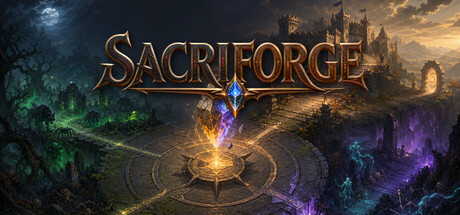
Some of the content in SacriForge was created with the help of generative AI tools during development, including 2D art and illustrations, music, sound effects, and text. All AI-assisted content was reviewed and edited by the developer.
This game was developed with the assistance of generative AI. AI was used to help create code, written content, and some visual assets under the developer's direction. All AI-generated content is reviewed and integrated by the developer. The game does not use live generative AI during gameplay.
To Raise a King was made by one person working with AI collaborators. AI tools were used in the following ways during development, and every AI output shipped in the game was reviewed, curated, edited, and approved by the developer before inclusion.
Source code. Written in collaboration with Anthropic's Claude, with the developer directing architecture, reviewing every change, and testing behavior.
Character and scene illustrations. Generated locally with the FLUX.2 image model running in ComfyUI. Prompts, reference images, layered compositions, and final selections were all authored and curated by the developer.
Voice acting. Voices were produced with ElevenLabs. The developer cast each role, wrote each line, directed the delivery through iteration, and hand-picked the takes shipped in the game.
Music and sound. Music and select sound effects were produced with ElevenLabs' music generation. Tracks were selected, edited, and placed by the developer.
Writing and design. Story beats, dialogue, and system design were developed collaboratively with Claude, with the developer as the final author.
The developer confirms they hold or have licensed the rights to use these tools' outputs commercially, and has taken reasonable steps to ensure no infringing or unlawful content was produced.
The entirety of the game from the code to the art to the music WAS GENERATED WITH AI. This is not a disguise, I do not know how to build an entire game from scratch by myself. The story, characters, and concept art was created entirely by me and partly with my best friend Xavier, but everything in game is made using AI.
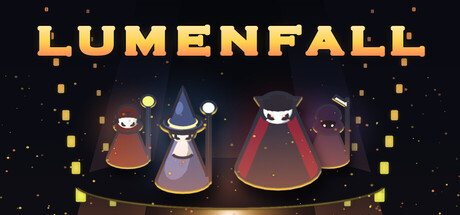
Lumenfall is built by a small studio using AI-assisted development tools. Some pre-generated content — including portions of the game's code, the store page text, and the 2D promotional/capsule artwork and achievement icons — was created with the help of AI tools, always under human direction and review. The game does not generate any content with AI at runtime; everything you play is fixed, hand-tuned content.
AI assisted drafting was used for the Steam store page text and marketing copy. The game does not use generative AI to create runtime gameplay content or player facing outputs during play.
Generative AI was used during development to assist in creating some pre-generated visual assets for the game and its promotional materials, as well as parts of the English localization. All AI-assisted content was reviewed by the developer and edited where necessary. No content is generated by AI while the game is running.
This game was made by 1 person, with the help of AI for the art, coding, sound, story, you name it. This was a lot of work for me the human though, this was not a few prompts, this was many different systems and custom work pipelines I designed completely myself. It took a long time and a huge amount of effort.
Campaign Forge uses generative AI as a core, opt-in feature. Worlds, characters, regions, and stories are generated live, on demand, at the player's direction, using an AI provider and model the player chooses (paid cloud, free cloud, or a fully local/offline model — bring your own API key or run locally).
Generative AI tools were used to translate in-game text. Translations into languages spoken by the development team have been reviewed and corrected. Other languages rely primarily on these AI tools.
This game uses generative AI tools (including Canva AI) to create some visual assets, such as the logo, menu backgrounds, and promotional artwork. In-game text localization into multiple languages was produced with AI assistance and reviewed by the development team. The trailer's background music was created using a generative AI music tool, licensed for commercial use. No content is generated by AI during gameplay, and the game does not connect to any external AI service.
Some non-core content in this game was created with the assistance of generative AI, including certain concept artwork, icons, promotional materials, and text. All AI-generated content has been reviewed, edited, and integrated by the development team to ensure it meets the game's quality standards and artistic direction.
Some of this game's assets were produced with the help of generative AI during development: 2D art and illustrations, background music and sound effects, and machine-assisted translation of the in-game text into additional languages. All such assets were reviewed by the developer and are included as fixed content. No content is generated at runtime.
This software uses generative AI to transcribe speech, translate live voice and text between languages, and optionally generate translated speech output. Depending on the mode selected by the user, these features may run through third-party online AI services or local models included with or configured for the software.
In the development of Project Deep Nexus, AI was utilized for several key components. This includes creating character and background artworks, as well as generating some music tracks. While the developer curated the plot and narrative, AI assisted in the process.
AI writing tools were used to assist in drafting store page descriptions and marketing copy. All game content, code, artwork, and audio were created without generative AI.
Space Planet Explorer uses generative AI to create assets that ship with the game, including planet surface textures, cinematic sequences, voice narration, and music. All of this content was generated during development — no AI content is generated live during gameplay. Planet visuals are AI-generated interpretations based on real scientific data, not actual NASA photography.
Generative AI was used in creating the fictional high schools, nicknames, and logos. I encourage all users to utilize the editing abilities in this game to create your very own universe. Generative AI is a great way to do this, so pick your favorite AI and build away!
Generative AI is used only to assist with localization and translation of game-related text. No gameplay, artwork, audio, or other player-facing content is generated by AI.
Generative AI tools were used in the development of Lexip to create initial drafts and source material for parts of the project, including code, visual assets, sounds, writing, and marketing materials. These outputs were not used unchanged; they were reviewed, selected, adapted, edited, and integrated by the developer. The final implementation, design decisions, and overall tuning were done manually. The game does not generate new AI content during gameplay.
This game includes some AI generated content using Adobe Firefly.
Some of the dialog backgrounds are AI generated textures.
The Story video and the Level Loading videos are AI generated.
This disclosure is provided so players can make an informed purchasing decision based on their own preferences.
AI was not used to create any gameplay code, Blueprints, game systems, level design, environments, or game mechanics.
Generative AI was used during development to assist in creating certain visual assets, dialogue drafts, event text, and marketing artwork. All AI-generated content has been reviewed, edited, and integrated by the developer before being included in the game. The game does not use live-generated AI content during gameplay.
This project is built by a one-man team. I use AI tools as a supportive assistant to help with development. However, every line of code, piece of text, and design decision has been manually reviewed, edited, and finalized by me to ensure the quality and soul of the game.
This game uses generative AI to assist with parts of the localization process. All AI-assisted translations are reviewed and edited by the developer before being included in the game.
Turbo Era Boss uses generative AI as part of its indie production workflow. Some pre-rendered visual assets, store capsule artwork, promotional/community images, and draft text/localization may be created or refined with AI-assisted tools. The game does not use live generative AI during gameplay. All AI-assisted material is reviewed, edited, and approved by Team76 before publication, and we avoid real team logos, real sponsors, driver likenesses, and other protected branding.
We want to be 100% clear: this software does not generate AI artwork. All animation, rendering, and creation tools are powered entirely by traditional algorithmic code.
The use of AI is strictly limited to:
• Text Localization: Assisted translations for store and interface text.
• Legacy Shape Detection: An optional, legacy computer-vision model that can be toggled on solely to assist with detecting edges and outlines. It does not generate art from prompts or models, and can be completely ignored in favour of our standard, non-AI outline tools.
AI is NOT used in the graphics, sound effects, music, or code, and none of these contain any AI-generated content. AI is used ONLY to produce higher-quality text translations than standard translation tools, and for no other purpose.
AI was used to assist with the localization process.
All other core game content including game design, programming, art direction, and gameplay systems
was created by the human development team.
As a solo developer, I used generative AI tools to help create some of the game's icons, artwork, and written text, which I then reviewed and edited by hand. The game's design, code, and systems are my own work, and the world, its factions, and its story are built on lore I have developed across the Imperium Sine Fine saga. Nothing is AI-generated during gameplay.
Generative AI tools were used to assist with initial translations of localization texts and as a starting point for a limited number of visual concepts. All AI-assisted translations were manually reviewed and edited. The visual concepts were substantially reworked and adapted by the developer to match the game’s original art style before being included in the final game.
AI was used to translate the game into certain languages. When selecting one of these languages for the first time, a notification appears. Additionally, a marker is displayed next to the language name in the options menu.
Furthermore, AI was utilized to generate some of the graphical assets and may have been used in the creation of videos.
During the development of this game, generative AI tools were used to assist the developer in several areas:
- Music & Audio: The game's soundtrack and musical scores were entirely generated using AI audio tools.
- Visual Assets: AI tools were used to assist in the texturing process for a selection of 3D models.
- Localization & Text: AI assisted in the translation and localization of the game's text, as well as refining marketing materials and store descriptions.
- Coding: AI coding agents were utilized to assist with programming, code optimization, and debugging.
All AI-assisted assets and code have been carefully reviewed, curated, and integrated by the developer to ensure a cohesive and high-quality player experience.
AI was used to assist with grammar corrections for in-game text, which were then carefully reviewed and refined by hand.
We use AI solely as a supporting tool. Every aspect of the game is guided by human creativity, and our development process remains firmly centered on manual work.
We used AI to generate additional chat message ideas based on the initial list we made ourselves. Relevant message ideas were added to the game, some messages were altered to fit, and rest were left on the cutting room floor.
Generative AI tools were used during the production of the game as creative and technical support. This applies only to content prepared in advance during development.
AI was used in several areas, including:
Artwork and promotional materials — generating base images, character concepts, interface concepts, reference images, and materials later used as a foundation for manual editing or further production.
3D models — some models are created with the help of AI tools and an image-to-3D workflow, then selected, adjusted, and integrated into the game.
Voice acting — character voices are created using AI-based voice synthesis.
Code and production tools — AI assistants support coding, code analysis, refactoring, and optimization.
Design consultation — AI tools are used as support for analyzing ideas, designing interfaces, refining descriptions, and planning game systems.
The main concept of the game, story structure, quest dependencies, world direction, and dialogue content are created and supervised by the game’s author. Content created with the help of AI is selected, edited, and implemented manually.
The game does not contain AI-generated content created in real time during gameplay.
This game's development made partial use of generative AI tools. Generative AI (ChatGPT and ElevenLabs' image generation features) was used to create some artwork, including the title screen and field background images, the title logo, and some of the special clover and UI icons. ElevenLabs' audio generation features were used for the BGM and sound effects. Generative AI was also used to help localize the game into languages other than Japanese (English, Simplified Chinese, Traditional Chinese, Korean, Russian, Spanish, Brazilian Portuguese, German, and French). All AI-generated assets and translations were reviewed and adjusted by the developer before being incorporated into the game.
AI tools were used during development.
The interface translations (English, French, German, Italian and Portuguese) and the log translations were generated with AI assistance, under the developer's direction and with human review. The game does not generate AI content at runtime.
Some of the content in SacriForge was created with the help of generative AI tools during development, including 2D art and illustrations, music, sound effects, and text. All AI-assisted content was reviewed and edited by the developer.
This game was developed with the assistance of generative AI. AI was used to help create code, written content, and some visual assets under the developer's direction. All AI-generated content is reviewed and integrated by the developer. The game does not use live generative AI during gameplay.
To Raise a King was made by one person working with AI collaborators. AI tools were used in the following ways during development, and every AI output shipped in the game was reviewed, curated, edited, and approved by the developer before inclusion.
Source code. Written in collaboration with Anthropic's Claude, with the developer directing architecture, reviewing every change, and testing behavior.
Character and scene illustrations. Generated locally with the FLUX.2 image model running in ComfyUI. Prompts, reference images, layered compositions, and final selections were all authored and curated by the developer.
Voice acting. Voices were produced with ElevenLabs. The developer cast each role, wrote each line, directed the delivery through iteration, and hand-picked the takes shipped in the game.
Music and sound. Music and select sound effects were produced with ElevenLabs' music generation. Tracks were selected, edited, and placed by the developer.
Writing and design. Story beats, dialogue, and system design were developed collaboratively with Claude, with the developer as the final author.
The developer confirms they hold or have licensed the rights to use these tools' outputs commercially, and has taken reasonable steps to ensure no infringing or unlawful content was produced.
The entirety of the game from the code to the art to the music WAS GENERATED WITH AI. This is not a disguise, I do not know how to build an entire game from scratch by myself. The story, characters, and concept art was created entirely by me and partly with my best friend Xavier, but everything in game is made using AI.
Lumenfall is built by a small studio using AI-assisted development tools. Some pre-generated content — including portions of the game's code, the store page text, and the 2D promotional/capsule artwork and achievement icons — was created with the help of AI tools, always under human direction and review. The game does not generate any content with AI at runtime; everything you play is fixed, hand-tuned content.
AI assisted drafting was used for the Steam store page text and marketing copy. The game does not use generative AI to create runtime gameplay content or player facing outputs during play.
Generative AI was used during development to assist in creating some pre-generated visual assets for the game and its promotional materials, as well as parts of the English localization. All AI-assisted content was reviewed by the developer and edited where necessary. No content is generated by AI while the game is running.
This game was made by 1 person, with the help of AI for the art, coding, sound, story, you name it. This was a lot of work for me the human though, this was not a few prompts, this was many different systems and custom work pipelines I designed completely myself. It took a long time and a huge amount of effort.
Campaign Forge uses generative AI as a core, opt-in feature. Worlds, characters, regions, and stories are generated live, on demand, at the player's direction, using an AI provider and model the player chooses (paid cloud, free cloud, or a fully local/offline model — bring your own API key or run locally).
Generative AI tools were used to translate in-game text. Translations into languages spoken by the development team have been reviewed and corrected. Other languages rely primarily on these AI tools.
This game uses generative AI tools (including Canva AI) to create some visual assets, such as the logo, menu backgrounds, and promotional artwork. In-game text localization into multiple languages was produced with AI assistance and reviewed by the development team. The trailer's background music was created using a generative AI music tool, licensed for commercial use. No content is generated by AI during gameplay, and the game does not connect to any external AI service.
Some non-core content in this game was created with the assistance of generative AI, including certain concept artwork, icons, promotional materials, and text. All AI-generated content has been reviewed, edited, and integrated by the development team to ensure it meets the game's quality standards and artistic direction.
Some of this game's assets were produced with the help of generative AI during development: 2D art and illustrations, background music and sound effects, and machine-assisted translation of the in-game text into additional languages. All such assets were reviewed by the developer and are included as fixed content. No content is generated at runtime.
This software uses generative AI to transcribe speech, translate live voice and text between languages, and optionally generate translated speech output. Depending on the mode selected by the user, these features may run through third-party online AI services or local models included with or configured for the software.
In the development of Project Deep Nexus, AI was utilized for several key components. This includes creating character and background artworks, as well as generating some music tracks. While the developer curated the plot and narrative, AI assisted in the process.
AI writing tools were used to assist in drafting store page descriptions and marketing copy. All game content, code, artwork, and audio were created without generative AI.
Space Planet Explorer uses generative AI to create assets that ship with the game, including planet surface textures, cinematic sequences, voice narration, and music. All of this content was generated during development — no AI content is generated live during gameplay. Planet visuals are AI-generated interpretations based on real scientific data, not actual NASA photography.
Generative AI was used in creating the fictional high schools, nicknames, and logos. I encourage all users to utilize the editing abilities in this game to create your very own universe. Generative AI is a great way to do this, so pick your favorite AI and build away!
Generative AI is used only to assist with localization and translation of game-related text. No gameplay, artwork, audio, or other player-facing content is generated by AI.
Generative AI tools were used in the development of Lexip to create initial drafts and source material for parts of the project, including code, visual assets, sounds, writing, and marketing materials. These outputs were not used unchanged; they were reviewed, selected, adapted, edited, and integrated by the developer. The final implementation, design decisions, and overall tuning were done manually. The game does not generate new AI content during gameplay.
This game includes some AI generated content using Adobe Firefly.
Some of the dialog backgrounds are AI generated textures.
The Story video and the Level Loading videos are AI generated.
This disclosure is provided so players can make an informed purchasing decision based on their own preferences.
AI was not used to create any gameplay code, Blueprints, game systems, level design, environments, or game mechanics.