Public Steam disclosure research25,380 disclosures tracked
Where do games disclose AI use?
Search developers’ Steam disclosures, compare classified AI use across
games, and follow recorded changes.
This index adds cross-game classifications and statistics to
statements published on individual store pages.
Groups reflect automatic analysis of public disclosures; mature records are excluded. These counts do not measure AI use across all of Steam.
Missing or unclear statements cannot establish whether a game uses AI.
Generative AI tools were used during development to assist with the creation of some character illustrations, visual art assets, and portions of the game’s code. All AI-assisted content was reviewed, edited, and integrated by the development team before being included in the final product. The game does not use generative AI to create content in real time during gameplay.
Generative AI tools were used during development to enhance and refine selected existing in-game artwork and music. These assets were not generated from scratch; AI was used only as part of the editing and improvement process. All AI-assisted outputs were reviewed and approved by the developer. The game does not generate AI content at runtime.
Epoch Studio is a private writing and worldbuilding studio. When you ask it to, it can generate text suggestions and illustrations to help you develop your own manuscript. All generation runs locally on your own machine using bundled, permissively-licensed AI models — or optional cloud providers you connect with your own API key. Nothing is generated on its own: every suggestion is a deliberate action you take, and you review, edit, and decide what becomes part of your book. Your writing never leaves your device and is never used to train any AI model.
Neural Defense was developed by a five-person indie team using a combination of hand-crafted work and generative AI tools. Generative AI was used during development to assist with music composition, concept art, portions of the game's code, and the editing and expansion of some narrative text. All final in-game assets — including 3D models, textures, and visual art seen during gameplay — were hand-crafted by the studio's artists. No content or code is generated live during gameplay; everything was created, reviewed, and finalized by the team prior to release.
Generative AI tools were used during development to assist with the creation and iteration of some visual assets and promotional artwork. All final assets are curated, reviewed and further edited or iterated on by the developer. AI-assisted development tools are also used for programming. No AI-generated content is created during gameplay.
This game uses generative AI to provide personalized choices and free-form conversations based on player input and profile information. The main story and scenarios are written by human writers.
Assistance with the development of:
- Custom procedural 2D animation rig.
- Reinforcement learning (RL) layer for player and NPC animations in hand-authored 2D environments.
- Base designs for sprites and backgrounds (further iterated by hand using digital editing software like photoshop)
No ai tools were used in any capacity for writing or story elements, voice acting, music, or anywhere else.
Some background art, still images, videos, and music were created with the assistance of generative AI tools; every asset was reviewed and curated by the developer. During gameplay, callers' dialogue is performed by an AI language model running entirely on the player's PC — fully offline, with no external AI service. The AI performs characters only within hand-written script boundaries, all story outcomes are decided by deterministic game logic, and generated text is filtered before display. Voice input is transcribed locally and never leaves your machine.
English — artwork (yes, pre-generated):
Visual art (scene backgrounds, character art, GUI covers, and visual FX) was drafted with generative image models, then human-reviewed, cropped, and accepted into the shipping game. Store capsules and library art produced the same way are included in this disclosure. Unreviewed generator output is not shipped.
English — writing (human, not AI narrative):
All narrative, dialogue, in-game text, and store copy are human-written. This game is not an AI-authored story. Planned English localization is human-translated, not model-generated.
English — audio / runtime (so reviewers do not assume the rest):
Audio is CC0 / public-domain / project-synthesized sound effects. There is no voice acting and no generative AI voice. The game does not call generative models at runtime.
During the development of *A Bad Dream: Trypophobia*, generative AI was used as a supporting tool to create and refine certain textures, 3D models, and visual elements, as well as to assist in programming specific systems. All content was manually reviewed, edited, configured, and integrated by Big Mount Interactive. The game does not generate content via AI during gameplay, nor does it connect to external AI services.
Generative AI tools were used during development to assist with creating promotional images for the Steam store page, early concept art, and voiceovers for character dialogues. No AI content is generated in real-time during gameplay. All in-game models, code, and environments were manually created, processed, and integrated by the developer.
AI has been used solely as a coding assistant for assistance purposes.
As a solo indie developer with no software background, using a coding assistant is my only option.
Regards.
Generative AI was used during development to create visual assets and other non-dialogue content included in the game. Generated assets were selected, edited, and integrated as part of the development process.
Generative AI was used to create the game's English and Simplified Chinese localization. AI tools were also used to assist with code generation during development. No AI-generated content is created during gameplay.
Generative AI tools were used during development to assist with the creation of [artwork, voice audio, text, and localization]. All AI-assisted content was reviewed and edited by the developer before being included in the game. The game does not generate AI content during gameplay.
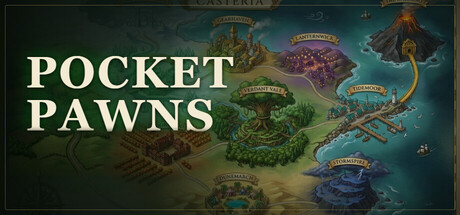
Pocket Pawns was made with the help of generative AI, and the game's own credits name every tool used.
Images and music: the chess piece art was generated with ChatGPT, the board art with Gemini, and the world and environment art from assets created with Nano Banana Pro alongside free-to-use CC0 packs found online. The soundtrack is from Suno.
Claude wrote the game's code, its writing, and its translations into ten languages — and made much of what you see and hear directly in code rather than from an image generator: the character pixel art, the in-world props and interface, the three-dimensional rooms, the animation, and the sound effects.
The chess itself is not generated. The puzzles come from the Lichess puzzle database, released under CC0, and your opponent is Stockfish, a classical open-source chess engine. Real positions, a real engine.
Nothing is generated while you play. Pocket Pawns creates no content at runtime and never connects to an AI service. It does not need an internet connection to play.
Some of the game's background music was created using generative AI, and a very small portion of the visuals underwent refinement or fine-tuning using generative AI.
Store assets, quiz content, and general layout of application generated with AI to help with design and formatting. Human review and edit before any code implemented. This game does not have any AI models running in the background or in-game. All scriptures are public domain.
AI tools were used to assist in creating character sprites during development, followed by manual retouching and adjustments. The game does not generate real-time AI content during gameplay.
Generative AI was used to assist in creating select background artwork and visual assets for the game. All assets were manually edited and refined before being integrated.
Veil of Time is a hand-built game. The maps, the writing, the music, the interface, and the game design are all human work. Generative AI was used in five specific places, each reviewed and finished by hand:
1. Voice acting. Every line of dialogue and every in-game book can be spoken aloud (3,707 voice clips), synthesized with ElevenLabs from the game's own written script. We chose this so the story stays open to players with low vision or reading difficulties, and to younger players who are not fast readers yet. A voice cast of this size would otherwise be out of reach for a small studio. No performance was cloned from a real person without licence.
2. Character and bestiary portraits, generated from the game's original hand-made sprites and finished by hand.
3. Some character sprites and the party's battle animation sheets, produced with AI assistance from the project's own hand-drawn art, then hand-corrected and palette-locked.
4. The intro and outro cinematic stills, the title screen, and the store key art.
5. Ambient critters and butterflies, converted from hand-made source art.
Everything else you see, read, and hear was made by people.
Generative AI tools were used during development to create the artwork and audio used throughout the game. The generated assets were reviewed, selected, edited as needed, and incorporated into the final game by the developer.
Some of the music in this game was created using Suno AI. Generative image tools were also used in the creation of certain in-game visual assets and marketing images. The generated content was reviewed, selected, and modified during the development process. Generative AI is not used in real time during gameplay, nor does the game generate any new content while being played.
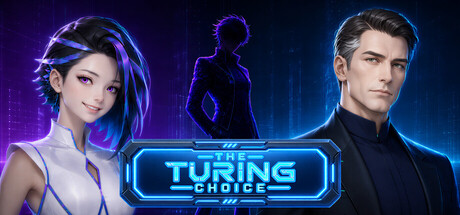
In a particularly fitting twist for a game about artificial intelligence whose protagonist is herself an artificial intelligence, generative AI tools were used during development to assist with some pre-generated visual assets, music, and portions of the text and localization. All AI-assisted content was reviewed, edited, and curated by the developer. No generative AI is used during gameplay.
Arcane Dash was created by a solo developer. Music, cutscene artwork, and translations were created with AI assistance. All levels, character sprites, and sound effects were hand-designed/coded by the developer, and all marketing materials were created and edited by the developer.
Generative AI was used to create some pre-generated character artwork, 2D images, and illustrations included in the game and related visual promotional materials. All generated images are reviewed and selected by the developer before inclusion. No AI-generated content is created during gameplay.
AI tools were used for some decorative textures and minor details. Although their use is minimal, they are visually present and may bother people sensitive to this topic. Furthermore, AI was used for temporary test dubbing of the characters. However, the final product will be voiced by human actors.
This game uses generative AI to create some character sprites, event CGs, backgrounds, and other in-game images. Some translations are also created using generative AI. These AI-generated assets are used as part of the game's content, as well as in images displayed on the game's store page. The game does not use generative AI to generate content in real time based on player input.
Some illustrative artwork used in the game (atmospheric key art shown in the in-game gallery) was created with the assistance of AI image-generation tools. Portions of the game's narrative text, achievement descriptions, and localized translations were written with the assistance of an AI language tool during development, then reviewed and edited by the developer. All sound effects and music are procedurally synthesized using traditional digital signal processing (oscillators and filters), not AI-generated.
Some pre-generated artwork and audio were created with generative AI during development. These outputs are integrated as fixed assets; the game does not generate content live during gameplay or connect to a third-party AI service during gameplay.
AI generation was temporarily used for placeholder assets, sound effects, and code during early development. all of these will be replaced with custom work before the official launch. AI is not used at runtime.
This game features certain art assets that were generated with the assistance of AI. All such AI-assisted or AI-imitated artwork has been created with the consent of the original creator (which essentially means I fed my own drawings into the AI). All other content, including text, audio, and other materials, was produced without any AI involvement.
This game uses AI to analyze the meaning and intent of players’ natural-language input in real time, enabling players to interact with characters using their own words. AI is used solely for input analysis during gameplay. All dialogue and narrative content are written by the development team and are not generated by AI.
We use AI tools during development to help write and debug code, and to help produce some art assets. Everything AI-assisted is made during development and reviewed by us before it ships.
We also use third-party assets bought from the Unity Asset Store. These are sold to us as human-made, and we have no reason to doubt that, but we cannot independently verify how each one was produced. Character animation uses Mixamo.
Some 2D art assets in this game — a portion of the character portraits, unit sprites, and city illustration backgrounds — were created with the assistance of AI image-generation tools (Google Gemini) during development. All such assets are pre-generated, then reviewed and curated by the developer before being included in the build; the game does not generate any AI content live at runtime. Game text, design, code, and systems are authored by the developer without live AI generation.
Generative AI tools were used in the creation of certain visual art assets. All generated content was reviewed and edited by our development team before being included in the final game.
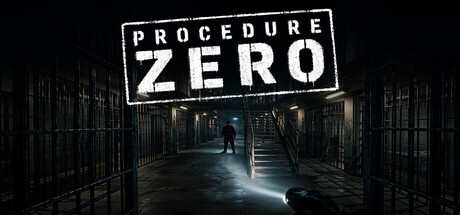
PROCEDURE ZERO is made by one person.
Pre-generated AI tools were used for character voices, sound effects, the
opening scene, and translations into languages other than Polish. Every
line of it was chosen, edited and placed in the game by hand. The game
does not generate any content while you play.
Some art, the 3D models, the music beds, the sound effects and all character voice lines were produced with generative AI tools during development, then hand-reviewed, edited and shipped as fixed assets. Nothing is generated while you play: the game ships every asset on disc, runs no model, and makes no network call.
This game uses Eleven Labs to generate certain sound effects. All other content — including art, models, music, writing, and gameplay — is entirely hand‑made and does not use AI.
Generative AI tools were used during development to assist with the creation of some character illustrations, visual art assets, and portions of the game’s code. All AI-assisted content was reviewed, edited, and integrated by the development team before being included in the final product. The game does not use generative AI to create content in real time during gameplay.
Generative AI tools were used during development to enhance and refine selected existing in-game artwork and music. These assets were not generated from scratch; AI was used only as part of the editing and improvement process. All AI-assisted outputs were reviewed and approved by the developer. The game does not generate AI content at runtime.
Epoch Studio is a private writing and worldbuilding studio. When you ask it to, it can generate text suggestions and illustrations to help you develop your own manuscript. All generation runs locally on your own machine using bundled, permissively-licensed AI models — or optional cloud providers you connect with your own API key. Nothing is generated on its own: every suggestion is a deliberate action you take, and you review, edit, and decide what becomes part of your book. Your writing never leaves your device and is never used to train any AI model.
Neural Defense was developed by a five-person indie team using a combination of hand-crafted work and generative AI tools. Generative AI was used during development to assist with music composition, concept art, portions of the game's code, and the editing and expansion of some narrative text. All final in-game assets — including 3D models, textures, and visual art seen during gameplay — were hand-crafted by the studio's artists. No content or code is generated live during gameplay; everything was created, reviewed, and finalized by the team prior to release.
Generative AI tools were used during development to assist with the creation and iteration of some visual assets and promotional artwork. All final assets are curated, reviewed and further edited or iterated on by the developer. AI-assisted development tools are also used for programming. No AI-generated content is created during gameplay.
This game uses generative AI to provide personalized choices and free-form conversations based on player input and profile information. The main story and scenarios are written by human writers.
Assistance with the development of:
- Custom procedural 2D animation rig.
- Reinforcement learning (RL) layer for player and NPC animations in hand-authored 2D environments.
- Base designs for sprites and backgrounds (further iterated by hand using digital editing software like photoshop)
No ai tools were used in any capacity for writing or story elements, voice acting, music, or anywhere else.
Some background art, still images, videos, and music were created with the assistance of generative AI tools; every asset was reviewed and curated by the developer. During gameplay, callers' dialogue is performed by an AI language model running entirely on the player's PC — fully offline, with no external AI service. The AI performs characters only within hand-written script boundaries, all story outcomes are decided by deterministic game logic, and generated text is filtered before display. Voice input is transcribed locally and never leaves your machine.
English — artwork (yes, pre-generated):
Visual art (scene backgrounds, character art, GUI covers, and visual FX) was drafted with generative image models, then human-reviewed, cropped, and accepted into the shipping game. Store capsules and library art produced the same way are included in this disclosure. Unreviewed generator output is not shipped.
English — writing (human, not AI narrative):
All narrative, dialogue, in-game text, and store copy are human-written. This game is not an AI-authored story. Planned English localization is human-translated, not model-generated.
English — audio / runtime (so reviewers do not assume the rest):
Audio is CC0 / public-domain / project-synthesized sound effects. There is no voice acting and no generative AI voice. The game does not call generative models at runtime.
During the development of *A Bad Dream: Trypophobia*, generative AI was used as a supporting tool to create and refine certain textures, 3D models, and visual elements, as well as to assist in programming specific systems. All content was manually reviewed, edited, configured, and integrated by Big Mount Interactive. The game does not generate content via AI during gameplay, nor does it connect to external AI services.
Generative AI tools were used during development to assist with creating promotional images for the Steam store page, early concept art, and voiceovers for character dialogues. No AI content is generated in real-time during gameplay. All in-game models, code, and environments were manually created, processed, and integrated by the developer.
AI has been used solely as a coding assistant for assistance purposes.
As a solo indie developer with no software background, using a coding assistant is my only option.
Regards.
Generative AI was used during development to create visual assets and other non-dialogue content included in the game. Generated assets were selected, edited, and integrated as part of the development process.
Generative AI was used to create the game's English and Simplified Chinese localization. AI tools were also used to assist with code generation during development. No AI-generated content is created during gameplay.
Generative AI tools were used during development to assist with the creation of [artwork, voice audio, text, and localization]. All AI-assisted content was reviewed and edited by the developer before being included in the game. The game does not generate AI content during gameplay.
Pocket Pawns was made with the help of generative AI, and the game's own credits name every tool used.
Images and music: the chess piece art was generated with ChatGPT, the board art with Gemini, and the world and environment art from assets created with Nano Banana Pro alongside free-to-use CC0 packs found online. The soundtrack is from Suno.
Claude wrote the game's code, its writing, and its translations into ten languages — and made much of what you see and hear directly in code rather than from an image generator: the character pixel art, the in-world props and interface, the three-dimensional rooms, the animation, and the sound effects.
The chess itself is not generated. The puzzles come from the Lichess puzzle database, released under CC0, and your opponent is Stockfish, a classical open-source chess engine. Real positions, a real engine.
Nothing is generated while you play. Pocket Pawns creates no content at runtime and never connects to an AI service. It does not need an internet connection to play.
Some of the game's background music was created using generative AI, and a very small portion of the visuals underwent refinement or fine-tuning using generative AI.
Store assets, quiz content, and general layout of application generated with AI to help with design and formatting. Human review and edit before any code implemented. This game does not have any AI models running in the background or in-game. All scriptures are public domain.
AI tools were used to assist in creating character sprites during development, followed by manual retouching and adjustments. The game does not generate real-time AI content during gameplay.
Generative AI was used to assist in creating select background artwork and visual assets for the game. All assets were manually edited and refined before being integrated.
Veil of Time is a hand-built game. The maps, the writing, the music, the interface, and the game design are all human work. Generative AI was used in five specific places, each reviewed and finished by hand:
1. Voice acting. Every line of dialogue and every in-game book can be spoken aloud (3,707 voice clips), synthesized with ElevenLabs from the game's own written script. We chose this so the story stays open to players with low vision or reading difficulties, and to younger players who are not fast readers yet. A voice cast of this size would otherwise be out of reach for a small studio. No performance was cloned from a real person without licence.
2. Character and bestiary portraits, generated from the game's original hand-made sprites and finished by hand.
3. Some character sprites and the party's battle animation sheets, produced with AI assistance from the project's own hand-drawn art, then hand-corrected and palette-locked.
4. The intro and outro cinematic stills, the title screen, and the store key art.
5. Ambient critters and butterflies, converted from hand-made source art.
Everything else you see, read, and hear was made by people.
Generative AI tools were used during development to create the artwork and audio used throughout the game. The generated assets were reviewed, selected, edited as needed, and incorporated into the final game by the developer.
Some of the music in this game was created using Suno AI. Generative image tools were also used in the creation of certain in-game visual assets and marketing images. The generated content was reviewed, selected, and modified during the development process. Generative AI is not used in real time during gameplay, nor does the game generate any new content while being played.
In a particularly fitting twist for a game about artificial intelligence whose protagonist is herself an artificial intelligence, generative AI tools were used during development to assist with some pre-generated visual assets, music, and portions of the text and localization. All AI-assisted content was reviewed, edited, and curated by the developer. No generative AI is used during gameplay.
Arcane Dash was created by a solo developer. Music, cutscene artwork, and translations were created with AI assistance. All levels, character sprites, and sound effects were hand-designed/coded by the developer, and all marketing materials were created and edited by the developer.
Generative AI was used to create some pre-generated character artwork, 2D images, and illustrations included in the game and related visual promotional materials. All generated images are reviewed and selected by the developer before inclusion. No AI-generated content is created during gameplay.
AI tools were used for some decorative textures and minor details. Although their use is minimal, they are visually present and may bother people sensitive to this topic. Furthermore, AI was used for temporary test dubbing of the characters. However, the final product will be voiced by human actors.
This game uses generative AI to create some character sprites, event CGs, backgrounds, and other in-game images. Some translations are also created using generative AI. These AI-generated assets are used as part of the game's content, as well as in images displayed on the game's store page. The game does not use generative AI to generate content in real time based on player input.
Some illustrative artwork used in the game (atmospheric key art shown in the in-game gallery) was created with the assistance of AI image-generation tools. Portions of the game's narrative text, achievement descriptions, and localized translations were written with the assistance of an AI language tool during development, then reviewed and edited by the developer. All sound effects and music are procedurally synthesized using traditional digital signal processing (oscillators and filters), not AI-generated.
Some pre-generated artwork and audio were created with generative AI during development. These outputs are integrated as fixed assets; the game does not generate content live during gameplay or connect to a third-party AI service during gameplay.
AI generation was temporarily used for placeholder assets, sound effects, and code during early development. all of these will be replaced with custom work before the official launch. AI is not used at runtime.
This game features certain art assets that were generated with the assistance of AI. All such AI-assisted or AI-imitated artwork has been created with the consent of the original creator (which essentially means I fed my own drawings into the AI). All other content, including text, audio, and other materials, was produced without any AI involvement.
This game uses AI to analyze the meaning and intent of players’ natural-language input in real time, enabling players to interact with characters using their own words. AI is used solely for input analysis during gameplay. All dialogue and narrative content are written by the development team and are not generated by AI.
We use AI tools during development to help write and debug code, and to help produce some art assets. Everything AI-assisted is made during development and reviewed by us before it ships.
We also use third-party assets bought from the Unity Asset Store. These are sold to us as human-made, and we have no reason to doubt that, but we cannot independently verify how each one was produced. Character animation uses Mixamo.
Some 2D art assets in this game — a portion of the character portraits, unit sprites, and city illustration backgrounds — were created with the assistance of AI image-generation tools (Google Gemini) during development. All such assets are pre-generated, then reviewed and curated by the developer before being included in the build; the game does not generate any AI content live at runtime. Game text, design, code, and systems are authored by the developer without live AI generation.
Generative AI tools were used in the creation of certain visual art assets. All generated content was reviewed and edited by our development team before being included in the final game.
PROCEDURE ZERO is made by one person.
Pre-generated AI tools were used for character voices, sound effects, the
opening scene, and translations into languages other than Polish. Every
line of it was chosen, edited and placed in the game by hand. The game
does not generate any content while you play.
Some art, the 3D models, the music beds, the sound effects and all character voice lines were produced with generative AI tools during development, then hand-reviewed, edited and shipped as fixed assets. Nothing is generated while you play: the game ships every asset on disc, runs no model, and makes no network call.
This game uses Eleven Labs to generate certain sound effects. All other content — including art, models, music, writing, and gameplay — is entirely hand‑made and does not use AI.