Public Steam disclosure research25,380 disclosures tracked
Where do games disclose AI use?
Search developers’ Steam disclosures, compare classified AI use across
games, and follow recorded changes.
This index adds cross-game classifications and statistics to
statements published on individual store pages.
Groups reflect automatic analysis of public disclosures; mature records are excluded. These counts do not measure AI use across all of Steam.
Missing or unclear statements cannot establish whether a game uses AI.
Football Academy Director includes pre-generated fictional player portraits and selected promotional artwork created with the assistance of generative AI. All AI-generated content is created before release and manually reviewed and curated. The game does not generate AI content during gameplay.
Football Academy Director uses the NG_Regens facepack for fictional player portraits, with permission from the creator. NG_Regens can be found at: https://ngregens.org/
Game Overlay Translator uses AI at runtime to translate the on-screen text that the player chooses to capture from other games or apps. All processing runs locally on the player's own PC and works offline: on-screen text is recognized with an on-device OCR model (RapidOCR / ONNX Runtime) and translated with on-device neural machine translation models (FuguMT, Argos Translate) and, optionally, a locally-run LLM (Ollama / Qwen2.5, or NVIDIA Riva).
No captured text, images, screenshots, or any other user data are sent to external or cloud AI services. The app does not accept free-form prompts and does not generate original or creative content — the AI only outputs a translation of the specific text the player captures. The source text belongs to the third-party games or apps the player runs.
Guardrails: the tool translates only the text the player explicitly captures from their own screen; it cannot be prompted to produce anything else, and all inference is local/offline, so no content is generated on, or sent to, any external server.
We used generative AI mainly for generating code. It has also been used for writing flavour text, many interface descriptions and some lines for an AI character. Finally it has also been used for proofreading.
NULL//REBORN was built with agentic AI as a creative partner throughout the entire pipeline.
I designed the vision, story outline, musical direction, and game logic — then used AI to bring each piece to life:
- generating the art,
- fleshing out the script,
- composing the music, and writing the code.
Every element was guided by human intent and shaped by AI execution.
Some of the artwork on this game's Steam store page and library/marketing assets — including the capsule images and library hero — was created with the assistance of generative AI image tools. All such artwork was reviewed and edited by us prior to use to ensure it is appropriate and does not contain any content that infringes the intellectual property rights of any third party. The game itself does not generate any content using AI at runtime.
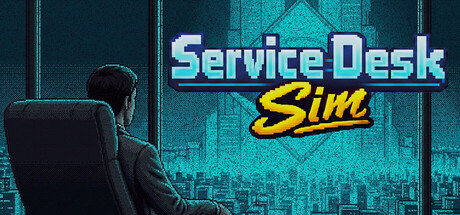
We used advanced AI language models (Claude and Gemini) to help translate
SERVICE DESK SIM into 8 languages: French, German, Spanish, Italian, Hindi,
Urdu, Japanese, and English (UK). The AI handled the initial translation of
all in-game text from UI menus to dialogue, story sequences, and thousands
of unique support tickets. Every translation was then carefully reviewed and
tested by humans to ensure quality and cultural accuracy across all languages.
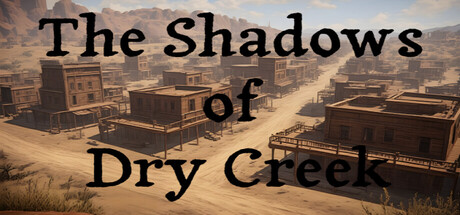
The visuals in The Shadows of Dry Creek (illustrations and scenes) were generated using generative artificial intelligence tools, then curated and integrated within a consistent art direction aligned with the game’s universe. Some elements may have been manually adjusted or refined to ensure they fit the intended narrative experience.
Generative AI was used in the creation of some graphic assets. These assets were further processed using filters and adjustments to better suit the game's visual style.
AI DISCLOSURE
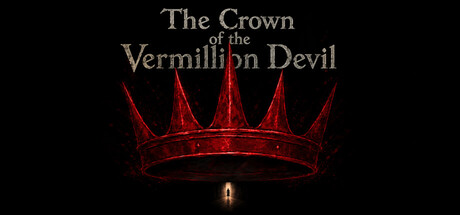
Crown of the Vermillion Devil uses AI-generated imagery for its location artwork. All writing, game design, systems, music, and narrative content are original human-authored work. We are a small independent project and have been transparent about this from the start. If that affects your purchasing decision, we respect it.
This game uses generative AI tools to assist in the creation of visual assets (characters, backgrounds) and narrative content. All AI-generated content has been reviewed and curated by the development team to ensure it meets our quality and safety standards.
AI-Generated Content Disclosure:
Artificial intelligence technology was utilized during the development of this game to assist in the creation of in-game background art and certain cutscenes.
Some background elements were partially generated using AI.
Localization into languages other than German was carried out with the help of AI.
AI was used as a development aid (to help implement certain systems in the game).
I am a solo indie developer and wanted to tell an engaging horror story set in an anime/Japanese-inspired world. Without AI, I unfortunately would never have been able to create a project like this!
Some visual/audio assets, text content, and development assistance were created with AI tools and then reviewed, modified, and integrated by the developer.
Some puzzle illustrations and promotional visual assets were created with AI-assisted tools and then edited/curated by the developer. No real-time generative AI is used during gameplay.
This game uses AI-generated images for some of its 2D artwork, character
scenes, and store page visuals. All AI-generated content is reviewed, edited,
and curated by our team to fit the game's historical setting. The game's
design, writing, story, and code are created by human developers.
Some visual assets and parts of the development workflow for Forest of Numbers were created with the assistance of generative artificial intelligence tools. All content was curated, reviewed, and refined by the developer before being included in the final game.
AI technologies were used extensively throughout the development of this game. The vast majority of the game's design, balancing data, art assets, audio assets, programming, and testing were completed with AI assistance.
Generative AI tools were used during the development of this game to assist with the creation and refinement of some visual assets, background artwork, character-related images, audio elements, voice content, narrative-related materials, localization, and programming code. All AI-assisted content was reviewed, selected, edited, and integrated by the developer to ensure that it fits the game’s artistic direction, narrative, and technical requirements. The game does not generate new AI content while it is running, and players do not directly interact with any live generative AI system.
Some Library images are AI generated. Some (small amount) of in-game images are AI generated. 95% of all assets are created by real artists and in future going for the 100%.
This game was developed with the assistance of generative AI tools. Specifically, generative AI was used to assist with the creation and refinement of some background art assets, the creation of some music assets, and the production of some promotional animation materials.
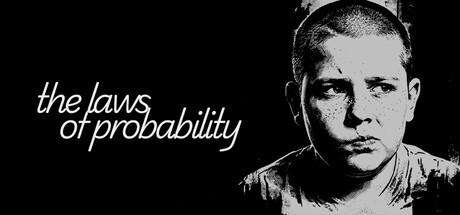
The story, code, mechanics, and every design decision of The Laws of Probability are entirely my own. The music was generated with AI tools based on my direction, and the backgrounds were AI-rendered from my hand-drawn sketches. Using this technology allowed me to bring the project's original vision to life and deliver a complete experience. I am sharing this openly because I respect your right to know.
Generative AI was used to code & write elements of this game including but not limited to items, default hero names, default party names, SVG Vectors and to make balance decisions and other elements of game play.
This game does not use Live-Generated AI during gameplay.
The game does not connect to any external AI service, does not send player input to AI models, and does not generate new AI content while the game is running.
Some visual assets in the game were created with the assistance of generative AI tools during development. These assets are static, pre-generated, reviewed by the developer, and included directly in the game build.
All AI-assisted visual content is used as fixed in-game artwork and is not dynamically generated during gameplay
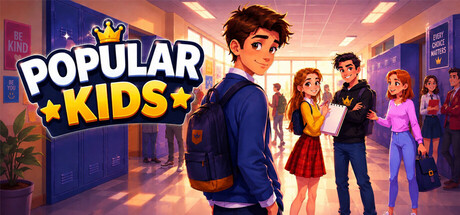
Popular Kids uses generative artificial intelligence to power conversations with student characters. Players can interact using voice or text, and AI-generated dialogue allows characters to respond dynamically based on the current situation, their personality, previous interactions, and the player’s choices throughout the game.
All storylines, characters, progression systems, popularity mechanics, reputation systems, and overall game design are created by the developer. Generative AI is used only to generate character dialogue and conversational responses during gameplay. AI-generated content is monitored and guided by character-specific instructions and game rules to maintain age-appropriate school-life interactions and narrative consistency.
Generative AI tools were used during development to assist with coding, game design ideas, music, dialogue writing, and select texture assets. All content has been reviewed and approved by the developer.
Playstories uses live-generated AI during gameplay to create fictional interactive story prose, dialogue, player choices, scene keywords, branching follow-up scenes, and optional scene images from player prompts and actions through novelai.ai. AI does not control purchases, account actions, executable code, or system-level behavior.
This game uses pre-generated AI content in the following areas of its production:
- Character artwork (comic-style panels)
- Background and environment artwork
- FMV/cutscene videos
- Music and ambient audio
- Story dialogue text (developer-edited with AI assistance)
All AI tools used are commercially licensed for use in this type of product. As the sole developer (Karayel / Yunus Emre Bas), I confirm that I hold the rights to use these AI-generated outputs and they do not infringe on any third-party intellectual property. The final selection, integration, narrative direction, and quality control were all performed by the developer.
This game uses AI language models to generate real-time conversational text content during gameplay. Players interact with AI-powered desktop companions through text chat. The AI responses are generated either locally on the player's PC or through optional cloud AI services (such as OpenAI, Deepseek, etc.). All AI-generated content consists of text-based conversations only — no AI-generated images, audio, or video are used.
AI-supported tools (Photoshop) were used to assist in the creation of selected pre-generated art and UI elements. There is no live-generated AI content.
VoidCraft uses generative AI in two ways. During development, AI tools assisted in creating written content that ships with the game (lore, item and research descriptions, mission templates, NPC flavour text) and in exploring marketing artwork concepts; all of it was reviewed by the developer before inclusion. During gameplay, two features generate text live using large language models: the optional in-game Advisor, which analyses your empire and offers strategy advice in character, and contract mission briefings (titles, short stories, and NPC names) on station contract boards. Players cannot type free-form prompts into these systems - the AI receives only structured game-state data assembled by our servers, and every output is validated server-side before it appears in the game. Core gameplay (combat, economy, progression, rewards) is governed by deterministic game rules, not by AI.
Football Academy Director includes pre-generated fictional player portraits and selected promotional artwork created with the assistance of generative AI. All AI-generated content is created before release and manually reviewed and curated. The game does not generate AI content during gameplay.
Football Academy Director uses the NG_Regens facepack for fictional player portraits, with permission from the creator. NG_Regens can be found at: https://ngregens.org/
Game Overlay Translator uses AI at runtime to translate the on-screen text that the player chooses to capture from other games or apps. All processing runs locally on the player's own PC and works offline: on-screen text is recognized with an on-device OCR model (RapidOCR / ONNX Runtime) and translated with on-device neural machine translation models (FuguMT, Argos Translate) and, optionally, a locally-run LLM (Ollama / Qwen2.5, or NVIDIA Riva).
No captured text, images, screenshots, or any other user data are sent to external or cloud AI services. The app does not accept free-form prompts and does not generate original or creative content — the AI only outputs a translation of the specific text the player captures. The source text belongs to the third-party games or apps the player runs.
Guardrails: the tool translates only the text the player explicitly captures from their own screen; it cannot be prompted to produce anything else, and all inference is local/offline, so no content is generated on, or sent to, any external server.
We used generative AI mainly for generating code. It has also been used for writing flavour text, many interface descriptions and some lines for an AI character. Finally it has also been used for proofreading.
NULL//REBORN was built with agentic AI as a creative partner throughout the entire pipeline.
I designed the vision, story outline, musical direction, and game logic — then used AI to bring each piece to life:
- generating the art,
- fleshing out the script,
- composing the music, and writing the code.
Every element was guided by human intent and shaped by AI execution.
Some of the artwork on this game's Steam store page and library/marketing assets — including the capsule images and library hero — was created with the assistance of generative AI image tools. All such artwork was reviewed and edited by us prior to use to ensure it is appropriate and does not contain any content that infringes the intellectual property rights of any third party. The game itself does not generate any content using AI at runtime.
We used advanced AI language models (Claude and Gemini) to help translate
SERVICE DESK SIM into 8 languages: French, German, Spanish, Italian, Hindi,
Urdu, Japanese, and English (UK). The AI handled the initial translation of
all in-game text from UI menus to dialogue, story sequences, and thousands
of unique support tickets. Every translation was then carefully reviewed and
tested by humans to ensure quality and cultural accuracy across all languages.
The visuals in The Shadows of Dry Creek (illustrations and scenes) were generated using generative artificial intelligence tools, then curated and integrated within a consistent art direction aligned with the game’s universe. Some elements may have been manually adjusted or refined to ensure they fit the intended narrative experience.
Generative AI was used in the creation of some graphic assets. These assets were further processed using filters and adjustments to better suit the game's visual style.
AI DISCLOSURE
Crown of the Vermillion Devil uses AI-generated imagery for its location artwork. All writing, game design, systems, music, and narrative content are original human-authored work. We are a small independent project and have been transparent about this from the start. If that affects your purchasing decision, we respect it.
This game uses generative AI tools to assist in the creation of visual assets (characters, backgrounds) and narrative content. All AI-generated content has been reviewed and curated by the development team to ensure it meets our quality and safety standards.
AI-Generated Content Disclosure:
Artificial intelligence technology was utilized during the development of this game to assist in the creation of in-game background art and certain cutscenes.
Some background elements were partially generated using AI.
Localization into languages other than German was carried out with the help of AI.
AI was used as a development aid (to help implement certain systems in the game).
I am a solo indie developer and wanted to tell an engaging horror story set in an anime/Japanese-inspired world. Without AI, I unfortunately would never have been able to create a project like this!
Some visual/audio assets, text content, and development assistance were created with AI tools and then reviewed, modified, and integrated by the developer.
Some puzzle illustrations and promotional visual assets were created with AI-assisted tools and then edited/curated by the developer. No real-time generative AI is used during gameplay.
This game uses AI-generated images for some of its 2D artwork, character
scenes, and store page visuals. All AI-generated content is reviewed, edited,
and curated by our team to fit the game's historical setting. The game's
design, writing, story, and code are created by human developers.
Some visual assets and parts of the development workflow for Forest of Numbers were created with the assistance of generative artificial intelligence tools. All content was curated, reviewed, and refined by the developer before being included in the final game.
AI technologies were used extensively throughout the development of this game. The vast majority of the game's design, balancing data, art assets, audio assets, programming, and testing were completed with AI assistance.
Generative AI tools were used during the development of this game to assist with the creation and refinement of some visual assets, background artwork, character-related images, audio elements, voice content, narrative-related materials, localization, and programming code. All AI-assisted content was reviewed, selected, edited, and integrated by the developer to ensure that it fits the game’s artistic direction, narrative, and technical requirements. The game does not generate new AI content while it is running, and players do not directly interact with any live generative AI system.
Some Library images are AI generated. Some (small amount) of in-game images are AI generated. 95% of all assets are created by real artists and in future going for the 100%.
This game was developed with the assistance of generative AI tools. Specifically, generative AI was used to assist with the creation and refinement of some background art assets, the creation of some music assets, and the production of some promotional animation materials.
The story, code, mechanics, and every design decision of The Laws of Probability are entirely my own. The music was generated with AI tools based on my direction, and the backgrounds were AI-rendered from my hand-drawn sketches. Using this technology allowed me to bring the project's original vision to life and deliver a complete experience. I am sharing this openly because I respect your right to know.
Generative AI was used to code & write elements of this game including but not limited to items, default hero names, default party names, SVG Vectors and to make balance decisions and other elements of game play.
This game does not use Live-Generated AI during gameplay.
The game does not connect to any external AI service, does not send player input to AI models, and does not generate new AI content while the game is running.
Some visual assets in the game were created with the assistance of generative AI tools during development. These assets are static, pre-generated, reviewed by the developer, and included directly in the game build.
All AI-assisted visual content is used as fixed in-game artwork and is not dynamically generated during gameplay
Popular Kids uses generative artificial intelligence to power conversations with student characters. Players can interact using voice or text, and AI-generated dialogue allows characters to respond dynamically based on the current situation, their personality, previous interactions, and the player’s choices throughout the game.
All storylines, characters, progression systems, popularity mechanics, reputation systems, and overall game design are created by the developer. Generative AI is used only to generate character dialogue and conversational responses during gameplay. AI-generated content is monitored and guided by character-specific instructions and game rules to maintain age-appropriate school-life interactions and narrative consistency.
Generative AI tools were used during development to assist with coding, game design ideas, music, dialogue writing, and select texture assets. All content has been reviewed and approved by the developer.
Playstories uses live-generated AI during gameplay to create fictional interactive story prose, dialogue, player choices, scene keywords, branching follow-up scenes, and optional scene images from player prompts and actions through novelai.ai. AI does not control purchases, account actions, executable code, or system-level behavior.
This game uses pre-generated AI content in the following areas of its production:
- Character artwork (comic-style panels)
- Background and environment artwork
- FMV/cutscene videos
- Music and ambient audio
- Story dialogue text (developer-edited with AI assistance)
All AI tools used are commercially licensed for use in this type of product. As the sole developer (Karayel / Yunus Emre Bas), I confirm that I hold the rights to use these AI-generated outputs and they do not infringe on any third-party intellectual property. The final selection, integration, narrative direction, and quality control were all performed by the developer.
This game uses AI language models to generate real-time conversational text content during gameplay. Players interact with AI-powered desktop companions through text chat. The AI responses are generated either locally on the player's PC or through optional cloud AI services (such as OpenAI, Deepseek, etc.). All AI-generated content consists of text-based conversations only — no AI-generated images, audio, or video are used.
AI-supported tools (Photoshop) were used to assist in the creation of selected pre-generated art and UI elements. There is no live-generated AI content.
VoidCraft uses generative AI in two ways. During development, AI tools assisted in creating written content that ships with the game (lore, item and research descriptions, mission templates, NPC flavour text) and in exploring marketing artwork concepts; all of it was reviewed by the developer before inclusion. During gameplay, two features generate text live using large language models: the optional in-game Advisor, which analyses your empire and offers strategy advice in character, and contract mission briefings (titles, short stories, and NPC names) on station contract boards. Players cannot type free-form prompts into these systems - the AI receives only structured game-state data assembled by our servers, and every output is validated server-side before it appears in the game. Core gameplay (combat, economy, progression, rewards) is governed by deterministic game rules, not by AI.