Public Steam disclosure research26,450 disclosures tracked
Where do games disclose AI use?
Search developers’ Steam disclosures, compare classified AI use across
games, and follow recorded changes.
This index adds cross-game classifications and statistics to
statements published on individual store pages.
Groups reflect automatic analysis of public disclosures; mature records are excluded. These counts do not measure AI use across all of Steam.
Missing or unclear statements cannot establish whether a game uses AI.
During the development process, we have used procedural and AI-based tools to assist with content creation. In all such cases, the final product reflects the creativity and expression of our own development team.
Some elements of background artwork used in this game were created with the assistance of generative AI and subsequently edited and refined by the developer using pixel-editing tools. All AI-generated artwork is pre-generated and incorporated into the game before release. No AI content is generated during gameplay.
Pre-generated assets only. No content is generated by AI while playing.
- Character, background and CG images: Stable Diffusion (illustriousPencilXL), edited.
- Music and vocal ending themes: ACE-Step.
- Character voices: VOICEVOX speech synthesis, credited per each character's terms of use.
All content was reviewed before release. The game contains no adult content.
Some images in the game use AI.
Spanish - Latin America, Ukrainian, Portuguese - Brazil, Turkish, Polish, Portuguese - Portugal, Japanese, Traditional Chinese, Simplified Chinese, Spanish - Spain, Korean, Italian, French, German versions was translated using AI.
Generative AI was used extensively during the development of this game. The developer selected, edited, and integrated the generated content into the final game, while overseeing game design and architecture, creating the original theme music, and refining the final presentation.
The music in this release was composed with AI assistance (Anthropic's Claude). It is written as note data and played by the game's own synthesizer; no AI-generated audio files are used, and no AI runs while you play. The code of this modern port was also largely written with AI assistance. The original 1995 game - its artwork, levels and sound effects - is unchanged, human-made work by Software Storm.
This game was made with the help of AI tools under the developer's direction: they helped write the code that procedurally draws all of the art and synthesizes the music and sound effects, and they translated the game text into nine languages. No AI generates content while you play, and the game does not connect to any AI service.
Generative AI was used during development to assist with texture optimization and translation/localization of game content. AI-generated content is reviewed and adjusted by the development team before being included in the game.
Pre-generated AI tools were used during development to create some event illustrations and card artwork. All AI-generated content is pre-created, reviewed, and included in the shipped game. The game does not use generative AI to create content during gameplay and does not include live-generated AI content.
We're a small team with a big vision. AI lets us build the full game we set out to make, instead of a smaller one. Every idea, design and final call is ours. We used AI to help with code, sound effects, some 3D models and textures (reworked by hand), and dialogue drafts. Nothing is generated while you play.
Using AI for collecting informations about work and organise it... helps in developing scripts, also some images/huds are started from generating procedure.
Some content that ships with the game was made with generative AI tools before release: the interface artwork (menus and the in-flight HUD art), the 3D aircraft models, the music tracks (made with Suno), and the game's app icon. The developers selected, edited and integrated all of it by hand. Nothing is generated while you play, and the game does not connect to any AI service.
This game is a small passion project built with the help of AI-assisted tools. They allow me to attempt a scope that simply wouldn’t be financially possible otherwise.
AI is used as a tool, not as a substitute for creative direction or quality. Everything that makes it into the game is selected, reviewed, edited, implemented, and held to the same standard regardless of how it was produced.
For me, this technology is about lowering the barrier to creation. It gives small independent developers the ability to pursue ideas that once required studio-sized budgets.
Ultimately, I want the game to stand on its own. AI makes the project possible; it doesn’t lower the standard for the finished product.
Some content in the game was created during development with the help of generative AI tools and then edited, assembled and integrated by the developer:
- 3D models: Concept images were generated with Higgsfield and converted into 3D meshes with Tripo. The developer then cleaned, split, rigged and animated them by hand in Blender.
- Sound effects: Many ambient and creature sounds were generated with ElevenLabs and selected and mixed by the developer.
- Music: The music tracks were generated with the AI music generator makebestmusic.com and selected and integrated by the developer.
- Some interface icons as well as store and marketing images were created with AI image generation and then edited.
- In-game text: Dialogue and translations (English, French, Spanish, Japanese, Chinese) were written or translated with AI assistance and reviewed by the developer.
Gameplay design, game systems, world layout and the final selection of all content were done by the developer. No content is generated by AI while the game is running.
Yes, this game has been built with AI.
As a software engineer for over 15 years, I wanted to see how far I could push AI to bring my idea to life. I built the initial prototype myself, but have used AI extensively to turn the prototype into a fully functional game that looks and feels the way I imagined. This is still months of work with over 50 hours of playtesting to bring it to life.
AI has come a long way, and game development is evolving fast. This game would never have left the prototype stage without it. Please consider giving it a chance.
Generative AI was used during development to assist with some visual assets, music, and localization. All such content is the result of a human-led artistic and creative process.
AI-assisted tools were used to help draft and translate text into localized languages. Otherwise, the game would be unavailable in any other languages besides English.
AI tools helped during development: concept references and 3D modeling for the logo and asteroids, and first drafts of some text and the translations. Everything was directed and assembled by the developer.
Generative AI was used to create some of the music in Breakremental. The AI-generated music is temporary, and we plan to replace it with original music when possible.
AI, primarily Claude and Claude Code, was used throughout development. A significant portion of the game's code was written, modified, refactored, or debugged with AI assistance. Localizations were AI-generated, some animations and shaders were created using AI, and certain levels were designed by drawing simple masks in Microsoft Paint, feeding them into an AI coding agent, and letting it turn those questionable drawings into playable environments.
If you're looking for a completely AI-free game, this isn't one.
Generative AI tools were used to assist with the translation and localization of the Steam store page text. All AI-assisted content was reviewed and edited before publication. No AI-generated content is created during gameplay.
Made by a solo developer. Visual assets and audio are AI-generated and hand-edited; AI assisted with code. The physics and design are not generated. Nothing is generated by AI while you play.
AI-assisted tools were used for some background art assets and for the English, Simplified Chinese, Traditional Chinese, and Korean localization. These assets were reviewed and adjusted during development.
AI-assisted coding tools were used during development to support programming and code iteration.
The visual assets, including tanks, ammunition, and vehicles are our own and come from our channels, Yarnub and Blue Paw Print.
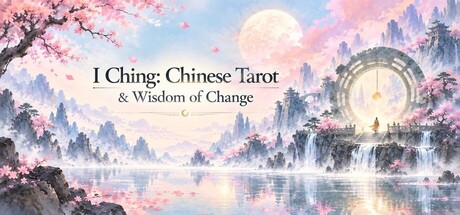
The application includes a locally operated Qwen language model that is used to generate personalized I Ching readings and interpretations based on user input.
When a user enters a question, the AI model analyzes the question together with predefined I Ching knowledge and generates a contextual interpretation of the relevant hexagram. The generated content is intended for divination, reflection, decision support, and personal exploration.
The AI is limited to the context and purpose of I Ching readings and is guided by predefined system instructions and application rules. It is not used for communication between users.
If applicable: User prompts and AI-generated readings are processed locally on the user's device and are not transmitted to an external AI service.
Some of the content in this game—specifically the background music and the translations of in-game and store text—was created using generative AI tools prior to release. These tools were used primarily for testing purposes, including for numerous online and offline servers and game scenarios. All AI-assisted content has been reviewed and edited by the developer. The game does not generate any content using AI while you are playing.
As a solo developer, I use generative AI tools to support my creative vision for Tooth & Tide. This includes AI-generated music and visual artwork used in the game and its store materials, which I select and incorporate into the experience. I direct the game’s design and development, using these tools as part of my production process. All AI-generated content is prepared during development; the game does not generate content through AI while you play.
All voice acting is performed by professional actors and is licensed.
All the music in the game was composed by real composers—Ilya Khaminov, Sergey Sergeev, Alexander Kosyakov, and Emil Zenko—and is licensed.
All 3D models and animations were created by our talented team of professional artists.
As part of the development process, generative AI was used to assist in the creation of certain visual elements, including artistic textures and company logos. The AI-generated content was reviewed, edited, and/or further refined by our development team before being incorporated into the game.
The game has been in development since 2019, and 99% of all game content was created by professional developers, artists, and designers.
This game includes content created with the assistance of generative AI tools:
- In-Game Artwork: Philosopher portraits and background visuals were generated using Google's Gemini (Gemini Pro) and hand-curated by the developer.
- Text: Philosopher biographies and informational descriptions were generated with Anthropic's Claude, based on the developer's direction, then reviewed and edited by the developer.
All AI-generated content has been reviewed, edited, and curated by the developer, who holds full commercial rights for its use in this product.
Pre-generated content only. The game makes no network calls and generates
nothing at runtime.
ART. All 2D art is pixel art produced with PixelLab, an AI image generation
service, from prompts written by the developer and kept in the repository
(tools/pixellab.py). This covers device sprites, component and interface
icons, shop and manufacturer marks, effects, textures, the menu backdrop,
achievement icons and the store capsules. Every image was reviewed and
selected by the developer, many were regenerated against a written art
direction until they matched it, and several are further transformed in
code — trimmed and squared, recoloured for dark backgrounds, made seamless
for tiling, or desaturated to produce the locked variant of an achievement
icon.
TEXT AND LOCALISATION. The interface text, the tutorial, the help book and
the in-game prose were written with AI assistance, and the translations into
German, Turkish, French, Italian and Spanish were AI-produced from the
English. All of it was reviewed by the developer. The store description and
its five translations were produced the same way.
This game uses generative AI tools to help create some of its visual art, including in-game and store assets. All creative direction and game design were guided by the developer.