Public Steam disclosure research27,951 disclosures tracked
Where do games disclose AI use?
Search developers’ Steam disclosures, compare classified AI use across
games, and follow recorded changes.
This index adds cross-game classifications and statistics to
statements published on individual store pages.
Groups reflect automatic analysis of public disclosures; mature records are excluded. These counts do not measure AI use across all of Steam.
Missing or unclear statements cannot establish whether a game uses AI.
Silly Agent is a labor of love by a single developer. To make a game of this scale possible, I've integrated AI technology for specific assets like background music, character voices, and some 3D model foundations. This tech acts as my "extended team," allowing me to deliver a rich, voiced, and musically atmospheric world that would otherwise take years for one person to build manually.
This game uses generative AI as part of the development process.
AI tools were used to assist in the creation of certain visual assets, concepts, and marketing materials.
All AI-generated content was reviewed, edited, and integrated manually to ensure consistency with the game's design and quality standards.
The gameplay itself is fully designed and controlled by the developer, with no real-time AI-generated content during play.
During development, we used generative AI tools to assist with certain visual assets, including images and 3D models. All AI-generated content was pre-produced during the development phase and has been manually reviewed and validated. No real-time AI generation occurs during gameplay.
During the development of this game, generative AI tools were used as a supportive resource for technical and creative tasks. Specifically, AI was utilized to assist in structuring complex C# scripts and providing visual reference images for world-building and character design. This allowed me as a solo developer to streamline my technical workflow and focus more on the core gameplay, environmental puzzles, and the unique atmospheric feel of the project. Every piece of AI-assisted logic or visual concept has been manually reviewed, adapted, and implemented by me to ensure it fits perfectly within the game's overall design.
AI Disclosure
This game uses pre-generated AI assets for specific visual elements:
The beach background featured in branding and the title screen.
Selected environmental details and decorative art within the game world (such as shop window graphics).
AI tools were also used as efficiency aids during the development process (coding and reviews).
Some promotional images and video materials for this game were created with the assistance of generative AI. All content has been reviewed and modified by human editors.
This game uses generative AI in the creation of some visual assets.
All generated content has been reviewed, edited, and adjusted by the developer before being included in the game. The gameplay and core mechanics are entirely designed and controlled by the developer and do not rely on AI.
Generative AI was utilized strictly to assist in drafting the narrative script and visuals for our promotional marketing trailers, and for in-game cutscenes. All other actual in-game content—including the gameplay code, 3D models, level design, physics, and mechanics—was meticulously crafted by hand by human developers.
MANSION uses live artificial intelligence during gameplay. The AI Commander enemy in Campaign mode and all five AI agents in Arena mode are powered by large language models that generate real-time tactical decisions and reasoning text. This content is generated live during gameplay and varies every session. No pre-rendered AI content is used in artwork, audio, or narrative. AI generated text is limited to short tactical reasoning displayed in the in-game terminal.
AI was used for multilingual localization work and during the prototyping and implementation of in-game systems. All AI-generated outputs were directly reviewed and modified by the developer before final integration.
Some visual assets, including loading screen images and menu screen artwork, were developed with the assistance of AI image generation tools. AI video generation tools were also used to assist in the production of opening, ending, and promotional trailer videos. All content was created and directed by the developer, with AI serving as a supporting tool to realize the game's creative vision.
This game uses generative AI (Grok Imagine by xAI) to create visual assets for the Steam store page, including the header, capsules, background images, and logos.
Some visual assets in this game, such as the capsule art, were generated with the assistance of AI tools and then edited and refined by the developer. No gameplay, mechanics, or code were generated by AI.
Some textures and 3D models in this game were created using AI-assisted procedural rendering during development. The game does not generate any content with AI at runtime.
AI was used to generate or assist in the creation of illustrations, background music, and sound effects. Each asset has been manually edited and polished for the final game.
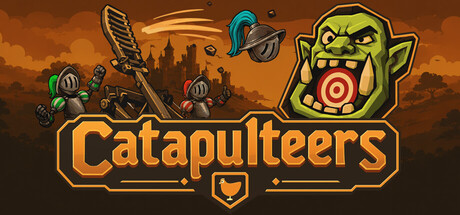
Some content in Catapulteers was created with the assistance of generative AI tools, including selected in-game textures, models, voice-over, and music.
Catapulteers is a handcrafted game made by a small independent team of five developers. We use AI only as one of several production tools to support specific parts of asset creation and iteration.
Every AI-assisted element has been reviewed, edited, selected, and integrated by our team, and the final creative direction, gameplay, humor, world, systems, and overall experience are fully authored by us.
This project leverages generative AI to assist in software development and documentation processing, covering data retrieval and synthesis, localization, modular script implementation, and code logic optimization. By utilizing AI for cross-disciplinary knowledge integration and performance refactoring, all outputs undergo manual review and adjustment. This ensures that core creativity remains developer-led while enhancing development efficiency under the premise of maintaining system stability.
This game uses pre-generated AI images for card artwork and
character sprites, created with Stable Diffusion. No AI is used
to generate content during gameplay.
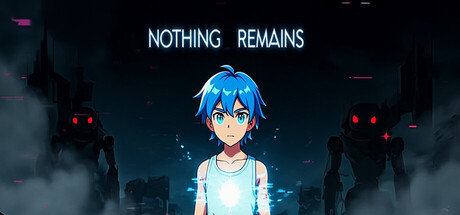
Some store and promotional artwork for Nothing Remains has been created or enhanced using AI-assisted tools. All gameplay systems, mechanics, and in-game content are fully original and developed without the use of generative AI.
AI was used during development to assist with brainstorming and iteration, while all final rooms, puzzles, and gameplay mechanics were designed by the developer.
Generative AI was sporadically used to create initial references and placeholder assets, which have been or will be replaced with hand-crafted content during production.
Textures for billboards are made with AI to showoff the "AI car company" The AI art is easily noticable and intentional
Text to Speech software is used for the AI cars commands. this can be toggled off ingame
LLM is used in the steampage description, THOUGH it has not written a single word of the description, it was just used to find proper words and sentences to make it look like it was written by the AI bot of the car.