Public Steam disclosure research25,380 disclosures tracked
Where do games disclose AI use?
Search developers’ Steam disclosures, compare classified AI use across
games, and follow recorded changes.
This index adds cross-game classifications and statistics to
statements published on individual store pages.
Groups reflect automatic analysis of public disclosures; mature records are excluded. These counts do not measure AI use across all of Steam.
Missing or unclear statements cannot establish whether a game uses AI.
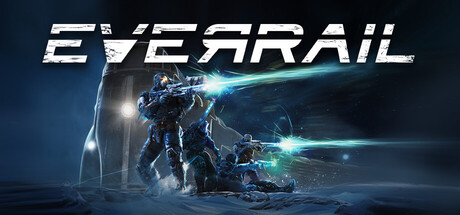
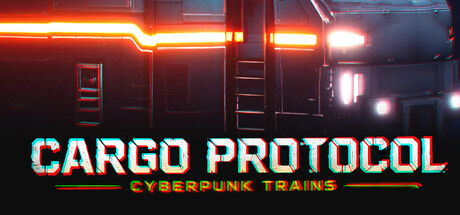
In EverRail, AI-generated voiceover is used only for machine characters: the train's AI board computer and robot enemies, voices that are artificial in the story itself, which also lets us offer them in multiple languages. Beyond that, our team uses generative AI as a tool to support development, with our artists, designers, and engineers refining and hand-building every asset that makes it into the game.
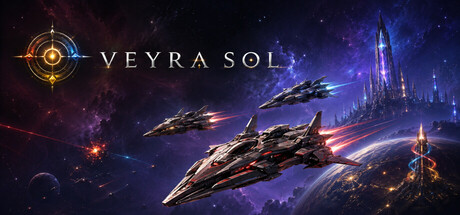
Veyrasol uses generative AI tools as part of its art pipeline. Both 3D models and 2D artwork used in the game (illustrations, backgrounds, UI and unit icons), as well as store page and marketing graphics such as capsule images and banners, were created with the help of generative AI tools and then reviewed, edited and assembled by the developer. Generative AI tools were also used to help write parts of the marketing website and store page copy. The core game (engine, server logic, real-time combat, and systems) is hand-coded by the developer, and no content is generated by AI at runtime during play.
I've used AI for code, and to generate some 2D & 3D assets.
I know people want to boycott AI (and I can respect that opinion), but this game would be nearly impossible for a solo developer to make without it.
I cannot stress to you the amount of manual work that still has to go into something like this, even with AI tooling.
You couldn't "prompt" a game like this.
I genuinely care about creating a good game, and if my use of AI is a hard stop for you trying this game, it's your loss!
During the development of this game, generative AI tools were used to assist the developer in several areas:
- Music & Audio: The game's soundtrack and musical scores were entirely generated using AI audio tools.
- Visual Assets: AI tools were used to assist in the texturing process for a selection of 3D models.
- Localization & Text: AI assisted in the translation and localization of the game's text, as well as refining marketing materials and store descriptions.
- Coding: AI coding agents were utilized to assist with programming, code optimization, and debugging.
All AI-assisted assets and code have been carefully reviewed, curated, and integrated by the developer to ensure a cohesive and high-quality player experience.
Some visual assets in this game (such as illustrations, icons, and background images) were created with the assistance of generative AI tools. All AI-generated content was reviewed, edited, and curated by our development team before being included in the game.
AI tools were used as supportive tools during the development process, including assistance with code, visual assets, and music. All AI-assisted content was reviewed, edited, and integrated by our development team before being included in the game.
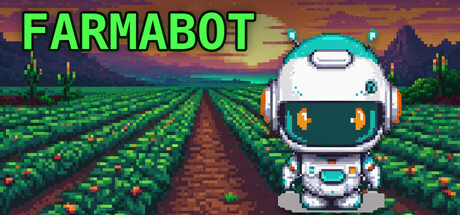
Some of the 2D art in Farmabot — including certain character, creature and crop sprites, cutscene background illustrations, and the game's store page / marketing images (capsules, icon, key art) — was produced with the assistance of locally-run generative AI image tools (Stable Diffusion). All AI-assisted assets are pre-generated (there is no live or runtime AI generation in the game); every asset was curated, edited, and assembled by the developer before inclusion.
To Raise a King was made by one person working with AI collaborators. AI tools were used in the following ways during development, and every AI output shipped in the game was reviewed, curated, edited, and approved by the developer before inclusion.
Source code. Written in collaboration with Anthropic's Claude, with the developer directing architecture, reviewing every change, and testing behavior.
Character and scene illustrations. Generated locally with the FLUX.2 image model running in ComfyUI. Prompts, reference images, layered compositions, and final selections were all authored and curated by the developer.
Voice acting. Voices were produced with ElevenLabs. The developer cast each role, wrote each line, directed the delivery through iteration, and hand-picked the takes shipped in the game.
Music and sound. Music and select sound effects were produced with ElevenLabs' music generation. Tracks were selected, edited, and placed by the developer.
Writing and design. Story beats, dialogue, and system design were developed collaboratively with Claude, with the developer as the final author.
The developer confirms they hold or have licensed the rights to use these tools' outputs commercially, and has taken reasonable steps to ensure no infringing or unlawful content was produced.
We use AI-generated or AI-assisted content for some announcement and promotional materials, including announcement screenshots, trailers, GIFs, and game icons.
The final release version of the game will not use AI-generated content.
Generative AI is used only to assist with localization and translation of game-related text. No gameplay, artwork, audio, or other player-facing content is generated by AI.
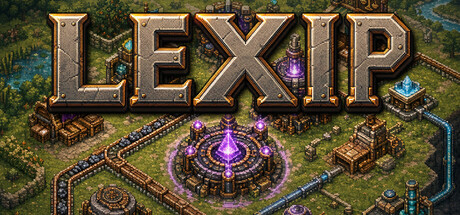
Generative AI tools were used in the development of Lexip to create initial drafts and source material for parts of the project, including code, visual assets, sounds, writing, and marketing materials. These outputs were not used unchanged; they were reviewed, selected, adapted, edited, and integrated by the developer. The final implementation, design decisions, and overall tuning were done manually. The game does not generate new AI content during gameplay.
Salt and Soil uses generative AI during gameplay to create some Annual Family Council narrative text and structured choice outcomes based on the current campaign state. Generated council content is constrained by the game’s historical setting, family data, localization rules, and gameplay schema, then validated before it is shown to the player.
No game assets or gameplay content were generated using AI.
Localization into some supported languages was created with AI assistance and reviewed by the developers and community where possible.
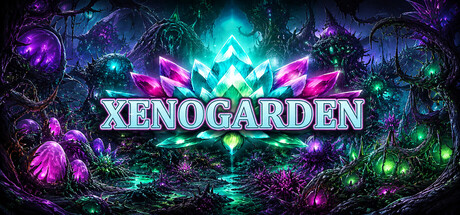
Generative AI-assisted tools were used as part of the development process for Xenogarden.
This includes support in creating and refining selected visual content such as concept art, artwork, textures, marketing materials and store page assets, as well as assistance with text, localization, sound/music ideas and creative drafts.
All content included in the game is pre-generated, selected, reviewed and curated. The game does not generate new AI content during gameplay and does not connect to external AI services during gameplay.
This game uses pre-generated generative AI content to assist with select 2D artwork, UI elements, and/or marketing materials. This content was reviewed and, where necessary, edited by the developer. No content is generated live by AI during gameplay.
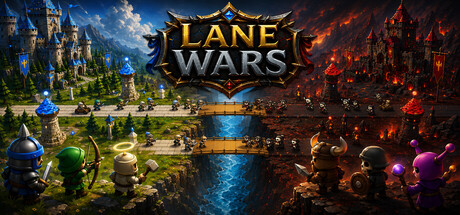
Lane Wars uses generative AI only for some pre-made 2D artwork: the game's icon, main-menu key art, and the Steam store capsule/promotional images were created with AI image-generation tools and then edited by the developer. Some trailer and marketing music was made with an AI music tool. Everything you interact with in-game — the 3D characters, environments, HUD, visual and sound effects, and all gameplay systems — is hand-built and procedurally generated in code, not AI-generated. The game does not use any generative AI at runtime.
AI is used during our early Alpha development phase to create temporary placeholder art. The intent is to replace once the core game loop as been satisfied.
Generative AI was used during the development process to assist with code optimization, refactoring, and text translation. None of the AI-generated content is generated in real-time or active during live gameplay.
Generative AI assisted with: English localization (AI-translated, developer-reviewed),
some store-page capsule art (generated programmatically), and store-page description text.
No AI runs live/at runtime in the game. Core code, game design and original in-game
sprite art were made by the developer.
Generative AI was used to assist in the creation of the visual assets displayed on the Steam store page, including capsules, promotional artwork, backgrounds, and other marketing images. AI was also used to assist in the creation of certain 2D visual assets used in the game. All AI-generated content was reviewed, edited, and integrated by the developer before being included. No generative AI is used during gameplay or by players.
A pre-rendered cinematic intro sequence was created with the assistance of AI-based video generation tools. Some visual assets were generated or refined using AI image generation.
Some art assets, textures, and sound effects are created with the assistance of AI tools, then curated and edited by the developer. All game design, gameplay systems, code architecture, physics simulation, and mission design are human-made. No AI-generated content is created at runtime.
As a solo developer with a limited budget, I use AI tools to help produce some assets and sounds. This lets me keep my time focused where a solo dev's hours matter most — the core gameplay, the physics simulation, and mission design — while still delivering production quality that would normally require an extended team. Every AI-assisted asset is curated, edited, and integrated by hand.
This game uses AI-generated content, created during development and included as fixed, pre-generated assets in the shipped game (not generated live or dynamically during gameplay).
3D models: Unit, structure, and Titan models are generated using Meshy, an AI text/image-to-3D generation tool.
Music: The game's background soundtrack (16 tracks) is generated using Suno, an AI music generation tool.
A small number of icons and minor graphical assets currently used in the game are temporary placeholders created with the help of AI. These assets will be replaced with original, custom-made artwork as development progresses. Our goal is to use fully original content in the final version.
AI tools were used during development as coding and asset-pipeline assistants (writing the procedural generation code for models, textures and music) and to help draft store page text. All content was reviewed by the developer. The game does not generate content with AI at runtime.
Pre-generated AI tools were used to create some visual assets and promotional artwork, including UI concepts, store page artwork, icons, and environmental illustrations. These assets are reviewed and curated by the developer before inclusion. The game does not use live-generated AI content during gameplay.
Command Doctrine uses generative AI to create some of the content you play. When you generate a scenario or a campaign, an AI model produces the map, the opposing forces, the objectives, and the written mission briefing from your prompt. AI is also used to write narrative battle reports, to create the images that accompany them, and to interpret the natural-language orders you give your units. This content is generated live by third-party AI services. We apply content moderation and input filtering to guard against inappropriate or unsafe output.
Erevael is made by a solo developer who uses generative AI as part of the development process. The following player-facing content is created with AI and reviewed by the developer before release:
- Visual art, including assets used in the procedurally generated world.
- Localization: translations are machine-generated and have not yet been professionally reviewed.
Music and sound effects are sourced from licensed, human-made libraries and are not AI-generated. AI coding assistants are also used during development.
The AI-generated art is a starting point. If the game finds an audience, the plan is to replace it with work from human artists in a free update for everyone, while keeping the original art available as an optional mod.
Good, honest call — AI-generated art means you disclose it, and Steam shows this text publicly on your page. Here's a clean, accurate disclosure message:
Some of the visual assets in this game (such as card artwork and illustrations) were created with the assistance of generative AI tools. All AI-generated content was reviewed and curated by the developer. The game's design, code, and gameplay are human-authored.
Some of the images in the game were generated using AI during the prototype stage. Such assets may be present in the game up until the release of the demo (inclusive). During the development process, we gradually get rid of generated assets and replace them with hand-made ones. By the time of the official release, all generated content will be removed. This is a normal process for developing an indie game.
Some store page marketing images, capsule assets, and promotional screenshots were created or edited with generative AI and then reviewed and adjusted for layout, sizing, and text. The game does not use live generative AI during gameplay, and it does not connect to any third-party AI service while players are playing.
This game actively supports human creativity, notably musicians and programmers - but uses AI in the design of marketing materials and some aspects of software development. Neither the game itself - nor the procedural generation techniques used to create the world, music, or audio - use AI or AI-generated art.
The game was vibe coded. Many of the current assets were generated by various GenAI models, some of which will be staying but some of which are just placeholders for the time being. Much manual work still goes into making everything look good and come together even when using GenAI.
In EverRail, AI-generated voiceover is used only for machine characters: the train's AI board computer and robot enemies, voices that are artificial in the story itself, which also lets us offer them in multiple languages. Beyond that, our team uses generative AI as a tool to support development, with our artists, designers, and engineers refining and hand-building every asset that makes it into the game.
Veyrasol uses generative AI tools as part of its art pipeline. Both 3D models and 2D artwork used in the game (illustrations, backgrounds, UI and unit icons), as well as store page and marketing graphics such as capsule images and banners, were created with the help of generative AI tools and then reviewed, edited and assembled by the developer. Generative AI tools were also used to help write parts of the marketing website and store page copy. The core game (engine, server logic, real-time combat, and systems) is hand-coded by the developer, and no content is generated by AI at runtime during play.
I've used AI for code, and to generate some 2D & 3D assets.
I know people want to boycott AI (and I can respect that opinion), but this game would be nearly impossible for a solo developer to make without it.
I cannot stress to you the amount of manual work that still has to go into something like this, even with AI tooling.
You couldn't "prompt" a game like this.
I genuinely care about creating a good game, and if my use of AI is a hard stop for you trying this game, it's your loss!
During the development of this game, generative AI tools were used to assist the developer in several areas:
- Music & Audio: The game's soundtrack and musical scores were entirely generated using AI audio tools.
- Visual Assets: AI tools were used to assist in the texturing process for a selection of 3D models.
- Localization & Text: AI assisted in the translation and localization of the game's text, as well as refining marketing materials and store descriptions.
- Coding: AI coding agents were utilized to assist with programming, code optimization, and debugging.
All AI-assisted assets and code have been carefully reviewed, curated, and integrated by the developer to ensure a cohesive and high-quality player experience.
Some visual assets in this game (such as illustrations, icons, and background images) were created with the assistance of generative AI tools. All AI-generated content was reviewed, edited, and curated by our development team before being included in the game.
AI tools were used as supportive tools during the development process, including assistance with code, visual assets, and music. All AI-assisted content was reviewed, edited, and integrated by our development team before being included in the game.
Some of the 2D art in Farmabot — including certain character, creature and crop sprites, cutscene background illustrations, and the game's store page / marketing images (capsules, icon, key art) — was produced with the assistance of locally-run generative AI image tools (Stable Diffusion). All AI-assisted assets are pre-generated (there is no live or runtime AI generation in the game); every asset was curated, edited, and assembled by the developer before inclusion.
To Raise a King was made by one person working with AI collaborators. AI tools were used in the following ways during development, and every AI output shipped in the game was reviewed, curated, edited, and approved by the developer before inclusion.
Source code. Written in collaboration with Anthropic's Claude, with the developer directing architecture, reviewing every change, and testing behavior.
Character and scene illustrations. Generated locally with the FLUX.2 image model running in ComfyUI. Prompts, reference images, layered compositions, and final selections were all authored and curated by the developer.
Voice acting. Voices were produced with ElevenLabs. The developer cast each role, wrote each line, directed the delivery through iteration, and hand-picked the takes shipped in the game.
Music and sound. Music and select sound effects were produced with ElevenLabs' music generation. Tracks were selected, edited, and placed by the developer.
Writing and design. Story beats, dialogue, and system design were developed collaboratively with Claude, with the developer as the final author.
The developer confirms they hold or have licensed the rights to use these tools' outputs commercially, and has taken reasonable steps to ensure no infringing or unlawful content was produced.
We use AI-generated or AI-assisted content for some announcement and promotional materials, including announcement screenshots, trailers, GIFs, and game icons.
The final release version of the game will not use AI-generated content.
Generative AI is used only to assist with localization and translation of game-related text. No gameplay, artwork, audio, or other player-facing content is generated by AI.
Generative AI tools were used in the development of Lexip to create initial drafts and source material for parts of the project, including code, visual assets, sounds, writing, and marketing materials. These outputs were not used unchanged; they were reviewed, selected, adapted, edited, and integrated by the developer. The final implementation, design decisions, and overall tuning were done manually. The game does not generate new AI content during gameplay.
Salt and Soil uses generative AI during gameplay to create some Annual Family Council narrative text and structured choice outcomes based on the current campaign state. Generated council content is constrained by the game’s historical setting, family data, localization rules, and gameplay schema, then validated before it is shown to the player.
No game assets or gameplay content were generated using AI.
Localization into some supported languages was created with AI assistance and reviewed by the developers and community where possible.
Generative AI-assisted tools were used as part of the development process for Xenogarden.
This includes support in creating and refining selected visual content such as concept art, artwork, textures, marketing materials and store page assets, as well as assistance with text, localization, sound/music ideas and creative drafts.
All content included in the game is pre-generated, selected, reviewed and curated. The game does not generate new AI content during gameplay and does not connect to external AI services during gameplay.
This game uses pre-generated generative AI content to assist with select 2D artwork, UI elements, and/or marketing materials. This content was reviewed and, where necessary, edited by the developer. No content is generated live by AI during gameplay.
Lane Wars uses generative AI only for some pre-made 2D artwork: the game's icon, main-menu key art, and the Steam store capsule/promotional images were created with AI image-generation tools and then edited by the developer. Some trailer and marketing music was made with an AI music tool. Everything you interact with in-game — the 3D characters, environments, HUD, visual and sound effects, and all gameplay systems — is hand-built and procedurally generated in code, not AI-generated. The game does not use any generative AI at runtime.
AI is used during our early Alpha development phase to create temporary placeholder art. The intent is to replace once the core game loop as been satisfied.
Generative AI was used during the development process to assist with code optimization, refactoring, and text translation. None of the AI-generated content is generated in real-time or active during live gameplay.
Generative AI assisted with: English localization (AI-translated, developer-reviewed),
some store-page capsule art (generated programmatically), and store-page description text.
No AI runs live/at runtime in the game. Core code, game design and original in-game
sprite art were made by the developer.
Generative AI was used to assist in the creation of the visual assets displayed on the Steam store page, including capsules, promotional artwork, backgrounds, and other marketing images. AI was also used to assist in the creation of certain 2D visual assets used in the game. All AI-generated content was reviewed, edited, and integrated by the developer before being included. No generative AI is used during gameplay or by players.
A pre-rendered cinematic intro sequence was created with the assistance of AI-based video generation tools. Some visual assets were generated or refined using AI image generation.
Some art assets, textures, and sound effects are created with the assistance of AI tools, then curated and edited by the developer. All game design, gameplay systems, code architecture, physics simulation, and mission design are human-made. No AI-generated content is created at runtime.
As a solo developer with a limited budget, I use AI tools to help produce some assets and sounds. This lets me keep my time focused where a solo dev's hours matter most — the core gameplay, the physics simulation, and mission design — while still delivering production quality that would normally require an extended team. Every AI-assisted asset is curated, edited, and integrated by hand.
This game uses AI-generated content, created during development and included as fixed, pre-generated assets in the shipped game (not generated live or dynamically during gameplay).
3D models: Unit, structure, and Titan models are generated using Meshy, an AI text/image-to-3D generation tool.
Music: The game's background soundtrack (16 tracks) is generated using Suno, an AI music generation tool.
A small number of icons and minor graphical assets currently used in the game are temporary placeholders created with the help of AI. These assets will be replaced with original, custom-made artwork as development progresses. Our goal is to use fully original content in the final version.
AI tools were used during development as coding and asset-pipeline assistants (writing the procedural generation code for models, textures and music) and to help draft store page text. All content was reviewed by the developer. The game does not generate content with AI at runtime.
Pre-generated AI tools were used to create some visual assets and promotional artwork, including UI concepts, store page artwork, icons, and environmental illustrations. These assets are reviewed and curated by the developer before inclusion. The game does not use live-generated AI content during gameplay.
Command Doctrine uses generative AI to create some of the content you play. When you generate a scenario or a campaign, an AI model produces the map, the opposing forces, the objectives, and the written mission briefing from your prompt. AI is also used to write narrative battle reports, to create the images that accompany them, and to interpret the natural-language orders you give your units. This content is generated live by third-party AI services. We apply content moderation and input filtering to guard against inappropriate or unsafe output.
Erevael is made by a solo developer who uses generative AI as part of the development process. The following player-facing content is created with AI and reviewed by the developer before release:
- Visual art, including assets used in the procedurally generated world.
- Localization: translations are machine-generated and have not yet been professionally reviewed.
Music and sound effects are sourced from licensed, human-made libraries and are not AI-generated. AI coding assistants are also used during development.
The AI-generated art is a starting point. If the game finds an audience, the plan is to replace it with work from human artists in a free update for everyone, while keeping the original art available as an optional mod.
Good, honest call — AI-generated art means you disclose it, and Steam shows this text publicly on your page. Here's a clean, accurate disclosure message:
Some of the visual assets in this game (such as card artwork and illustrations) were created with the assistance of generative AI tools. All AI-generated content was reviewed and curated by the developer. The game's design, code, and gameplay are human-authored.
Some of the images in the game were generated using AI during the prototype stage. Such assets may be present in the game up until the release of the demo (inclusive). During the development process, we gradually get rid of generated assets and replace them with hand-made ones. By the time of the official release, all generated content will be removed. This is a normal process for developing an indie game.
Some store page marketing images, capsule assets, and promotional screenshots were created or edited with generative AI and then reviewed and adjusted for layout, sizing, and text. The game does not use live generative AI during gameplay, and it does not connect to any third-party AI service while players are playing.
This game actively supports human creativity, notably musicians and programmers - but uses AI in the design of marketing materials and some aspects of software development. Neither the game itself - nor the procedural generation techniques used to create the world, music, or audio - use AI or AI-generated art.
The game was vibe coded. Many of the current assets were generated by various GenAI models, some of which will be staying but some of which are just placeholders for the time being. Much manual work still goes into making everything look good and come together even when using GenAI.