Public Steam disclosure research27,951 disclosures tracked
Where do games disclose AI use?
Search developers’ Steam disclosures, compare classified AI use across
games, and follow recorded changes.
This index adds cross-game classifications and statistics to
statements published on individual store pages.
Groups reflect automatic analysis of public disclosures; mature records are excluded. These counts do not measure AI use across all of Steam.
Missing or unclear statements cannot establish whether a game uses AI.
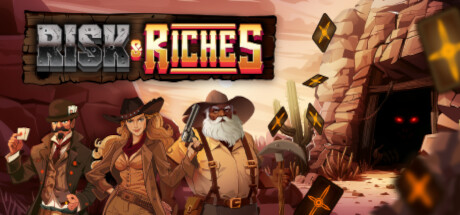
This game was built by a solo dev experimenting with GenAI. GenAI tools were used to help draft character portraits, reward videos, and icons (Jokers, Mods, Stagecoaches, Trinkets) along with background variations and some marketing materials. Every asset that made it into the final game was reviewed, refined, and approved by hand.
No GenAI systems interact with players during gameplay and no visual content is live-generated.
The game also does not collect or use player data for AI training or adaptive behavior.
This game uses generative AI for some content. Specifically:
Image generation AI is used for some illustrations such as backgrounds. After use, the development team makes modifications and adjustments.
As indie developers, in order to improve our game content within limited resources, we used AI-assisted tools for「some background music tracks」during the early creation phase to generate drafts and inspiration references. The final version of these tracks was still manually designed and adjusted by our team.
We also confirm that visual assets in the game are original creations by our artists, no AI image generation tools were used for the game's visuals.
NO generative AI will be in the FINAL game.
For the current DEMO only, AI (Adobe Firefly) was used to create some art for the demo, but it is being replaced by hand-made art before the full game launch.
This game is primarily human-made. AI was used for some coding assistance in late stage of production, text proofreading, and as a starting point for a few 3D meshes and textures in creation process.
Our game utilizes AI in various aspects.
Code: AI algorithms are applied to optimize the game's code, ensuring smoother gameplay and better performance. This includes improving character pathfinding and adjusting in-game parameters for an ideal difficulty level.
Text: We use AI-driven natural language processing to assist in text-related tasks, like ensuring consistency and grammar in the in-game text for items, locations, and descriptions.
Textures: AI, such as generative adversarial networks, helps in creating high-quality textures for different surfaces in the game, enhancing the visual appeal.
Sound Effects: AI is used to analyze and manipulate sound effects, making them more realistic and in tune with in-game actions and events.
Music: AI algorithms analyze musical styles to compose original music that sets the right mood for different game scenes.
This game uses generative AI in parts of the development process. Any AI-assisted assets are reviewed by the developer and, when needed, edited or adjusted before being included in the game. The game does not run generative AI in real time.
Some artwork: selected visuals such as certain card art and enemy character art.
Some music: selected BGM tracks.
100% of the in-game art was made by artists, including marketing material. However, some of the in-game text was created with the assistance of AI tools.
Only localizations other than English or German (in-game and store page) were created with AI, nothing else. Any feedback or corrections to these localizations are very much welcome.
Some images and backgrounds in the game are AI-assisted assets that have been carefully edited and refined by me. The artwork is a blend of self-designed visuals and AI-generated elements, with adjustments made to harmonize color patterns.
Artificial intelligence was used to create some art assets for this game like the cards, monster and sprites.
Store page assets like the box art also makes use of Artificial Intelligence.
Generative AI tools were used as part of the development workflow for programming assistance, debugging support, implementation planning, and visual refinement.
AI-assisted visual workflows were used to explore, refine, or produce some visual elements. All such content was reviewed and integrated manually by the developer.
Ashes of Morgravia does not use live generative AI during gameplay. The game does not generate AI content at runtime and does not send player input to AI services.
Some of the art in the game is made with the help of generative AI. This involves generating images from hand-drawn sketches, generating art with AI iteratively, painting over and modifying AI generated art, and fine-tuning art both hand-made and AI generated.
I used AI to generate some 2D image assets
1 Promotional images on the game store
2 Images of in-game hero commanders, player-customized avatars, artifact images, game interface background images, game loading interface images
The background illustrations, unit icons, technology icons, and building icons in the game are generated by AI and then manually modified. Other materials are hand-drawn.
Some of the game icons and music used in the DEMO version were generated by AI. In the official release, we will replace these assets.The localized translation of the game is done using AI.
The game was created by two brothers, and one of them is 2D artist, who uses both manual drawing and AI assistance. With just manual drawing, it would never be possible to create this amount of art with this team. And we have no budget to hire additional artists. Similar situation with localization.
Some aspects of Fire Isle's art were initially created using Adobe Firefly and Claude generated images and 3D models as a base. I then personally edited all of this art in Photoshop and similar software to better match the game's art style. I am actively in the process of replacing all of the game's AI-generated art with entirely hand-made art.
Generative AI tools were used during the development of this game to assist in the creation of various pre-generated content, including certain visual assets, text, localization, audio, UI elements, promotional materials, and development support.
All content ultimately released or included in the game has been manually reviewed, edited, and approved to ensure it meets the game’s quality standards.