Public Steam disclosure research25,882 disclosures tracked
Where do games disclose AI use?
Search developers’ Steam disclosures, compare classified AI use across
games, and follow recorded changes.
This index adds cross-game classifications and statistics to
statements published on individual store pages.
Groups reflect automatic analysis of public disclosures; mature records are excluded. These counts do not measure AI use across all of Steam.
Missing or unclear statements cannot establish whether a game uses AI.
Generative AI was used as a supporting tool during the creation of some of the Steam Community assets, with all AI-generated images being carefully refined and significantly reworked by a professional graphic artist. The game itself (and all in-game artwork) was created entirely by human developers and artists, without the use of generative AI.
This game uses generative AI for some visual assets.
All such assets are reviewed, edited, and refined by the developer before use.
Generative AI is not used for gameplay or game progression.
I use AI-generated content—such as game illustrations—as a basis for refinement or as a reference.
I also use AI to write code, or refer to the code it generates.
Codex, powered by ChatGPT, was used as a coding assistant during development.
I’m a software engineer with 25 years of programming experience. I used Codex to help with technical implementation while I focused on the game’s design, systems, balance, and overall feel. It made it possible to build Mindscape in my spare time and release it for free.
One man team here. AI helped me learn to code and I also used it to help generate some of the artwork and voices. All of the artwork generated by AI has been carefully polished and modified.
Generative AI was used only for limited enhancements to marketing visuals, texture edits, and selected SFX.
Gameplay systems and mechanics do not rely on AI-generated content.
All generated assets are owned and licensed by us.
Localisation: The game's interface text was localised into 11 languages (French, Spanish (Latin America), Italian, German, Portuguese (Brazil), Russian, Simplified Chinese, Korean, Japanese, Polish, Turkish) with the assistance of AI tools. All original English source text was written by the developer.
Voice-over: Some in-game voice-over was created using AI voice generation, used alongside recordings from real voice artists.
Music: Two background music tracks heard on in-game radios were generated with AI tools, then filtered and edited by the developer in FL Studio.
Store art: The capsule artwork combines a hand-made logo created by a commissioned artist with an AI-generated background.
This game uses curated, pre-generated AI-assisted artwork and audio. These assets are created before release, then reviewed, edited, processed, and integrated by the developer as fixed in-game images, ambience, and related store or marketing materials.
Approximately 90% of Haunted House's content (art, text, narrative, game design, and code) is AI-generated, using ComfyUI / Stable Diffusion with custom LoRA, LLMs, and AI coding assistants. All AI outputs are reviewed, edited, and integrated by Hoppy, the sole developer. Music and sound effects are licensed, not AI-generated. No voice acting. Final creative direction and decisions are by Hoppy.
Generative AI was used during development to assist with polishing promotional illustrations and drafting portions of the game's logic code. Some manually drawn promotional artwork was refined with AI assistance to improve less polished areas. AI-assisted code was manually reviewed by the developer, integrated by hand, and verified through local builds and hands-on playtesting before use. The game does not include player-facing real-time AI generation.
The game does not use any live-generated AI content. All assets, text, audio, and gameplay loops are static and pre-packaged, running entirely local and offline without any dynamic runtime generation.
Generative AI may be used for certain promotional materials and future story-related visual content. All AI-assisted content is reviewed and edited by the developer before being included in the game or store page.
AI tools were used in a limited capacity during the development of the game, primarily to assist with certain programming tasks and the creation of temporary assets.
No AI-generated content is created in real time while playing the game.
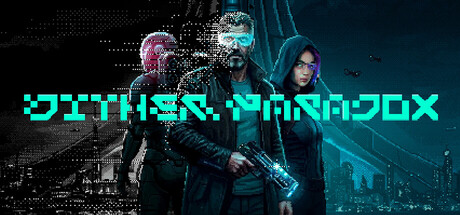
Dither Paradox is created and directed by Michał Kita. The game's final pixel art, animation, and visual design are made by hand, and every artistic and creative decision is made by people.
We use generative AI as a production tool that supports - but does not replace - this work. In the visual layer, AI is sometimes used during the concept and iteration stage - to explore ideas and variations - while the final art assets that ship in the game are made by hand. AI also assists in producing music and voiceover, which are then curated, edited, and approved by the team, as well as some promotional materials.
AI lets us reach a higher level of polish in less time, but authorship, art direction, and final responsibility for everything players see and hear remain with the people who make the game.
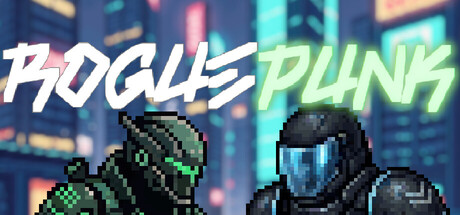
RoguePunk is an independent project, and its visual and audio content including pixel-art characters, enemies, environments, music, and sound effects was created with the help of generative AI tools, then selected, arranged, edited, and integrated by hand to fit the game's world and feel.
I see these tools the way earlier developers saw new engines, samplers, and digital art software: as a way for solo developers to bring an ambitious, fully-realized world to players who might otherwise never get to see it.
Some 3D models, prop assets, and sound effects in this game were created with the help of generative AI tools and then reviewed, edited, and integrated by our team to fit the game's art style and quality standards. Other art, design, and store/marketing materials were created without generative AI.
Some pre-rendered 2D artwork, icon, and UI/store visual assets were created or assisted with generative AI during development. The game does not generate AI content during gameplay and does not connect to an external AI service.
During development, some of the game's art assets (including icons, UI elements, scene backgrounds, and character visuals) were created with the help of AI image-generation tools, then curated, adjusted, and integrated by hand. The game does not generate any AI content in real time during play.
The Living Atlas uses procedural generation algorithms to create unique fantasy worlds, including terrain, biomes, river systems, and civilization simulation. These systems were developed with the assistance of large language models (LLMs) used during development for code generation and design. The store page copy and marketing assets were also created with LLM assistance. No AI-generated content is produced during gameplay — all in-game content is generated by deterministic procedural algorithms seeded by player input.
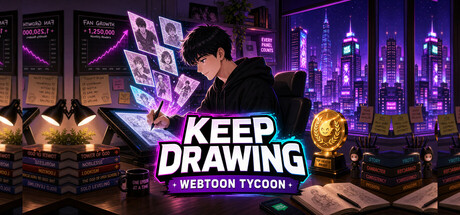
Keep Drawing was developed by HuDoes Interactive with AI-assisted tools used as part of our workflow — not as a fully automated production pipeline.
Some in-game visuals and UI elements were created or refined with generative AI during development. All such assets were reviewed, edited, and integrated by the developer before release. Store and marketing graphics (including Steam capsule artwork) were also created with AI assistance and then manually adjusted for quality and consistency.
AI-assisted coding tools were used to help write and refactor parts of the game's source code. The design, game systems, balance, and final implementation remain developer-directed.
Some visual assets and concept artwork used in the game were created or assisted by generative AI tools and further modified by the developer. All gameplay systems, story content, level design, and interactive features were created by the developer.
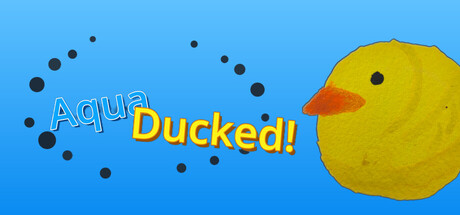
Some of the content in AquaDucked! was created with the help of generative AI tools:
- Some background music was created using AI music-generation tools.
- The blurred background images behind each theme were created or refined with AI tools.
- Portions of the store page and marketing text were drafted with AI assistance.
The core game art — the ducks, tools, and objects you play with — is either original, hand-painted watercolor, or photo-generated, not AI-generated.
All AI-generated content is pre-generated during development. AquaDucked! does not generate any content live during gameplay and does not connect to any external AI services while you play. We've made commercially reasonable efforts to ensure this content is appropriate and does not infringe on the rights of others.
The in-game interface text is translated into the supported languages using AI / machine translation. Parts of this store page description were drafted with AI. Parts of the source code were written with the help of an AI coding assistant.The in-game interface text is translated into the supported languages using AI. Parts of this store page description were drafted with AI. Parts of the source code were written with the help of an AI coding assistant.
Generative AI was used during development to assist with creating some art assets, music, sound effects, gameplay prototypes, text, and code iteration. All AI-generated content used in the game has been manually reviewed, edited, integrated, and tested before inclusion.
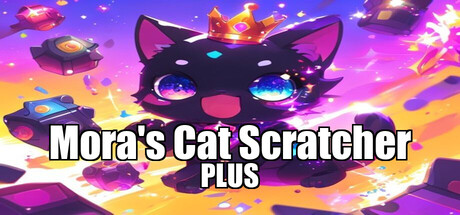
Cat & Fox Studios used generative AI image tools (Pollinations FLUX) to create the store-page art assets for this game, including:
the Main Capsule, Library Hero, Library Logo, Vertical Capsule, Page Background, small/header capsules, and the character illustrations of Mora the cat shown on the store page and in gallery posts.
These AI-generated assets are used for marketing imagery and Steam store presentation only. The original music in the game was composed by Dr. Jenna Fox of Cat & Fox Studios.
The game itself does not call any AI service during gameplay — all play is fully deterministic.
Generative AI was used to create some of the capsule and promotional artwork displayed on the game's Steam store page. All such artwork was reviewed and selected by the developer. No AI-generated content is created during gameplay.
Generative AI disclosure
Some visual assets in American Dream were created with the help of generative artificial intelligence during development, then reviewed and edited by the developer before release.
This includes the main menu background art and related promotional graphics used on the Steam store page and in Steam library/marketing images (such as header, capsule, and hero artwork). Gameplay screenshots are captured from the actual game and are not AI-generated.
Generative AI is not used to create content while you play. The game does not generate artwork, audio, narrative, or code during gameplay, and it does not connect to any third-party AI services while running.
Football Academy Director includes pre-generated fictional player portraits and selected promotional artwork created with the assistance of generative AI. All AI-generated content is created before release and manually reviewed and curated. The game does not generate AI content during gameplay.
Football Academy Director uses the NG_Regens facepack for fictional player portraits, with permission from the creator. NG_Regens can be found at: https://ngregens.org/
We used Generative AI tools solely for localizing the store page descriptions, brainstorming promotional texts, and translating "About This Game" sections into multiple languages to make the game accessible to a wider audience. No AI-generated assets (such as art, code, or audio) are used within the game build itself.
Game Overlay Translator uses AI at runtime to translate the on-screen text that the player chooses to capture from other games or apps. All processing runs locally on the player's own PC and works offline: on-screen text is recognized with an on-device OCR model (RapidOCR / ONNX Runtime) and translated with on-device neural machine translation models (FuguMT, Argos Translate) and, optionally, a locally-run LLM (Ollama / Qwen2.5, or NVIDIA Riva).
No captured text, images, screenshots, or any other user data are sent to external or cloud AI services. The app does not accept free-form prompts and does not generate original or creative content — the AI only outputs a translation of the specific text the player captures. The source text belongs to the third-party games or apps the player runs.
Guardrails: the tool translates only the text the player explicitly captures from their own screen; it cannot be prompted to produce anything else, and all inference is local/offline, so no content is generated on, or sent to, any external server.
Generative AI was used as a supporting tool during the creation of some of the Steam Community assets, with all AI-generated images being carefully refined and significantly reworked by a professional graphic artist. The game itself (and all in-game artwork) was created entirely by human developers and artists, without the use of generative AI.
This game uses generative AI for some visual assets.
All such assets are reviewed, edited, and refined by the developer before use.
Generative AI is not used for gameplay or game progression.
I use AI-generated content—such as game illustrations—as a basis for refinement or as a reference.
I also use AI to write code, or refer to the code it generates.
Codex, powered by ChatGPT, was used as a coding assistant during development.
I’m a software engineer with 25 years of programming experience. I used Codex to help with technical implementation while I focused on the game’s design, systems, balance, and overall feel. It made it possible to build Mindscape in my spare time and release it for free.
One man team here. AI helped me learn to code and I also used it to help generate some of the artwork and voices. All of the artwork generated by AI has been carefully polished and modified.
Generative AI was used only for limited enhancements to marketing visuals, texture edits, and selected SFX.
Gameplay systems and mechanics do not rely on AI-generated content.
All generated assets are owned and licensed by us.
Localisation: The game's interface text was localised into 11 languages (French, Spanish (Latin America), Italian, German, Portuguese (Brazil), Russian, Simplified Chinese, Korean, Japanese, Polish, Turkish) with the assistance of AI tools. All original English source text was written by the developer.
Voice-over: Some in-game voice-over was created using AI voice generation, used alongside recordings from real voice artists.
Music: Two background music tracks heard on in-game radios were generated with AI tools, then filtered and edited by the developer in FL Studio.
Store art: The capsule artwork combines a hand-made logo created by a commissioned artist with an AI-generated background.
This game uses curated, pre-generated AI-assisted artwork and audio. These assets are created before release, then reviewed, edited, processed, and integrated by the developer as fixed in-game images, ambience, and related store or marketing materials.
Approximately 90% of Haunted House's content (art, text, narrative, game design, and code) is AI-generated, using ComfyUI / Stable Diffusion with custom LoRA, LLMs, and AI coding assistants. All AI outputs are reviewed, edited, and integrated by Hoppy, the sole developer. Music and sound effects are licensed, not AI-generated. No voice acting. Final creative direction and decisions are by Hoppy.
Generative AI was used during development to assist with polishing promotional illustrations and drafting portions of the game's logic code. Some manually drawn promotional artwork was refined with AI assistance to improve less polished areas. AI-assisted code was manually reviewed by the developer, integrated by hand, and verified through local builds and hands-on playtesting before use. The game does not include player-facing real-time AI generation.
The game does not use any live-generated AI content. All assets, text, audio, and gameplay loops are static and pre-packaged, running entirely local and offline without any dynamic runtime generation.
Generative AI may be used for certain promotional materials and future story-related visual content. All AI-assisted content is reviewed and edited by the developer before being included in the game or store page.
AI tools were used in a limited capacity during the development of the game, primarily to assist with certain programming tasks and the creation of temporary assets.
No AI-generated content is created in real time while playing the game.
Dither Paradox is created and directed by Michał Kita. The game's final pixel art, animation, and visual design are made by hand, and every artistic and creative decision is made by people.
We use generative AI as a production tool that supports - but does not replace - this work. In the visual layer, AI is sometimes used during the concept and iteration stage - to explore ideas and variations - while the final art assets that ship in the game are made by hand. AI also assists in producing music and voiceover, which are then curated, edited, and approved by the team, as well as some promotional materials.
AI lets us reach a higher level of polish in less time, but authorship, art direction, and final responsibility for everything players see and hear remain with the people who make the game.
RoguePunk is an independent project, and its visual and audio content including pixel-art characters, enemies, environments, music, and sound effects was created with the help of generative AI tools, then selected, arranged, edited, and integrated by hand to fit the game's world and feel.
I see these tools the way earlier developers saw new engines, samplers, and digital art software: as a way for solo developers to bring an ambitious, fully-realized world to players who might otherwise never get to see it.
Some 3D models, prop assets, and sound effects in this game were created with the help of generative AI tools and then reviewed, edited, and integrated by our team to fit the game's art style and quality standards. Other art, design, and store/marketing materials were created without generative AI.
Some pre-rendered 2D artwork, icon, and UI/store visual assets were created or assisted with generative AI during development. The game does not generate AI content during gameplay and does not connect to an external AI service.
During development, some of the game's art assets (including icons, UI elements, scene backgrounds, and character visuals) were created with the help of AI image-generation tools, then curated, adjusted, and integrated by hand. The game does not generate any AI content in real time during play.
The Living Atlas uses procedural generation algorithms to create unique fantasy worlds, including terrain, biomes, river systems, and civilization simulation. These systems were developed with the assistance of large language models (LLMs) used during development for code generation and design. The store page copy and marketing assets were also created with LLM assistance. No AI-generated content is produced during gameplay — all in-game content is generated by deterministic procedural algorithms seeded by player input.
Keep Drawing was developed by HuDoes Interactive with AI-assisted tools used as part of our workflow — not as a fully automated production pipeline.
Some in-game visuals and UI elements were created or refined with generative AI during development. All such assets were reviewed, edited, and integrated by the developer before release. Store and marketing graphics (including Steam capsule artwork) were also created with AI assistance and then manually adjusted for quality and consistency.
AI-assisted coding tools were used to help write and refactor parts of the game's source code. The design, game systems, balance, and final implementation remain developer-directed.
Some visual assets and concept artwork used in the game were created or assisted by generative AI tools and further modified by the developer. All gameplay systems, story content, level design, and interactive features were created by the developer.
Some of the content in AquaDucked! was created with the help of generative AI tools:
- Some background music was created using AI music-generation tools.
- The blurred background images behind each theme were created or refined with AI tools.
- Portions of the store page and marketing text were drafted with AI assistance.
The core game art — the ducks, tools, and objects you play with — is either original, hand-painted watercolor, or photo-generated, not AI-generated.
All AI-generated content is pre-generated during development. AquaDucked! does not generate any content live during gameplay and does not connect to any external AI services while you play. We've made commercially reasonable efforts to ensure this content is appropriate and does not infringe on the rights of others.
The in-game interface text is translated into the supported languages using AI / machine translation. Parts of this store page description were drafted with AI. Parts of the source code were written with the help of an AI coding assistant.The in-game interface text is translated into the supported languages using AI. Parts of this store page description were drafted with AI. Parts of the source code were written with the help of an AI coding assistant.
Generative AI was used during development to assist with creating some art assets, music, sound effects, gameplay prototypes, text, and code iteration. All AI-generated content used in the game has been manually reviewed, edited, integrated, and tested before inclusion.
Cat & Fox Studios used generative AI image tools (Pollinations FLUX) to create the store-page art assets for this game, including:
the Main Capsule, Library Hero, Library Logo, Vertical Capsule, Page Background, small/header capsules, and the character illustrations of Mora the cat shown on the store page and in gallery posts.
These AI-generated assets are used for marketing imagery and Steam store presentation only. The original music in the game was composed by Dr. Jenna Fox of Cat & Fox Studios.
The game itself does not call any AI service during gameplay — all play is fully deterministic.
Generative AI was used to create some of the capsule and promotional artwork displayed on the game's Steam store page. All such artwork was reviewed and selected by the developer. No AI-generated content is created during gameplay.
Generative AI disclosure
Some visual assets in American Dream were created with the help of generative artificial intelligence during development, then reviewed and edited by the developer before release.
This includes the main menu background art and related promotional graphics used on the Steam store page and in Steam library/marketing images (such as header, capsule, and hero artwork). Gameplay screenshots are captured from the actual game and are not AI-generated.
Generative AI is not used to create content while you play. The game does not generate artwork, audio, narrative, or code during gameplay, and it does not connect to any third-party AI services while running.
Football Academy Director includes pre-generated fictional player portraits and selected promotional artwork created with the assistance of generative AI. All AI-generated content is created before release and manually reviewed and curated. The game does not generate AI content during gameplay.
Football Academy Director uses the NG_Regens facepack for fictional player portraits, with permission from the creator. NG_Regens can be found at: https://ngregens.org/
We used Generative AI tools solely for localizing the store page descriptions, brainstorming promotional texts, and translating "About This Game" sections into multiple languages to make the game accessible to a wider audience. No AI-generated assets (such as art, code, or audio) are used within the game build itself.
Game Overlay Translator uses AI at runtime to translate the on-screen text that the player chooses to capture from other games or apps. All processing runs locally on the player's own PC and works offline: on-screen text is recognized with an on-device OCR model (RapidOCR / ONNX Runtime) and translated with on-device neural machine translation models (FuguMT, Argos Translate) and, optionally, a locally-run LLM (Ollama / Qwen2.5, or NVIDIA Riva).
No captured text, images, screenshots, or any other user data are sent to external or cloud AI services. The app does not accept free-form prompts and does not generate original or creative content — the AI only outputs a translation of the specific text the player captures. The source text belongs to the third-party games or apps the player runs.
Guardrails: the tool translates only the text the player explicitly captures from their own screen; it cannot be prompted to produce anything else, and all inference is local/offline, so no content is generated on, or sent to, any external server.