Public Steam disclosure research25,383 disclosures tracked
Where do games disclose AI use?
Search developers’ Steam disclosures, compare classified AI use across
games, and follow recorded changes.
This index adds cross-game classifications and statistics to
statements published on individual store pages.
Groups reflect automatic analysis of public disclosures; mature records are excluded. These counts do not measure AI use across all of Steam.
Missing or unclear statements cannot establish whether a game uses AI.
This game was developed using an agentic AI coding tool, the code was written with AI assistance, under the design, direction, and review of the developer. The game contains no AI-generated assets — models and textures are generated procedurally in-engine, audio (sound effects and music) is pre-synthesized with the developer's own non-AI DSP tools, and UI text uses system fonts. No AI content is generated at runtime.
Google Gemini was utilized during the development phase as an assistive tool for C# scripting, code optimization, debugging, and brainstorming game mechanics. All AI-assisted outputs were manually reviewed, edited, and validated by the developer to ensure proper integration and originality.
This application uses generative AI tools to assist in writing parts of the code and logic during development. All AI-generated code has been reviewed, tested, and integrated by humans to ensure the security and stability of the application.
Generative AI was utilized exclusively during development to assist with writing and optimizing code. The game does not contain any AI-generated art, music, or other in-game assets.
Hey everyone! I’m incredibly excited to finally bring this factory game to Steam.
To be completely transparent, a significant part of this game was crafted through what the cool kids call "Vibe Coding"—leveraging cutting-edge AI to help bring my logic, systems, and visions to life. While the AI helped lay down the bricks, the core factory mechanics, balancing, and gameplay design are all fueled by my own passion for automation.
Think of it as a factory game built by a developer who loves automation so much, they even automated parts of the development process! I hope you enjoy optimizing your factories as much as I enjoyed optimizing this code.
Azura uses artificial intelligence to accelerate card prototyping, character ideas, and mechanic balancing, always providing creative support. All final content goes through human curation and collaborations with artists, ensuring a visually unique and soulful game.
Assistance in programming ( the programmer can't remember Godot's _unhandled_input(event) syntax even after 5 projects… ). Assistance with text and minor graphic patching.
Generative AI tools were used during development to assist with programming, debugging, text drafting, and localization drafts. All final game content, code, text, and store materials are reviewed and edited by the developer before release. The game does not use AI to generate content during gameplay and does not connect to external AI services while running.
I use AI tools in limited parts of the development process, including:
• Assisting with certain steps of creating game assets.
• Supporting debugging workflows.
• Helping with localization and translation.
AI-generated content is used only during the concept art and asset planning phase to generate initial creative ideas. No AI-generated content is present in the final game.
We use AI-assisted tools in parts of our development process to assist with content creation, improve productivity, and streamline routine tasks so our team has more time for creative work. Where we use these tools, the work is directed, reviewed, and finalized by our team.
Generative AI tools were used during parts of the asset prototyping and ideation process. All final game assets were significantly modified, refined, and curated by the development team before inclusion in the game.
We want to be fully transparent with our community about how we develop our game. In this project, we have integrated Artificial Intelligence (AI) tools as an operational support for our team.
How we use it:
- Process optimization: It helps us streamline technical tasks and repetitive workflows.
- Efficiency: It allows us to deliver better work and move forward much faster.
- Resource maximization: It enables the team to save time on mechanical processes to focus on the final game polish.
Our commitment to craftsmanship:
- Total human control: No element of the final game has been left solely to AI.
- Expert review: Every technical asset or piece of content goes through a rigorous human editing filter.
- Manual work behind everything: Technology only optimizes our delivery times, but there is always genuine craftsmanship behind every asset.
- Guaranteed quality: We use AI to empower our team's capabilities, ensuring the essence and final finish of the game remain 100% human.
Thank you for your constant support!
Generative AI was not used to create artwork, audio, narrative content, or marketing assets for Dream Abstract. Generative AI tools were used during development to assist with coding and debugging.
SPECTRENDS currently uses generative artificial intelligence for some placeholder visuals and promotional assets during development.
These AI-generated assets are temporary and will be fully replaced with original, hand-crafted art before the game's full release.
The final version of the game will not use generative AI for any assets.
AI tools were used during development to assist with code review, debugging, and localization. The game does not use generative AI during gameplay. Music is generated in real time using procedural audio systems and custom algorithms.
Final Deal is a human-created game. Generative AI tools were used as part of the development process for brainstorming and concept exploration of some visual assets. All gameplay mechanics, systems, writing, artistic direction, and final creative were made by the developer.
Artificial Intelligence was used as a supportive tool during the early stages of development, primarily for idea generation, documentation structuring, and general content review.
AI was also used to create certain placeholder images during the conceptual phase. These assets are temporary and will be replaced, as they are not intended to be part of the final version of the game.
All final game content, including design, gameplay systems, mechanics, artwork, and programming, has been manually created, implemented, and validated by the developer, along with licensed assets from the Unity Asset Store and contributions from freelancers (all properly credited).
AI-assisted tools were used as part of the development workflow for prototyping, implementation support, and content iteration. The released game content was selected, edited, and curated by the developer. The game does not use live generative AI during gameplay.
All AI used to make this game has been limited to coordinating tasks and making minor images that will be replaced before release. Code assistance was a major portion of its use to find errors and fix script as needed.
No AI is connecting to any third party or outside source during/before/after gameplay.
Generative AI tools were used during development for technical planning, system architecture, building custom systems, code cleanup, and similar engineering support.
Some current pre-release visual/model assets are AI-generated placeholders. These are intended to be replaced with final authored assets before release.
AI tools were used strictly to assist with optimizing some C# scripts and brainstorming mechanics. All final 2D and 3D in-game assets, animations, and core gameplay features were manually created and implemented by the developer.
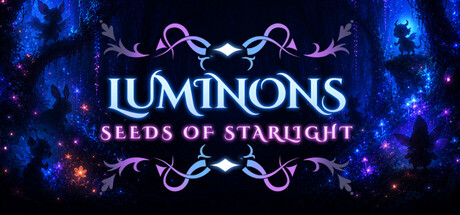
I'm a solo developer and a 3D and graphic design teacher by day. Every visual asset in this game (from the pixel art creatures to the 3D environments) is crafted by me. Music and sound effects come from licensed human creators.
AI tools helped me during development with coding, debugging, and organizing ideas, but never to create visual or audio content.
The English and Spanish localizations are written by me. For all other languages, I used AI-assisted translation, because there's nothing better than playing a game in your own language, and I wanted Luminons to reach as many people as possible. Professional translators are outside the budget for a solo project, but if this game finds its audience, revisiting every localization with human translators (and adding more languages) is absolutely on the list.
The game does not feature any live or procedurally generated AI content. The entire player experience consists of fixed, hand-crafted assets with AI assistance and static, local code.
We have updated our AI disclosure in order to provide better transparency and clarity around the use of this support tool for Crazy Taxi: World Tour:
At SEGA Corporation, we utilize generative AI as an optional support tool for developers, with the aim of enabling developers to focus more on creative tasks and deliver better experiences to our players.
In Crazy Taxi: World Tour, generative AI was used as part of the ideation process for background objects. However, no AI-generated content will be included in the final game.
Monster Pit features handcrafted assets created by talented artists, musicians, and creators from the indie community. AI image generation tools were used during prototyping and stylization to keep the overall visual direction together.
This game was developed using an agentic AI coding tool, the code was written with AI assistance, under the design, direction, and review of the developer. The game contains no AI-generated assets — models and textures are generated procedurally in-engine, audio (sound effects and music) is pre-synthesized with the developer's own non-AI DSP tools, and UI text uses system fonts. No AI content is generated at runtime.
Google Gemini was utilized during the development phase as an assistive tool for C# scripting, code optimization, debugging, and brainstorming game mechanics. All AI-assisted outputs were manually reviewed, edited, and validated by the developer to ensure proper integration and originality.
This application uses generative AI tools to assist in writing parts of the code and logic during development. All AI-generated code has been reviewed, tested, and integrated by humans to ensure the security and stability of the application.
Generative AI was utilized exclusively during development to assist with writing and optimizing code. The game does not contain any AI-generated art, music, or other in-game assets.
Hey everyone! I’m incredibly excited to finally bring this factory game to Steam.
To be completely transparent, a significant part of this game was crafted through what the cool kids call "Vibe Coding"—leveraging cutting-edge AI to help bring my logic, systems, and visions to life. While the AI helped lay down the bricks, the core factory mechanics, balancing, and gameplay design are all fueled by my own passion for automation.
Think of it as a factory game built by a developer who loves automation so much, they even automated parts of the development process! I hope you enjoy optimizing your factories as much as I enjoyed optimizing this code.
Azura uses artificial intelligence to accelerate card prototyping, character ideas, and mechanic balancing, always providing creative support. All final content goes through human curation and collaborations with artists, ensuring a visually unique and soulful game.
Assistance in programming ( the programmer can't remember Godot's _unhandled_input(event) syntax even after 5 projects… ). Assistance with text and minor graphic patching.
Generative AI tools were used during development to assist with programming, debugging, text drafting, and localization drafts. All final game content, code, text, and store materials are reviewed and edited by the developer before release. The game does not use AI to generate content during gameplay and does not connect to external AI services while running.
I use AI tools in limited parts of the development process, including:
• Assisting with certain steps of creating game assets.
• Supporting debugging workflows.
• Helping with localization and translation.
AI-generated content is used only during the concept art and asset planning phase to generate initial creative ideas. No AI-generated content is present in the final game.
We use AI-assisted tools in parts of our development process to assist with content creation, improve productivity, and streamline routine tasks so our team has more time for creative work. Where we use these tools, the work is directed, reviewed, and finalized by our team.
Generative AI tools were used during parts of the asset prototyping and ideation process. All final game assets were significantly modified, refined, and curated by the development team before inclusion in the game.
We want to be fully transparent with our community about how we develop our game. In this project, we have integrated Artificial Intelligence (AI) tools as an operational support for our team.
How we use it:
- Process optimization: It helps us streamline technical tasks and repetitive workflows.
- Efficiency: It allows us to deliver better work and move forward much faster.
- Resource maximization: It enables the team to save time on mechanical processes to focus on the final game polish.
Our commitment to craftsmanship:
- Total human control: No element of the final game has been left solely to AI.
- Expert review: Every technical asset or piece of content goes through a rigorous human editing filter.
- Manual work behind everything: Technology only optimizes our delivery times, but there is always genuine craftsmanship behind every asset.
- Guaranteed quality: We use AI to empower our team's capabilities, ensuring the essence and final finish of the game remain 100% human.
Thank you for your constant support!
Generative AI was not used to create artwork, audio, narrative content, or marketing assets for Dream Abstract. Generative AI tools were used during development to assist with coding and debugging.
SPECTRENDS currently uses generative artificial intelligence for some placeholder visuals and promotional assets during development.
These AI-generated assets are temporary and will be fully replaced with original, hand-crafted art before the game's full release.
The final version of the game will not use generative AI for any assets.
AI tools were used during development to assist with code review, debugging, and localization. The game does not use generative AI during gameplay. Music is generated in real time using procedural audio systems and custom algorithms.
Final Deal is a human-created game. Generative AI tools were used as part of the development process for brainstorming and concept exploration of some visual assets. All gameplay mechanics, systems, writing, artistic direction, and final creative were made by the developer.
Artificial Intelligence was used as a supportive tool during the early stages of development, primarily for idea generation, documentation structuring, and general content review.
AI was also used to create certain placeholder images during the conceptual phase. These assets are temporary and will be replaced, as they are not intended to be part of the final version of the game.
All final game content, including design, gameplay systems, mechanics, artwork, and programming, has been manually created, implemented, and validated by the developer, along with licensed assets from the Unity Asset Store and contributions from freelancers (all properly credited).
AI-assisted tools were used as part of the development workflow for prototyping, implementation support, and content iteration. The released game content was selected, edited, and curated by the developer. The game does not use live generative AI during gameplay.
All AI used to make this game has been limited to coordinating tasks and making minor images that will be replaced before release. Code assistance was a major portion of its use to find errors and fix script as needed.
No AI is connecting to any third party or outside source during/before/after gameplay.
Generative AI tools were used during development for technical planning, system architecture, building custom systems, code cleanup, and similar engineering support.
Some current pre-release visual/model assets are AI-generated placeholders. These are intended to be replaced with final authored assets before release.
AI tools were used strictly to assist with optimizing some C# scripts and brainstorming mechanics. All final 2D and 3D in-game assets, animations, and core gameplay features were manually created and implemented by the developer.
I'm a solo developer and a 3D and graphic design teacher by day. Every visual asset in this game (from the pixel art creatures to the 3D environments) is crafted by me. Music and sound effects come from licensed human creators.
AI tools helped me during development with coding, debugging, and organizing ideas, but never to create visual or audio content.
The English and Spanish localizations are written by me. For all other languages, I used AI-assisted translation, because there's nothing better than playing a game in your own language, and I wanted Luminons to reach as many people as possible. Professional translators are outside the budget for a solo project, but if this game finds its audience, revisiting every localization with human translators (and adding more languages) is absolutely on the list.
The game does not feature any live or procedurally generated AI content. The entire player experience consists of fixed, hand-crafted assets with AI assistance and static, local code.
We have updated our AI disclosure in order to provide better transparency and clarity around the use of this support tool for Crazy Taxi: World Tour:
At SEGA Corporation, we utilize generative AI as an optional support tool for developers, with the aim of enabling developers to focus more on creative tasks and deliver better experiences to our players.
In Crazy Taxi: World Tour, generative AI was used as part of the ideation process for background objects. However, no AI-generated content will be included in the final game.
Monster Pit features handcrafted assets created by talented artists, musicians, and creators from the indie community. AI image generation tools were used during prototyping and stylization to keep the overall visual direction together.