Public Steam disclosure research26,831 disclosures tracked
Where do games disclose AI use?
Search developers’ Steam disclosures, compare classified AI use across
games, and follow recorded changes.
This index adds cross-game classifications and statistics to
statements published on individual store pages.
Groups reflect automatic analysis of public disclosures; mature records are excluded. These counts do not measure AI use across all of Steam.
Missing or unclear statements cannot establish whether a game uses AI.
Generative AI was used to assist in creating some visual assets, including certain background images and the game start screen artwork. Other game content, including gameplay, programming, character design, and world-building, was created independently by the development team.
Generative AI tools were used during development to assist with portions of the programming, user interface and text presentation implementation, as well as initial drafts of some localizations. The game’s setting, narrative text, visual design, and all final content were created and determined by the developer. No generative image models were used, and the game does not connect to or invoke any generative AI services at runtime. It contains no live-generated content.
As a small indie studio, we set out to bring as many of our ideas to life as possible and deliver a deep gaming experience. To turn these ambitions into reality, we utilized AI as an assistant tool. Neural networks helped us write code, create some of the art, and voice the characters. However, the entire creative concept, the design of the interactive diary, the shadow theater sequence, and the overall atmosphere of the project are completely the result of our human imagination and direction.
Generative AI was used as an assistive tool during development to create certain visual assets and other supporting content. All AI-assisted content was reviewed, edited, and integrated by the developer. The game does not use live-generated AI.
The images shown on the monster reveal screen after an egg is cracked, and the artwork used on the daily report screen, were created with generative AI.
Source code and store page copy were written with AI assistance (Claude), reviewed and edited by the developer before shipping. No AI-generated artwork, music, voice or narrative content ships in this game. All in-game visuals are hand-written shaders and code-drawn geometry; sound effects are procedurally synthesised by a deterministic script; music is licensed from a human artist; fonts are licensed typefaces. No generative AI runs at runtime.
We are committed to the ethical use of AI. As such, limited assistance with some text, spoken dialogue, narrative, localization, and store/marketing copy may have been utilized.
It is not used to generate artwork or live gameplay content, and all final content is reviewed by the team.
This game uses pre-generated AI content. Some character art, key art, and Steam store graphics were created with generative AI image tools and then selected, cropped, and composited by the developer. English and Simplified Chinese text (in-game localization and store copy) was drafted with generative AI and then reviewed and edited. The game does not use live AI generation during gameplay.
Some ambient audio in this game — background crowd voices and station announcements — is generated using neural text-to-speech. All visual art, music, and narrative writing are human-authored or made with traditional, non-generative tools.
Generative AI tools were used during development to create and assist with some pre-generated artwork, localization, and store/marketing assets. All AI-assisted content was reviewed and edited by the developer before inclusion in the final product. The game does not generate AI content during gameplay.
This game's implementation makes extensive use of generative AI tools. Most of the visual assets (including skill icons and UI elements such as the boss health bar), the background music, portions of the in-game text and its localization, and much of the source code were produced with the assistance of AI generation tools.
The game design itself is authored by the developer: the overall structure and player progression, class and skill design, boss movesets and phase design, and all numeric balance including damage values, health, drop rates and growth curves. These were planned, playtested and iterated on by the developer.
The 2D art in OBOLUS is made with image generation models running locally on my own machine — Stable Diffusion XL through ComfyUI, including a style model I trained myself on 1930s cartoon references. None of it is a raw output: every sprite, backdrop, card frame and icon was directed through many passes, then cut out, colour-corrected, upscaled and assembled frame by frame into animation sheets.
Everything else is not AI: the rules, every card and every number on it, the balance, the 22 heroes, the six lands, the writing and the interface. The sound effects are synthesised by code written for this game.
Nothing is generated while you play. The game makes no network calls and ships with no model — nothing runs on your machine, and none of your data goes anywhere.
This game uses generative AI-assisted content in some pre-rendered assets, such as visual effects, UI elements, background or promotional artwork, and marketing/community materials. No live generative AI system is used during gameplay, and the game does not generate new player-facing content dynamically while the player is playing.
Generative AI was used to create pre-generated promotional artwork for the Steam store page and Steam library, including capsule, header, hero, and library artwork. The generated artwork was based on the developer's original game concepts and gameplay references. All outputs were manually reviewed, selected, edited, composited, resized, and verified by the developer before publication. Gameplay screenshots and the gameplay trailer use actual in-game footage. The game does not generate AI content during gameplay and does not connect to external AI services.
AI Was used to generate the page description, it was also used to test certain parts of the game and help debug a few problems, there was partial AI usage also for the game music, while the music itself was created in FL Studio there was usage to generate some of the variants of the tracks
Generative AI tools were used during development to assist with portions of the game's code, visual asset creation, localization, and marketing artwork. All included content was selected, edited, integrated, and reviewed by the developer. The game does not generate AI content during gameplay.
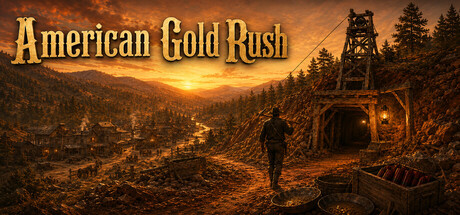
American Gold Rush uses limited AI-generated art in the opening scene background.
All pixel art, all sound effects, all music, and all writing are human-made, by named people in the credits paid for the work.
Generative AI tools were used during development to assist with some pre-generated visual assets, written content, and development-related creative work. All AI-assisted content included in the final game and store materials is reviewed by the developer before release. The game does not generate AI content during gameplay and does not connect to external AI services while running.
Root Cause is utilizes AI assets in the game. This content, when utilized, is generated during development, then curated, edited, and committed to the project before release. Nothing is generated while the game is running.
Items that may be generated:
Illustrated art.
UI/Interfaces
Icon Sets
Sounds and Music
Dialogue, case briefings, case content, and interface copy
The visual art in Gearbound is made with PixelLab, an AI pixel-art tool. Every sprite, animation, tileset, background, prop, interface element and piece of marketing art was generated with PixelLab and then directed, edited and assembled by us.
The music and sound effects are rendered by synthesis scripts that were written with AI assistance. No generative audio model was used, and nothing was sourced from a music-generation service.
Nothing is generated by AI while you play. Every asset is finished and baked into the build before it ships, and the game makes no AI calls at runtime.
Generative AI was used to create in-game CCTV camera footage images and English voiceovers.
All AI-generated assets have been reviewed and edited to fit the game's atmosphere and quality standards.
Generative AI was used for:
- The game's logo and Steam store capsule artwork (image generation)
- Translation of in-game text into Turkish, German, French and Spanish
-AI-generated images were reviewed and edited before use.
Generative AI tools were used for localization assistance and for the creation or editing of certain promotional/marketing assets. The game itself does not contain AI-generated content, and no generative AI systems are used during gameplay.
AI coding assistants were used during development to help create and edit portions of the code and player-facing implementation that ship with the game. The game's 2D artwork was not created by an image-generation model. All AI-assisted outputs were reviewed, edited, and integrated by the developer. The game does not use generative AI at runtime.
Generative AI tools were used during development to assist with the creation and iteration of some game assets and development code. AI-assisted content included in the final game is pre-generated and reviewed by the developer. The game does not generate AI content during gameplay.
Music and sound effects were AI-generated (Suno / ElevenLabs) and edited by the developer. AI (Claude Code) was also used as a coding assistant during development. Visual assets are licensed/purchased assets and are not AI-generated. No AI content is generated live during gameplay all content is fixed and authored before release.
Generative AI was used during development as a coding assistant and to assist with drafting and translating store-page and marketing text. Some pixel-art assets were rendered by deterministic drawing code written with AI assistance; the final images were not directly output by a text-to-image or diffusion model. All shipped and published content was reviewed and edited by the developer. No generative AI runs in the game, and no content is generated from player input.
HASSO uses generative AI tools for part of its pre-produced content: the card illustrations, and the translation of the game's text into the languages it supports. All AI-generated content is reviewed and curated before it is included in the game. The user interface icons, the music and the sound effects are not AI-generated. No content is generated by AI at runtime: the player never sends prompts and never receives live AI output.