Public Steam disclosure research25,383 disclosures tracked
Where do games disclose AI use?
Search developers’ Steam disclosures, compare classified AI use across
games, and follow recorded changes.
This index adds cross-game classifications and statistics to
statements published on individual store pages.
Groups reflect automatic analysis of public disclosures; mature records are excluded. These counts do not measure AI use across all of Steam.
Missing or unclear statements cannot establish whether a game uses AI.
We use Generative AI technology in some assets to assist with texture creation and initial modeling drafts. Crucially, all AI-generated content in this game is generated based on the development team's own primary/original work, followed by rigorous review and editing. All final artistic work and decisions are strictly managed within the team to ensure originality and quality.
AI tools were used during development to assist with asset creation (pixel art sprites, terrain textures, localization drafts) and game design iteration. All AI-generated content was reviewed, edited and curated by the developer.
I’m a good programmer, but a terrible artist. So some of the images were created with the help of AI. By the time of release, I’ll try to remove all AI-generated images from the Steam page and from some textures in the game.
Salvo uses generative AI in a limited, pre-rendered capacity:
• Voice Acting: NPC dialogue throughout the campaign is voiced using ElevenLabs text-to-speech technology. All voice lines are generated, reviewed, and bundled with the game during development. No voice synthesis occurs at runtime.
• Visual Assets: Select concept art, promotional materials, and supplementary illustrations (such as wiki imagery) were created with assistance from AI image generation tools and reviewed by the development team before inclusion.
• Marketing Materials: The game's trailer voiceover and certain store page assets were produced with AI assistance.
All AI-assisted content has been reviewed by the developer prior to release. The game does not generate, transmit, or produce any AI content during gameplay — all in-game audio, visuals, and text are pre-rendered and ship with the game.
As a solo developer, I’ve used AI-assisted tools to create some of the game’s assets. My goal is to replace these with fully hand-drawn artwork created by a professional artist.
Generative AI tools were used to refine store descriptions and assist with the translation of certain UI elements to provide a better experience for international players. All visual assets and core gameplay mechanics are original creations.
AI generated content was used during development for concept art, promotional graphics, marketing materials, and placeholder assets.
The game does not use live AI generated content during gameplay.
Some item icons, visual assets, and music in this game were created with the assistance of generative AI. In-game text was translated to multiple languages using AI. All AI-generated content was reviewed, edited, and curated by the developer.
A pre-generated AI tool was used during development to help create the main menu background image. The final selected image was curated and integrated by the developer. No live AI-generated content is present in gameplay.
Building a game of this scale as a solo indie developer is a gigantic quest. To bring this vision to life, I utilized AI to help manage the immense development load.
I have used AI to help create placeholder assets as visual guides to get the final look and feel, some initial base assets that have since been modified to be game-ready, and, in some rare cases, game elements that did not require further polishing. I have worked hard to ensure the overall quality is as high as possible, given the limitations with funding, personnel and time.
What wasn't made with AI:
The core game design, idea and execution. Some of the game code, performance optimizations, final polishing, and most final assets. Additionally, some of the development tools, such as the terrain optimizer/generator, targeting, turret, and explosion systems, have been under development as personal hobby projects for nearly a decade. The game was completely visualized, balanced, play tested, and designed by people (the fun part).
What is heavily AI-generated:
Audio: The audio concepts and prompts were written by me, generated using AI algorithms, and then manually polished where needed. Real human work was required to orchestrate, mix, time, and fit these audio clips seamlessly into the game.
Some textures: In a few rare cases, a generated texture was used "as-is" and did not require any additional post-processing or optimization of any kind (excluding cropping or some basic photoshopping).
Some background music in the game was composed with the assistance of generative AI tools. These tracks were subsequently edited, mixed, and refined by the developer to ensure alignment with the game's sci-fi aesthetic.
Some temporary UI icons and placeholder assets used during development were generated with AI tools. These are non-final assets and will be replaced or refined before the final release. The game does not use any real-time or player-facing generative AI systems.
Yes, I use AI tools to help build this game, and I'm not going to pretend I don't.
I'm one person. Every system, mechanic, and design decision is made, tested, and tuned by me personally. I use the best tools available, AI among them, to let a one-person studio punch way above its weight. That's the entire point of being indie: no rules except the ones that make a better game.
Assets are a fluid mix of commercially licensed, hand-crafted, AI-generated, AI-generated then hand-adjusted, and hand-crafted then AI-polished. I'll use whatever it takes to make this the best game it can be.
AI tools were used during development to generate initial 3D model drafts and UI artwork assets. All AI-generated content was manually reviewed, refined, and integrated by the development team. No AI generates content at runtime during gameplay.
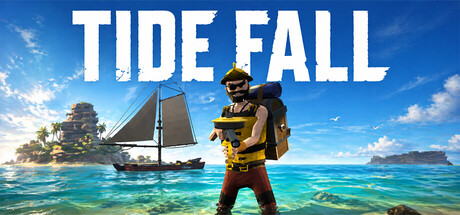
Generative AI was used to assist with some promotional visuals, such as logo and store page imagery. Tide Fall also includes commercially licensed marketplace assets. All gameplay systems and game development are created and implemented by me
AI coding tools were used during development. All visual assets, music, writing, and narrative content are human-made. An alternative wireframe visual mode is also available.
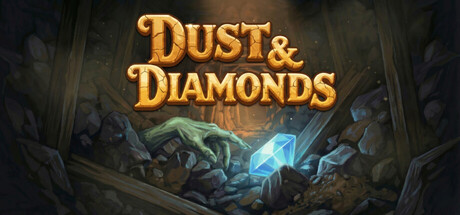
Dust & Diamonds is a 100% solo project.
The idea for this game came to me a few days after my son was born — my first child. I was celebrating with my cousin and bet him I could build something like Motherload in two weeks. As you've probably guessed, I lost that bet spectacularly. I'm writing this almost a year later, and my son turns one in a few days.
I have a degree in computer game engineering, but I live in a small town with no game studios — so I drive a pallet jack around a warehouse by day and build this game after hours. I can't afford to hire an artist or a composer. To bring this world to life at all, I turned to generative AI tools. I'm not going to hide that.
How does the game use AI?
Graphics (2D): A significant portion of the visual assets — character portraits, environment elements, buildings — was generated using AI, then manually retouched, edited, and assembled by me in the engine into a cohesive style with a parallax system.
Music and sound: The musical tracks in the game were generated by AI. Fittingly, this ties directly into the game's lore — the "Relics of the Old World" (our 21st century) collected by the goblins are canonically works created by AI before the great cataclysm, carrying the lost wisdom of humanity.
What's mine in this game is the design: how the economy works, how water behaves in a flooded shaft, when a ceiling collapses, what the old man says across the counter. I came up with each of these systems, wrote them out, tested them, and reworked them a dozen times until they behaved the way I wanted.
I'm just a regular guy who had an idea for a game about digging in the dirt and was stubborn enough to see it through. Thank you for your understanding and support.
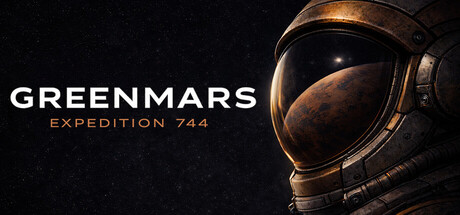
GreenMars: Expedition 744 is a solo-led independent project.
Generative AI tools are used occasionally as production support for certain pre-rendered content and communication materials. The artistic direction, original designs, and core creative decisions remain fully defined internally by human authors.
The game does not use generative AI during gameplay.
I'm a game/level designer so I used visual scripting to make games. AI was used to generate the code of some elements of the game that were too complicated to do in visual scripting. SFX and Voices were also generated by AI.
We use AI tools to assist in generating some icons and basic text. All AI-generated content is strictly reviewed and extensively modified manually by our team to ensure final quality.
The in-game graphics and sound are generated by AI and then modified and adjusted by creators before being used.
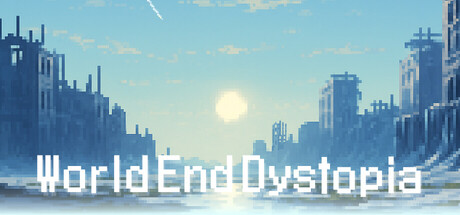
In World End Dystopia, AI technology is used as a supplementary tool in certain parts of the production process. AI supports tasks such as prototyping, comparison, and organization, while the worldbuilding, narrative, game design, and all final expressions and decisions are created entirely by human hands.
Just as the AI “EDEN” depicted in the game exists to support human choice, AI in the real-world development process is likewise limited to an assistive role—supporting human understanding and judgment rather than replacing creativity or decision-making.
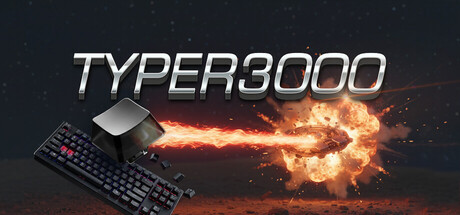
We have used AI primarily for image generation and for optimizing the network system in Typer3000. AI-driven image generation allowed us to rapidly create and iterate visual assets such as backgrounds, interface elements, and stylistic variations, ensuring a consistent and scalable visual design.
In addition, we have used AI to support the setup and optimization of the multiplayer network architecture. It helped us refine data transmission strategies, reduce latency, and improve synchronization of player inputs, resulting in a smooth and responsive real-time gameplay experience.
Select visual assets and base scripts in this title were created with the assistance of generative AI. All AI-generated content was manually edited and strictly reviewed by the developer before final inclusion.
I am a single developer. AI is used to speed up some processes, some marketing and concept materials are made with AI as a base to improve on and deliver better game.
There are optional AI soundtracks in the game.
AI was used as a productivity tool to assist in coding and drafting assets. All final content, including art and logic, has been extensively refined and reconstructed by human developers to ensure quality.
During the development process, we may use AI-based tools to assist with content creation. In all such cases, the final product reflects the creativity and expression of our own development team.
Some minor visual assets, such as icons and UI elements, were created or assisted using licensed AI tools during development.
All AI-assisted content has been reviewed, edited, and integrated by the developer to ensure consistency with the overall art direction and quality standards.
AI is not used in gameplay systems, code, or real-time content generation.
We use Generative AI technology in some assets to assist with texture creation and initial modeling drafts. Crucially, all AI-generated content in this game is generated based on the development team's own primary/original work, followed by rigorous review and editing. All final artistic work and decisions are strictly managed within the team to ensure originality and quality.
AI tools were used during development to assist with asset creation (pixel art sprites, terrain textures, localization drafts) and game design iteration. All AI-generated content was reviewed, edited and curated by the developer.
I’m a good programmer, but a terrible artist. So some of the images were created with the help of AI. By the time of release, I’ll try to remove all AI-generated images from the Steam page and from some textures in the game.
Salvo uses generative AI in a limited, pre-rendered capacity:
• Voice Acting: NPC dialogue throughout the campaign is voiced using ElevenLabs text-to-speech technology. All voice lines are generated, reviewed, and bundled with the game during development. No voice synthesis occurs at runtime.
• Visual Assets: Select concept art, promotional materials, and supplementary illustrations (such as wiki imagery) were created with assistance from AI image generation tools and reviewed by the development team before inclusion.
• Marketing Materials: The game's trailer voiceover and certain store page assets were produced with AI assistance.
All AI-assisted content has been reviewed by the developer prior to release. The game does not generate, transmit, or produce any AI content during gameplay — all in-game audio, visuals, and text are pre-rendered and ship with the game.
As a solo developer, I’ve used AI-assisted tools to create some of the game’s assets. My goal is to replace these with fully hand-drawn artwork created by a professional artist.
Generative AI tools were used to refine store descriptions and assist with the translation of certain UI elements to provide a better experience for international players. All visual assets and core gameplay mechanics are original creations.
AI generated content was used during development for concept art, promotional graphics, marketing materials, and placeholder assets.
The game does not use live AI generated content during gameplay.
Some item icons, visual assets, and music in this game were created with the assistance of generative AI. In-game text was translated to multiple languages using AI. All AI-generated content was reviewed, edited, and curated by the developer.
A pre-generated AI tool was used during development to help create the main menu background image. The final selected image was curated and integrated by the developer. No live AI-generated content is present in gameplay.
Building a game of this scale as a solo indie developer is a gigantic quest. To bring this vision to life, I utilized AI to help manage the immense development load.
I have used AI to help create placeholder assets as visual guides to get the final look and feel, some initial base assets that have since been modified to be game-ready, and, in some rare cases, game elements that did not require further polishing. I have worked hard to ensure the overall quality is as high as possible, given the limitations with funding, personnel and time.
What wasn't made with AI:
The core game design, idea and execution. Some of the game code, performance optimizations, final polishing, and most final assets. Additionally, some of the development tools, such as the terrain optimizer/generator, targeting, turret, and explosion systems, have been under development as personal hobby projects for nearly a decade. The game was completely visualized, balanced, play tested, and designed by people (the fun part).
What is heavily AI-generated:
Audio: The audio concepts and prompts were written by me, generated using AI algorithms, and then manually polished where needed. Real human work was required to orchestrate, mix, time, and fit these audio clips seamlessly into the game.
Some textures: In a few rare cases, a generated texture was used "as-is" and did not require any additional post-processing or optimization of any kind (excluding cropping or some basic photoshopping).
Some background music in the game was composed with the assistance of generative AI tools. These tracks were subsequently edited, mixed, and refined by the developer to ensure alignment with the game's sci-fi aesthetic.
Some temporary UI icons and placeholder assets used during development were generated with AI tools. These are non-final assets and will be replaced or refined before the final release. The game does not use any real-time or player-facing generative AI systems.
Yes, I use AI tools to help build this game, and I'm not going to pretend I don't.
I'm one person. Every system, mechanic, and design decision is made, tested, and tuned by me personally. I use the best tools available, AI among them, to let a one-person studio punch way above its weight. That's the entire point of being indie: no rules except the ones that make a better game.
Assets are a fluid mix of commercially licensed, hand-crafted, AI-generated, AI-generated then hand-adjusted, and hand-crafted then AI-polished. I'll use whatever it takes to make this the best game it can be.
AI tools were used during development to generate initial 3D model drafts and UI artwork assets. All AI-generated content was manually reviewed, refined, and integrated by the development team. No AI generates content at runtime during gameplay.
Generative AI was used to assist with some promotional visuals, such as logo and store page imagery. Tide Fall also includes commercially licensed marketplace assets. All gameplay systems and game development are created and implemented by me
AI coding tools were used during development. All visual assets, music, writing, and narrative content are human-made. An alternative wireframe visual mode is also available.
Dust & Diamonds is a 100% solo project.
The idea for this game came to me a few days after my son was born — my first child. I was celebrating with my cousin and bet him I could build something like Motherload in two weeks. As you've probably guessed, I lost that bet spectacularly. I'm writing this almost a year later, and my son turns one in a few days.
I have a degree in computer game engineering, but I live in a small town with no game studios — so I drive a pallet jack around a warehouse by day and build this game after hours. I can't afford to hire an artist or a composer. To bring this world to life at all, I turned to generative AI tools. I'm not going to hide that.
How does the game use AI?
Graphics (2D): A significant portion of the visual assets — character portraits, environment elements, buildings — was generated using AI, then manually retouched, edited, and assembled by me in the engine into a cohesive style with a parallax system.
Music and sound: The musical tracks in the game were generated by AI. Fittingly, this ties directly into the game's lore — the "Relics of the Old World" (our 21st century) collected by the goblins are canonically works created by AI before the great cataclysm, carrying the lost wisdom of humanity.
What's mine in this game is the design: how the economy works, how water behaves in a flooded shaft, when a ceiling collapses, what the old man says across the counter. I came up with each of these systems, wrote them out, tested them, and reworked them a dozen times until they behaved the way I wanted.
I'm just a regular guy who had an idea for a game about digging in the dirt and was stubborn enough to see it through. Thank you for your understanding and support.
GreenMars: Expedition 744 is a solo-led independent project.
Generative AI tools are used occasionally as production support for certain pre-rendered content and communication materials. The artistic direction, original designs, and core creative decisions remain fully defined internally by human authors.
The game does not use generative AI during gameplay.
I'm a game/level designer so I used visual scripting to make games. AI was used to generate the code of some elements of the game that were too complicated to do in visual scripting. SFX and Voices were also generated by AI.
We use AI tools to assist in generating some icons and basic text. All AI-generated content is strictly reviewed and extensively modified manually by our team to ensure final quality.
The in-game graphics and sound are generated by AI and then modified and adjusted by creators before being used.
In World End Dystopia, AI technology is used as a supplementary tool in certain parts of the production process. AI supports tasks such as prototyping, comparison, and organization, while the worldbuilding, narrative, game design, and all final expressions and decisions are created entirely by human hands.
Just as the AI “EDEN” depicted in the game exists to support human choice, AI in the real-world development process is likewise limited to an assistive role—supporting human understanding and judgment rather than replacing creativity or decision-making.
We have used AI primarily for image generation and for optimizing the network system in Typer3000. AI-driven image generation allowed us to rapidly create and iterate visual assets such as backgrounds, interface elements, and stylistic variations, ensuring a consistent and scalable visual design.
In addition, we have used AI to support the setup and optimization of the multiplayer network architecture. It helped us refine data transmission strategies, reduce latency, and improve synchronization of player inputs, resulting in a smooth and responsive real-time gameplay experience.
Select visual assets and base scripts in this title were created with the assistance of generative AI. All AI-generated content was manually edited and strictly reviewed by the developer before final inclusion.
I am a single developer. AI is used to speed up some processes, some marketing and concept materials are made with AI as a base to improve on and deliver better game.
There are optional AI soundtracks in the game.
AI was used as a productivity tool to assist in coding and drafting assets. All final content, including art and logic, has been extensively refined and reconstructed by human developers to ensure quality.
During the development process, we may use AI-based tools to assist with content creation. In all such cases, the final product reflects the creativity and expression of our own development team.
Some minor visual assets, such as icons and UI elements, were created or assisted using licensed AI tools during development.
All AI-assisted content has been reviewed, edited, and integrated by the developer to ensure consistency with the overall art direction and quality standards.
AI is not used in gameplay systems, code, or real-time content generation.